Day 252 of 280 · 36 weeks
The reference number
Last reviewed · 3 min read · 8 sources · Plain-text version
Thirty-six weeks, and visits are weekly from now. Today the hospital number, the labor line, and the route go on one card, in both phones.
- Size this week
- about the size of a romaine lettuce
- Length this week
- around 47.4 cm from head to heel
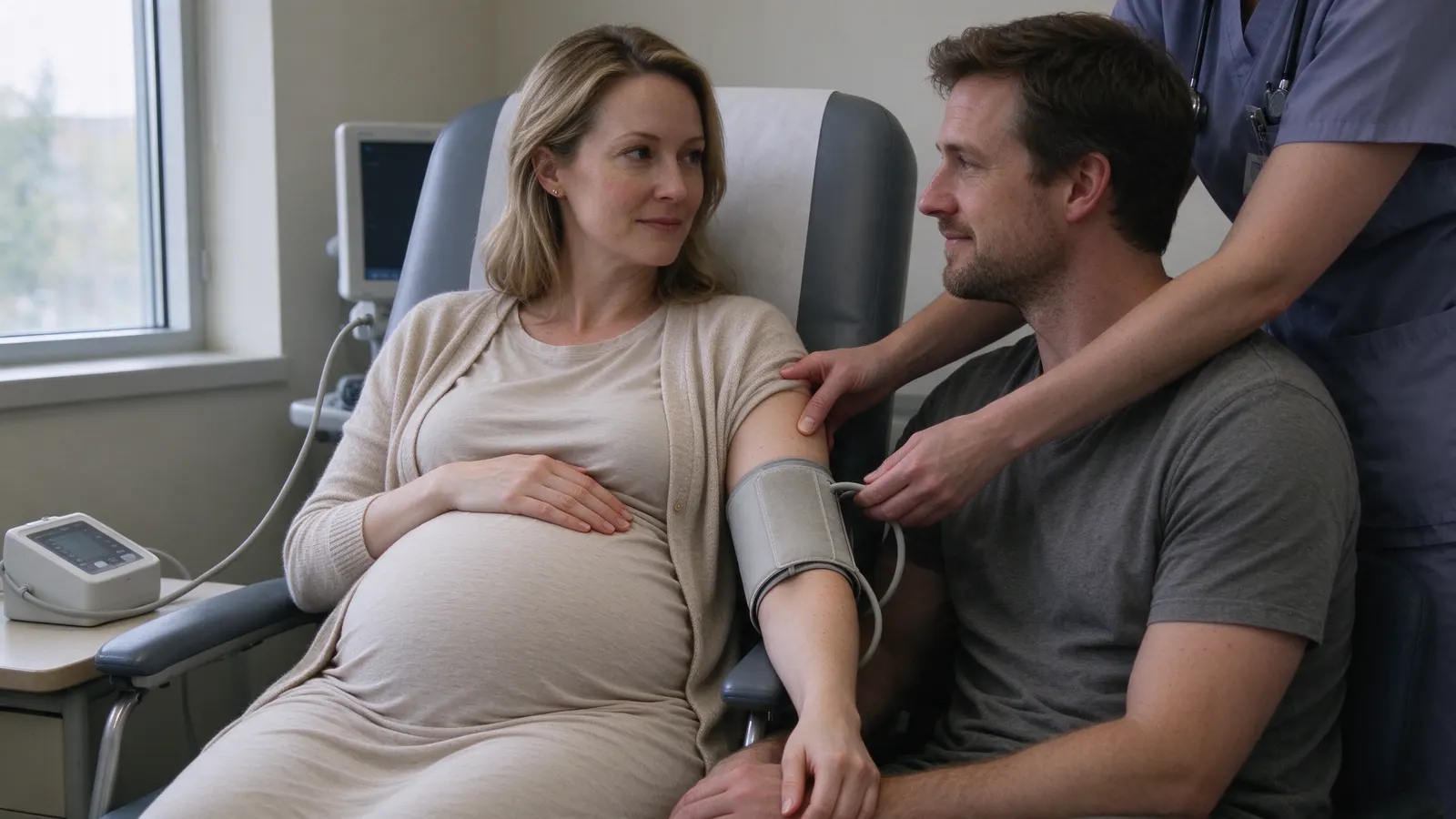
Thirty-six weeks. From here your checkups come every week until the baby is born (MedlinePlus). Today's job is small and worth more than it looks: one card that holds the numbers you'd otherwise be hunting for at 3 a.m.
Your baby

Around now your baby is around 47.4cm long from head to heel, about the size of a romaine lettuce (NHS). They may have engaged, with the head moving down into your pelvis, and their lungs are likely mature enough to breathe outside the womb unaided (NHS). The Office on Women's Health puts a 36-week baby at about 16 to 19 inches and 6 to 6½ pounds (OWH).
Babies born from 34 through 36 weeks are called "late preterm," and the weeks still to come help the brain, lungs, and liver finish developing (NICHD). Some babies don't wait. If yours comes early, the baby's day-by-day notes start at your first month, and these notes can rest.
Your body
The schedule changes this week: routine checkups are weekly from week 36 until birth (OWH). The NHS's list for this week includes packing your hospital bag and noting your hospital reference number and important phone numbers (NHS). The AAP's version is fuller: the hospital's name, address, and phone number, the doctor or midwife who will deliver your baby, the quickest route and the entrance to use, and an ambulance number kept handy (AAP).
Physically, this week's list reads like the whole pregnancy at once: sleeping problems, backache, heartburn, leg cramps, feeling hot, swollen hands and feet, and earlier symptoms coming back (NHS). You won't have them all. Most people have a handful on any given day.
Try today
The reference-number card
Time: 15 minutes
At the top of one index card, write your hospital reference number, if your hospital gave you one (NHS).
Under it: the labor and delivery line, your provider's number, and the ambulance number (AAP).
Then the route: the hospital's address and the entrance you'll actually use (AAP).
Photograph the card on both phones and mark the photo as a favorite. The paper card goes in the bag.
Make it work:If there's already a list on the fridge, this is the version that leaves the house. Same numbers, smaller.
Watch for
Normal
your baby's movements feeling different as space runs out.
Call your provider
right away if movement stops or slows; there's no set number that counts as normal, and a change is what matters (CDC).
Normal
a long list of mild symptoms this week (NHS).
Call your provider
for any bleeding; the NHS says to seek advice (NHS).
Normal
feeling hot, which is on this week's list (NHS).
Call your provider
as soon as you can for fever or chills (OWH).
For you
The card won't make the birth go any particular way. What it does is take one job off the night it starts: nobody has to search, scroll, or remember. That leaves both of you free for the part that needs you.
If you're the partner: the card is yours to carry too. Check that the photo is on your phone before you put it away. And if she's feeling anxious or low in these last weeks, the NHS's advice for this week is simple: talk to the doctor or midwife (NHS).
Sources
- MedlinePlus. "Prenatal Care." National Library of Medicine. https://medlineplus.gov/prenatalcare.html
- NHS. "Week 36." Week-by-week guide to pregnancy, Best Start in Life. https://www.nhs.uk/best-start-in-life/pregnancy/week-by-week-guide-to-pregnancy/3rd-trimester/week-36/
- Office on Women's Health. "Stages of pregnancy." U.S. Department of Health and Human Services. https://womenshealth.gov/pregnancy/youre-pregnant-now-what/stages-pregnancy
- Eunice Kennedy Shriver National Institute of Child Health and Human Development. "About Preterm Labor and Birth." National Institutes of Health. https://www.nichd.nih.gov/health/topics/preterm/conditioninfo
- Office on Women's Health. "Prenatal care and tests." U.S. Department of Health and Human Services. https://womenshealth.gov/pregnancy/youre-pregnant-now-what/prenatal-care-and-tests
- American Academy of Pediatrics. "Last Minute Activities Before Delivery." HealthyChildren.org. https://www.healthychildren.org/English/ages-stages/prenatal/Pages/Last-Minute-Activities.aspx
- Centers for Disease Control and Prevention. "Urgent Maternal Warning Signs and Symptoms." HEAR HER campaign, 2024. https://www.cdc.gov/hearher/maternal-warning-signs/index.html
- Office on Women's Health. "Pregnancy complications." U.S. Department of Health and Human Services. https://womenshealth.gov/pregnancy/youre-pregnant-now-what/pregnancy-complications
This guide is general education that summarizes published research and guidance from groups like the American Academy of Pediatrics, the CDC, and the WHO. It isn’t medical advice, and every child develops on their own timeline. Your pediatrician knows your child; if something feels wrong, call them. In an emergency, call 911.
Get each day’s note the morning it applies
Add your due date to a free Chorevia household, and every morning until the birth the day's note arrives in the app and by email: what's forming, what your body is doing, one thing to try, what to watch for, and a word for you.
Create your household