Tweens · 11 to 12 years
Age 11: Development, Research, and What Helps
Last reviewed · 18 min read · 14 activities · 12 common questions · 74 sources · Plain-text version
Eleven often brings a new school, a changing body, louder feelings, and the first group chats. Here's what's developing, what the research says (including what's been oversold), and how to stay close while handing over more.
At a glance
- Test scores often dip in the year kids move to middle school. It's common, partly about the school itself, and worth watching rather than panicking over.
- Moods really do get less positive across early adolescence, then level off in the mid-teens. Stay steady; this phase has a known shape.
- Parents mostly know what's going on because kids tell them. Calm reactions and low-key, side-by-side talks beat surveillance.
- Eleven-year-olds still need 9 to 12 hours of sleep. Phones charge outside the bedroom, and screens go off an hour before bed.
- Start alcohol and vaping talks now, with clear rules. Letting kids sip at home is linked to more drinking later, not less.
- At 11 or 12, the AAP recommends Tdap, a first meningococcal dose, and HPV if not started. US guidance has been in flux in 2026, so ask which schedule your pediatrician follows.
- Kids this age can do and fold laundry, clean a bathroom, and cook a simple meal with supervision, and many are ready to earn first money babysitting or pet sitting.
- Under 13 rides in the back seat, and everyone buckles up every ride. Save 988 and Poison Help (1-800-222-1222) in your phone.
Your age-11 checklist
0 of 12 done
Eleven is a year of firsts: for many kids, middle school, a body deep in puberty, and a first group chat. For puberty basics, first phones, and the social media debate, see the age 10 guide; for what comes next, see the age 12 guide.
What's developing#
The AAP's key issues for 11-year-olds are puberty and body image, more advanced thinking, and a social life that now includes social media (AAP). The range of normal is wide.
Puberty in full swing
Many girls have breast development and some get their first period; many boys notice their testicles growing. New body hair, body odor, and worries about looks are common (AAP). Many girls start their period around 12, on average 2 to 3 years after breasts begin to develop, and boys usually start a year or two later than girls (Allen & Waterman, AAP). Some kids question their gender identity now, and puberty can be especially hard for transgender children (Allen & Waterman, AAP); your pediatrician can help.
Thinking in black and white
An 11-year-old's brain is about 95% of its adult size. Many still think in concrete, black-and-white terms, but they're starting to use more logic, read social cues better, and enjoy talking about values as they form their own sense of right and wrong (AAP). Early adolescents also tend to be self-conscious and feel judged by peers, need more privacy, push boundaries, and may react strongly when you hold a limit (Allen & Waterman, AAP).
A brain being fine-tuned
The teen years are about fine-tuning the brain, which finishes maturing in the mid-to-late 20s. The prefrontal cortex, which handles planning and decisions, is one of the last parts to mature, while changes in social areas push kids toward peers (NIMH). The popular "strong gas pedal, weak brakes" picture is a simplification; researchers have pointed to evidence that doesn't fit it (Pfeifer & Allen, 2012).
Friend groups and group chats
Many kids belong to defined friend groups now, and curiosity about sex, drugs, and alcohol is growing. Social media can add heat to all of it and expose kids to adult content (AAP).
A bigger school
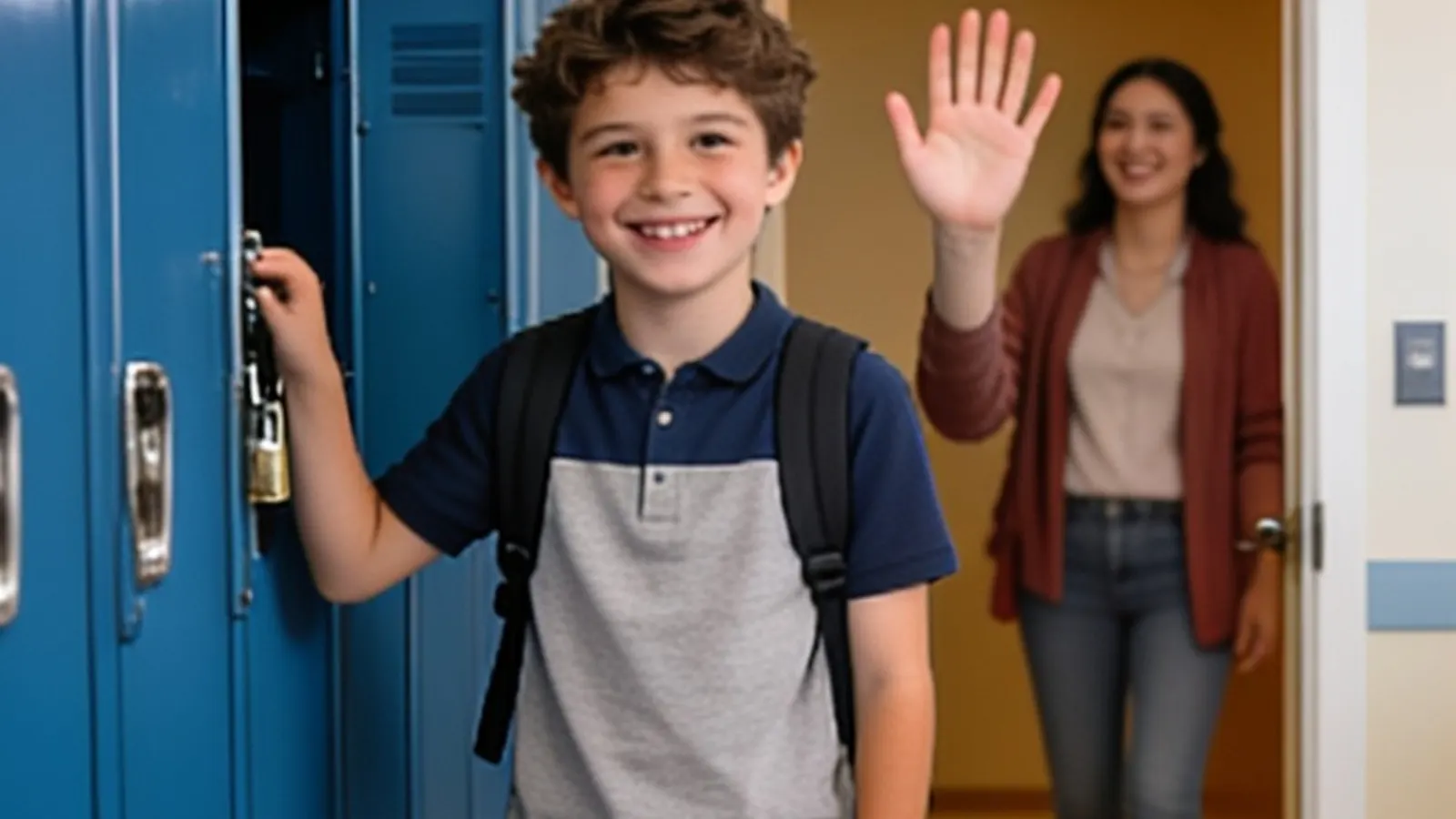
For many families, 11 means middle school: more teachers, more classmates, and less hand-holding. Many students feel less like they belong at school during the move (Borman et al., 2019).
Sleep needs and the later clock
Children 6 to 12 need 9 to 12 hours of sleep a day (Paruthi et al., 2016). At the start of puberty, sleep-wake cycles shift up to 2 hours later, and the AAP has urged middle and high schools to start at 8:30 a.m. or later (AAP; AAP, 2014). In 2015 surveys from nine states, 57.8% of middle schoolers slept less than recommended on school nights (Wheaton et al., 2018). Bedtime phone or tablet use is linked with about twice the odds of too little sleep (Carter et al., 2016), so keep screens out of bedrooms and off an hour before bed (AAP).
What the research says#
Some claims about this age hold up well. Some, like quick mindset fixes, are oversold.
1. The middle school dip is real, and it's partly the school. One long-standing theory blames a mismatch between what young teens need and what schools offer (Eccles et al., 1993). In New York City, test scores fell by 0.14 to 0.18 standard deviations in the year kids moved to a middle school, compared with similar kids in K-8 schools, and the gap lasted through 8th grade (Rockoff & Lockwood, 2010). Statewide Florida data showed a similar drop, lasting through grade 10, plus more absences (Schwerdt & West, 2013). These studies compare school setups, not individual children. Takeaway: A wobble in the first year is common. Watch it, and ask the school for help early.
2. Belonging can be nudged. Mindset slogans, less so. In a double-blind randomized trial of 1,304 middle schoolers, brief exercises framing worries about fitting in as normal and temporary cut sixth-grade discipline incidents by 34%, raised attendance by 12%, and cut failing grades by 18% (Borman et al., 2019). Growth mindset programs are more contested. A national experiment found a short online program raised grades among lower-achieving students (Yeager et al., 2019), but a 2023 meta-analysis of 63 studies found a tiny average effect that was not significant after correcting for publication bias (Macnamara & Burgoyne, 2023). An earlier one found weak effects, with possible benefits for students from low-income families or at academic risk (Sisk et al., 2018). Takeaway: Tell your child that worries about fitting in are normal and pass. Don't count on a mindset poster to raise grades.
3. Moods dip, then level off. In 220 young people who rated their emotions at random moments in grades 5 to 8 and again 4 years later, average emotions grew less positive across early adolescence, and the decline stopped around 10th grade (Larson et al., 2002). Takeaway: More irritability is expected. Watch for changes that last or disrupt daily life.
4. Early puberty adds a little risk, for boys too. A meta-analysis of 101 studies found that maturing earlier than peers was linked with more emotional and behavior problems in both boys and girls. The effects were small, and contrary to the common view, they weren't larger for girls (Ullsperger & Nikolas, 2017). Takeaway: An early bloomer of any gender may need extra check-ins.
5. You know what your child tells you. In a study of 703 Swedish 14-year-olds, what parents knew came mainly from what kids freely told them, not from tracking, and that disclosure was most closely tied to less rule-breaking (Stattin & Kerr, 2000). In 479 families followed for 5 years, teens on average disclosed more in weeks when mothers asked more and controlled less (Keijsers et al., 2016). Takeaway: Ask, listen, and keep reactions calm. That keeps information flowing.
6. A sip at home isn't protective. Among 561 Rhode Island students, 29.5% had sipped alcohol by the fall of sixth grade, usually at home from a parent. By ninth grade, 26.0% of sippers had had a full drink, versus 5.5% of non-sippers, even after accounting for behavior problems and family drinking (Jackson et al., 2015). Among 1,927 Australian adolescents followed from seventh grade, those given alcohol only by parents had higher odds of later binge drinking (odds ratio 2.58) (Mattick et al., 2018). A review of 77 long-term studies linked later, lighter drinking with monitoring, a warm relationship, limited access, clear disapproval, and parents' own example (Ryan et al., 2010). All of this is observational. Takeaway: A clear no-alcohol rule, delivered warmly, beats teaching kids to drink at home.
7. Talking about sex helps, a little. Pooling 52 studies of 25,314 adolescents, parent-teen talks about sex had a small protective link with safer sex, stronger for girls and for talks with mothers (Widman et al., 2016). Abstinence-only-until-marriage programs haven't been shown to delay sex or reduce risky behavior (Santelli et al., 2017). And among 1,398 girls, HPV vaccination at 11 or 12 wasn't followed by more signs of sexual activity over up to 3 years (Bednarczyk et al., 2012). Takeaway: Start early, keep it frequent, and include every parent.
8. Online and in-person bullying are mostly one problem. Across 80 studies, traditional bullying was about twice as common as cyberbullying, and the two were highly correlated (Modecki et al., 2014). Takeaway: If trouble shows up in the group chat, ask about school too, and the reverse.
Parenting techniques#
Smooth the move to middle school
- Rehearse. The AAP suggests rehearsing new situations, asking what your child is worried about, and problem-solving together (AAP).
- Normalize. Tell your child that almost everyone worries about fitting in at first, and it gets better, the core message of the belonging trial above (Borman et al., 2019).
- Build a system. Checklists, timers, a steady workspace, and screens off during homework help with organization (AAP).
- Reach out early. If your child struggles in a subject, ask the teacher how to help (AAP).
Script: "Lots of kids feel lost the first few weeks of middle school. That's normal, and it gets easier. What are you most curious about?"
Keep talking as they pull away
Kids benefit from their parents' input, even when they seem tuned out (AAP).
- Go side by side. Car rides, cooking, and walks feel less like an interview.
- Ask more, control less. Teens tell more in weeks when parents ask more and control less (Keijsers et al., 2016).
- React so they'll tell you again. Thank them for telling you before you respond to what they told you.
- Respect privacy, with clear limits. Knock, and don't read diaries. Make it clear that safety concerns, like threats or self-harm, override privacy.
Script: "I'm really glad you told me. I'm not mad. Let's figure out what to do."
Ride out the big feelings
Expect strong reactions when you hold a limit (Allen & Waterman, AAP). Name the feeling, wait until everyone is calm, then problem-solve. Pick your battles: hold firm on safety and core values, and let go of hairstyles and bedroom decor.
Coach the group chat
Early online experiences set the tone, so check in often about what your child sees, sends, and receives, and talk about being kind online (Moreno, AAP). In UK data, ages 11 to 13 were a window when heavier social media use by girls predicted lower life satisfaction a year later, though lower life satisfaction also predicted more use later, so the link runs both ways (Orben et al., 2022). Agree on a few rules (see the group chat activity below) and write them into your Family Media Plan.
If your child is bullied online
Don't threaten to take away the device; kids may see it as punishment and stop telling you. Save screenshots, listen (even one supportive person helps), and report it to the platform, the school, or the police if there are threats of harm (Moreno, AAP).
Start the alcohol and vaping talk now
Most young teens don't use: in 2025, 91% of eighth graders reported no alcohol, marijuana, or nicotine in the past month, though 11% had drunk alcohol and 9% had vaped nicotine in the past year (NIDA, 2025). Most e-cigarettes contain highly addictive nicotine, which can harm the parts of a teen's brain that control attention, learning, mood, and impulse control (CDC).
NIAAA advises talking early and often, setting rules early and enforcing them consistently, and working with other parents; about 80% of teens think parents should have a say in whether they drink (NIAAA). Skip the sips (Jackson et al., 2015), and offer a no-questions-asked pickup (AAP).
Script: "Our rule is no alcohol or vaping while your brain is still building. If you're ever somewhere that feels wrong, text me the code word and I'll come, no questions in the car."
Talk about sex, consent, and porn
It isn't too soon to talk about pregnancy, sexually transmitted infections, and sexting. Starting early doesn't signal encouragement, and silence sends kids to unsafe sources (AAP). Teach consent plainly: saying yes, without pressure, each time, to each thing, and anyone can change their mind (Voss, AAP). Your child can also say no to anyone, adult or friend, and tell you afterward (AAP).
Porn often gets there first. In a national survey of 1,358 teens aged 13 to 17, 73% had seen online pornography; the average age at first exposure was 12, and 15% first saw it at 10 or younger (Robb & Mann, 2023).
Script: "You might see sex videos online, even by accident. They're not how real people treat each other. If something bothers you, tell me. You won't be in trouble."
Know the warning signs of eating disorders and self-harm
Eating disorders often develop quietly. Watch for eating only a few "safe" foods, pushing food around the plate, excessive exercise, baggy clothes, pulling away, and seeming depressed, anxious, or quick to anger (AAP). Talk about healthy habits, not weight (Golden et al., 2016).
From 2009 to 2015, emergency visits for self-inflicted injuries among girls aged 10 to 14 rose 18.8% a year (Mercado et al., 2017). Signs include cuts or scars on the hands, wrists, stomach, or legs, long sleeves in hot weather, and signs of depression. Asking doesn't plant the idea; the AAP calls that a myth. Ask calmly, book a pediatrician visit even if your child won't come, and lock up sharp objects, medicines, and firearms (McKean & Rahmandar, AAP).
What to teach#
Eleven-year-olds can handle near-adult work and decisions, with you nearby.
Family jobs at a near-adult level
The AAP's list for 11- and 12-year-olds: clean the kitchen, change bedsheets, unload the dishwasher, do and fold laundry, clean the bathroom, wash the car, cook a simple meal with supervision, and watch younger siblings with an adult at home. Busy kids still need these; the AAP calls skipping chores for overscheduled kids a mistake (AAP).
The research is observational but encouraging. Kindergartners who did regular chores rated themselves more competent in third grade (White et al., 2019). In daily diaries from 752 teens aged 14 to 15, helping the family was linked with more happiness, largely through a sense of filling a meaningful role (Telzer & Fuligni, 2009).
Spell out what's expected, add one task at a time, praise effort honestly, and build jobs into routines; badgering doesn't work (AAP). Keep these as unpaid family jobs. See how to stop nagging and raising independent kids.
Money: earning, banking, and a budget
The CFPB's money lessons for ages 6 to 12: you can earn money, saving is a habit, spending means choices, comparing prices pays, and loans cost interest (CFPB).
- First earnings. Federal law bars most employment under 14, but casual babysitting and minor chores around private homes are allowed (US Department of Labor), so pet sitting and yard work for neighbors are fair game. State rules can add limits. The Red Cross designs its online babysitting course for ages 11 and up (American Red Cross).
- A real account. Many banks offer youth accounts; a parent or guardian stays on the account until adulthood, and deposits are FDIC-insured up to $250,000 (FDIC, 2026).
- A budget and a big goal. Decide what your child's money pays for, then let them save toward something that takes months.
The evidence is limited and observational. Young adults who got an allowance as kids reported modestly higher financial responsibility (Collins & Odders-White, 2021), and adults whose parents taught them to save were 16% more likely to save (Bucciol & Veronesi, 2014). No trials have tested paying for chores. Lab experiments suggest expected rewards can dampen kids' interest in a task (Deci et al., 1999), but those tasks weren't chores, and the finding is disputed (Eisenberger et al., 1999). Many families pay only for optional extra jobs. See chores by age and what to pay, teaching financial skills, rewards without bribery, and teaching the cost of living.
Home alone and in charge of siblings
Experts typically agree that 11 or 12 is an appropriate age to stay home alone for a few hours, though readiness varies. Some states set minimum ages, from 8 to 14. First make sure your child knows how to reach you, when to call 911, and what to do about a fire, a knock at the door, or a cut; then start short (AAP). For siblings, start with your child in charge while you're home (see the activities below).
Online safety and sextortion
Teach the red flags: someone who approaches on social media, quickly asks for nude photos, pushes the chat to another app, or builds a friendship or romance fast. If it happens, the blackmailer is to blame, paying rarely stops it, and the right move is to block, keep the messages, and get an adult's help (NCMEC). NCMEC's free Take It Down service helps remove nude images taken before 18 without the image leaving the device (NCMEC). Sites aimed at kids under 13 must get your consent before collecting your child's personal information (FTC).
Values and who they're becoming
This is a good age to talk about values (AAP). Share what your family stands for and why, ask what your child thinks, and let them disagree out loud.
Activities to try#
Pick a few that fit your family. Several work best when your child is the one running them.
How we rate the evidence
- Strong evidence
- Randomized trials or systematic reviews show a consistent benefit.
- Moderate evidence
- Consistent observational research, or a major guideline (AAP, WHO) built on research.
- Emerging evidence
- Small or early studies. Plausible, not yet proven.
- Mixed evidence
- Studies disagree, or reviews rate the evidence as weak.
Too tired to choose? Let us pick one.
Middle school dry run
Emerging evidence- Time
- An hour or two before school starts
- Builds
- Confidence, a sense of control
- Walk or drive the route at the time your child will travel.
- If the school allows it, walk the class schedule and find the bathrooms, cafeteria, and nurse.
- Practice the locker combination at home until it's automatic.
- Ask what still feels uncertain and plan for it together.
Evidence: Emerging. The AAP suggests rehearsing new situations and problem-solving worries ahead of time (AAP); a dry run itself hasn't been studied.
Belonging stories
Emerging evidence- Time
- 15 minutes, early in the school year
- Builds
- Belonging, perspective
- Ask an older cousin, neighbor, or sibling to share what was hard about starting middle school and how it changed.
- Share your own story too.
- Ask your child to write a few lines of advice for next year's new students.
Evidence: Emerging. A school version, where sixth graders read stories, presented as coming from older students, saying that worries about fitting in are normal and temporary, then wrote about them, cut failing grades by 18% in a randomized trial (Borman et al., 2019); a home version hasn't been tested.
The Sunday reset
Emerging evidence- Time
- 15 to 20 minutes, once a week
- Builds
- Planning, organization, independence
- Empty the backpack and toss old papers.
- Copy the week's assignments, tests, and activities into one planner.
- Pack anything needed for Monday.
- Hand over more of it each month until your child runs it alone.
Evidence: Emerging. The AAP recommends checklists, timers, and a consistent workspace for kids who struggle with organization, and a backpack that weighs no more than 10% to 20% of body weight (AAP).
Car-ride check-ins
Emerging evidence- Time
- Any drive or walk
- Builds
- Connection, a habit of telling you things
- Keep your phone away and the music low.
- Ask one specific question, like "Who did you sit with at lunch?"
- Let silence sit; don't fill it.
- Thank them for anything they share.
Evidence: Emerging. What parents know comes mostly from what kids choose to share (Stattin & Kerr, 2000), and teens share more when parents ask more and control less (Keijsers et al., 2016); car talks specifically haven't been studied.
Group chat ground rules
Emerging evidence- Time
- 20 minutes, then a quick monthly check-in
- Builds
- Digital judgment, kindness online
- Together, write 4 or 5 rules, like "Don't forward anyone's messages or photos without asking."
- Add: leave chats that turn cruel, and tell a parent about anything sexual or threatening.
- Agree that chats are muted after bedtime.
- Practice a polite exit line for chats that turn mean.
- Add the rules to your Family Media Plan.
Evidence: Emerging. The AAP advises clear digital media rules and checking in early and often about what kids see and send (AAP; Moreno, AAP); specific rules haven't been tested.
Screenshot, block, tell
Emerging evidence- Time
- 10 minutes
- Builds
- A plan for cruelty and pressure online
- Show your child how to take a screenshot and how to block and report on each app they use.
- Walk through a pretend message: "Send me a pic or I'll tell everyone."
- Say out loud: "You won't be in trouble for telling me."
Evidence: Emerging. The AAP advises saving screenshots and reporting cyberbullying (Moreno, AAP), and NCMEC advises blocking without deleting and getting adult help for sextortion (NCMEC); drills like this haven't been studied.
Pick a code word
Emerging evidence- Time
- 5 minutes
- Builds
- A safe way out of risky situations
- Choose a word or emoji that means "come get me."
- Agree that you'll pick up with no questions in the moment.
- Talk the next day, calmly.
Make it work: Let your child blame you: "My parents need me home."
Evidence: Emerging. The AAP suggests a no-questions-asked pickup policy for 11-year-olds (AAP); the code word itself hasn't been studied.
Plan, shop, and cook a family dinner
Emerging evidence- Time
- 2 hours, once a week or so
- Builds
- Cooking, budgeting, planning
- Give your child a budget for one dinner.
- They choose a recipe, check the pantry, and write the list.
- They shop, comparing prices.
- They cook, with you supervising the stove, oven, and knives.
Make it work: Let them keep a recipe file of their wins.
Evidence: Emerging. The AAP lists cooking a simple meal with supervision for ages 11 to 12 (AAP); observational studies link chores like making a meal to better working memory and self-control in kids (Tepper et al., 2022) and cooking skill in young adulthood to better eating 10 years later (Utter et al., 2018).
Own the laundry, sheets and all
Emerging evidence- Time
- About an hour a week
- Builds
- Self-care, responsibility
- Do one full cycle together: sort, wash, dry, fold, put away.
- Add changing the sheets and washing towels.
- Hand it over on a set day each week.
Make it work: Keep this an unpaid family job, not a paid extra.
Evidence: Emerging. Doing and folding laundry and changing sheets are on the AAP's list for 11- to 12-year-olds (AAP); chores are linked with later self-competence in observational research (White et al., 2019).
Babysitting course and a first business
Emerging evidence- Time
- About 4 hours for the course, then a few hours a week
- Builds
- Child care skills, safety know-how, first earnings
- Your child takes a babysitting course and gets first aid training.
- Start as a parent's helper, with an adult at home.
- Make a simple flyer for babysitting, pet sitting, or yard work, for neighbors you know.
- Track hours, pay, and what they learned in a notebook.
Make it work: You approve every job and know where they'll be.
Evidence: Emerging. The Red Cross designs its online babysitting course for ages 11 and up (American Red Cross), and casual babysitting and chores around homes are outside federal child labor rules (US Department of Labor); outcomes haven't been studied.
Open an account and save for something big
Emerging evidence- Time
- An hour to set up, then 10 minutes a month
- Builds
- Saving, patience, comfort with banking
- Your child picks a goal that will take a few months and looks up the price.
- Open a youth account together (FDIC, 2026).
- Decide what share of each payment goes to savings.
- Review the balance monthly and let them make the purchase when they get there.
Evidence: Emerging. In Dutch data, adults whose parents taught them to save were 16% more likely to save, though the study is observational (Bucciol & Veronesi, 2014).
Sibling-sitting trial run
Emerging evidence- Time
- 30 to 60 minutes, while you're home
- Builds
- Responsibility, judgment, sibling bonds
- Your older child is in charge while you work in another room.
- Agree on the rules, snacks, and screen limits ahead of time.
- Afterward, ask what went well and what was hard.
- Lengthen the time, then try a short trip out.
Evidence: Emerging. The AAP lists watching younger siblings with an adult present as an 11-to-12 job and suggests a first aid or CPR class before kids are in charge (AAP; AAP).
Build a sleep budget
Moderate evidence- Time
- 15 minutes
- Builds
- Sleep habits, planning
- Start from the school-day wake-up time.
- Count back at least 9 hours to find lights-out.
- Set a screens-off time an hour before that.
- Set up a charging spot outside the bedrooms for everyone.
Evidence: Moderate. Sleep experts recommend 9 to 12 hours for ages 6 to 12 (Paruthi et al., 2016), the AAP advises screens off an hour before bed and out of bedrooms (AAP), and a meta-analysis links bedtime device use with short sleep (Carter et al., 2016).
Where do you stand?
Emerging evidence- Time
- 10 minutes, at dinner or in the car
- Builds
- Values, reasoning, respectful disagreement
- Pose a dilemma: "Your friend copies your homework. What do you do?"
- Everyone answers and gives a reason.
- Ask, "What would change your mind?"
Evidence: Emerging. The AAP notes that 11-year-olds often enjoy talking about values as they form their own sense of right and wrong (AAP); this game hasn't been studied.
Common questions#
How much sleep does an 11-year-old need?
An 11-year-old needs 9 to 12 hours of sleep a day (Paruthi et al., 2016). If your child gets up at 6:30 a.m., that means lights out by 9:30 p.m. at the latest. Many miss the mark: in nine states in 2015, 57.8% of middle schoolers slept less than recommended on school nights (Wheaton et al., 2018). Puberty shifts the body clock later, so keep screens out of the bedroom and off an hour before bed (AAP).
Is it normal for grades to drop in middle school?
Yes, a dip in achievement is common in the year kids switch to middle school. Large studies in New York City and Florida found test scores fell in the transition year compared with kids who stayed in K-8 schools (Rockoff & Lockwood, 2010; Schwerdt & West, 2013). Talk to the teacher early if your child is struggling (AAP). A sudden, steep drop, especially with avoiding school or trouble concentrating, can be a sign of bullying (Moreno, AAP) or too little sleep (Wheaton et al., 2018), so ask.
Why is my 11-year-old so moody?
Moodiness is a normal part of early adolescence. In one long-term study, average emotions grew less positive across early adolescence and stopped declining around 10th grade (Larson et al., 2002), and preteens often react strongly when parents hold a limit (Allen & Waterman, AAP). Worry more about changes that last, like hopelessness, sleep changes, or low energy (McKean & Rahmandar, AAP), and talk to your pediatrician. If your child talks about wanting to die, call or text 988 (NIMH).
What vaccines does my child need at 11 or 12?
The AAP recommends Tdap (a tetanus, diphtheria, and whooping cough booster) and a first dose of meningococcal vaccine at 11 or 12, the HPV vaccine at 9 to 12 if it hasn't been started, and a flu shot every year (Fenton, AAP). Most kids who start HPV before 15 need 2 doses, 6 to 12 months apart (Frenck & Perkins, AAP). US guidance has been changing. In January 2026, the CDC moved meningococcal vaccine to shared decision-making and proposed a single HPV dose, though the FDA approval is for a multi-dose series (WebMD, 2026). The AAP's 2026 schedule differs from the CDC's (AAP). In March 2026, a federal judge paused that CDC schedule change (KFF, 2026) in a lawsuit brought by medical groups including the AAP, and the government has appealed (STAT, 2026); as of October 2026, the case was still in the courts (Contemporary Pediatrics, 2026). Ask your pediatrician which schedule they follow.
Can an 11-year-old babysit?
Many 11-year-olds can start, ideally with training and with an adult nearby at first. The Red Cross designs its online babysitting course for ages 11 and up (American Red Cross), and federal child labor rules don't cover casual babysitting (US Department of Labor). The AAP lists watching younger siblings with an adult at home as an 11-to-12 job (AAP), which makes "parent's helper" a good first step. Check your state's rules, and make sure your child knows when to call 911.
Can my 11-year-old stay home alone or watch younger siblings?
For a few hours, often yes: experts typically agree that 11 or 12 is an appropriate age to stay home alone for short stretches, depending on your child's maturity (AAP). Some states set minimum ages, from 8 to 14, so check yours. Start short, have your child check in when they get home, and review emergencies first. Being in charge of siblings is a bigger step; the AAP suggests a first aid or CPR class beforehand (AAP).
Should my 11-year-old have a debit card?
There's no research-backed age, but a youth account with a parent on it can be a good next step once your child has practiced budgeting with cash. Many banks offer youth accounts; a parent or guardian stays on the account until adulthood, and deposits are FDIC-insured (FDIC, 2026). Ask about spending limits, alerts, and fees, and review the statement together each month. Research on teaching kids to save is observational but encouraging (Bucciol & Veronesi, 2014).
What should I do if my child is being bullied in a group chat?
Listen first, save screenshots, and report it, without threatening to take away the device. The AAP warns that kids may see losing the device as punishment and stop telling you; having even one person listen helps, and you can report to the platform, the school, and police if there are threats (Moreno, AAP). Ask about school too, since online and in-person bullying usually overlap (Modecki et al., 2014).
When should I talk to my 11-year-old about sex and consent?
Start now, in small pieces, if you haven't already. The AAP says it isn't too soon at 11 to talk about pregnancy, sexually transmitted infections, and sexting, and that starting early doesn't signal encouragement (AAP). In one national survey, the average age of first seeing online porn was 12 (Robb & Mann, 2023), so you want to get there first. Parent-teen talks about sex have a small protective link with safer sex later (Widman et al., 2016).
Is it okay to let my child have a sip of alcohol at home?
No; research doesn't support the idea that sips at home teach kids to drink responsibly. Kids who sipped by sixth grade were more likely to have a full drink by ninth grade (26.0% vs. 5.5%) (Jackson et al., 2015), and teens given alcohol by parents had higher odds of later binge drinking (Mattick et al., 2018). NIAAA notes that teens are less likely to drink heavily when parents set specific rules against drinking young (NIAAA).
Should I read my 11-year-old's texts?
It usually works better to agree on rules and check in openly than to read everything in secret. Parents learn most from what kids choose to tell them (Stattin & Kerr, 2000), and teens tell more when parents ask more and control less (Keijsers et al., 2016). Preteens need more privacy (Allen & Waterman, AAP), so be upfront about any spot checks or parental controls. If you see signs of sextortion, self-harm, or threats, safety comes first.
Can an 11-year-old sit in the front seat?
No, the AAP says all children younger than 13 should ride in the back seat. Most children don't fit an adult seat belt without a booster until 10 to 12; the belt fits when the lap belt sits low across the upper thighs and the shoulder belt crosses the middle of the chest and shoulder, not the neck (AAP).
Safety and when to get help#
Eleven-year-olds roam farther, online and off. Plan for these risks now.
Car rides: back seat and a belt every time
All children younger than 13 belong in the back seat. Keep using a booster until the adult belt fits, and use lap and shoulder belts on every ride, including in other people's cars (AAP).
Helmets on every ride
A helmet on every bike ride, however short; most bike crashes happen near home. No riding at dusk or after dark (AAP).
Firearms: locked, unloaded, ammunition apart
Firearms are the leading cause of death for US children and teens. The safest home has no gun; if you keep one, store it locked and unloaded, with ammunition locked separately and keys out of reach. Teaching kids not to touch guns isn't enough. More than a third of unintentional shootings of children happen in other people's homes, so ask about unlocked guns before visits (Schaechter, AAP).
Sextortion and online exploitation
Reports of online enticement, which includes sextortion, rose more than 300% from 2021 to 2023, and teenage boys have been the most common targets in recent cases. Get help before deciding whether to pay; paying rarely stops the blackmail. Block the account, keep the messages, and report to the CyberTipline (NCMEC). Make sure your child knows they won't be in trouble for telling you.
Poisons, medicines, and vapes
Call Poison Help at 1-800-222-1222 for any possible poisoning or medicine mistake; experts answer 24/7 at no cost (America's Poison Centers). Lock up medicines and alcohol.
Mental health crises and 988
Warning signs of suicide include talking about wanting to die or being a burden, feeling hopeless or trapped, withdrawing, giving away belongings, and big changes in eating or sleep (NIMH). Call or text the 988 Suicide & Crisis Lifeline any time. It's free and confidential, and you don't have to be suicidal to call (988 Lifeline).
Get emergency care now if your child
- Is in a life-threatening situation, such as trying to hurt themselves: call 911 (NIMH)
- Has trouble breathing, collapses, or has a seizure after a possible poisoning: call 911 (Poison Help)
- Has any of these after a hit to the head or body: a worsening headache, weakness or numbness, repeated vomiting, slurred speech, can't be woken, unequal pupils, a seizure, increasing confusion, or any loss of consciousness (Torres & Master, AAP)
Call your pediatrician if your child
- Shows eating disorder warning signs, like few "safe" foods, skipping meals, or excessive exercise (AAP)
- Has cuts, burns, or scars you can't explain, or you suspect self-harm (McKean & Rahmandar, AAP)
- Has lasting sadness, hopelessness, sleep changes, or low energy (McKean & Rahmandar, AAP)
- Avoids school or can't concentrate after being bullied (Moreno, AAP)
- Seems dazed or doesn't feel right after a hit to the head or body (Torres & Master, AAP)
- Has puberty changes that seem very early or very late (see the age 10 guide)
The 11-year checkup
Expect a full exam and questions about school, family, mood, eating, screens, sleep, safety, and substances. Your child may prefer some time alone with the doctor; supporting that shows trust, and you'll still get time for your questions. Tests may include a cholesterol check and a hearing screen, which is done once between 11 and 14 (AAP). The AAP schedule adds a substance use assessment from 11 and depression and suicide-risk screening from 12 (AAP, 2025). For vaccines, see What vaccines does my child need at 11 or 12? above.
Sources#
- American Academy of Pediatrics. "Your Checkup Checklist: 11 Years Old." HealthyChildren.org, 2025. https://www.healthychildren.org/English/ages-stages/Your-Childs-Checkups/Pages/your-checkup-checklist-11-years-old.aspx
- Allen B, Waterman H. "Stages of Adolescence." HealthyChildren.org, updated 2024. https://www.healthychildren.org/English/ages-stages/teen/Pages/Stages-of-Adolescence.aspx
- American Academy of Pediatrics. "Back-to-School Tips for Families." HealthyChildren.org, updated 2026. https://www.healthychildren.org/English/ages-stages/gradeschool/school/Pages/Back-to-School-Tips.aspx
- American Academy of Pediatrics. "Age-Appropriate Chores for Children." HealthyChildren.org, updated 2024. https://www.healthychildren.org/English/family-life/family-dynamics/communication-discipline/Pages/Chores-and-Responsibility.aspx
- American Academy of Pediatrics. "Is Your Child Ready to Stay Home Alone?" HealthyChildren.org, updated 2023. https://www.healthychildren.org/English/safety-prevention/at-home/Pages/is-your-child-ready-to-stay-home-alone.aspx
- American Academy of Pediatrics. "Healthy Sleep Habits: How Many Hours Does Your Child Need?" HealthyChildren.org, updated 2026. https://www.healthychildren.org/English/healthy-living/sleep/Pages/healthy-sleep-habits-how-many-hours-does-your-child-need.aspx
- American Academy of Pediatrics. "Family Media Plan." HealthyChildren.org, accessed 2026. https://www.healthychildren.org/English/fmp/Pages/MediaPlan.aspx
- Moreno M. "Cyberbullying: How to Help Prevent It." HealthyChildren.org, updated 2022. https://www.healthychildren.org/English/family-life/Media/Pages/Cyberbullying.aspx
- Voss R. "Helping Teens Make Choices About Sex: Parent Tips." HealthyChildren.org, updated 2025. https://www.healthychildren.org/English/ages-stages/teen/dating-sex/pages/Helping-Teens-Resist-Sexual-Pressure.aspx
- American Academy of Pediatrics. "Anorexia & Bulimia: How Eating Disorders Can Affect Your Child." HealthyChildren.org, updated 2025. https://www.healthychildren.org/English/health-issues/conditions/emotional-problems/Pages/Eating-Disorders-Anorexia.aspx
- McKean A, Rahmandar MH. "When Children and Teens Self-Harm." HealthyChildren.org, updated 2024. https://www.healthychildren.org/English/health-issues/conditions/emotional-problems/Pages/When-Children-and-Teens-Self-Harm.aspx
- Fenton R. "AAP-Recommended Vaccines for 'Tweens, Teens & Young Adults." HealthyChildren.org, updated 2026. https://www.healthychildren.org/english/safety-prevention/immunizations/pages/immunizations-for-teenagers-and-young-adults.aspx
- Frenck RW, Perkins R. "HPV: Facts About the Virus that Causes Cancer and How to Prevent It." HealthyChildren.org, updated 2022. https://www.healthychildren.org/English/safety-prevention/immunizations/Pages/are-your-kids-protected-from-cancer-caused-by-hpv.aspx
- American Academy of Pediatrics. "AAP Releases Recommended Childhood and Adolescent Immunization Schedule for 2026." HealthyChildren.org, 2026. https://www.healthychildren.org/English/news/Pages/AAPs-recommended-childhood-and-adolescent-immunization-schedule-for-2026.aspx
- American Academy of Pediatrics. "Car Seats: Information for Families." HealthyChildren.org, updated 2026. https://www.healthychildren.org/English/safety-prevention/on-the-go/Pages/Car-Safety-Seats-Information-for-Families.aspx
- American Academy of Pediatrics. "Bicycle Safety for Children: Myths & Facts." HealthyChildren.org, updated 2026. https://www.healthychildren.org/English/safety-prevention/at-play/Pages/Bicycle-Safety-Myths-And-Facts.aspx
- Schaechter J. "Guns in the Home: How to Keep Kids Safe." HealthyChildren.org, updated 2026. https://www.healthychildren.org/English/safety-prevention/at-home/Pages/Handguns-in-the-Home.aspx
- Torres AR, Master CL. "Concussions in Children & Teens: What Parents Need to Know." HealthyChildren.org, updated 2024. https://www.healthychildren.org/English/health-issues/injuries-emergencies/sports-injuries/Pages/Concussions.aspx
- American Academy of Pediatrics and Bright Futures. "Recommendations for Preventive Pediatric Health Care" (Periodicity Schedule). 2025. https://downloads.aap.org/AAP/PDF/periodicity_schedule.pdf
- American Academy of Pediatrics Adolescent Sleep Working Group, Committee on Adolescence, Council on School Health. "School start times for adolescents." Pediatrics, 2014. https://pubmed.ncbi.nlm.nih.gov/25156998/
- Golden NH, Schneider M, Wood C; AAP Committee on Nutrition, Committee on Adolescence, Section on Obesity. "Preventing Obesity and Eating Disorders in Adolescents." Pediatrics, 2016. https://pubmed.ncbi.nlm.nih.gov/27550979/
- Paruthi S, Brooks LJ, D'Ambrosio C, et al. "Recommended Amount of Sleep for Pediatric Populations: A Consensus Statement of the American Academy of Sleep Medicine." Journal of Clinical Sleep Medicine, 2016. https://pubmed.ncbi.nlm.nih.gov/27250809/
- National Institute of Mental Health. "The Teen Brain: 7 Things to Know." Accessed 2026. https://www.nimh.nih.gov/health/publications/the-teen-brain-7-things-to-know
- National Institute of Mental Health. "Warning Signs of Suicide." Revised 2025. https://www.nimh.nih.gov/health/publications/warning-signs-of-suicide
- National Institute of Mental Health. "Children and Mental Health: Is This Just a Stage?" Revised 2024. https://www.nimh.nih.gov/health/publications/children-and-mental-health
- National Institute on Drug Abuse. "Reported use of most drugs remains low among U.S. teens." December 2025. https://nida.nih.gov/news-events/news-releases/2025/12/reported-use-of-most-drugs-remains-low-among-us-teens
- National Institute on Alcohol Abuse and Alcoholism. "Parenting To Prevent Childhood Alcohol Use." Accessed 2026. https://www.niaaa.nih.gov/publications/brochures-and-fact-sheets/parenting-prevent-childhood-alcohol-use
- Centers for Disease Control and Prevention. "E-Cigarette Use Among Youth." 2024. https://www.cdc.gov/tobacco/e-cigarettes/youth.html
- Consumer Financial Protection Bureau. "Money as You Grow: School-age children to preteens." Accessed 2026. https://www.consumerfinance.gov/consumer-tools/money-as-you-grow/school-age-children-preteens/
- Federal Deposit Insurance Corporation. "Your Child's Financial Building Blocks." 2026. https://www.fdic.gov/consumer-resource-center/2026-03/your-childs-financial-building-blocks
- US Department of Labor, Wage and Hour Division. "Fact Sheet #43: Child Labor Provisions of the FLSA for Nonagricultural Occupations." Revised 2016. https://www.dol.gov/agencies/whd/fact-sheets/43-child-labor-non-agriculture
- Federal Trade Commission. "Protecting Your Child's Privacy Online." 2026. https://consumer.ftc.gov/articles/protecting-your-childs-privacy-online
- American Red Cross. "Babysitting Basics (online course)." Accessed 2026. https://www.redcross.org/take-a-class/classes/babysitting-basics-online/a6R0V0000015FUP.html
- National Center for Missing & Exploited Children. "Sextortion." Accessed 2026. https://www.missingkids.org/theissues/sextortion
- National Center for Missing & Exploited Children. "Take It Down." Accessed 2026. https://takeitdown.ncmec.org/
- 988 Suicide & Crisis Lifeline. "Get Help." Accessed 2026. https://988lifeline.org/get-help/
- America's Poison Centers. "Poison Help." Accessed 2026. https://poisoncenters.org/
- Poison Help. "Poison Control." America's Poison Centers, accessed 2026. https://www.poisonhelp.org/
- Robb MB, Mann S. "Teens and Pornography." Common Sense Media, 2023. https://www.commonsensemedia.org/sites/default/files/research/report/2022-teens-and-pornography-final-web.pdf
- WebMD. "What the CDC's New Vaccine Schedule Means for Your Child." 2026. https://www.webmd.com/children/vaccines/news/20260106/cdc-new-childhood-vaccine-schedule
- Kates J. "The Court's Opening Shot on Federal Vaccine Policy Changes." KFF, 2026. https://www.kff.org/quick-insights/the-courts-opening-shot-on-federal-vaccine-policy-changes/
- STAT. "HHS appeals ruling that stalled many of Kennedy's vaccine policy changes." 2026. https://www.statnews.com/2026/04/29/hhs-appealing-acip-vaccine-policy-lawsuit-ruling/
- Contemporary Pediatrics. "What pediatricians should know about the 2026-27 AAP vaccine schedule." October 2026. https://contemporarypediatrics.com/view/what-pediatricians-should-know-about-the-2026-27-aap-vaccine-schedule
- Rockoff JE, Lockwood BB. "Stuck in the Middle: How and Why Middle Schools Harm Student Achievement." Education Next, 2010. https://www.educationnext.org/stuck-in-the-middle/
- Schwerdt G, West MR. "The Impact of Alternative Grade Configurations on Student Outcomes through Middle and High School." Journal of Public Economics, 2013. https://ideas.repec.org/a/eee/pubeco/v97y2013icp308-326.html
- Eccles JS, Midgley C, Wigfield A, et al. "Development during adolescence: The impact of stage-environment fit on young adolescents' experiences in schools and in families." American Psychologist, 1993. https://pubmed.ncbi.nlm.nih.gov/8442578/
- Borman GD, Rozek CS, Pyne J, Hanselman P. "Reappraising academic and social adversity improves middle school students' academic achievement, behavior, and well-being." PNAS, 2019. https://pubmed.ncbi.nlm.nih.gov/31358624/
- Yeager DS, Hanselman P, Walton GM, et al. "A national experiment reveals where a growth mindset improves achievement." Nature, 2019. https://pubmed.ncbi.nlm.nih.gov/31391586/
- Macnamara BN, Burgoyne AP. "Do growth mindset interventions impact students' academic achievement? A systematic review and meta-analysis with recommendations for best practices." Psychological Bulletin, 2023. https://pubmed.ncbi.nlm.nih.gov/36326645/
- Sisk VF, Burgoyne AP, Sun J, et al. "To What Extent and Under Which Circumstances Are Growth Mind-Sets Important to Academic Achievement? Two Meta-Analyses." Psychological Science, 2018. https://pubmed.ncbi.nlm.nih.gov/29505339/
- Larson RW, Moneta G, Richards MH, Wilson S. "Continuity, stability, and change in daily emotional experience across adolescence." Child Development, 2002. https://pubmed.ncbi.nlm.nih.gov/12146740/
- Ullsperger JM, Nikolas MA. "A meta-analytic review of the association between pubertal timing and psychopathology in adolescence: Are there sex differences in risk?" Psychological Bulletin, 2017. https://pubmed.ncbi.nlm.nih.gov/28530427/
- Pfeifer JH, Allen NB. "Arrested development? Reconsidering dual-systems models of brain function in adolescence and disorders." Trends in Cognitive Sciences, 2012. https://pubmed.ncbi.nlm.nih.gov/22613872/
- Stattin H, Kerr M. "Parental monitoring: a reinterpretation." Child Development, 2000. https://pubmed.ncbi.nlm.nih.gov/11016567/
- Keijsers L, Voelkle MC, Maciejewski D, et al. "What drives developmental change in adolescent disclosure and maternal knowledge? Heterogeneity in within-family processes." Developmental Psychology, 2016. https://pubmed.ncbi.nlm.nih.gov/27893247/
- Jackson KM, Barnett NP, Colby SM, Rogers ML. "The prospective association between sipping alcohol by the sixth grade and later substance use." Journal of Studies on Alcohol and Drugs, 2015. https://pubmed.ncbi.nlm.nih.gov/25785796/
- Mattick RP, Clare PJ, Aiken A, et al. "Association of parental supply of alcohol with adolescent drinking, alcohol-related harms, and alcohol use disorder symptoms: a prospective cohort study." Lancet Public Health, 2018. https://pubmed.ncbi.nlm.nih.gov/29396259/
- Ryan SM, Jorm AF, Lubman DI. "Parenting factors associated with reduced adolescent alcohol use: a systematic review of longitudinal studies." Australian and New Zealand Journal of Psychiatry, 2010. https://pubmed.ncbi.nlm.nih.gov/20815663/
- Widman L, Choukas-Bradley S, Noar SM, et al. "Parent-Adolescent Sexual Communication and Adolescent Safer Sex Behavior: A Meta-Analysis." JAMA Pediatrics, 2016. https://pubmed.ncbi.nlm.nih.gov/26524189/
- Santelli JS, Kantor LM, Grilo SA, et al. "Abstinence-Only-Until-Marriage: An Updated Review of U.S. Policies and Programs and Their Impact." Journal of Adolescent Health, 2017. https://pubmed.ncbi.nlm.nih.gov/28842065/
- Bednarczyk RA, Davis R, Ault K, et al. "Sexual activity-related outcomes after human papillomavirus vaccination of 11- to 12-year-olds." Pediatrics, 2012. https://pubmed.ncbi.nlm.nih.gov/23071201/
- Modecki KL, Minchin J, Harbaugh AG, et al. "Bullying prevalence across contexts: a meta-analysis measuring cyber and traditional bullying." Journal of Adolescent Health, 2014. https://pubmed.ncbi.nlm.nih.gov/25168105/
- Orben A, Przybylski AK, Blakemore SJ, Kievit RA. "Windows of developmental sensitivity to social media." Nature Communications, 2022. https://pubmed.ncbi.nlm.nih.gov/35347142/
- Carter B, Rees P, Hale L, et al. "Association Between Portable Screen-Based Media Device Access or Use and Sleep Outcomes: A Systematic Review and Meta-analysis." JAMA Pediatrics, 2016. https://pubmed.ncbi.nlm.nih.gov/27802500/
- Wheaton AG, Jones SE, Cooper AC, Croft JB. "Short Sleep Duration Among Middle School and High School Students — United States, 2015." MMWR, 2018. https://pubmed.ncbi.nlm.nih.gov/29370154/
- Mercado MC, Holland K, Leemis RW, et al. "Trends in Emergency Department Visits for Nonfatal Self-inflicted Injuries Among Youth Aged 10 to 24 Years in the United States, 2001-2015." JAMA, 2017. https://pubmed.ncbi.nlm.nih.gov/29164246/
- White EM, DeBoer MD, Scharf RJ. "Associations Between Household Chores and Childhood Self-Competency." Journal of Developmental and Behavioral Pediatrics, 2019. https://pubmed.ncbi.nlm.nih.gov/30507727/
- Tepper DL, Howell TJ, Bennett PC. "Executive functions and household chores: Does engagement in chores predict children's cognition?" Australian Occupational Therapy Journal, 2022. https://pubmed.ncbi.nlm.nih.gov/35640882/
- Telzer EH, Fuligni AJ. "Daily family assistance and the psychological well-being of adolescents from Latin American, Asian, and European backgrounds." Developmental Psychology, 2009. https://pubmed.ncbi.nlm.nih.gov/19586187/
- Utter J, Larson N, Laska MN, et al. "Self-Perceived Cooking Skills in Emerging Adulthood Predict Better Dietary Behaviors and Intake 10 Years Later: A Longitudinal Study." Journal of Nutrition Education and Behavior, 2018. https://pubmed.ncbi.nlm.nih.gov/29525525/
- Collins JM, Odders-White E. "Allowances: Incidence in the US and Relationship to Financial Capability in Young Adulthood." Journal of Family and Economic Issues, 2021. https://ideas.repec.org/a/kap/jfamec/v42y2021i3d10.1007_s10834-020-09748-y.html
- Bucciol A, Veronesi M. "Teaching children to save: What is the best strategy for lifetime savings?" Journal of Economic Psychology, 2014. https://ideas.repec.org/a/eee/joepsy/v45y2014icp1-17.html
- Deci EL, Koestner R, Ryan RM. "A meta-analytic review of experiments examining the effects of extrinsic rewards on intrinsic motivation." Psychological Bulletin, 1999. https://pubmed.ncbi.nlm.nih.gov/10589297/
- Eisenberger R, Pierce WD, Cameron J. "Effects of reward on intrinsic motivation—negative, neutral and positive: comment on Deci, Koestner, and Ryan (1999)." Psychological Bulletin, 1999. https://pubmed.ncbi.nlm.nih.gov/10589299/
This guide is general education that summarizes published research and guidance from groups like the American Academy of Pediatrics, the CDC, and the WHO. It isn’t medical advice, and every child develops on their own timeline. Your pediatrician knows your child; if something feels wrong, call them. In an emergency, call 911.
Raising capable kids with Chorevia
When your kids are ready for responsibility, Chorevia turns chores into a family economy, with points, proof, a reward ladder you design, and monthly costs kids work off. Adults always make the call. Free for families.
Create your household