Early school years · 8 to 9 years
Age 8: Development, Research, and What Helps
Last reviewed · 17 min read · 14 activities · 12 common questions · 75 sources · Plain-text version
Eight brings best friends, bigger schoolwork, and for some kids the first signs of puberty. Here's what's developing, what research says about praise, reading, bullying, and sports, and how to build real responsibility at home.
At a glance
- Puberty can begin at 8, especially in girls. Breast buds at 8 are in the normal range; signs before 8 in girls or 9 in boys are worth a call to your pediatrician.
- Start short, matter-of-fact body talks now, before the changes arrive, and keep them going.
- Kids 6 to 12 need 9 to 12 hours of sleep and at least 60 minutes of activity a day. Keep screens out of the bedroom at night.
- Growth mindset and praise studies are weaker than their fame. Praise specific effort and strategies, and skip over-the-top praise.
- Keep organized sports to fewer hours a week than your child's age, play more than one sport, and build in rest days.
- Online games are fine with guardrails: chat limited to people your child knows, parental controls on, and you nearby.
- Eight-year-olds can help make dinner, put away laundry, and walk the dog, and can budget a small allowance toward a bigger goal.
- Most 8-year-olds still need a booster seat. Store guns locked and unloaded, and ask about guns before your child visits other homes.
Your age-8 checklist
0 of 12 done
Eight-year-olds reason through problems, care intensely about friends, and can handle real jobs at home. For some, the first signs of puberty show up this year. This guide covers ages 8 to 9. For the year before, see the 7-year guide; for what comes next, the 9-year guide.
What's developing#
The 8-year checkup centers on school, friendships, puberty, physical activity, and safety (AAP). The range of normal is wide.
Thinking in several steps at once
Eight-year-olds use logic and reason in new ways and get better at keeping several parts of a problem in mind at once, just as schoolwork gets harder (AAP). Planning, remembering instructions, and switching tasks (executive function) are still developing. They improve with practice that gets steadily harder (Diamond & Lee, 2011).
Best friends and a wider world
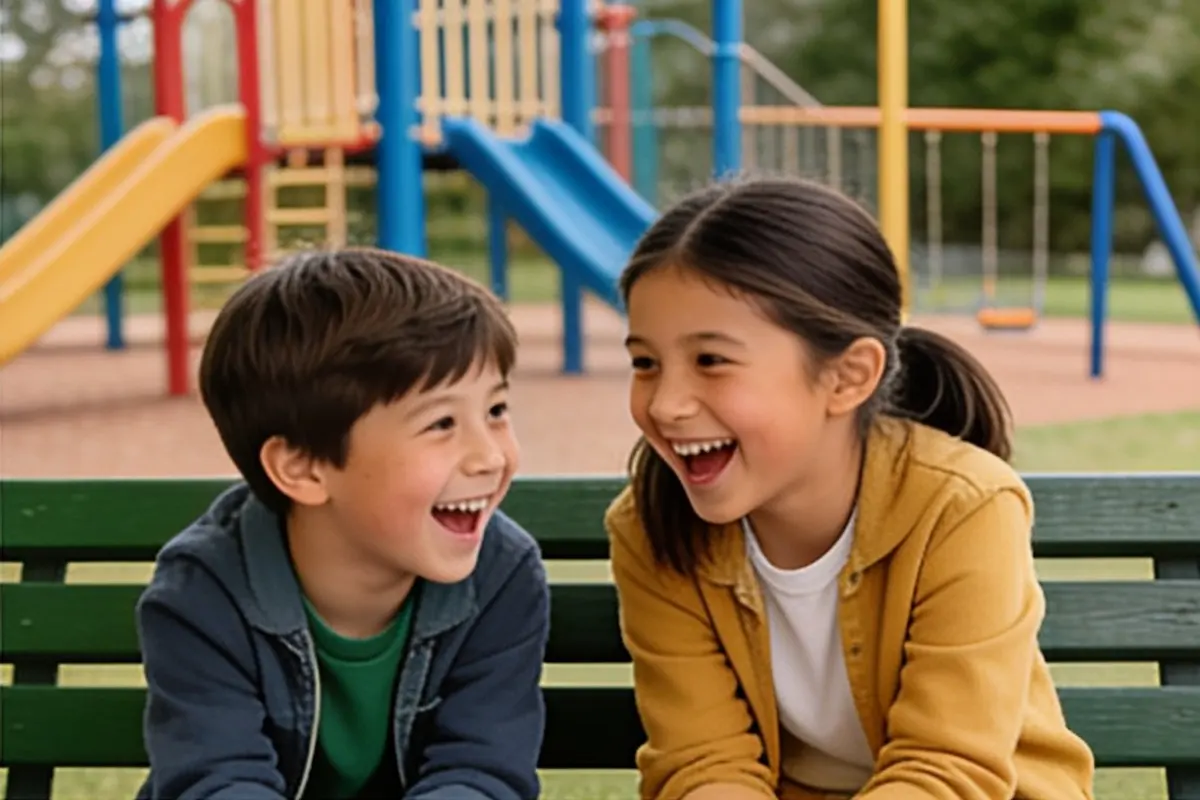
Friends matter more each year. Eight-year-olds gravitate to kids with similar interests and may have a "best" friend. They also meet families with different beliefs and practices, and the friction that brings is a normal way to practice reasoning (AAP).
Comparison, self-esteem, and body image
On average, self-esteem rises from age 4 to 11, according to a meta-analysis of 331 samples (Orth et al., 2018). But kids now compare themselves with peers, and appearance gets pulled in early. In a study of 97 girls aged 5 to 8, girls who thought their friends wanted to be thinner were less happy with their own looks a year later (Dohnt & Tiggemann, 2006).
Growth and the first signs of puberty
Kids this age grow a little over 2 inches and gain about 6.5 pounds a year on average. A slightly faster growth phase between 6 and 8 can bring a little pubic or underarm hair, mild acne, or body odor (AAP).
- Girls usually start puberty between 8 and 13. The first sign is usually breast buds, nickel-sized bumps under the nipple that may start on one side and feel tender. In about 15% of girls, pubic hair comes first. First periods usually follow 2 to 3 years after breast buds (AAP).
- Boys start about a year later. The first sign is testicular enlargement, at 11 on average but anywhere from 9 to 14 (AAP).
The AAP advises having girls checked if puberty begins before 8, and boys before 9 (AAP).
Sleep, activity, and screens
Children 6 to 12 need 9 to 12 hours of sleep a day (Paruthi et al., 2016). The AAP advises keeping screens out of bedrooms and turning them off an hour before bed (AAP). Kids 6 to 17 need 60 minutes or more of moderate to vigorous activity daily, with muscle- and bone-strengthening play at least 3 days a week (CDC). The AAP's 2026 guidance links misuse of digital media at 6 to 12 with poorer sleep, weaker attention control, and less time with family and friends (Munzer, AAP).
What the research says#
Some of this age's most-repeated advice rests on weaker evidence than its fame suggests. Here's what holds up.
1. Puberty is starting earlier for many girls. In a 1997 study of 17,077 girls examined in pediatric offices, 48.3% of Black girls and 14.7% of white girls had begun breast or pubic hair development by age 8 (Herman-Giddens et al., 1997). A cohort of more than 1,200 girls followed from 2004 to 2011 found a median age for breast development of 8.8 for Black, 9.3 for Hispanic, and 9.7 for white and Asian girls, and earlier onset with higher BMI (Biro et al., 2013). A meta-analysis of 30 studies found breast development starting almost 3 months earlier per decade from 1977 to 2013 (Eckert-Lind et al., 2020). The AAP calls the trend over the last 40 years "less clear" and still debated (AAP). Takeaway: Have the first body talks by 8, not 11.
2. Early developers face a small extra risk to mood and behavior. A meta-analysis of 101 articles found that maturing earlier than peers was linked to more emotional and behavior problems in both girls and boys, with small effects (Ullsperger & Nikolas, 2017). Takeaway: Prepare early developers ahead of time and keep an eye on how they feel, not just how they look.
3. Kids who read for fun tend to do better later. In a US cohort of more than 10,000 young adolescents, those who began reading for pleasure early in childhood scored higher on cognitive tests and had fewer mental health problems (Sun et al., 2023). A meta-analysis of 99 studies found that leisure reading and reading skill feed each other over the school years, and poor readers seemed to benefit too (Mol & Bus, 2011). Both are mostly correlational, so they can't prove reading causes the gains. Takeaway: Protect daily reading time for books your child chooses.
4. Growth mindset and praise effects are smaller than advertised. A famous 1998 study found fifth graders praised for intelligence persisted less after failure than those praised for effort (Mueller & Dweck, 1998). In studies of 624 Chinese children aged 9 to 13, a close replication found almost none of those effects (Li & Bates, 2019). Two meta-analyses found weak links between mindset and achievement, and weak effects of mindset programs (Sisk et al., 2018), and a 2023 review found the programs' overall effect was tiny and not significant after correcting for likely publication bias (Macnamara & Burgoyne, 2023). A large national experiment did find a short online lesson raised grades among lower-achieving high school students (Yeager et al., 2019). Takeaway: Praise specific effort and strategies because it's useful feedback, not a magic switch.
5. Over-the-top praise can backfire. In a set of studies, adults gave more inflated praise ("incredibly beautiful!") to children with low self-esteem, and that kind of praise made those children more likely to avoid a challenge (Brummelman et al., 2014). Takeaway: Be honest and specific, especially with a child who doubts themselves.
6. School anti-bullying programs work, modestly. A review of 100 evaluations found school-based programs reduced both bullying and being bullied, with modest effects (Gaffney et al., 2021). Takeaway: Bring the school in. Bullying isn't something your child should have to solve alone.
7. More sports hours mean more injuries. In a study of 1,190 athletes aged 7 to 18, those training in one sport intensively had more injuries. Those playing more hours a week than their age in years, or with more than twice as much organized sport as free play, had higher odds of serious overuse injuries (Jayanthi et al., 2015). The AAP warns that specializing too early can harm kids physically and emotionally (Brenner, 2016). Takeaway: Sample several sports and keep weekly hours below your child's age.
8. Chores go with competence. Among 9,971 US children, those who did chores regularly in kindergarten rated themselves more competent socially and academically in third grade and scored higher in math (White et al., 2019). In a parent survey covering 207 kids aged 5 to 13, cooking and other self-care and family-care chores predicted better working memory and self-control; pet care didn't (Tepper et al., 2022). Both are correlational. Takeaway: Real family jobs are worth the extra effort it takes to teach them.
Parenting techniques#
Start body talks early and keep them short
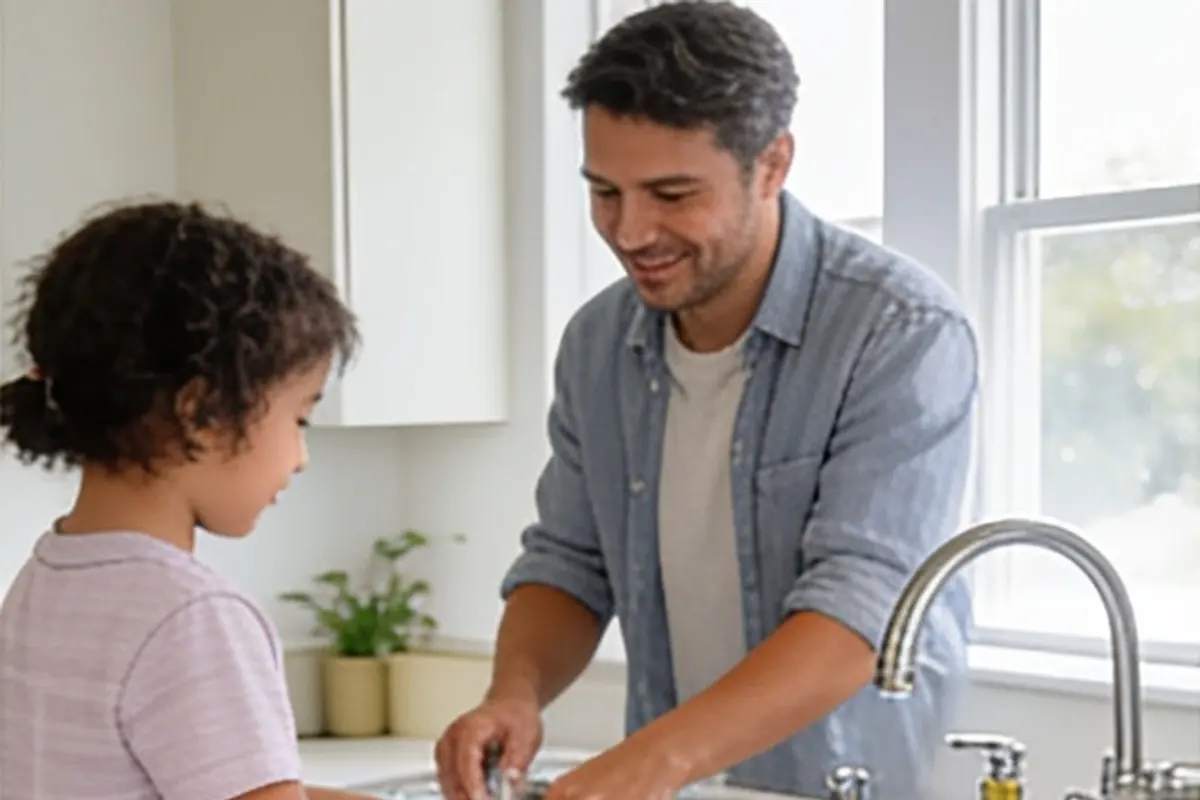
The AAP suggests many small conversations rather than one big talk, so your child can ask questions at their own pace. Breast buds are a natural opening, and it's OK if your child would rather read a good book than talk (AAP). Use the real names for body parts, and explain which secrets are fine (a surprise party) and which always get told to a trusted adult (AAP).
Script: "Bodies start changing anywhere from about 8 to 14. Some of your friends might start soon. You can ask me anything, even the awkward stuff."
Talk about what bodies do, not what they weigh
In a study of more than 2,700 teens, parents' talk about weight was linked to more dieting and binge eating, while talk about healthy eating was linked to less (Berge et al., 2013). The AAP advises focusing on healthy habits rather than weight (Golden et al., 2016). Stop weight comments at home, including from siblings, and point out strengths that have nothing to do with size (AAP).
Script: "Your legs got you all the way up that climbing wall. Bodies come in lots of shapes, and yours is strong."
Give praise that carries information
Praise your child's effort in a task, not just the outcome, and don't expect perfection (AAP). Name what they did, and skip the superlatives (Brummelman et al., 2014).
Script: "You reread the question when the answer didn't make sense. That's what good problem-solvers do."
Coach friendships and take bullying seriously
Bullying is aggressive behavior that's repeated or likely to be, with a real or perceived imbalance of power (CDC). Watch for headaches or stomachaches, avoiding school, lost belongings, sleep trouble, or a sudden loss of friends (AAP). If it's happening:
- Listen first. Ask what happened and when, without rushing to fix it.
- Practice Stop-Walk-Talk. Say "Stop" firmly, walk away calmly, tell a trusted adult.
- Build friendships through clubs, sports, and playdates; kids with friends are less vulnerable.
- Bring in the school if it doesn't stop (AAP).
If your child is the one bullying, act right away: set firm limits, model kindness, and use non-physical discipline (AAP).
Homework and big projects
In elementary school, the link between homework and achievement is much weaker than in grades 7 to 12. Cooper said his research is consistent with the "10-minute rule" (about 10 minutes a night per grade) and suggests young kids' homework be short and doable without much struggle (Duke Today, 2006). Keep a daily routine, a set workspace, and a "launch pad" for backpacks (AAP). For a long project, plan backward from the due date together (see Backward-plan a big project). If school is a steady struggle, talk to the teacher and your pediatrician, who may suggest screening for ADHD or learning differences (AAP).
Protect free time
No study sets a "right" number of activities. The AAP warns that a hurried lifestyle and heavy focus on enrichment can squeeze out free play (Ginsburg, 2007), and says a busy schedule is no reason to skip chores (AAP). For sports, plan 1 to 2 rest days a week and 2 to 3 months off a year (AAP). If sleep, free play, or family dinners keep disappearing, something can go.
First devices and online games
The AAP's 2026 guidance moves past simple time limits. It suggests shared family devices, delaying personal tablets, watching and playing alongside your child, a family media plan, and parental controls. No study points to a safe age for a first phone (Munzer, AAP). For multiplayer games, choose ones with limited player-to-player chat, turn off voice chat, play only with people your child knows, and keep devices in busy rooms (Rich, AAP). Defaults matter: the FTC alleged that Fortnite turned on voice and text chat by default while matching kids with strangers, and its maker, Epic Games, agreed in 2022 to pay $520 million over that and other practices (FTC).
Watch for trouble: anger when media is taken away, slipping grades, lost sleep or exercise, or screens becoming your child's only interest (AAP).
What to teach#
Eight-year-olds can handle real responsibility at home and with money. Start small, teach each skill, then hand it over.
Family jobs, done to a standard
The AAP lists jobs for 8- to 10-year-olds: everything from the younger list (making beds, setting and clearing the table, raking, sorting laundry, feeding pets) plus vacuuming, helping make dinner, making their own snacks, walking a pet, and putting away groceries and their own laundry (AAP). Its tips:
- Add one new task at a time, and post a checklist.
- Do jobs at the same time each day.
- Praise effort; scolding and badgering don't work.
- If jobs are skipped, use consequences such as losing a privilege (AAP).
"To a standard" means agreeing on what done looks like: show, do it together, watch, then hand it over (more in teaching kids pride in their work and how to stop nagging about chores). Keep power mowers off the list until about 12 (UPMC Children's).
Keep two kinds of work separate. Family jobs are expected and unpaid, because everyone who lives in a home helps run it. Paid extras are optional jobs beyond that, such as washing the car. The research on paying kids for chores is limited and mixed. Lab experiments find expected, tangible rewards can lower interest in an activity, more so for children than college students (Deci et al., 1999), but they measured interest in lab tasks, not willingness to do chores. For what other families do, see chores by age and what to pay.
Money: a small budget and a bigger goal
The CFPB says money habits and norms really start to take shape between 6 and 12 (CFPB). Ideas it suggests for this age: you can earn money through an allowance or jobs, you can build a habit of setting money aside, you have to choose how to spend, compare prices before you buy, and keep personal information private (CFPB). An 8-year-old can handle a simple budget: spend, save, and give, with savings aimed at something that takes weeks to reach. More in teaching kids financial skills and the cost of living at 8.
Independence in small steps
Most states have no home-alone age law (AAP); those that do set minimums from 8 to 14 (AAP). Experts typically point to 11 or 12 for a few hours, though some parents are comfortable leaving a mature 8- or 9-year-old for half an hour once in a while (AAP). Build the skills first: your phone number and address, when to call 911, and what to do if someone knocks (see Home-alone practice run).
Online rules that last
Teach a few rules early: play only with people you know in real life, never share personal information, block and report anyone who makes you uncomfortable, and tell a parent if a stranger contacts you (Rich, AAP). Make clear they won't lose their game for telling you.
Activities to try#
Pick one or two to start. Most of these build skills through repetition, so short and regular beats long and rare.
How we rate the evidence
- Strong evidence
- Randomized trials or systematic reviews show a consistent benefit.
- Moderate evidence
- Consistent observational research, or a major guideline (AAP, WHO) built on research.
- Emerging evidence
- Small or early studies. Plausible, not yet proven.
- Mixed evidence
- Studies disagree, or reviews rate the evidence as weak.
Too tired to choose? Let us pick one.
Read-for-fun time
Moderate evidence- Time
- 20 to 30 minutes a day
- Builds
- Reading stamina, vocabulary, a habit that lasts
- Get a library card in your child's name and let them pick most of the books, comics and graphic novels included.
- Set a daily reading time, like after dinner or before lights out.
- Read your own book nearby so your child sees you reading too.
- Keep reading aloud harder books than your child can read alone.
Make it work: Don't turn it into a quiz. Ask "What was the best part?" instead of checking comprehension.
Evidence: Moderate. Large studies link early reading for pleasure to better cognition and mental health later (Sun et al., 2023) and find leisure reading and reading skill build on each other (Mol & Bus, 2011); both are correlational.
Backward-plan a big project
Emerging evidence- Time
- 15 minutes to plan, then a few minutes a day
- Builds
- Planning, time management, follow-through
- Write the due date on a calendar together.
- List the steps: pick a topic, gather materials, draft, build, check.
- Work backward and put each step on its own day, with a spare day before the deadline.
- Each evening, have your child cross off the day's step.
Make it work: Hand over more of the planning each time, until your child makes the list and you just check it.
Evidence: Emerging. Executive function improves with repeated practice that gets gradually harder (Diamond & Lee, 2011), but planning homework this way hasn't been studied.
Cook one dish a week
Emerging evidence- Time
- 30 to 45 minutes, once a week
- Builds
- Following steps, math, confidence, a real contribution
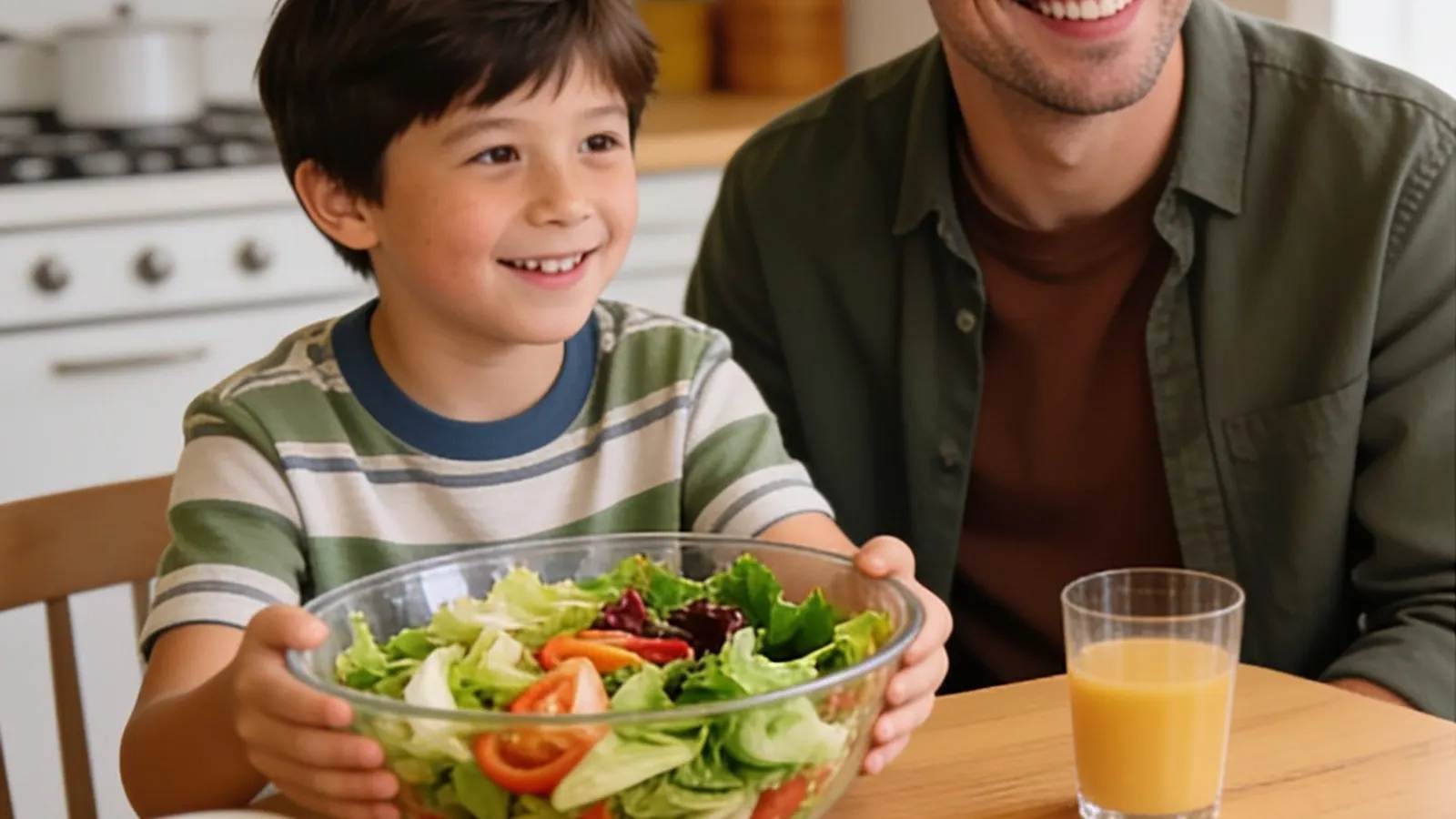
- Let your child choose one simple dish: a salad, scrambled eggs, a fruit platter.
- Read the recipe together and have them measure and mix.
- You handle the stove and sharp knives at first; they wash, stir, and plate.
- Serve it with credit: "Jordan made the salad tonight."
Evidence: Emerging. The AAP lists helping make dinner as a job for 8- to 10-year-olds (AAP) and notes cooking teaches fractions and following directions (AAP); in a parent survey, making meals was linked to better working memory and self-control (Tepper et al., 2022).
Laundry, basket to drawer
Emerging evidence- Time
- 15 to 20 minutes, once or twice a week
- Builds
- Sorting, sequencing, ownership of their own stuff
- Your child sorts dirty clothes into lights and darks.
- They load the machine while you add detergent and start it.
- They fold, match socks, and put everything away.
- Agree on "done": nothing left in the basket, drawers closed.
Make it work: Keep detergent, especially pods, locked up and out of reach of younger kids in the home (AAP).
Evidence: Emerging. The AAP says 8- to 10-year-olds can put away their own laundry (AAP), and regular chores in early school years are linked to later self-competence (White et al., 2019).
Pet care routine
Emerging evidence- Time
- 10 to 20 minutes a day
- Builds
- Responsibility, empathy, routine
- Write the pet's daily needs on a card: food, water, walk, litter or cage.
- Have your child check each off at the same time daily.
- Walk the dog together until your child can handle the leash on their own.
Make it work: The pet's welfare can't depend on an 8-year-old's memory. Check quietly, and step in if needed.
Evidence: Emerging. The AAP lists walking a pet and feeding pets among age-appropriate jobs (AAP), but one study found pet-care chores weren't linked to executive function the way cooking and self-care chores were (Tepper et al., 2022).
Spend, save, give
Emerging evidence- Time
- 10 minutes when money comes in
- Builds
- Budgeting, delayed gratification, generosity
- Set up three jars or envelopes: spend, save, give.
- Agree on a split, such as half to spend and the rest divided between save and give.
- Pick a savings goal that will take 6 to 10 weeks, and draw a progress bar.
- Let your child choose where the give money goes.
Make it work: Let them spend their spend money on things you think are silly. Small regrets now are cheap lessons.
Evidence: Emerging. The CFPB says money habits take shape between 6 and 12 and suggests teaching kids to set money aside and choose how to spend (CFPB; CFPB); this setup hasn't been tested in trials.
Price detective
Emerging evidence- Time
- 10 minutes during a regular shopping trip
- Builds
- Comparison, math, healthy skepticism
- Give your child one item to find, like cereal or pasta.
- Have them compare two or three brands by price and size.
- Ask which is the better deal and why, then buy their pick.
Make it work: Shelf tags often show the price per ounce. Show your child where to look.
Evidence: Emerging. Comparing prices and features before buying is one of the CFPB's money ideas for ages 6 to 12 (CFPB); the activity itself hasn't been studied.
Play their game with them
Moderate evidence- Time
- 20 to 30 minutes, once a week
- Builds
- Trust, online safety skills, a shared interest
- Ask your child to teach you their favorite game.
- Together, open the settings: turn off voice chat, limit chat to friends, and set spending limits.
- Ask who they play with and what they'd do if a stranger messaged them.
Make it work: Keep it fun. If every session turns into a lecture, your child will stop inviting you.
Evidence: Moderate. The AAP recommends playing alongside kids, using parental controls, and making a family media plan (Munzer, AAP; Rich, AAP), though co-play itself has little direct research.
The question box
Emerging evidence- Time
- A few minutes a week
- Builds
- Body knowledge, trust, an open door for later talks
- Put a small box and paper somewhere private.
- Tell your child they can drop in any question about bodies, growing up, or anything else, with or without their name.
- Answer each one within a few days, briefly and honestly, in the car or at bedtime.
- Leave an age-appropriate book about puberty on their shelf.
Evidence: Emerging. The AAP recommends ongoing small conversations about puberty and good books as an alternative for kids who'd rather not talk (AAP); the box itself hasn't been studied.
Stop-Walk-Talk practice
Emerging evidence- Time
- 5 to 10 minutes
- Builds
- Confidence, a plan for bullying and teasing
- Take turns playing the kid being teased and the teaser, using mild, made-up lines.
- Practice saying "Stop" or "Not cool" firmly, then walking away with head up.
- Name the adults your child would tell at school, at practice, and at home.
Make it work: Also practice being an upstander: saying "Stop," helping the targeted kid walk away, and getting an adult (AAP).
Evidence: Emerging. The AAP recommends practicing this response until it feels natural (AAP); it hasn't been tested as a standalone skill.
An outdoor hour
Moderate evidence- Time
- About 60 minutes a day, in pieces
- Builds
- Fitness, strong bones, and possibly healthier eyes
- Plan outdoor time after school before screens come out.
- Mix in running, jumping, and climbing for bones and muscles.
- On weekends, try a bike ride, a hike, or a park with friends.
Evidence: Moderate. The CDC recommends at least 60 minutes of activity daily for kids 6 to 17 (CDC). In a randomized trial of 1,903 first-graders in China, an extra 40 minutes outdoors each school day cut new nearsightedness over 3 years from 39.5% to 30.4% (He et al., 2015).
Sport sampling with rest days
Moderate evidence- Time
- One season at a time
- Builds
- Broad motor skills, fun, lower injury risk
- Let your child pick a different sport or activity each season.
- Add up weekly practice and game hours, and keep the total below their age.
- Protect 1 to 2 days a week with no organized sport.
- Ask after each season: "Was it fun? Want to keep going?"
Make it work: Kids say fun is the top reason they play (AAP). Ride home talking about what they enjoyed, not what went wrong.
Evidence: Moderate. The AAP encourages a variety of sports before puberty, weekly training hours no higher than age, and regular rest (AAP; Brenner & Watson, 2024), backed by injury research (Jayanthi et al., 2015).
Home-alone practice run
Emerging evidence- Time
- 15 to 30 minutes, a few times
- Builds
- Independence, judgment, emergency skills
- Quiz your child: your phone number, your address, and when to call 911.
- Walk through what to do if someone knocks, the smoke alarm goes off, or they get a small cut.
- Post emergency numbers and a trusted neighbor's number on the fridge.
- Start with a quick errand nearby, and have your child call or text when you leave and when you're back.
Make it work: Ask whether your child actually feels OK about it. A scared child isn't ready, whatever their age.
Evidence: Emerging. AAP experts recommend practice runs, a check-in routine, and short first stretches alone (AAP; AAP); no studies test them.
Booster fit check
Moderate evidence- Time
- 5 minutes
- Builds
- Crash protection, a habit your child can check themselves
- Have your child sit in the booster with lap and shoulder belt buckled.
- Check that the lap belt is low and snug across the upper thighs, not the belly.
- Check that the shoulder belt crosses the middle of the chest and shoulder, not the neck.
- Repeat in every car your child rides in, including grandparents' and carpools.
Evidence: Moderate. Among more than 7,000 children aged 4 to 8 in crashes, those in booster seats had 45% lower injury risk than those in seat belts alone (Arbogast et al., 2009); the AAP recommends boosters until the adult belt fits (AAP).
Common questions#
Is it normal for an 8-year-old girl to start developing breasts?
Yes, breast buds can start at 8 and still be within the normal range. The AAP says girls usually begin puberty between 8 and 13, with breast buds as the most common first sign (AAP). One side often starts first and can be tender, and a girl may worry the lump is something serious; reassure her that it's normal and ask the doctor if questions persist (AAP). Be willing to buy a first bra when she asks (AAP). Mention the changes at her checkup.
What counts as early puberty, and when should I call the doctor?
Puberty is usually called early if it begins before 8 in girls or before 9 in boys (AAP). An AAP clinical report says most children with early signs have normal variations that don't need tests or treatment, such as early pubic hair or body odor (premature adrenarche) or fat tissue that looks like breast development. Signs that need prompt evaluation include breast development that keeps progressing over 4 to 6 months, or enlarging penis and testicles, especially with a fast growth spurt (Kaplowitz & Bloch, 2016). If treatment is needed, it can slow puberty (AAP). Call your pediatrician about any signs before those ages.
How do I talk to my 8-year-old about puberty?
Start with short, calm, frequent conversations rather than one big talk. The AAP suggests sharing information in small doses so your child can ask questions at their own pace, describing changes as a normal part of growing up, and offering trusted books for kids who'd rather read than talk (AAP). Remind your child that friends will grow at different rates and eventually catch up, and respect their privacy (AAP). Your pediatrician may suggest starting these talks at the 8-year visit (AAP).
How much sleep does an 8-year-old need?
An 8-year-old needs 9 to 12 hours of sleep a day. That's the American Academy of Sleep Medicine's recommendation for ages 6 to 12 (Paruthi et al., 2016), and the AAP supports it. Keep the same wake time on weekdays and weekends, keep screens out of the bedroom, and turn them off an hour before bed (AAP). If your child needs 7 a.m. wake-ups, that means a bedtime between 7 and 10 p.m., depending on how much sleep they seem to need.
How much homework should an 8-year-old have?
A common guideline is about 10 minutes per grade, so 20 to 30 minutes a night for second and third graders. Homework researcher Harris Cooper found the link between homework and achievement is much weaker in elementary school than in grades 7 to 12, and recommends that young kids' homework be short and lead to success without much struggle (Duke Today, 2006). If homework regularly takes far longer or ends in tears, talk to the teacher.
What should I do if my 8-year-old is being bullied?
Listen first, then help your child practice responses, and bring in the school if it continues. The AAP suggests asking what happened without rushing to fix it, rehearsing Stop-Walk-Talk, encouraging friendships, and involving teachers, counselors, and your pediatrician if the bullying doesn't stop (AAP). For teasing about weight or looks, help your child stay near a friend in hallways, at lunch, and on the bus, and tell them often, "I believe in you" (AAP). School programs do reduce bullying (Gaffney et al., 2021). If your child talks about self-harm, get help right away (see Safety and when to get help).
How many activities is too many for an 8-year-old?
There's no research-backed number; watch for what gets crowded out. If sleep, unstructured play, homework, or family time keep slipping, your child is probably overscheduled. The AAP warns that heavy enrichment schedules can squeeze out free play (Ginsburg, 2007). For sports specifically, keep weekly hours below your child's age, with 1 to 2 days off a week and 2 to 3 months off a year (AAP). The AAP says nearly 70% of kids drop their favorite sport before 13 and calls that a warning sign of burnout (AAP).
Is it safe for my 8-year-old to play online games like Roblox or Minecraft?
It can be, with chat limited to people your child knows, parental controls on, and you nearby. The AAP notes that Roblox and Fortnite let parents restrict chat and messaging, Minecraft lets players block, mute, and report others, and console controls can turn off voice chat and limit spending (Rich, AAP). Check settings yourself rather than trusting defaults (FTC). Reports of online enticement of children to the national CyberTipline rose from 44,155 in 2021 to 186,819 in 2023 (NCMEC), so make sure your child knows to tell you about anyone who asks for photos or personal details.
Can my 8-year-old stay home alone?
Usually not for long; most 8-year-olds aren't ready to be home alone regularly. The AAP says experts typically point to 11 or 12 for a few hours, but some parents are comfortable leaving a mature 8- or 9-year-old for half an hour once in a while (AAP). Most states have no age law (AAP), and those that do set minimums from 8 to 14, so check your state's rules (AAP). Readiness matters more than a birthday: your child should feel comfortable, know safety rules, and be able to say what they'd do in a fire or other emergency (AAP).
Does my 8-year-old still need a booster seat?
Most do. The AAP says to use a booster until the adult seat belt fits, typically at 4 feet 9 inches tall and between 8 and 12 years old, and that most children won't fit a seat belt alone until 10 to 12 (AAP). The belt fits when the lap belt lies low across the upper thighs, the shoulder belt crosses the middle of the chest and shoulder, and your child can sit all the way back with knees bent at the seat's edge, without slouching, for the whole ride. All children younger than 13 should ride in the back seat (AAP). Boosters cut injury risk by 45% compared with seat belts alone for kids 4 to 8 (Arbogast et al., 2009).
How much allowance should an 8-year-old get?
There's no research-based amount, so pick a sum you can sustain that covers a few things your child will now pay for themselves. The point is practice with choices, saving, and comparing prices, which the CFPB lists as key money ideas for ages 6 to 12 (CFPB). Consider keeping allowance separate from everyday family jobs, which everyone does unpaid, and paying only for optional extras. Research on paying for chores is limited and mixed (Deci et al., 1999). For what US families report paying, see chores by age and what to pay.
What chores can an 8-year-old do?
An 8-year-old can vacuum, help make dinner, make their own snacks, walk a pet, and put away groceries and their own laundry, along with setting and clearing the table, making their bed, raking, and emptying wastebaskets (AAP). Add one new task at a time, show exactly what "done" looks like, and praise effort. Children who did regular chores in kindergarten rated themselves more competent by third grade, though the study shows a link, not proof (White et al., 2019). See also raising independent kids with chores.
Safety and when to get help#
For children 5 to 14, drowning is the second leading cause of accidental death after car crashes (CDC). The basics below cover this age's biggest risks.
Boosters and the back seat
Keep using a belt-positioning booster until the adult belt fits, and keep every child under 13 in the back seat (AAP). See Booster fit check.
Water and swimming
Every child should learn to get back to the surface from underwater, swim at least 25 yards, and get out of the water (AAP). Lessons don't make kids drown-proof: kids still need an adult watching closely, and life jackets in lakes, rivers, and oceans (CDC; Denny et al., 2019).
Guns at home and at friends' homes
The AAP says the safest home for a child is one without guns. If you keep a gun, store it locked and unloaded, with ammunition locked separately, and keep keys and codes away from kids. Before your child visits another home, ask: "Is there an unlocked gun in your house?" (AAP). Teaching kids not to touch guns isn't enough. In one study, 30 of 64 boys aged 8 to 12 handled a real handgun they found, and more than 90% of those who handled it or pulled the trigger had already had some gun safety instruction (Jackman et al., 2001). Locking guns, keeping them unloaded, and locking ammunition separately are each linked to fewer youth suicides and accidental shootings (Grossman et al., 2005; AAP).
Poisons and medicines
Lock up medicines, cleaning products, and laundry products in their original containers. Liquid nicotine for vapes is highly toxic, so lock up refills. For a possible poisoning, call Poison Help at 1-800-222-1222 or use webPOISONCONTROL (AAP).
Bikes, sports, and head injuries
Use a helmet that meets the CPSC standard, fits snugly without sliding over the eyes, and is replaced about every 5 years or after a serious fall or crash (AAP). Across 40 studies of more than 64,000 injured cyclists, helmets were linked to much lower odds of serious head injury (Olivier & Creighton, 2017). After a hit to the head, a child with a possible concussion should be seen by a health care provider and should never return to play the same day (CDC; CDC).
Online exploitation and body safety
If someone online asks your child for pictures or tries to meet them, report it to NCMEC's CyberTipline online or at 1-800-843-5678 (NCMEC). Most children who are sexually abused are harmed by someone they know, and many don't tell for a long time. Withdrawal, school struggles, anger, nightmares, or avoiding certain adults can be signs of stress worth asking about (AAP).
Worry, mood, and mental health
The USPSTF recommends screening for anxiety from age 8 (USPSTF, 2022), so expect questions about mood at checkups. If your child talks about hurting themselves or you're worried about their safety, call or text 988, the Suicide & Crisis Lifeline, which is free, open 24/7, and for everyone (988 Lifeline).
Call 911 if your child
- Is unconscious, not breathing, or having a seizure, including after a possible poisoning (AAP)
- After a blow to the head, can't be woken, has a seizure, has a headache that gets worse, vomits repeatedly, has slurred speech or weakness, can't recognize people or places, or has one pupil larger than the other (CDC)
- Is in immediate danger of hurting themselves
Call your pediatrician if your child
- Shows signs of puberty before 8 (girls) or 9 (boys), or early changes that keep progressing (AAP; Kaplowitz & Bloch, 2016)
- Has any bump to the head followed by symptoms like headache, dizziness, or feeling foggy (CDC)
- Has new headaches or stomachaches, dreads school, or loses friends suddenly, which can signal bullying (AAP)
- Gets angry without screens, or screen use is cutting into sleep, grades, or exercise (AAP)
- Struggles at school despite effort; ask about ADHD or learning screening (AAP)
- Worries or seems sad in ways that get in the way of daily life (USPSTF, 2022)
The 8-year checkup
Expect a full exam, possibly vision and hearing screens, questions about school, friends, activity, and safety, and a talk about puberty. Your pediatrician can give any missed vaccine doses without restarting a series (AAP). The AAP recommends a flu vaccine for all children 6 months and older, ideally by the end of October (AAP), and starting HPV vaccination between 9 and 12, so it may come up at next year's visit (AAP). US guidance has been changing: the AAP's 2026 schedule differs from the CDC's (AAP), and in March 2026 a federal judge paused the CDC's January 2026 schedule changes while the court fight continues (KFF, 2026). Ask your pediatrician which schedule they follow.
Sources#
- American Academy of Pediatrics. "Your Checkup Checklist: 8 Years Old." HealthyChildren.org, updated 2024. https://www.healthychildren.org/English/ages-stages/Your-Childs-Checkups/Pages/your-checkup-checklist-8-years-old.aspx
- American Academy of Pediatrics Section on Endocrinology. "Physical Changes During Puberty." HealthyChildren.org, updated 2014. https://www.healthychildren.org/English/ages-stages/gradeschool/puberty/Pages/Physical-Development-of-School-Age-Children.aspx
- Allen B, Miller K. "Physical Development in Girls: What to Expect During Puberty." HealthyChildren.org, updated 2019. https://www.healthychildren.org/English/ages-stages/gradeschool/puberty/Pages/Physical-Development-Girls-What-to-Expect.aspx
- American Academy of Pediatrics Section on Endocrinology. "Concerns Girls Have About Puberty." HealthyChildren.org, updated 2015. https://www.healthychildren.org/English/ages-stages/gradeschool/puberty/Pages/Concerns-Girls-Have-About-Puberty.aspx
- American Academy of Pediatrics and Pediatric Endocrine Society. "Precocious Puberty: When Puberty Starts Early." HealthyChildren.org, updated 2014. https://www.healthychildren.org/English/ages-stages/gradeschool/puberty/Pages/When-Puberty-Starts-Early.aspx
- American Academy of Pediatrics. "Healthy Sleep Habits: How Many Hours Does Your Child Need?" HealthyChildren.org, updated 2026. https://www.healthychildren.org/English/healthy-living/sleep/Pages/healthy-sleep-habits-how-many-hours-does-your-child-need.aspx
- American Academy of Pediatrics. "Car Seats: Information for Families." HealthyChildren.org, updated 2026. https://www.healthychildren.org/English/safety-prevention/on-the-go/Pages/Car-Safety-Seats-Information-for-Families.aspx
- American Academy of Pediatrics. "Is Your Child Ready to Stay Home Alone?" HealthyChildren.org, updated 2023. https://www.healthychildren.org/English/safety-prevention/at-home/Pages/is-your-child-ready-to-stay-home-alone.aspx
- American Academy of Pediatrics. "Safety at Home Alone: Information for Parents." HealthyChildren.org, updated 2015. https://www.healthychildren.org/English/safety-prevention/at-home/Pages/Safe-at-Home-Alone.aspx
- American Academy of Pediatrics. "Why Bullying Hurts All Children—and What Parents Can Do About It." HealthyChildren.org, updated 2025. https://www.healthychildren.org/English/safety-prevention/at-play/Pages/Bullying-Its-Not-Ok.aspx
- American Academy of Pediatrics. "Weight-based Teasing and Bullying in Children: How Parents Can Help." HealthyChildren.org, updated 2024. https://www.healthychildren.org/English/health-issues/conditions/obesity/pages/Teasing-and-Bullying.aspx
- American Academy of Pediatrics. "Age-Appropriate Chores for Children." HealthyChildren.org, updated 2024. https://www.healthychildren.org/English/family-life/family-dynamics/communication-discipline/Pages/Chores-and-Responsibility.aspx
- American Academy of Pediatrics. "Ten Tips for Your Child's Success in School." HealthyChildren.org, updated 2019. https://www.healthychildren.org/English/ages-stages/gradeschool/school/Pages/Ten-Tips-for-Your-Childs-Success-in-School.aspx
- Munzer T. "Helping Kids Thrive in a Digital World: AAP Policy Explained." HealthyChildren.org, updated 2026. https://www.healthychildren.org/English/family-life/Media/Pages/helping-kids-thrive-in-a-digital-world-AAP-policy-explained.aspx
- Rich M. "Multiplayer Games Online: How to Help Keep Kids Safe." HealthyChildren.org, updated 2022. https://www.healthychildren.org/English/family-life/Media/Pages/multiplayer-games-online-how-to-help-keep-kids-safe.aspx
- Gerwin R, Tomopoulos S. "Parental Controls: Setting Safe & Healthy Media Limits." HealthyChildren.org, updated 2024. https://www.healthychildren.org/English/family-life/Media/Pages/parental-controls-for-kids-setting-safe-and-healthy-media-limits.aspx
- Schaechter J. "Guns in the Home: How to Keep Kids Safe." HealthyChildren.org, updated 2026. https://www.healthychildren.org/English/safety-prevention/at-home/Pages/Handguns-in-the-Home.aspx
- American Academy of Pediatrics. "Is There an Unlocked Gun Where Your Child Plays?" HealthyChildren.org, updated 2026. https://www.healthychildren.org/English/safety-prevention/at-play/Pages/Is-There-A-Gun-Where-Your-Child-Plays-Asking-Can-Save-Lives.aspx
- American Academy of Pediatrics. "Poison Prevention & Treatment Tips for Parents." HealthyChildren.org, updated 2026. https://www.healthychildren.org/English/safety-prevention/all-around/Pages/Poison-Prevention.aspx
- McCallin T, Shenoi R. "Swim Lessons for Children: When to Start & What to Consider." HealthyChildren.org, updated 2026. https://www.healthychildren.org/English/safety-prevention/at-play/Pages/Swim-Lessons.aspx
- Nienow S. "Preventing Child Sexual Abuse: What Parents Need to Know." HealthyChildren.org, updated 2025. https://www.healthychildren.org/English/safety-prevention/at-home/Pages/Sexual-Abuse.aspx
- Brenner JS, Watson D. "Burnout in Young Athletes: How to Keep the Fun in Sports." HealthyChildren.org, updated 2024. https://www.healthychildren.org/English/health-issues/injuries-emergencies/sports-injuries/Pages/Too-Much-Too-Soon-Overtraining.aspx
- American Academy of Pediatrics. "Bike Helmets for Kids: Parent FAQs." HealthyChildren.org, updated 2024. https://www.healthychildren.org/English/safety-prevention/at-play/Pages/Bicycle-Helmets-What-Every-Parent-Should-Know.aspx
- American Academy of Pediatrics. "AAP (Influenza) Flu Prevention & Treatment Recommendations for 2026-27." HealthyChildren.org, 2026. https://www.healthychildren.org/English/news/Pages/aap-%28influenza%29-flu-prevention-recommendations-for-2026-27.aspx
- Frenck RW Jr, Perkins R. "HPV: Facts About the Virus that Causes Cancer and How to Prevent It." HealthyChildren.org, updated 2022. https://www.healthychildren.org/English/safety-prevention/immunizations/Pages/are-your-kids-protected-from-cancer-caused-by-hpv.aspx
- American Academy of Pediatrics. "AAP Releases Recommended Childhood and Adolescent Immunization Schedule for 2026." HealthyChildren.org, 2026. https://www.healthychildren.org/English/news/Pages/AAPs-recommended-childhood-and-adolescent-immunization-schedule-for-2026.aspx
- Kates J. "The Court's Opening Shot on Federal Vaccine Policy Changes." KFF, 2026. https://www.kff.org/quick-insights/the-courts-opening-shot-on-federal-vaccine-policy-changes/
- Centers for Disease Control and Prevention. "Child Activity: An Overview." 2025. https://www.cdc.gov/physical-activity-basics/guidelines/children.html
- Centers for Disease Control and Prevention. "Youth Violence Prevention: Bullying." 2024. https://www.cdc.gov/youth-violence/about/about-bullying.html
- Centers for Disease Control and Prevention. "HEADS UP: Concussion Basics." 2025. https://www.cdc.gov/heads-up/about/index.html
- Centers for Disease Control and Prevention. "HEADS UP: Signs and Symptoms of Concussion." 2025. https://www.cdc.gov/heads-up/signs-symptoms/index.html
- Centers for Disease Control and Prevention. "HEADS UP: What to Do After a Concussion." 2025. https://www.cdc.gov/heads-up/guidelines/recovery-from-concussion.html
- Centers for Disease Control and Prevention. "Drowning Facts." 2026. https://www.cdc.gov/drowning/data-research/facts/index.html
- Centers for Disease Control and Prevention. "Preventing Drowning." 2025. https://www.cdc.gov/drowning/prevention/index.html
- Consumer Financial Protection Bureau. "Money as You Grow: School-Age Children to Preteens." Updated 2026. https://www.consumerfinance.gov/consumer-tools/money-as-you-grow/school-age-children-preteens/
- Consumer Financial Protection Bureau. "Learn About the Building Blocks of Financial Capability." Updated 2024. https://www.consumerfinance.gov/consumer-tools/educator-tools/youth-financial-education/learn/
- Federal Trade Commission. "Fortnite Video Game Maker Epic Games to Pay More Than Half a Billion Dollars over FTC Allegations of Privacy Violations and Unwanted Charges." 2022. https://www.ftc.gov/news-events/news/press-releases/2022/12/fortnite-video-game-maker-epic-games-pay-more-half-billion-dollars-over-ftc-allegations
- National Center for Missing & Exploited Children. "CyberTipline." Accessed 2026. https://www.missingkids.org/gethelpnow/cybertipline
- 988 Suicide & Crisis Lifeline. "988 Lifeline." Accessed 2026. https://988lifeline.org/
- UPMC Children's Hospital of Pittsburgh. "Lawn Mower Safety." Accessed 2026. https://www.chp.edu/injury-prevention/safety/home-and-yard/lawnmowers
- Duke Today. "Duke Study: Homework Helps Students Succeed in School, As Long as There Isn't Too Much." 2006. https://today.duke.edu/2006/03/homework.html
- US Preventive Services Task Force. "Screening for Anxiety in Children and Adolescents: US Preventive Services Task Force Recommendation Statement." JAMA, 2022. https://pubmed.ncbi.nlm.nih.gov/36219403/
- Herman-Giddens ME, Slora EJ, Wasserman RC, et al. "Secondary sexual characteristics and menses in young girls seen in office practice: a study from the Pediatric Research in Office Settings network." Pediatrics, 1997. https://pubmed.ncbi.nlm.nih.gov/9093289/
- Biro FM, Greenspan LC, Galvez MP, et al. "Onset of breast development in a longitudinal cohort." Pediatrics, 2013. https://pubmed.ncbi.nlm.nih.gov/24190685/
- Eckert-Lind C, Busch AS, Petersen JH, et al. "Worldwide Secular Trends in Age at Pubertal Onset Assessed by Breast Development Among Girls: A Systematic Review and Meta-analysis." JAMA Pediatrics, 2020. https://pubmed.ncbi.nlm.nih.gov/32040143/
- Kaplowitz P, Bloch C; AAP Section on Endocrinology. "Evaluation and Referral of Children With Signs of Early Puberty." Pediatrics, 2016. https://pubmed.ncbi.nlm.nih.gov/26668298/
- Ullsperger JM, Nikolas MA. "A meta-analytic review of the association between pubertal timing and psychopathology in adolescence: Are there sex differences in risk?" Psychological Bulletin, 2017. https://pubmed.ncbi.nlm.nih.gov/28530427/
- Sun YJ, Sahakian BJ, Langley C, et al. "Early-initiated childhood reading for pleasure: associations with better cognitive performance, mental well-being and brain structure in young adolescence." Psychological Medicine, 2023. https://pubmed.ncbi.nlm.nih.gov/37376848/
- Mol SE, Bus AG. "To read or not to read: a meta-analysis of print exposure from infancy to early adulthood." Psychological Bulletin, 2011. https://pubmed.ncbi.nlm.nih.gov/21219054/
- Mueller CM, Dweck CS. "Praise for intelligence can undermine children's motivation and performance." Journal of Personality and Social Psychology, 1998. https://pubmed.ncbi.nlm.nih.gov/9686450/
- Li Y, Bates TC. "You can't change your basic ability, but you work at things, and that's how we get hard things done: Testing the role of growth mindset on response to setbacks, educational attainment, and cognitive ability." Journal of Experimental Psychology: General, 2019. https://pubmed.ncbi.nlm.nih.gov/31464486/
- Sisk VF, Burgoyne AP, Sun J, et al. "To What Extent and Under Which Circumstances Are Growth Mind-Sets Important to Academic Achievement? Two Meta-Analyses." Psychological Science, 2018. https://pubmed.ncbi.nlm.nih.gov/29505339/
- Macnamara BN, Burgoyne AP. "Do growth mindset interventions impact students' academic achievement? A systematic review and meta-analysis with recommendations for best practices." Psychological Bulletin, 2023. https://pubmed.ncbi.nlm.nih.gov/36326645/
- Yeager DS, Hanselman P, Walton GM, et al. "A national experiment reveals where a growth mindset improves achievement." Nature, 2019. https://pubmed.ncbi.nlm.nih.gov/31391586/
- Brummelman E, Thomaes S, Orobio de Castro B, et al. "'That's not just beautiful—that's incredibly beautiful!': the adverse impact of inflated praise on children with low self-esteem." Psychological Science, 2014. https://pubmed.ncbi.nlm.nih.gov/24434235/
- Orth U, Erol RY, Luciano EC. "Development of self-esteem from age 4 to 94 years: A meta-analysis of longitudinal studies." Psychological Bulletin, 2018. https://pubmed.ncbi.nlm.nih.gov/30010349/
- Dohnt H, Tiggemann M. "The contribution of peer and media influences to the development of body satisfaction and self-esteem in young girls: a prospective study." Developmental Psychology, 2006. https://pubmed.ncbi.nlm.nih.gov/16953697/
- Berge JM, Maclehose R, Loth KA, et al. "Parent conversations about healthful eating and weight: associations with adolescent disordered eating behaviors." JAMA Pediatrics, 2013. https://pubmed.ncbi.nlm.nih.gov/23797808/
- Golden NH, Schneider M, Wood C; AAP Committee on Nutrition, Committee on Adolescence, Section on Obesity. "Preventing Obesity and Eating Disorders in Adolescents." Pediatrics, 2016. https://pubmed.ncbi.nlm.nih.gov/27550979/
- Gaffney H, Ttofi MM, Farrington DP. "Effectiveness of school-based programs to reduce bullying perpetration and victimization: An updated systematic review and meta-analysis." Campbell Systematic Reviews, 2021. https://pubmed.ncbi.nlm.nih.gov/37131921/
- Jayanthi NA, LaBella CR, Fischer D, et al. "Sports-specialized intensive training and the risk of injury in young athletes: a clinical case-control study." American Journal of Sports Medicine, 2015. https://pubmed.ncbi.nlm.nih.gov/25646361/
- Brenner JS; AAP Council on Sports Medicine and Fitness. "Sports Specialization and Intensive Training in Young Athletes." Pediatrics, 2016. https://pubmed.ncbi.nlm.nih.gov/27573090/
- Brenner JS, Watson A; AAP Council on Sports Medicine and Fitness. "Overuse Injuries, Overtraining, and Burnout in Young Athletes." Pediatrics, 2024. https://pubmed.ncbi.nlm.nih.gov/38247370/
- White EM, DeBoer MD, Scharf RJ. "Associations Between Household Chores and Childhood Self-Competency." Journal of Developmental and Behavioral Pediatrics, 2019. https://pubmed.ncbi.nlm.nih.gov/30507727/
- Tepper DL, Howell TJ, Bennett PC. "Executive functions and household chores: Does engagement in chores predict children's cognition?" Australian Occupational Therapy Journal, 2022. https://pubmed.ncbi.nlm.nih.gov/35640882/
- Deci EL, Koestner R, Ryan RM. "A meta-analytic review of experiments examining the effects of extrinsic rewards on intrinsic motivation." Psychological Bulletin, 1999. https://pubmed.ncbi.nlm.nih.gov/10589297/
- Paruthi S, Brooks LJ, D'Ambrosio C, et al. "Recommended Amount of Sleep for Pediatric Populations: A Consensus Statement of the American Academy of Sleep Medicine." Journal of Clinical Sleep Medicine, 2016. https://pubmed.ncbi.nlm.nih.gov/27250809/
- Diamond A, Lee K. "Interventions shown to aid executive function development in children 4 to 12 years old." Science, 2011. https://pubmed.ncbi.nlm.nih.gov/21852486/
- Ginsburg KR; AAP Committee on Communications; AAP Committee on Psychosocial Aspects of Child and Family Health. "The importance of play in promoting healthy child development and maintaining strong parent-child bonds." Pediatrics, 2007. https://pubmed.ncbi.nlm.nih.gov/17200287/
- He M, Xiang F, Zeng Y, et al. "Effect of Time Spent Outdoors at School on the Development of Myopia Among Children in China: A Randomized Clinical Trial." JAMA, 2015. https://pubmed.ncbi.nlm.nih.gov/26372583/
- Arbogast KB, Jermakian JS, Kallan MJ, Durbin DR. "Effectiveness of belt positioning booster seats: an updated assessment." Pediatrics, 2009. https://pubmed.ncbi.nlm.nih.gov/19841126/
- Denny SA, Quan L, Gilchrist J, et al.; AAP Council on Injury, Violence, and Poison Prevention. "Prevention of Drowning." Pediatrics, 2019. https://pubmed.ncbi.nlm.nih.gov/30877146/
- Jackman GA, Farah MM, Kellermann AL, Simon HK. "Seeing is believing: what do boys do when they find a real gun?" Pediatrics, 2001. https://pubmed.ncbi.nlm.nih.gov/11389238/
- Grossman DC, Mueller BA, Riedy C, et al. "Gun storage practices and risk of youth suicide and unintentional firearm injuries." JAMA, 2005. https://pubmed.ncbi.nlm.nih.gov/15701912/
- Olivier J, Creighton P. "Bicycle injuries and helmet use: a systematic review and meta-analysis." International Journal of Epidemiology, 2017. https://pubmed.ncbi.nlm.nih.gov/27450862/
This guide is general education that summarizes published research and guidance from groups like the American Academy of Pediatrics, the CDC, and the WHO. It isn’t medical advice, and every child develops on their own timeline. Your pediatrician knows your child; if something feels wrong, call them. In an emergency, call 911.
Raising capable kids with Chorevia
When your kids are ready for responsibility, Chorevia turns chores into a family economy, with points, proof, a reward ladder you design, and monthly costs kids work off. Adults always make the call. Free for families.
Create your household