Day 246 of 280 · 35 weeks + 1 day
Perineal massage
Last reviewed · 3 min read · 8 sources · Plain-text version
Thirty-five weeks and one day. A Cochrane review found that massage once or twice a week from 35 weeks modestly reduced stitches after a first vaginal birth.
- Size this week
- about the size of a honeydew melon
- Length this week
- around 46.2 cm from head to heel
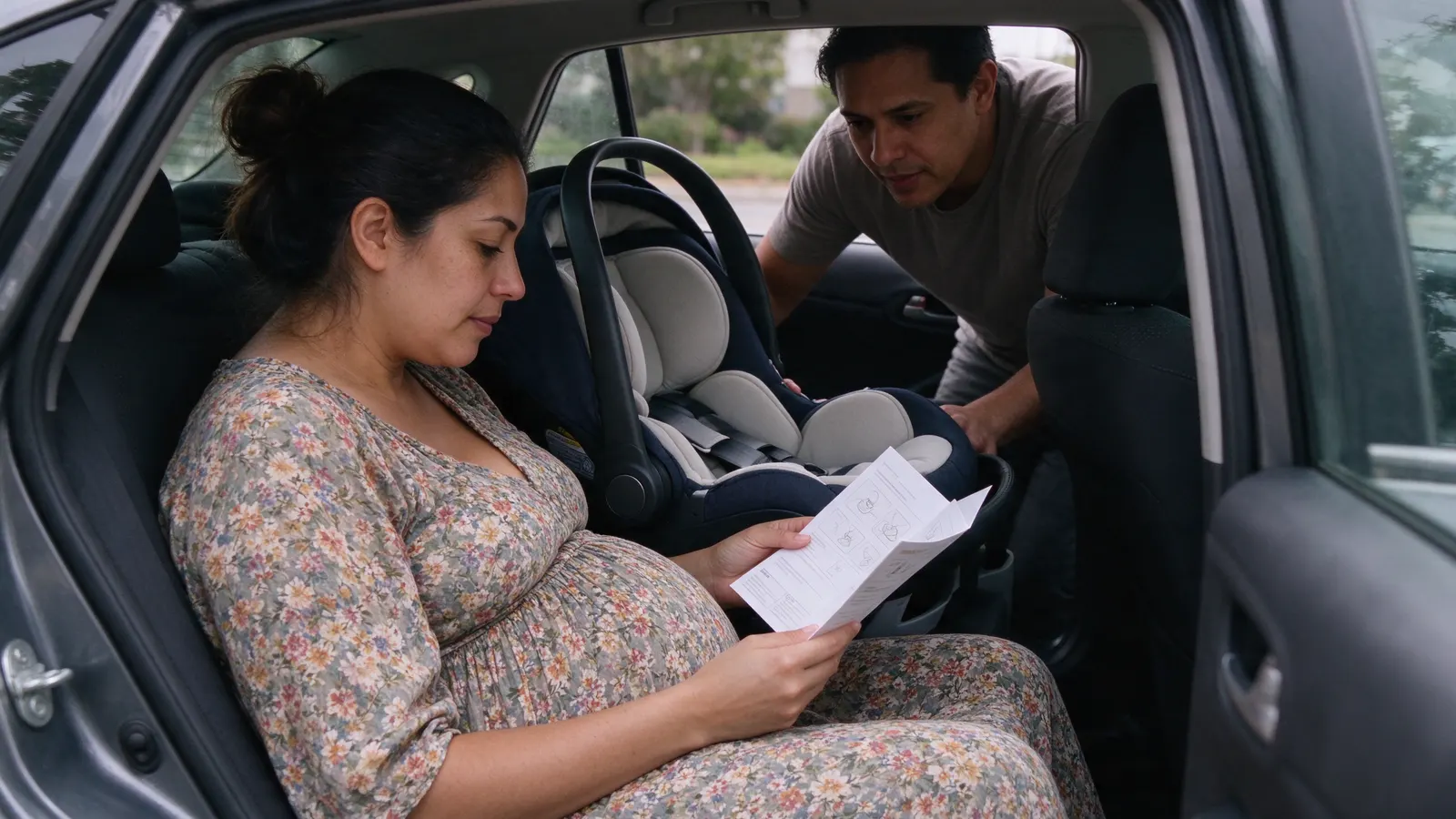
Thirty-five weeks and one day. Today's note is about something few people mention out loud: preparing the perineum, the skin and muscle between the vagina and the anus, for a vaginal birth. The evidence is real, the effect is modest, and it's entirely your choice.
Your baby

Your body
A Cochrane review pooled four good-quality trials with 2,497 women (Cochrane). Massage by the woman or her partner, as little as once or twice a week from 35 weeks, reduced tearing or cuts that needed stitches (RR 0.91) and made an episiotomy less likely (RR 0.84) (Cochrane). In plain terms, about 15 women would need to do it for one to avoid stitches. Both benefits showed up only for women who hadn't had a vaginal birth before (Cochrane).
What it didn't change matters too. There was no difference in tears by degree, in instrumental births, in sexual satisfaction, or in urinary, faecal, or wind incontinence (Cochrane). For women who had given birth vaginally before, one trial of 376 women found less perineal pain three months after the birth (Cochrane).
Try today
The perineal massage start
Time: 10 minutes to plan
Ask your provider, midwife, or class whether it suits you and how to do it. This note doesn't teach the technique; they should.
Decide who does it: you, or your partner. The trials included both (Cochrane).
Pick two evenings a week and put them in the calendar. Once or twice a week was enough in the review (Cochrane).
If it's uncomfortable or worrying in any way, stop and raise it at your next visit.
Make it work:Skipping it is a fine choice. The effect is modest, and it's one option among many, not a test you can fail.
Watch for
Normal
walking feeling harder, and needing to pee more, once the baby's head moves down into your pelvis (NHS).
Call your provider right away
for constant, severe belly pain, or pain with bleeding or fever (MedlinePlus).
Normal
a few tightenings through the day.
Call your provider or go to the hospital
for contractions every 10 minutes or more often, pelvic pressure, a low dull backache, or period-like cramps; this is still the window for preterm labor (NICHD).
Normal
tiredness, and needing to rest more often through the day (NHS).
Call your provider
right away for dizziness or fainting, which is on the CDC's list of urgent warning signs (CDC).
For you
If you're the partner: the review counted massage by partners as well as by women themselves (Cochrane). That makes it an offer, not an assignment. Ask once, follow her lead, learn how from her provider or class, and stop the moment she says so.
And if this whole topic makes you wince, you're not alone. Reading about it is enough for today.
Sources
- NHS. "Week 35." Week-by-week guide to pregnancy, Best Start in Life. https://www.nhs.uk/best-start-in-life/pregnancy/week-by-week-guide-to-pregnancy/3rd-trimester/week-35/
- Office on Women's Health. "Stages of pregnancy." U.S. Department of Health and Human Services. https://womenshealth.gov/pregnancy/youre-pregnant-now-what/stages-pregnancy
- Beckmann MM, Stock OM. "Antenatal perineal massage for reducing perineal trauma." Cochrane, 2022. https://www.cochrane.org/evidence/CD005123_antenatal-perineal-massage-reducing-perineal-trauma
- NHS. "Week 34." Week-by-week guide to pregnancy, Best Start in Life. https://www.nhs.uk/best-start-in-life/pregnancy/week-by-week-guide-to-pregnancy/3rd-trimester/week-34/
- MedlinePlus. "Aches and pains during pregnancy." National Library of Medicine. https://medlineplus.gov/ency/patientinstructions/000580.htm
- Eunice Kennedy Shriver National Institute of Child Health and Human Development. "What are the symptoms of preterm labor?" NIH, 2023. https://www.nichd.nih.gov/health/topics/preterm/conditioninfo/symptoms
- NHS. "Week 32." Week-by-week guide to pregnancy, Best Start in Life. https://www.nhs.uk/best-start-in-life/pregnancy/week-by-week-guide-to-pregnancy/3rd-trimester/week-32/
- Centers for Disease Control and Prevention. "Urgent Maternal Warning Signs and Symptoms." HEAR HER campaign, 2024. https://www.cdc.gov/hearher/maternal-warning-signs/index.html
This guide is general education that summarizes published research and guidance from groups like the American Academy of Pediatrics, the CDC, and the WHO. It isn’t medical advice, and every child develops on their own timeline. Your pediatrician knows your child; if something feels wrong, call them. In an emergency, call 911.
Get each day’s note the morning it applies
Add your due date to a free Chorevia household, and every morning until the birth the day's note arrives in the app and by email: what's forming, what your body is doing, one thing to try, what to watch for, and a word for you.
Create your household