Day 247 of 280 · 35 weeks + 2 days
The first feeds
Last reviewed · 3 min read · 9 sources · Plain-text version
Thirty-five weeks and two days. Your body is already making early milk. Tonight you read the newborn guide's feeding section together, before anyone is tired.
- Size this week
- about the size of a honeydew melon
- Length this week
- around 46.2 cm from head to heel
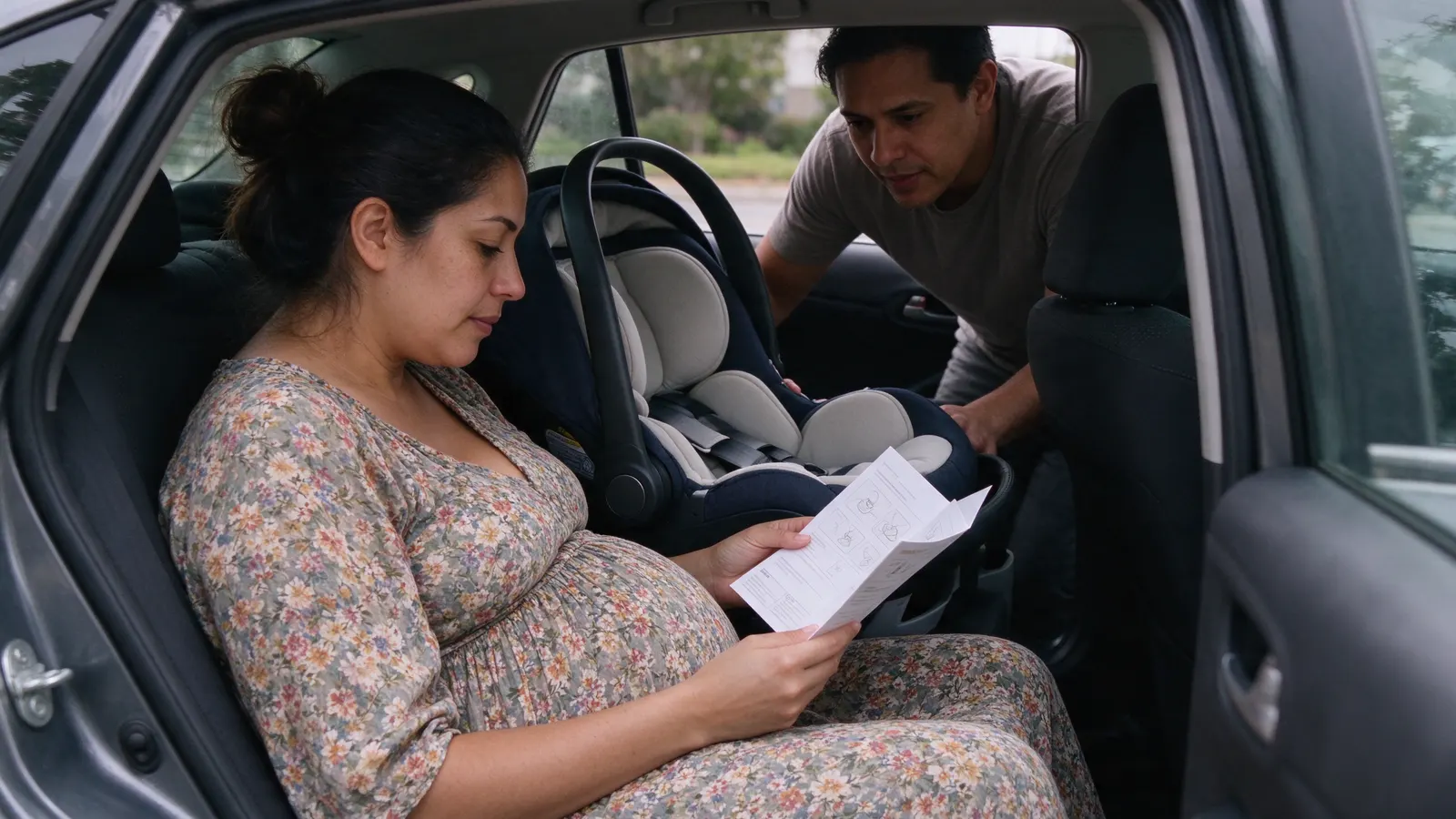
Thirty-five weeks and two days. The first feeds happen in a blur of tiredness and visitors. Reading about them now, together, means you'll both recognize what you're seeing when it starts.
Your baby

Your body
Yellow stains in your bra are most likely colostrum, an early milk rich in antibodies; it can start weeks or even months before the birth (NHS). The NHS says your milk typically comes in 3 to 5 days after birth (NHS); the Office on Women's Health says three to six days, and that breasts may leak and feel full even if you're not breastfeeding (OWH).
If you plan to breastfeed, the AAP suggests checking now whether your insurance covers an electric breast pump ordered in advance; WIC usually supplies one after birth (AAP). If you plan to use formula, or a mix, the same guide applies to you.
Try today
The first-feeds read
Time: 15 minutes · Feed on cues, however you feed in the guide
Sit down together and read the newborn guide's feeding section out loud, one paragraph each.
Each of you names one thing you didn't know and one thing you're unsure about.
Read the answer on how to tell your baby is eating enough: by 5 to 7 days old, a breastfed baby should have 6 or more wet diapers a day (AAP).
Write your two "unsure" questions down for the pediatrician or a feeding helper.
Make it work:Decide now who handles what isn't feeding: burping, diapers, water and snacks for whoever is feeding. That's the partner's half.
Watch for
Normal
tiredness; the NHS calls fatigue common in these weeks and says to rest throughout the day (NHS).
Call your provider
for overwhelming tiredness, one of the CDC's urgent warning signs (CDC).
Normal
indigestion, heartburn, and bloating (NHS).
Call your provider
for severe nausea and throwing up, especially if you can't drink for more than 8 hours or eat for more than 24 hours (CDC).
Normal
nerves about feeding and the birth.
For you
How you feed your baby is your decision, and it can change. The newborn guide's line is "however you feed": watch your baby's cues, let them set the pace, and ask early if feeding hurts or worries you. If the thought of feeding is already making you anxious, say so before the birth; the NHS's list for this week includes talking to your doctor or midwife if you feel anxious or low (NHS).
If you're the partner: the first feeds aren't a spectator event. You're the one who fetches, burps, changes, and keeps visitors to a sensible length.
Sources
- NHS. "Week 35." Week-by-week guide to pregnancy, Best Start in Life. https://www.nhs.uk/best-start-in-life/pregnancy/week-by-week-guide-to-pregnancy/3rd-trimester/week-35/
- NHS. "Week 36." Week-by-week guide to pregnancy, Best Start in Life. https://www.nhs.uk/best-start-in-life/pregnancy/week-by-week-guide-to-pregnancy/3rd-trimester/week-36/
- Office on Women's Health. "Recovering from birth." U.S. Department of Health and Human Services. https://womenshealth.gov/pregnancy/childbirth-and-beyond/recovering-birth
- American Academy of Pediatrics. "Last Minute Activities Before Delivery." HealthyChildren.org. https://www.healthychildren.org/English/ages-stages/prenatal/Pages/Last-Minute-Activities.aspx
- American Academy of Pediatrics. "How to Tell if Baby is Getting Enough Milk." HealthyChildren.org. https://www.healthychildren.org/English/ages-stages/baby/breastfeeding/Pages/How-to-Tell-if-Baby-is-Getting-Enough-Milk.aspx
- NHS. "Week 32." Week-by-week guide to pregnancy, Best Start in Life. https://www.nhs.uk/best-start-in-life/pregnancy/week-by-week-guide-to-pregnancy/3rd-trimester/week-32/
- Centers for Disease Control and Prevention. "Urgent Maternal Warning Signs and Symptoms." HEAR HER campaign, 2024. https://www.cdc.gov/hearher/maternal-warning-signs/index.html
- American Academy of Pediatrics. "Depression and Anxiety During Pregnancy and After Birth: FAQs." HealthyChildren.org, 2019. https://www.healthychildren.org/English/ages-stages/prenatal/Pages/Depression-and-Anxiety-During-Pregnancy-and-After-Birth-FAQs.aspx
- Centers for Disease Control and Prevention. "Symptoms of Depression Among Women." Reproductive Health, 2024. https://www.cdc.gov/reproductive-health/depression/index.html
This guide is general education that summarizes published research and guidance from groups like the American Academy of Pediatrics, the CDC, and the WHO. It isn’t medical advice, and every child develops on their own timeline. Your pediatrician knows your child; if something feels wrong, call them. In an emergency, call 911.
Get each day’s note the morning it applies
Add your due date to a free Chorevia household, and every morning until the birth the day's note arrives in the app and by email: what's forming, what your body is doing, one thing to try, what to watch for, and a word for you.
Create your household