Day 131 of 280 · 18 weeks + 5 days
One leg, not two
Last reviewed · 3 min read · 7 sources · Plain-text version
Two puffy ankles at the end of the day is common. One swollen, painful calf is a phone call today. Learn the difference once and keep it.
- Size this week
- about the size of a bell pepper
- Length this week
- around 14.2 cm from head to bottom
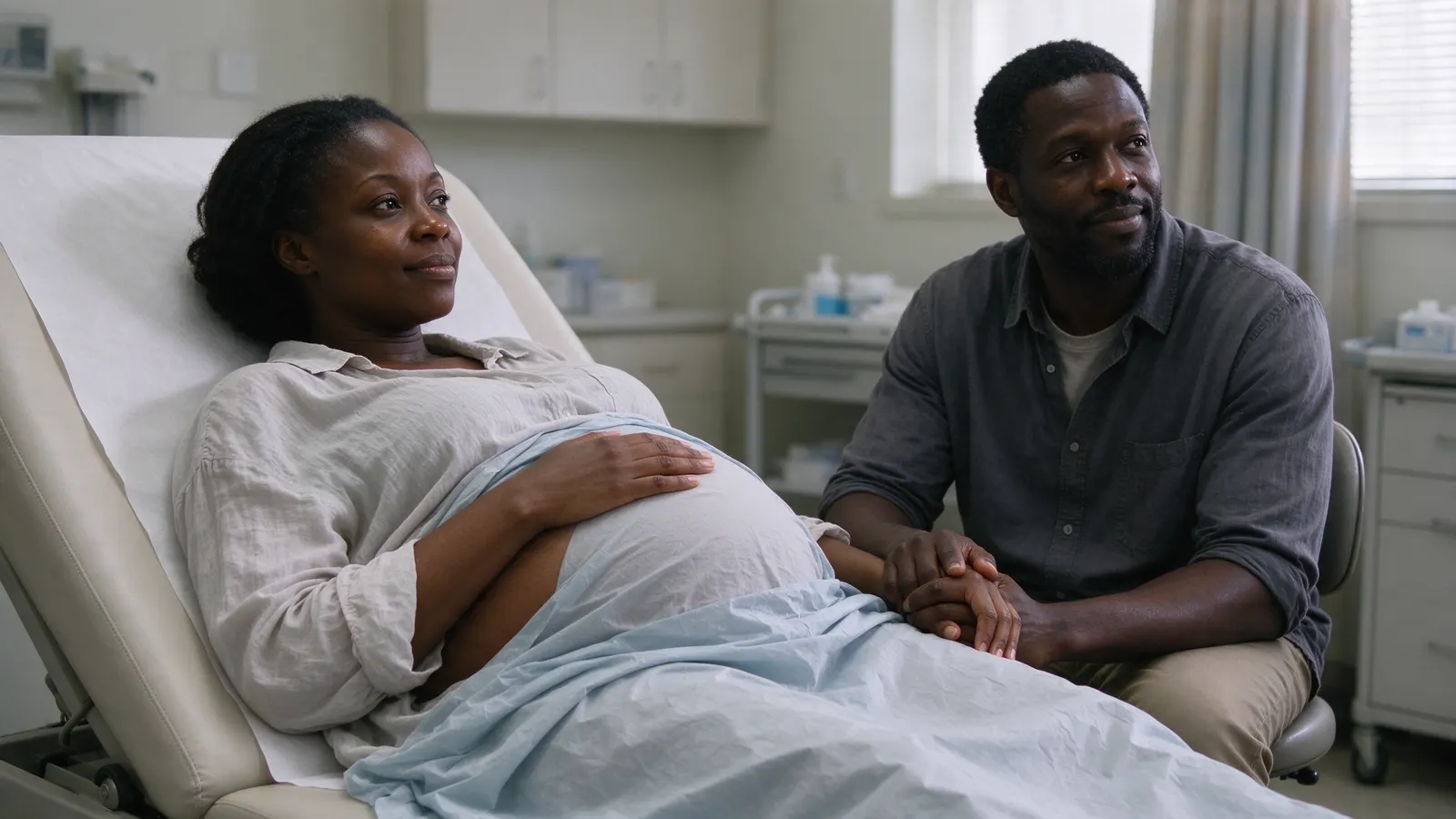
Eighteen weeks and five days. Today's note is short and specific, because the thing it teaches is easy to confuse with something ordinary.
Your baby

Your body
Two things from the NHS's week 18 page. Your breasts may have grown a cup size by now, especially in a first pregnancy (NHS). And your blood pressure is probably lower than it was, so standing up quickly can make you dizzy (NHS).
Now the thing to learn. MedlinePlus: "Pain and swelling in one leg but not the other can signal a blood clot," and you should let your provider know right away (MedlinePlus). The CDC puts "Severe swelling, redness, or pain of your leg or arm" on its list of urgent maternal warning signs, at any time in pregnancy and up to 6 weeks after birth (CDC).
Try today
The one-leg rule
Time: 3 minutes
Say it out loud once: one leg, not two. One calf that is swollen, red, warm, or painful, when the other isn't, is a call today (MedlinePlus).
Write it on the call-line card on the fridge, under whatever's already there: "One leg swollen or painful: call right away" (CDC).
Tell your partner the rule, so that if you say "my calf's sore" one evening, they say "one or both?"
Tonight, when you take your shoes off, look at both ankles. That's your baseline for what "both" looks like.
Make it work:This is a rule, not a worry. You learn it once, the way you learned where the fire exit is, and then you stop thinking about it.
Watch for
Normal
both ankles puffy at the end of a long day; swelling is on the NHS's list of ordinary symptoms around now (NHS).
Call your provider right away
for pain and swelling in one leg but not the other (MedlinePlus).
Normal
feeling your heart thump after the stairs.
Call 911
for chest pain or a fast-beating heart, or trouble breathing; all three are urgent warning signs (CDC), and MedlinePlus says severe chest pain or shortness of breath that does not go away means 911 or the emergency room (MedlinePlus).
Normal
more vaginal discharge than before pregnancy.
Call your provider
if it has a foul odor, a greenish colour, itching, or pain; infections matter because they may cause preterm labor (MedlinePlus).
For you
Two swollen ankles at the end of the day are a different, common thing. The NHS's later pages describe swelling in the ankles, feet and face, especially in hot weather, as probably water retention, though it should be checked for pre-eclampsia (NHS). For the ordinary kind, the OWH suggests eight to 10 glasses of fluids a day, less caffeine and salt, resting with your feet raised, and asking about support hose (OWH).
If you're the partner: you are the "one or both?" person now. It's a two-word job, and it matters.
Sources
- NHS. "Week 18." Week-by-week guide to pregnancy, Best Start in Life. https://www.nhs.uk/best-start-in-life/pregnancy/week-by-week-guide-to-pregnancy/2nd-trimester/week-18/
- MedlinePlus. "Aches and pains during pregnancy." National Library of Medicine. https://medlineplus.gov/ency/patientinstructions/000580.htm
- Centers for Disease Control and Prevention. "Urgent Maternal Warning Signs and Symptoms." HEAR HER campaign, 2024. https://www.cdc.gov/hearher/maternal-warning-signs/index.html
- NHS. "Week 19." Week-by-week guide to pregnancy, Best Start in Life. https://www.nhs.uk/best-start-in-life/pregnancy/week-by-week-guide-to-pregnancy/2nd-trimester/week-19/
- MedlinePlus. "Common symptoms during pregnancy." National Library of Medicine. https://medlineplus.gov/ency/patientinstructions/000583.htm
- NHS. "Week 28." Week-by-week guide to pregnancy, Best Start in Life. https://www.nhs.uk/best-start-in-life/pregnancy/week-by-week-guide-to-pregnancy/3rd-trimester/week-28/
- Office on Women's Health. "Body changes and discomforts." U.S. Department of Health and Human Services. https://womenshealth.gov/pregnancy/youre-pregnant-now-what/body-changes-and-discomforts
This guide is general education that summarizes published research and guidance from groups like the American Academy of Pediatrics, the CDC, and the WHO. It isn’t medical advice, and every child develops on their own timeline. Your pediatrician knows your child; if something feels wrong, call them. In an emergency, call 911.
Get each day’s note the morning it applies
Add your due date to a free Chorevia household, and every morning until the birth the day's note arrives in the app and by email: what's forming, what your body is doing, one thing to try, what to watch for, and a word for you.
Create your household