Day 133 of 280 · 19 weeks
Looser joints
Last reviewed · 3 min read · 10 sources · Plain-text version
Nineteen weeks. A hormone called relaxin is loosening your ligaments, so running may start to hurt. Today you swap one run for a swim or a brisk walk.
- Size this week
- about the size of a beef tomato
- Length this week
- around 15.3 cm from head to bottom
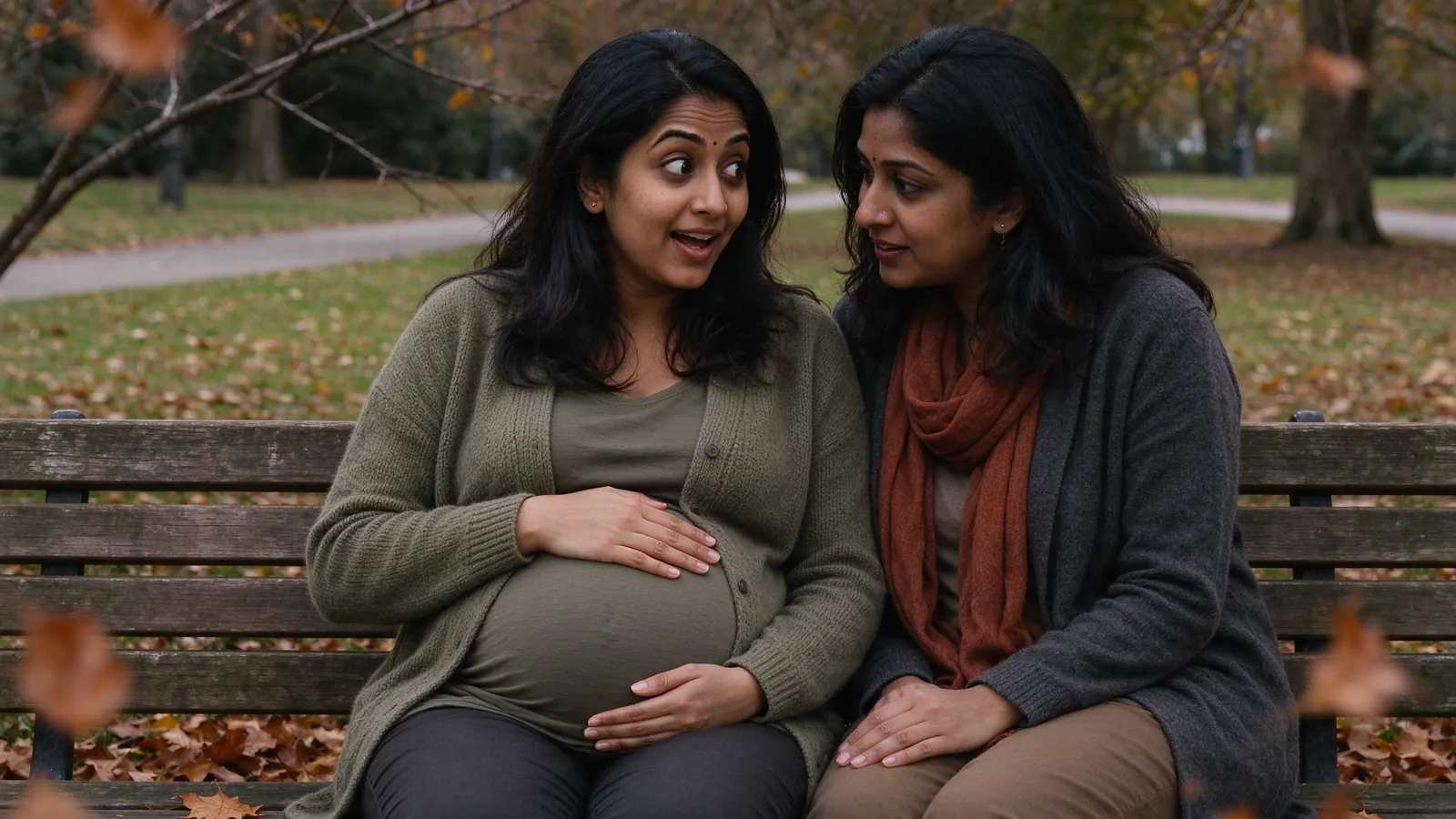
Nineteen weeks. If your knees or lower back have started complaining on a run, there's a reason, and it isn't that you've lost your fitness. Today is about keeping moving while the rules change underneath you.
Your baby

Your body
A hormone called relaxin is loosening your ligaments, so your back, knees and ankles have less support than they used to, and running may become uncomfortable (NHS). That's the change to plan around. The goal itself doesn't change: the NHS suggests 150 minutes of exercise a week, starting with 10 minutes a day if you're not there yet (NHS), and the CDC says moderate activity such as brisk walking can be split into smaller chunks across the week (CDC).
What changes is the how. Walking and swimming are generally safe, effective exercises in pregnancy (MedlinePlus). If you were already active, the AAP's advice is to keep your current level, slow down when you need to, and avoid jumping or jarring movements (AAP). The Office on Women's Health adds two rules worth knowing now: don't exercise lying on your back after the first trimester, and don't scuba dive (OWH).
Try today
The exercise swap
Time: 30 minutes, once this week
Look at your week and find the one run, class, or workout that has started to hurt or jar.
Swap it for a swim or a brisk walk of the same length; both are generally safe in pregnancy (MedlinePlus).
Keep the effort moderate, the kind the CDC means by brisk walking, not a race (CDC).
Afterwards, notice how your knees, ankles and back feel compared with the run, and decide whether to swap a second one.
Watch for
Normal
headaches, which are on this week's list (NHS).
Call your provider
for a headache that won't go away or gets worse over time, or one that comes with blurred vision or dizziness (CDC).
Normal
feeling hot, especially after exercise (NHS).
Seek care immediately
for symptoms of heat-related illness; pregnancy raises the risk of dehydration, which makes it harder to cool down (CDC).
Normal
leaking a little urine when you cough or sneeze; Kegel exercises help (MedlinePlus).
Call your provider
as soon as you can for fluid leaking from the vagina (OWH).
For you
If you love running, giving it up, even for a few months, can sting more than people expect. It isn't vanity. For a lot of people the run is where the thinking happens. Keep the time and the place if you can: the same route at a walk, the same early hour in a pool.
If you were never much for exercise, this isn't the week to start training. The AAP's suggestion for the newly active is moderate walking, swimming, prenatal yoga or Pilates, beginning with five to ten minutes a day (AAP).
If you're the partner: go with her. Adults need at least 150 to 300 minutes of moderate activity a week, brisk walking included (ODPHP), so the walk counts for you too.
Sources
- NHS. "Week 19." Week-by-week guide to pregnancy, Best Start in Life. https://www.nhs.uk/best-start-in-life/pregnancy/week-by-week-guide-to-pregnancy/2nd-trimester/week-19/
- Centers for Disease Control and Prevention. "Weight Gain During Pregnancy." Maternal and Infant Health. https://www.cdc.gov/maternal-infant-health/pregnancy-weight/index.html
- MedlinePlus. "Managing your weight gain during pregnancy." National Library of Medicine. https://medlineplus.gov/ency/patientinstructions/000603.htm
- American Academy of Pediatrics. "Nutrition and Exercise During Pregnancy." HealthyChildren.org. https://www.healthychildren.org/English/ages-stages/prenatal/Pages/Nutrition-and-Exercise-During-Pregnancy.aspx
- Office on Women's Health. "Staying healthy and safe." U.S. Department of Health and Human Services. https://womenshealth.gov/pregnancy/youre-pregnant-now-what/staying-healthy-and-safe
- Centers for Disease Control and Prevention. "Heat and Pregnancy." Heat and Health, 2024. https://www.cdc.gov/heat-health/risk-factors/heat-and-pregnancy.html
- Centers for Disease Control and Prevention. "Urgent Maternal Warning Signs and Symptoms." HEAR HER campaign, 2024. https://www.cdc.gov/hearher/maternal-warning-signs/index.html
- MedlinePlus. "Common symptoms during pregnancy." National Library of Medicine. https://medlineplus.gov/ency/patientinstructions/000583.htm
- Office on Women's Health. "Pregnancy complications." U.S. Department of Health and Human Services. https://womenshealth.gov/pregnancy/youre-pregnant-now-what/pregnancy-complications
- Office of Disease Prevention and Health Promotion. "Top 10 Things to Know About the Second Edition of the Physical Activity Guidelines for Americans." Health.gov. https://odphp.health.gov/our-work/nutrition-physical-activity/physical-activity-guidelines/current-guidelines/top-10-things-know
This guide is general education that summarizes published research and guidance from groups like the American Academy of Pediatrics, the CDC, and the WHO. It isn’t medical advice, and every child develops on their own timeline. Your pediatrician knows your child; if something feels wrong, call them. In an emergency, call 911.
Get each day’s note the morning it applies
Add your due date to a free Chorevia household, and every morning until the birth the day's note arrives in the app and by email: what's forming, what your body is doing, one thing to try, what to watch for, and a word for you.
Create your household