Day 114 of 280 · 16 weeks + 2 days
The blood-pressure number
Last reviewed · 3 min read · 7 sources · Plain-text version
Every visit from here checks your blood pressure and your urine. Today you learn what the two numbers mean, and write yours down.
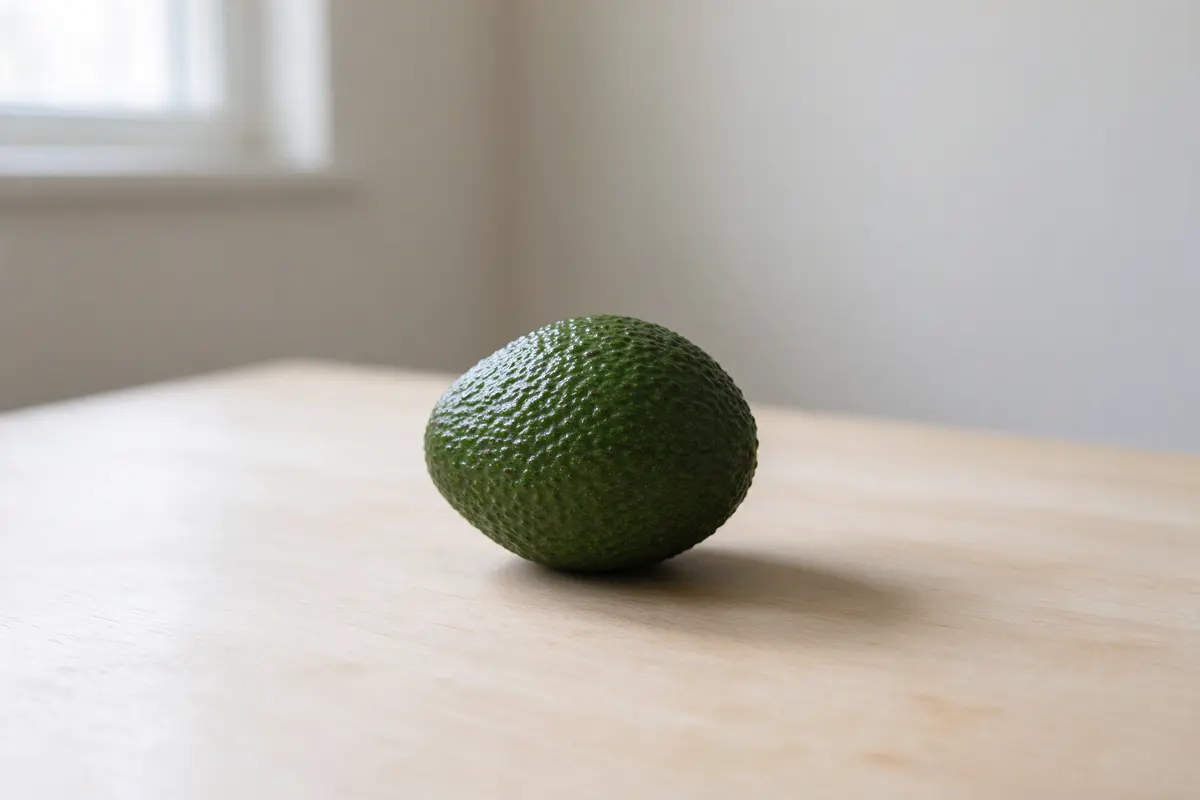
- Size this week
- about the size of an avocado
- Length this week
- around 11.6 cm from head to bottom
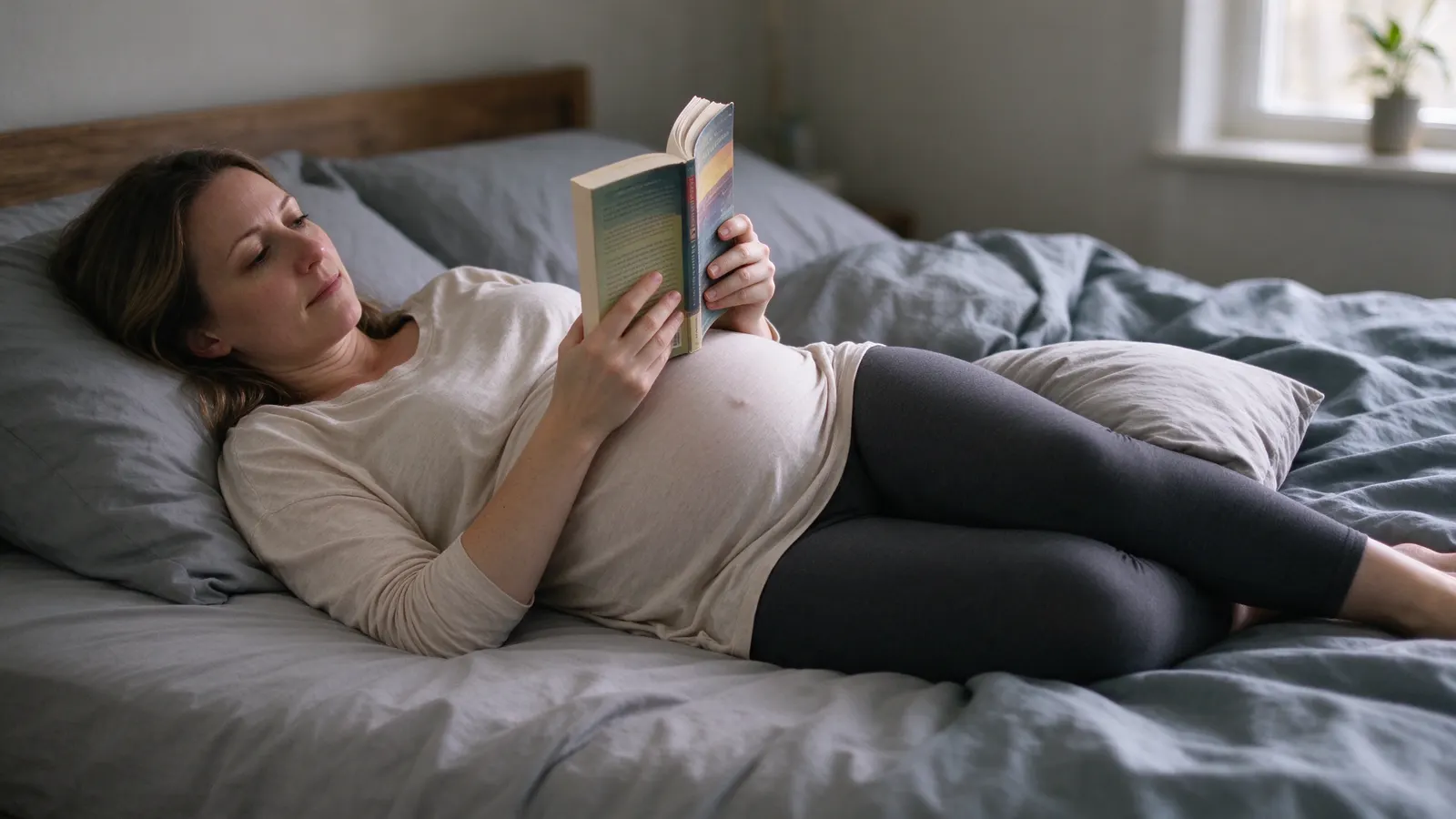
Sixteen weeks and two days. The cuff goes on your arm at every visit from now on. Today is about knowing what it's for, and keeping your own copy of the number.
Your baby
Your body
At the midwife appointment your blood pressure is checked and your urine is tested for protein, both signs that help spot pre-eclampsia (NHS). The CDC's definitions are plain. High blood pressure in pregnancy is diagnosed at 140/90 mm Hg or higher on two readings taken at least 4 hours apart, and a reading of 160/110 or higher is severe and "requires prompt medical attention" (CDC). High blood pressure from before pregnancy, or found before 20 weeks, is chronic hypertension; a rise after 20 weeks in someone with normal readings is gestational hypertension (CDC).
Preeclampsia is high blood pressure with signs of liver or kidney damage, starting after the 20th week (MedlinePlus). It occurs in about 2% to 8% of pregnancies and is one of the leading causes of pregnancy-related death, which is the reason for the cuff and the urine pot at every visit (CDC). For some women at higher risk, providers may recommend low-dose aspirin, which can reduce the risk when started at the right time (CDC); that is your provider's call, and MedlinePlus is blunt: "DO NOT start baby aspirin unless you have consulted with your doctor first" (MedlinePlus).
Try today
The blood-pressure number
Time: 2 minutes at the visit
When the cuff comes off, ask for the reading as two numbers, and write both on your checkup card with the date (NHS).
Ask what it was before pregnancy, or at your booking visit, and write that beside it as your baseline (CDC).
Ask whether the urine test showed any protein, and note the answer (NHS).
Ask one question: "Am I someone you'd suggest low-dose aspirin for?" Then do what they say (CDC).
Make it work:If you own a home cuff, ask whether and how the office wants you to use it; one reading isn't a diagnosis, two at least 4 hours apart is the definition (CDC).
Watch for
Normal
headaches, which are on the NHS's list of common symptoms (NHS).
Call your provider
or seek care immediately for a headache that won't go away or gets worse over time, or for changes in your vision (CDC); headaches can signal preeclampsia (MedlinePlus).
Normal
a reading that is a little different at each visit.
Call your provider today
for any reading of 160/110 or higher; the CDC says it requires prompt medical attention (CDC).
Normal
gradual weight gain over the second trimester (NHS).
Call your provider
for sudden swelling in your hands or feet, or rapid weight gain, which may signal preeclampsia (OWH).
For you
The CDC's advice on blood pressure in pregnancy fits on one line: "Go to every appointment with your health care provider" (CDC). The check takes a minute, and it catches the thing nobody can feel coming.
Tell your provider about every medicine you take, including over-the-counter ones, and don't stop or start any without asking (CDC).
If you're the partner: learn her two numbers and her baseline. If she ever mentions a headache that won't shift, you'll know why it matters.
Sources
- NHS. "Week 16." Week-by-week guide to pregnancy, Best Start in Life. https://www.nhs.uk/best-start-in-life/pregnancy/week-by-week-guide-to-pregnancy/2nd-trimester/week-16/
- Office on Women's Health. "Prenatal care and tests." U.S. Department of Health and Human Services. https://womenshealth.gov/pregnancy/youre-pregnant-now-what/prenatal-care-and-tests
- Centers for Disease Control and Prevention. "High Blood Pressure During Pregnancy." https://www.cdc.gov/high-blood-pressure/about/high-blood-pressure-during-pregnancy.html
- MedlinePlus. "Preeclampsia." Medical Encyclopedia, National Library of Medicine. https://medlineplus.gov/ency/article/000898.htm
- Centers for Disease Control and Prevention. "Urgent Maternal Warning Signs and Symptoms." HEAR HER campaign, 2024. https://www.cdc.gov/hearher/maternal-warning-signs/index.html
- MedlinePlus. "Aches and pains during pregnancy." National Library of Medicine. https://medlineplus.gov/ency/patientinstructions/000580.htm
- Office on Women's Health. "Body changes and discomforts." U.S. Department of Health and Human Services. https://womenshealth.gov/pregnancy/youre-pregnant-now-what/body-changes-and-discomforts
This guide is general education that summarizes published research and guidance from groups like the American Academy of Pediatrics, the CDC, and the WHO. It isn’t medical advice, and every child develops on their own timeline. Your pediatrician knows your child; if something feels wrong, call them. In an emergency, call 911.
Get each day’s note the morning it applies
Add your due date to a free Chorevia household, and every morning until the birth the day's note arrives in the app and by email: what's forming, what your body is doing, one thing to try, what to watch for, and a word for you.
Create your household