Day 118 of 280 · 16 weeks + 6 days
The gain so far
Last reviewed · 3 min read · 8 sources · Plain-text version
Sixteen weeks and six days. The scale at your checkup, the ranges the sources give, and when to stop weighing yourself between visits.
- Size this week
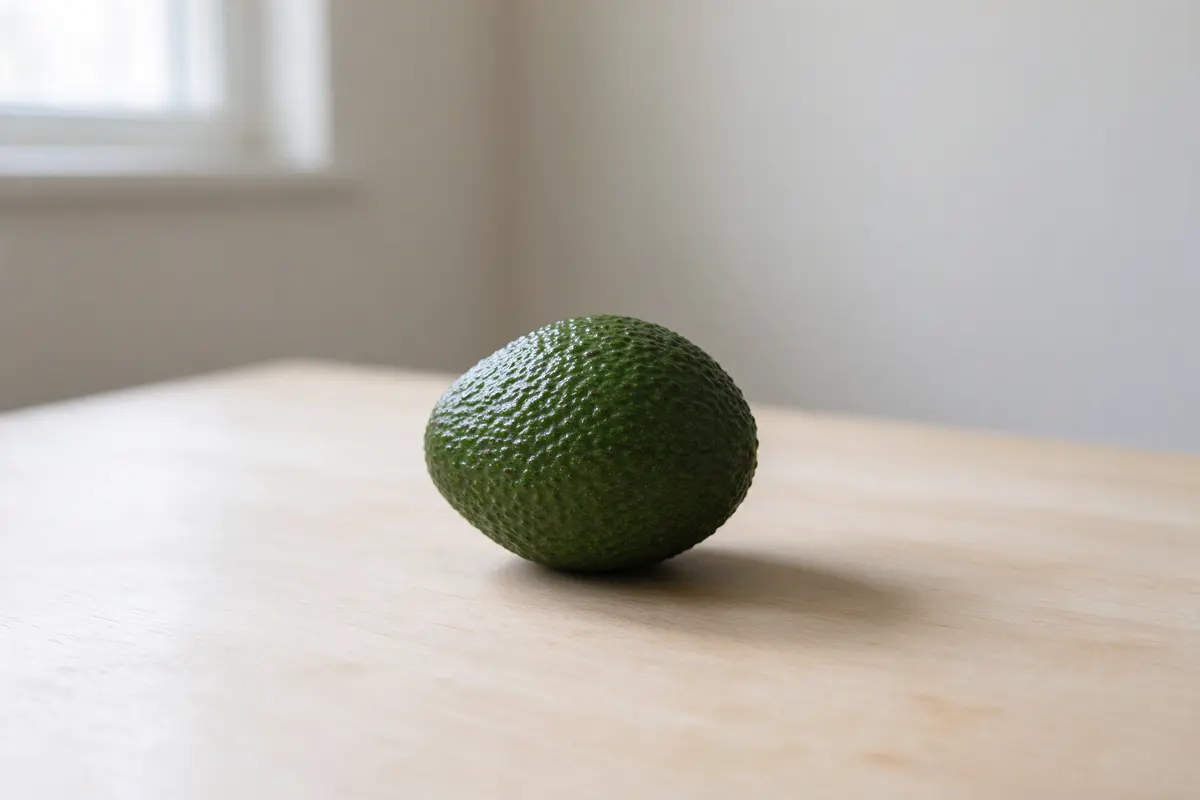
- about the size of an avocado
- Length this week
- around 11.6 cm from head to bottom

Sixteen weeks and six days. Around now you get weighed at an appointment, and the number can land harder than it should. Today puts it next to the ranges.
Your baby
Your body
You'll probably have put on some weight over the past few weeks, and you'll be weighed at your midwife appointment (NHS). The typical pattern, from NICHD, is about 1 to 4 pounds in the first trimester, then 2 to 4 pounds a month through the second and third (NICHD). MedlinePlus puts it as 2 to 4 lb (1 to 2 kg) in the first trimester, then about 1 lb (0.5 kg) a week for the rest of pregnancy (MedlinePlus).
The total depends on where you started. For a healthy pre-pregnancy weight the range is 25 to 35 pounds; below a BMI of 18.5, 28 to 40; a BMI of 25 to 29.9, 15 to 25; above 30, 11 to 20 (NICHD). Twins change it: normal-weight women carrying twins should gain 37 to 54 lb (MedlinePlus). The second trimester needs about 340 extra calories a day; the first needed none (CDC).
Try today
The trimester-two gain check
Time: 5 minutes, after a visit
Write today's weight on your checkup card under the one from your first visit.
Subtract, and compare the difference with NICHD's pattern: 1 to 4 pounds across the first trimester, then 2 to 4 a month (NICHD).
Inside the range, you're done. Outside it, that's a question for your next visit; the CDC's advice is to track the gain and work with your provider on goals (CDC).
Decide honestly whether weighing yourself at home helps or hurts. If it's making you anxious, leave it to the visits.
Make it work:The office scale is enough. Second-trimester visits are about monthly (MedlinePlus), and that's as often as the number needs checking.
Watch for
Normal
a steady gain of around 2 to 4 pounds a month now (NICHD).
Call your doctor
for rapid weight gain, which the Office on Women's Health lists as a possible sign of preeclampsia (OWH).
Normal
being hungrier; the second trimester needs about 340 extra calories a day (CDC).
Seek care immediately
for severe nausea and vomiting, meaning you can't drink for more than 8 hours or eat for more than 24 (CDC).
Normal
a range unlike a friend's, since it's set by pre-pregnancy BMI (CDC).
Call your provider
to set your own goal if you're carrying triplets or more; they need their own plan (CDC).
For you
Do not diet or try to lose weight during pregnancy; the advice is to eat well and stay active (MedlinePlus). If today's number is above the range, that's a conversation, not a reason to skip meals. In a study the CDC cites, only about 1 in 3 women gained the recommended amount; about 1 in 5 gained less and about 1 in 2 gained more (CDC).
The useful moves are small: water instead of sodas and fruit drinks, baked or grilled instead of fried, and walking, generally safe and effective once you've talked with your provider about exercise (MedlinePlus). The CDC's target is at least 150 minutes of moderate activity a week, split however you like (CDC).
If you're the partner: never comment on the number. Comment on the walk, and come along.
Sources
- NHS. "Week 16." Week-by-week guide to pregnancy, Best Start in Life. https://www.nhs.uk/best-start-in-life/pregnancy/week-by-week-guide-to-pregnancy/2nd-trimester/week-16/
- Office on Women's Health. "Stages of pregnancy." U.S. Department of Health and Human Services. https://womenshealth.gov/pregnancy/youre-pregnant-now-what/stages-pregnancy
- National Institute of Child Health and Human Development. "Other Pregnancy FAQs." National Institutes of Health. https://www.nichd.nih.gov/health/topics/pregnancy/more_information/other-faqs
- MedlinePlus. "Managing your weight gain during pregnancy." National Library of Medicine. https://medlineplus.gov/ency/patientinstructions/000603.htm
- Centers for Disease Control and Prevention. "Weight Gain During Pregnancy." https://www.cdc.gov/maternal-infant-health/pregnancy-weight/index.html
- MedlinePlus. "Prenatal care in your second trimester." National Library of Medicine. https://medlineplus.gov/ency/patientinstructions/000557.htm
- Office on Women's Health. "Body changes and discomforts." U.S. Department of Health and Human Services. https://womenshealth.gov/pregnancy/youre-pregnant-now-what/body-changes-and-discomforts
- Centers for Disease Control and Prevention. "Urgent Maternal Warning Signs and Symptoms." HEAR HER campaign, 2024. https://www.cdc.gov/hearher/maternal-warning-signs/index.html
This guide is general education that summarizes published research and guidance from groups like the American Academy of Pediatrics, the CDC, and the WHO. It isn’t medical advice, and every child develops on their own timeline. Your pediatrician knows your child; if something feels wrong, call them. In an emergency, call 911.
Get each day’s note the morning it applies
Add your due date to a free Chorevia household, and every morning until the birth the day's note arrives in the app and by email: what's forming, what your body is doing, one thing to try, what to watch for, and a word for you.
Create your household