Day 17 of 280 · 2 weeks + 3 days
Before you knew
Last reviewed · 3 min read · 6 sources · Plain-text version
About half of pregnancies aren't planned, which means half of all mothers had weeks they can't take back. What the CDC says about alcohol, and what to do with the guilt.
- Size this week
- a single cell, then a ball of cells
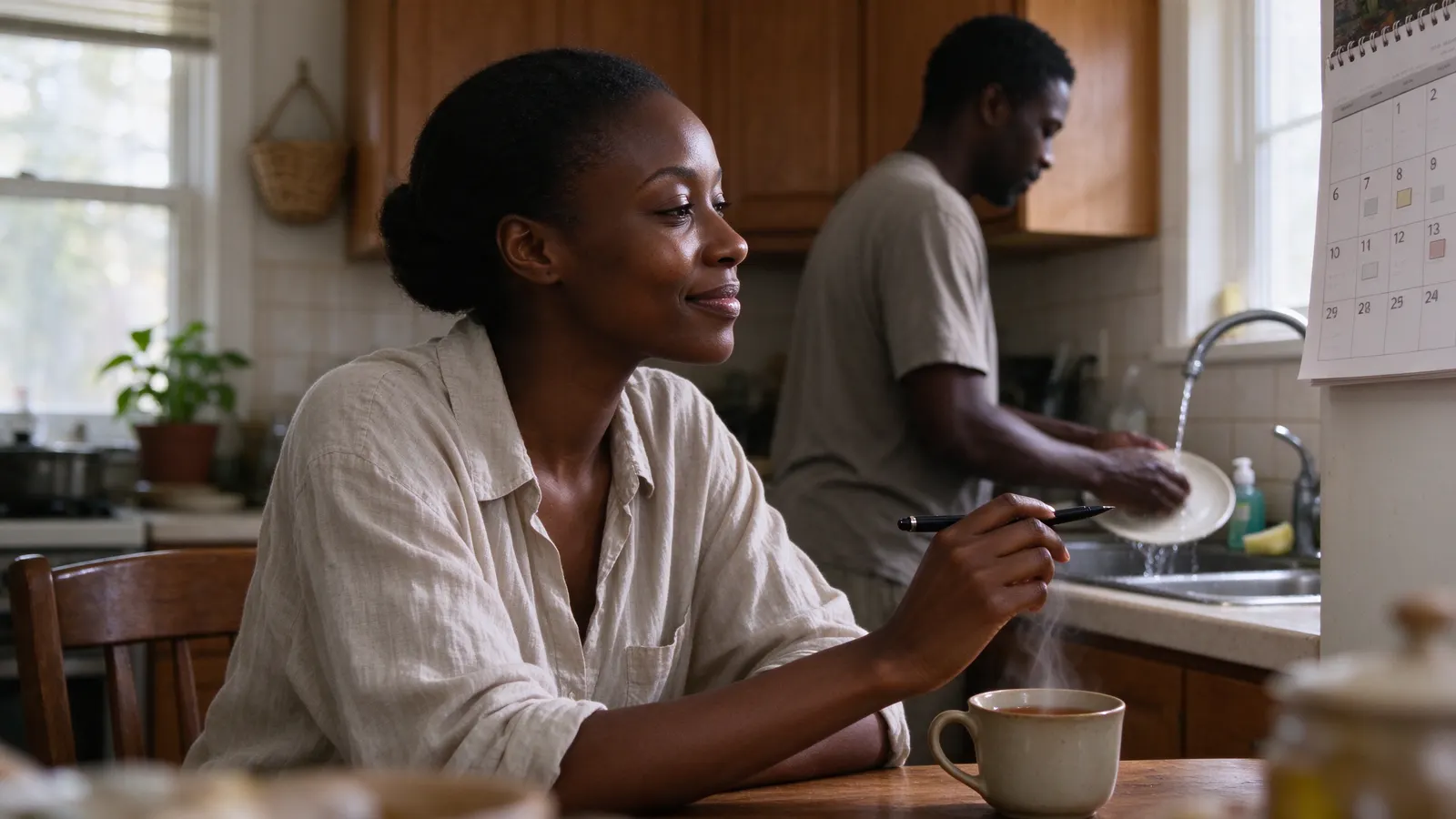
Most people find out at five or six weeks, and most spend an hour afterward doing the math on the weeks before. This note is for that hour.
Your baby
Around now the fertilized egg is still a ball of dividing cells, days from settling into the womb (NICHD). The CDC's alcohol guidance covers this stretch: there is no safe time during pregnancy to drink alcohol, and alcohol can harm a baby even before a woman knows she is pregnant (CDC). Drinking during pregnancy is linked to a higher risk of miscarriage, preterm birth, stillbirth, and SIDS, and prenatal alcohol exposure can cause lifelong disabilities, together called fetal alcohol spectrum disorders (CDC). Not every exposed baby is affected, but it is impossible to know which babies will be (CDC).
The CDC puts the next sentence beside it: it is never too late to stop alcohol use during pregnancy, and stopping improves the baby's health (CDC).
Your body
About half of all pregnancies are not planned (Office on Women's Health). The Office on Women's Health asks women who could become pregnant to prepare at least three months before trying, to stop smoking and drinking alcohol, and to take 400 to 800 micrograms of folic acid every day (Office on Women's Health): advice written for a "before" that half of us never get. All types of alcohol, including red or white wine, beer, and liquor, can be harmful, and there is no known safe amount (CDC). From here, the rule is the same for everyone: none.
Try today
The last-drink note
Time: 2 minutes
Write the date of your last drink, and roughly how much and how often in the weeks before it, on one line.
Add the date of your positive test, if you have one.
Put the line where you keep questions for the first visit; if any alcohol was used while pregnant, the CDC's advice is to talk with the provider as soon as possible and share your concerns (CDC).
Close the page. It is a fact for your provider, not a thing to reread.
Make it work:If stopping is hard, say that on the same line. It is the most useful sentence a provider can hear, and it is never too late to stop (CDC).
Watch for
Normal
a few drinks before you knew, which is most people's story, and exactly why the CDC says to talk rather than guess (CDC).
Call your provider
as soon as possible to share it (CDC).
Normal
feeling sick to your stomach, in the morning or at any time of day (NICHD).
Call 911
or go to an emergency room right away for severe chest pain or shortness of breath that does not go away (MedlinePlus).
Normal
tears that come from nowhere; mood swings from hormonal changes can begin a few weeks after conception (NICHD).
Call your provider
if sadness or worry won't lift; depression and anxiety in pregnancy are not something you caused, and they can be treated (AAP).
For you
Guilt about the weeks before the test is common and not useful. You acted on what you knew, which is all anyone does. The CDC's page does not ask you to relive those weeks; it asks you to stop now and to tell your provider, and it says plainly that stopping improves the baby's health (CDC).
If you're the partner: the right response to "I had wine at the wedding" is not reassurance and not silence. It is "we'll tell them at the visit," and then an evening with no drinks in the house, for both of you.
Sources
- Eunice Kennedy Shriver National Institute of Child Health and Human Development. "About Pregnancy." National Institutes of Health. https://www.nichd.nih.gov/health/topics/pregnancy/conditioninfo
- Centers for Disease Control and Prevention. "About Alcohol Use During Pregnancy." https://www.cdc.gov/alcohol-pregnancy/about/index.html
- Office on Women's Health. "Preconception health." U.S. Department of Health and Human Services, 2025. https://womenshealth.gov/pregnancy/you-get-pregnant/preconception-health
- Eunice Kennedy Shriver National Institute of Child Health and Human Development. "What are some common signs of pregnancy?" National Institutes of Health. https://www.nichd.nih.gov/health/topics/pregnancy/conditioninfo/signs
- MedlinePlus. "Common symptoms during pregnancy." National Library of Medicine. https://medlineplus.gov/ency/patientinstructions/000583.htm
- American Academy of Pediatrics. "Depression and Anxiety During Pregnancy and After Birth: FAQs." HealthyChildren.org, 2019. https://www.healthychildren.org/English/ages-stages/prenatal/Pages/Depression-and-Anxiety-During-Pregnancy-and-After-Birth-FAQs.aspx
This guide is general education that summarizes published research and guidance from groups like the American Academy of Pediatrics, the CDC, and the WHO. It isn’t medical advice, and every child develops on their own timeline. Your pediatrician knows your child; if something feels wrong, call them. In an emergency, call 911.
Get each day’s note the morning it applies
Add your due date to a free Chorevia household, and every morning until the birth the day's note arrives in the app and by email: what's forming, what your body is doing, one thing to try, what to watch for, and a word for you.
Create your household