Day 30 of 280 · 4 weeks + 2 days
Booking the first visit
Last reviewed · 3 min read · 9 sources · Plain-text version
One phone call today. What to have written down before you dial, when the first visit usually falls, and why earlier is better.
- Size this week
- about the size of a poppy seed
- Length this week
- about 2 mm from head to bottom
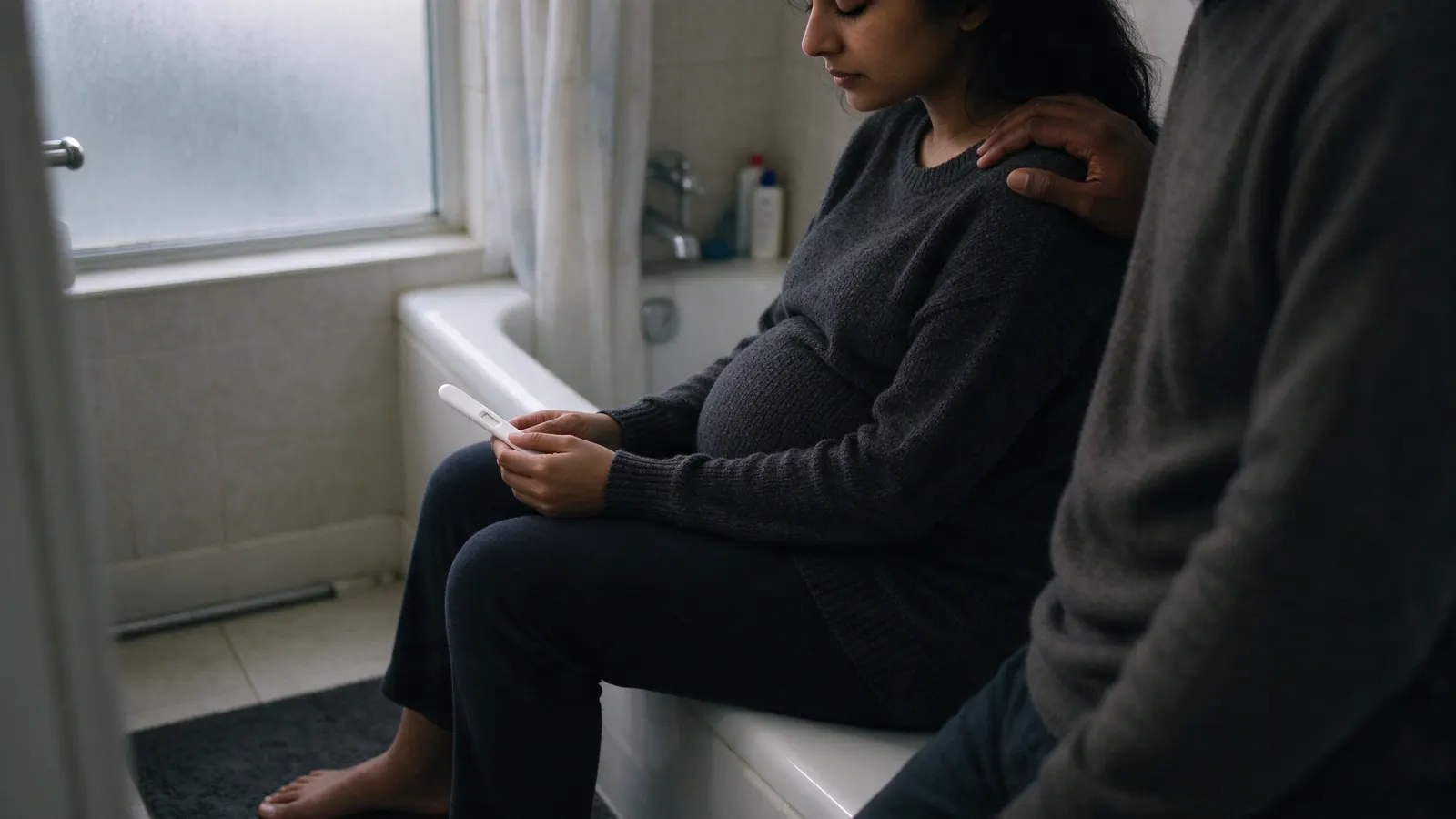
Four weeks and two days. Today's whole task is one phone call, and most of the work is what you write down before you dial.
Your baby
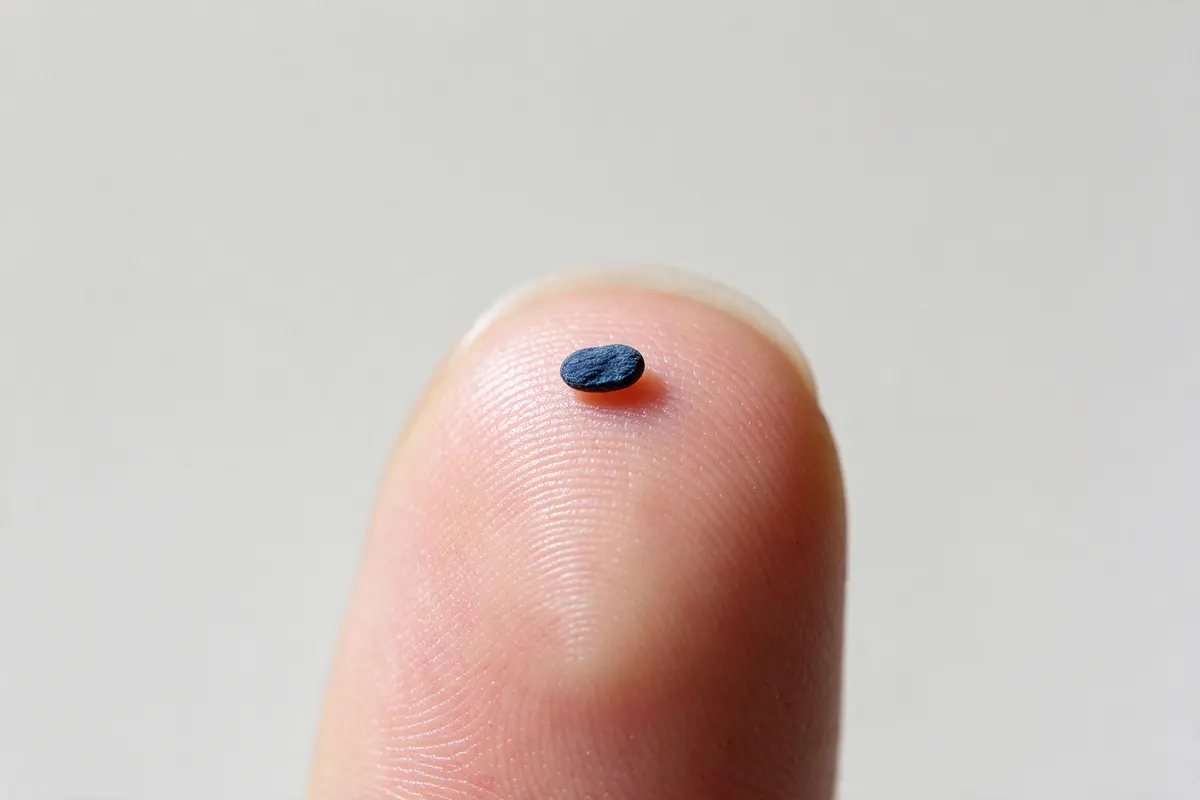
About 2mm, about the size of a poppy seed, in its fluid-filled amniotic sac (NHS). If you are wondering whether a scan could show anything yet: the heartbeat usually cannot be heard or seen on ultrasound until at least 6 to 7 weeks (MedlinePlus), and the NHS's dating scan comes at 8 to 14 weeks (NHS). The first visit is about you, your history, and the calendar, not about seeing the baby.
Your body
MedlinePlus is direct: "You should schedule your first prenatal visit soon after you learn that you are pregnant" (MedlinePlus). Expect a visit every month in the first trimester (MedlinePlus); the usual US rhythm after that is monthly through week 28, twice a month from 28 to 36, and weekly from 36 until birth (OWH). In the NHS system, the booking appointment usually falls between weeks 8 and 12, with a dating scan at 8 to 14 weeks, and a first pregnancy typically has around 10 appointments and 2 scans (NHS).
The first visit itself typically covers your health history, a physical exam, and lab tests, and your due date is calculated at 40 weeks (MedlinePlus). The blood panel usually includes a complete blood count, blood type with an Rh screen, and tests for rubella, hepatitis, syphilis, and HIV (MedlinePlus).
Try today
The first-call script
Time: 10 minutes to write, then the call
Write the first day of your last period. Pregnancy is dated from it (NHS), and it's the first thing the office will ask.
List any long-term condition. The NHS says to tell your specialist or GP, and not to stop regular medication without advice (NHS).
List every medicine and supplement you take, herbal ones included; "talk to your healthcare providers before starting or stopping any medicines" (CDC).
Write one question: can you keep the same carer throughout the pregnancy? (NHS)
Make the call and take the first date they offer.
Make it work:If the office books you for week 8 or later, that's inside the normal window (NHS). Ask what to call about before then; MedlinePlus's first-trimester list includes bleeding or cramping, fever, chills, and pain when passing urine (MedlinePlus).
Watch for
Normal
a few drops of spotting, not enough to cover a panty liner (MedlinePlus).
Call your provider right away
about any spotting before an ultrasound has confirmed the pregnancy, because it can signal an ectopic pregnancy, which untreated can be life-threatening (MedlinePlus).
Normal
tiredness and sore breasts (NHS).
Call your provider
for pain when passing urine; it's on the list of reasons to call in the first trimester (MedlinePlus).
Normal
wondering whether to stop a medicine you take every day.
Call your provider
before you stop it; the NHS says not to stop regular medication without advice (NHS).
For you
Don't wait for symptoms to book. Earlier starts to medical care are associated with better health outcomes (CDC), and NICHD's line is that women who suspect they are pregnant should schedule a visit to start prenatal care (NICHD). Early and regular prenatal care helps many women have healthy pregnancies and deliveries without complications (NICHD).
If you're the partner: put the appointment in your calendar too, and ask the office whether you can come. The first visit is mostly questions, and two memories are better than one.
Sources
- NHS. "Week 4." Week-by-week guide to pregnancy, Best Start in Life. https://www.nhs.uk/best-start-in-life/pregnancy/week-by-week-guide-to-pregnancy/1st-trimester/week-4/
- MedlinePlus. "Prenatal care in your first trimester." National Library of Medicine. https://medlineplus.gov/ency/patientinstructions/000544.htm
- Office on Women's Health. "Prenatal care and tests." U.S. Department of Health and Human Services. https://womenshealth.gov/pregnancy/youre-pregnant-now-what/prenatal-care-and-tests
- MedlinePlus. "Prenatal Care." National Library of Medicine. https://medlineplus.gov/prenatalcare.html
- Centers for Disease Control and Prevention. "Medicine and Pregnancy: An Overview." https://www.cdc.gov/medicine-and-pregnancy/about/index.html
- MedlinePlus. "Vaginal bleeding in early pregnancy." National Library of Medicine. https://medlineplus.gov/ency/patientinstructions/000614.htm
- Centers for Disease Control and Prevention. "About STIs and Pregnancy." 2025. https://www.cdc.gov/sti/about/about-stis-and-pregnancy.html
- National Institute of Child Health and Human Development. "What is prenatal care and why is it important?" National Institutes of Health. https://www.nichd.nih.gov/health/topics/pregnancy/conditioninfo/prenatal-care
- National Institute of Child Health and Human Development. "What is a high-risk pregnancy?" National Institutes of Health, 2017. https://www.nichd.nih.gov/health/topics/pregnancy/conditioninfo/high-risk
This guide is general education that summarizes published research and guidance from groups like the American Academy of Pediatrics, the CDC, and the WHO. It isn’t medical advice, and every child develops on their own timeline. Your pediatrician knows your child; if something feels wrong, call them. In an emergency, call 911.
Get each day’s note the morning it applies
Add your due date to a free Chorevia household, and every morning until the birth the day's note arrives in the app and by email: what's forming, what your body is doing, one thing to try, what to watch for, and a word for you.
Create your household