Day 31 of 280 · 4 weeks + 3 days
What's in the bottle
Last reviewed · 3 min read · 12 sources · Plain-text version
Folic acid, iron, calcium, vitamin D, and a ceiling on vitamin A. Today you read the prenatal vitamin label and check the numbers.
- Size this week
- about the size of a poppy seed
- Length this week
- about 2 mm from head to bottom

Four weeks and three days. Today is five minutes with a bottle and its tiny print: what's in it, how much, and what's not supposed to be.
Your baby
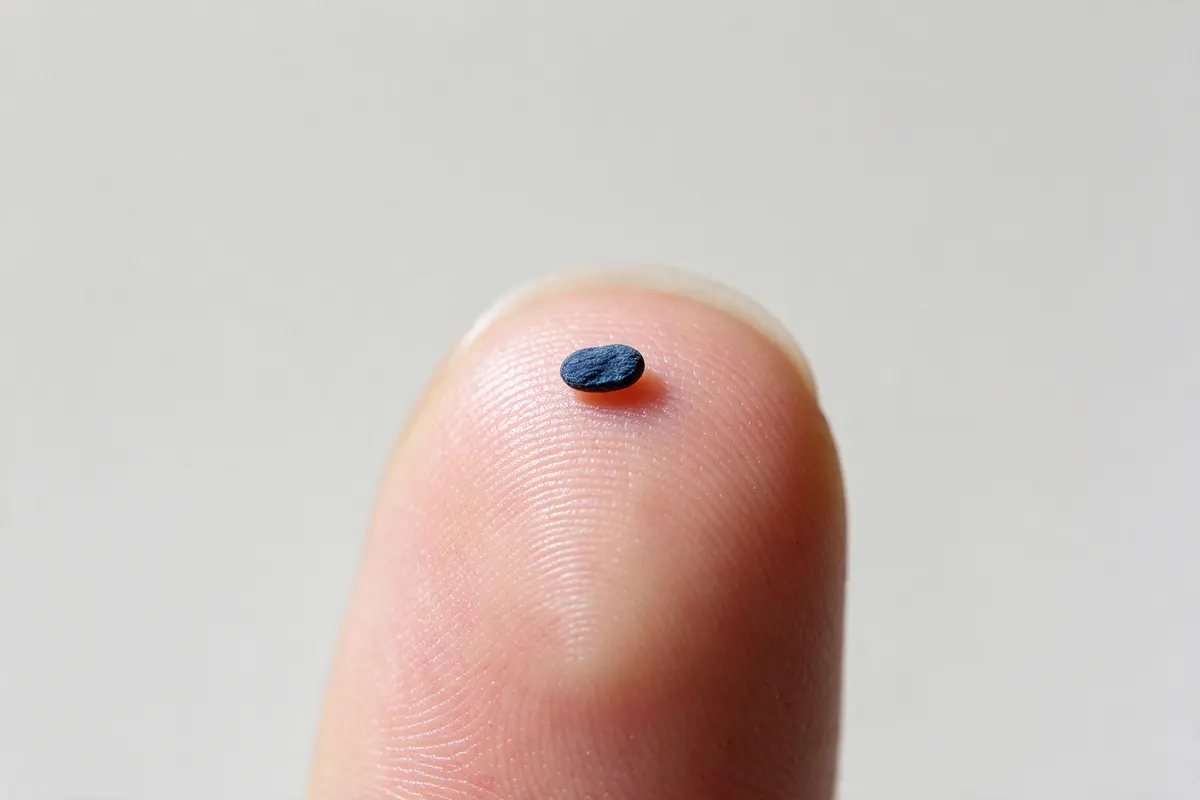
About 2mm long and growing rapidly (NHS). Folic acid is today's subject because its work is happening now: taken before and during pregnancy, it reduces the risk of spina bifida, anencephaly, and some heart defects (MedlinePlus), and neural tube defects form in the first few weeks of pregnancy, often before a person knows they are pregnant (CDC).
Your body
The numbers change once you're pregnant. During pregnancy you need 600 mcg of folate a day from foods and/or vitamins, and most people need a supplement to reach it (MedlinePlus). Iron goes to 27 mg a day because your blood volume rises; calcium is 1,000 mg a day for adults and 1,300 mg for pregnant teenagers aged 14 to 18; vitamin D is 600 IU a day (MedlinePlus). The NHS puts it more simply: 400mcg of folic acid daily until at least week 12, and consider vitamin D (NHS). The Office on Women's Health says 400 to 800 mcg of folic acid, continued throughout pregnancy (OWH).
Most prenatal vitamins contain 800 to 1000 mcg of folic acid (MedlinePlus), so one pill usually covers it. Two cautions: only take vitamin and mineral supplements that a health care provider recommends (MedlinePlus), and the daily prenatal should contain no more than 5,000 IU of vitamin A (OWH).
Try today
The prenatal vitamin label
Time: 5 minutes, bottle in hand
Find the folic acid line. Most prenatals list 800 to 1000 mcg (MedlinePlus); the pregnancy target is 600 mcg a day from food and vitamins together (MedlinePlus).
Find iron: 27 mg a day is the pregnancy figure (MedlinePlus).
Find vitamin A and check it's 5,000 IU or under (OWH).
Anything else on the shelf, herbal remedies included, goes on a list for your provider; the AAP says to make sure your doctor knows about every other supplement you take (AAP).
Take vitamins only in the doses your doctor recommends (AAP).
Make it work:Food folate counts, but not equally: folate from foods like orange juice and leafy greens is not absorbed as well as folic acid (NICHD).
Watch for
Normal
a queasy stomach after the pill; the iron in prenatal vitamins can irritate the stomach (MedlinePlus).
Call your provider
if you vomit blood or material that looks like coffee grounds, or lose more than 2 pounds (1 kilogram) in a week (MedlinePlus).
Normal
needing more sleep than usual in the first trimester (MedlinePlus).
Call your provider
for tiredness that is overwhelming rather than just more; the CDC lists it among the urgent warning signs (CDC).
Normal
tearfulness and mood swings from hormonal changes (NICHD).
Call your provider
if low mood or worry doesn't lift; anxiety during pregnancy is as common as depression, both can be treated, and the sooner you start the sooner you feel better (AAP).
For you
If the vitamin turns your stomach, move it. MedlinePlus's advice is to take prenatal vitamins at night and with food, since the iron can irritate the stomach (MedlinePlus). Same pill, better hour.
Don't add anything for the nausea on your own: "Do not take any medicines for morning sickness without talking with your provider first" (MedlinePlus).
If you're the partner: a bottle that lives next to the kettle gets taken; one in a drawer doesn't. Move it, and notice when it's running low.
Sources
- NHS. "Week 4." Week-by-week guide to pregnancy, Best Start in Life. https://www.nhs.uk/best-start-in-life/pregnancy/week-by-week-guide-to-pregnancy/1st-trimester/week-4/
- MedlinePlus. "Folic acid and birth defect prevention." Medical Encyclopedia, National Library of Medicine, 2025. https://medlineplus.gov/ency/article/002092.htm
- Centers for Disease Control and Prevention. "About Folic Acid." https://www.cdc.gov/folic-acid/about/index.html
- MedlinePlus. "Pregnancy and Nutrition." National Library of Medicine. https://medlineplus.gov/pregnancyandnutrition.html
- Office on Women's Health. "Staying healthy and safe." U.S. Department of Health and Human Services. https://womenshealth.gov/pregnancy/youre-pregnant-now-what/staying-healthy-and-safe
- American Academy of Pediatrics. "Nutrition and Exercise During Pregnancy." HealthyChildren.org. https://www.healthychildren.org/English/ages-stages/prenatal/Pages/Nutrition-and-Exercise-During-Pregnancy.aspx
- National Institute of Child Health and Human Development. "What is prenatal care and why is it important?" National Institutes of Health. https://www.nichd.nih.gov/health/topics/pregnancy/conditioninfo/prenatal-care
- MedlinePlus. "Morning sickness." National Library of Medicine, 2024. https://medlineplus.gov/ency/patientinstructions/000604.htm
- MedlinePlus. "Problems sleeping during pregnancy." National Library of Medicine. https://medlineplus.gov/ency/patientinstructions/000559.htm
- Centers for Disease Control and Prevention. "Urgent Maternal Warning Signs and Symptoms." HEAR HER campaign, 2024. https://www.cdc.gov/hearher/maternal-warning-signs/index.html
- National Institute of Child Health and Human Development. "What are some common signs of pregnancy?" National Institutes of Health. https://www.nichd.nih.gov/health/topics/pregnancy/conditioninfo/signs
- American Academy of Pediatrics. "Depression and Anxiety During Pregnancy and After Birth: FAQs." HealthyChildren.org, 2019. https://www.healthychildren.org/English/ages-stages/prenatal/Pages/Depression-and-Anxiety-During-Pregnancy-and-After-Birth-FAQs.aspx
This guide is general education that summarizes published research and guidance from groups like the American Academy of Pediatrics, the CDC, and the WHO. It isn’t medical advice, and every child develops on their own timeline. Your pediatrician knows your child; if something feels wrong, call them. In an emergency, call 911.
Get each day’s note the morning it applies
Add your due date to a free Chorevia household, and every morning until the birth the day's note arrives in the app and by email: what's forming, what your body is doing, one thing to try, what to watch for, and a word for you.
Create your household