Day 29 of 280 · 4 weeks + 1 day
The missed period
Last reviewed · 3 min read · 6 sources · Plain-text version
A missed period is often the first sign, and the test works better a week after it. Today: how to test, when, and what to do with a positive.
- Size this week
- about the size of a poppy seed
- Length this week
- about 2 mm from head to bottom
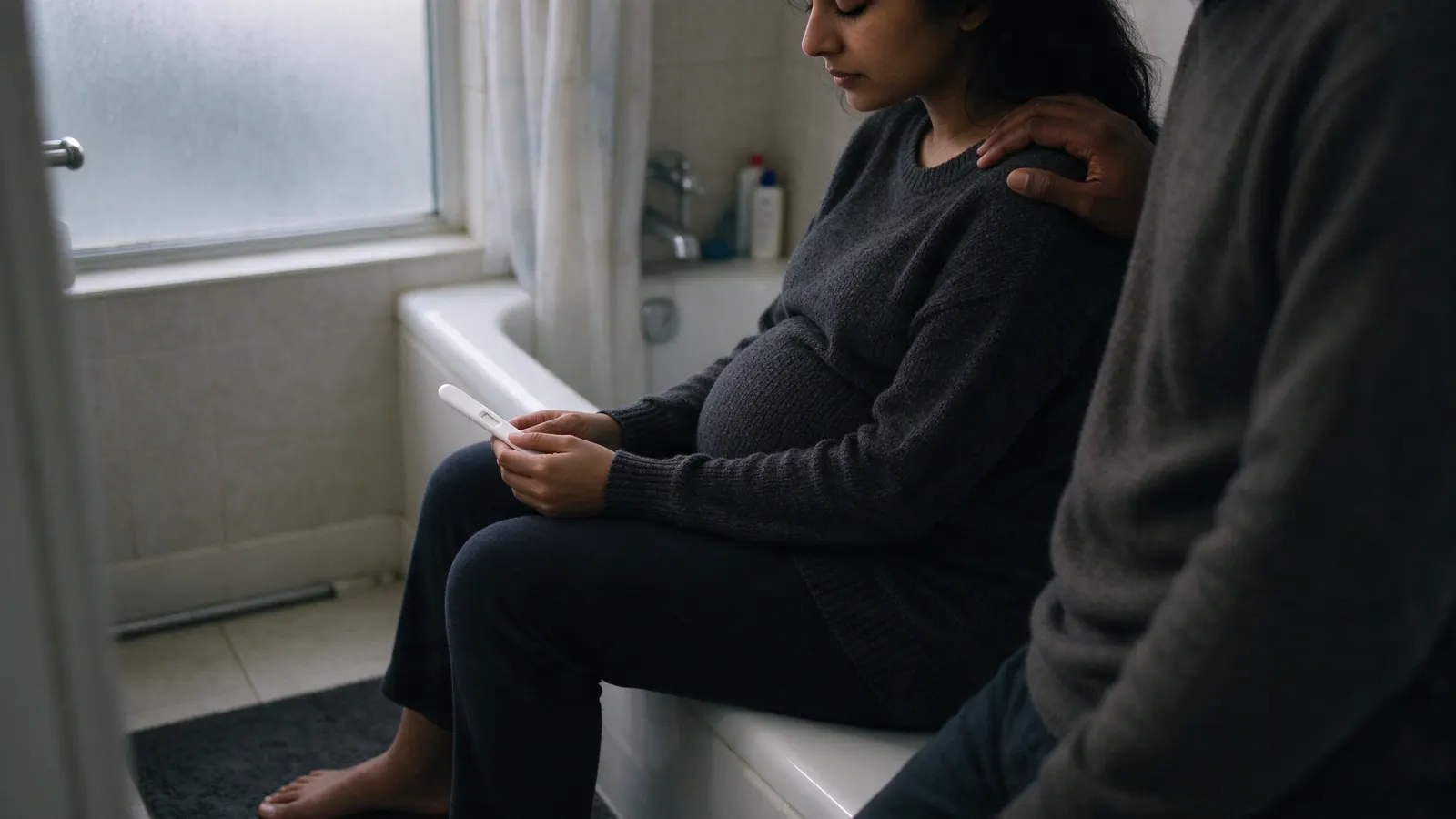
Four weeks and one day. Around now a period is due, and a lot of people are standing in a bathroom at six in the morning with a box and its tiny instruction sheet. Today is that minute, done well.
Your baby
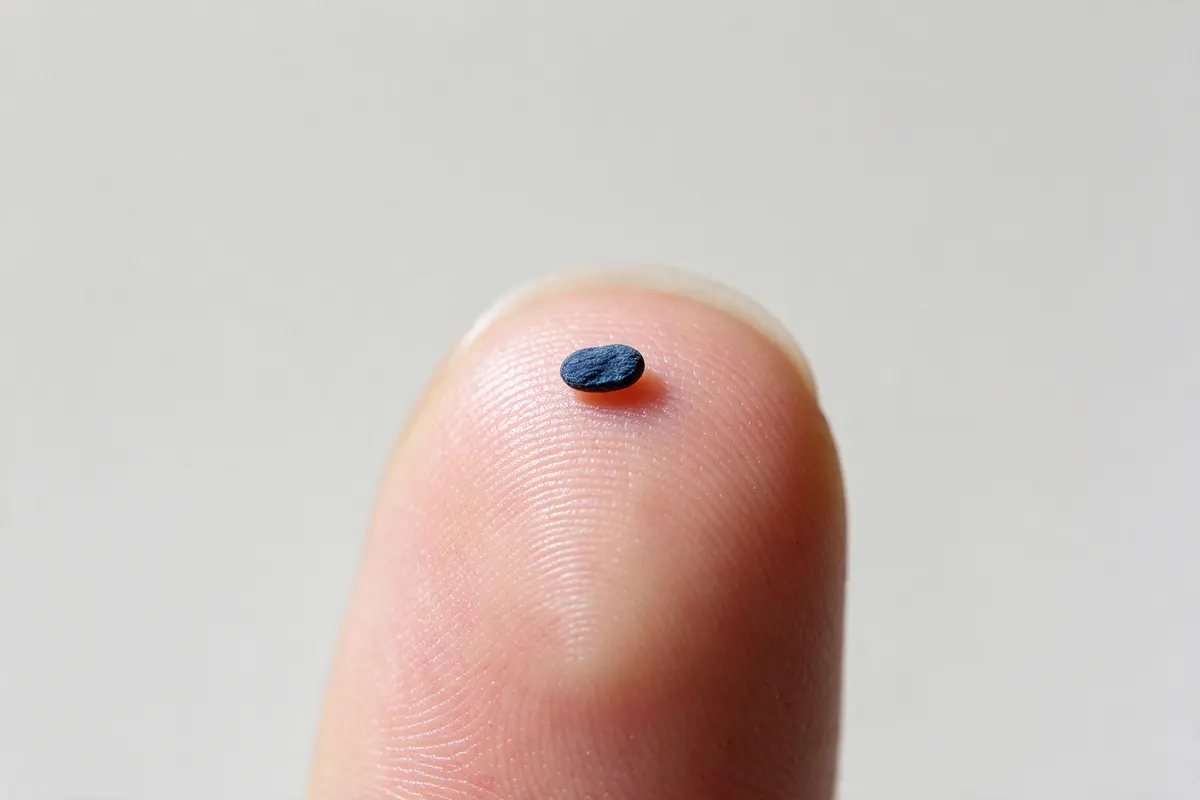
About 2mm long, about the size of a poppy seed, and growing rapidly (NHS). The outer layer of cells will later become the placenta, which provides oxygen and nutrients; for now the embryo is attached to a yolk sac that supplies its nourishment (NHS). The thing the test is looking for is already there: hCG forms when a fertilized egg implants in the uterus, and the level rises each day of pregnancy (OWH).
Your body
A missed period is often the first sign (OWH). The test's timing matters more than its brand: most home tests don't give accurate results one day after a missed period; waiting one week after it usually gives a more accurate result, and if the test is negative, repeat it after a week (OWH). Done at the right time, home tests detect hCG in urine with up to 97% accuracy (NICHD). Some can detect pregnancy from about 3½ weeks (NHS).
Accuracy also depends on when, how, by whom, and which brand (OWH), and some medicines can affect the result (OWH). That is why the steps below are so fussy about the clock.
Try today
The morning test
Time: 10 minutes, first thing
Test first thing in the morning; it may improve accuracy (OWH).
Follow the box, then wait the full time. Research suggests waiting 10 minutes for the most accurate result (OWH).
Check the control indicator. If it doesn't appear, the test isn't working, whatever else it shows (OWH).
If it's negative and your period still hasn't come, test again after a week (OWH).
Make it work:Your doctor can confirm the result with a more sensitive test and a pelvic exam (OWH), so one faint line is enough to make the call.
Watch for
Normal
no symptoms at all (NHS).
Call your provider
if you miss a period, even with a negative test; birth control pills, diabetes, PCOS, eating disorders, and certain medications can also stop a period, and it should be checked (NICHD).
Normal
queasiness; nausea can start 2 to 8 weeks after conception and at any time of day (NICHD).
Go to the ER
for severe nausea and throwing up, meaning you can't keep fluids down for more than 8 hours or food for more than 24 (CDC).
Normal
a headache before the period is even late (OWH).
Call your provider
before taking a medicine for it, to ask whether it's safe (MedlinePlus).
For you
The minute between the test and the result is long. Set the timer and leave the room; the box's answer doesn't change for being watched, and ten minutes is the number (OWH).
Blood tests can detect pregnancy about six to eight days after ovulation, earlier than urine tests (OWH), so if you can't stand to wait a week, that's a question for your provider's office, not a reason to buy a third box.
If you're the partner: ask whether she wants you in the room or on the other side of the door. Then do that, and don't read the stick before she does.
Sources
- NHS. "Week 4." Week-by-week guide to pregnancy, Best Start in Life. https://www.nhs.uk/best-start-in-life/pregnancy/week-by-week-guide-to-pregnancy/1st-trimester/week-4/
- Office on Women's Health. "Knowing if you are pregnant." U.S. Department of Health and Human Services. https://womenshealth.gov/pregnancy/you-get-pregnant/knowing-if-you-are-pregnant
- National Institute of Child Health and Human Development. "How do I know if I'm pregnant?" National Institutes of Health, 2017. https://www.nichd.nih.gov/health/topics/pregnancy/conditioninfo/know
- National Institute of Child Health and Human Development. "What are some common signs of pregnancy?" National Institutes of Health. https://www.nichd.nih.gov/health/topics/pregnancy/conditioninfo/signs
- Centers for Disease Control and Prevention. "Urgent Maternal Warning Signs and Symptoms." HEAR HER campaign, 2024. https://www.cdc.gov/hearher/maternal-warning-signs/index.html
- MedlinePlus. "Aches and pains during pregnancy." National Library of Medicine. https://medlineplus.gov/ency/patientinstructions/000580.htm
This guide is general education that summarizes published research and guidance from groups like the American Academy of Pediatrics, the CDC, and the WHO. It isn’t medical advice, and every child develops on their own timeline. Your pediatrician knows your child; if something feels wrong, call them. In an emergency, call 911.
Get each day’s note the morning it applies
Add your due date to a free Chorevia household, and every morning until the birth the day's note arrives in the app and by email: what's forming, what your body is doing, one thing to try, what to watch for, and a word for you.
Create your household