Day 34 of 280 · 4 weeks + 6 days
Who knows, and when
Last reviewed · 3 min read · 7 sources · Plain-text version
The last day of your first month. Today you and your partner decide who you'll tell now, who at the scan, and who later.
- Size this week
- about the size of a poppy seed
- Length this week
- about 2 mm from head to bottom
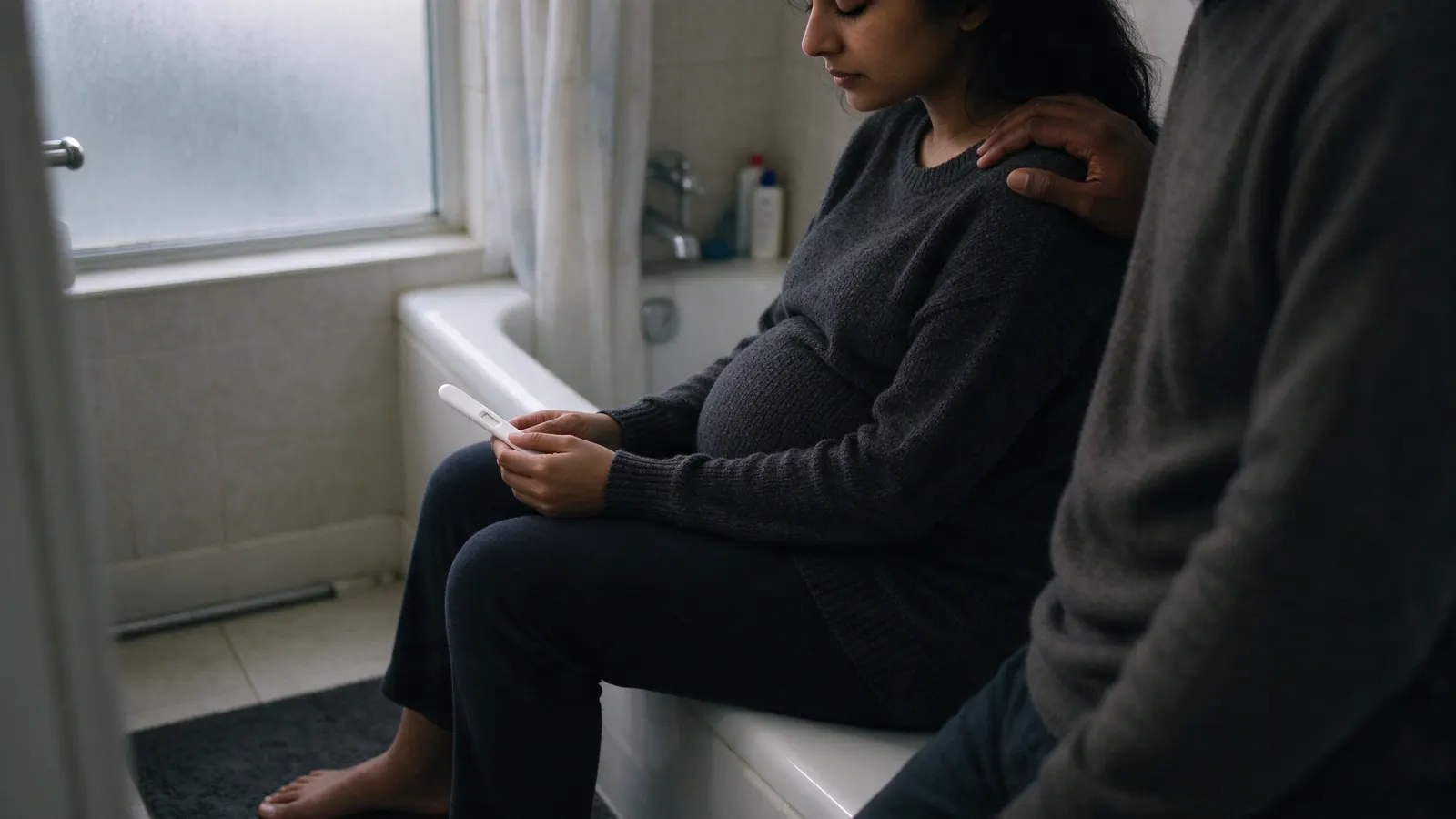
Four weeks and six days: the last day of your first month. Today is a conversation with your partner, or with yourself, about who gets told and when.
Your baby
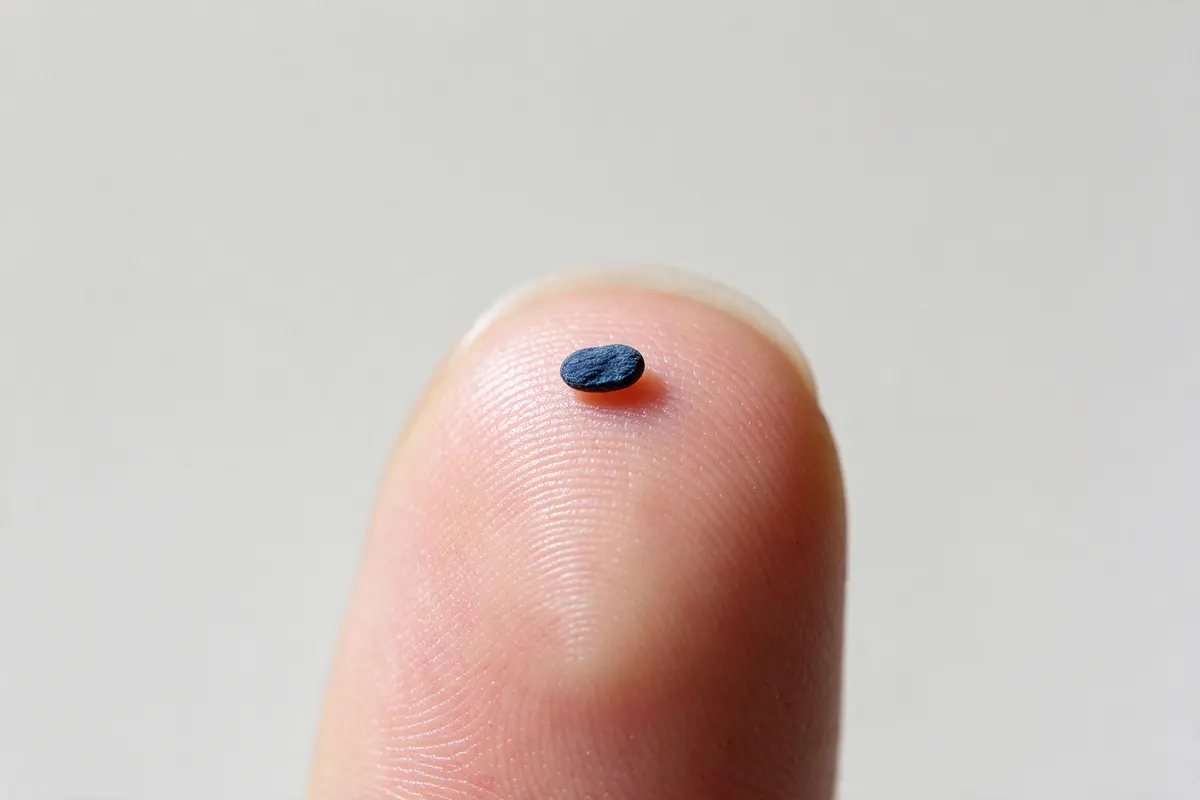
About 2mm long, about the size of a poppy seed, in its fluid-filled amniotic sac (NHS). Next week is a big one. The NHS's week 5 page says the nervous system, brain and spinal cord are forming, and that "the tiny heart is starting to form and will beat for the first time around now" (NHS). Week 5 is also the start of the embryonic period, when the major systems begin to develop (MedlinePlus).
Your body
Many people learn they're pregnant around next week, often after a late period (NHS). Either way, the early symptoms are the same list: a missed period, nausea, tiredness, sore breasts, needing to pee more often, bloating, cramping, or none at all (NHS).
Worries and anxiety are common around now, and support is available (NHS). The NHS's week 4 page says plainly to ask for help if you're feeling anxious or low (NHS). Today's list decides who you can ask.
Try today
The who-knows list
Time: 15 minutes, together
Draw three columns: now, at the scan, later.
Put each name in one column. The dating scan at 8 to 14 weeks is a natural second column (NHS).
Beside each "now" name, write what you'd like from them: a ride to the first visit, a meal, or just silence.
Add the person you'd call if something went wrong, and make sure they're in the first column.
Agree the list with your partner, and both keep the same copy.
Make it work:Nobody you've told can be untold, so when in doubt, move a name one column to the right.
Watch for
Normal
light spotting or cramping can occur around now (NHS).
Call your provider
about any bleeding; the NHS says it should be checked by a doctor (NHS).
Normal
cramping on its own, on the list of common early symptoms (NHS).
Call your provider right away
for bleeding with pain or cramping; if you can't reach them, go to the emergency room (MedlinePlus).
Normal
worry that comes and goes; it's common, and support is available (NHS).
Call your provider
as soon as possible if you think you have depression; in a crisis, call or text 988, or call or text the National Maternal Mental Health Hotline, 1-833-TLC-MAMA (CDC).
Normal
a month of notes and a list of warning signs you've never had.
Call your provider
if you feel like something just isn't right, even if it isn't on the list (CDC).
For you
If the feeling this week is more dread than delight, you haven't done anything wrong. The AAP's line on depression and anxiety in pregnancy is that "these feelings are not something you caused by doing or not doing something," that anxiety is as common as depression, and that both can be treated if you seek help (AAP). Asking for help is on the NHS's to-do list for this week (NHS).
If you're the partner: your name belongs on the list too. Pick one person of your own to tell now; you'll need somewhere to put your own worry that isn't her.
That's your first month: the count, the folic acid, the test, the call, the fridge. Next week the heart starts to form, and the notes continue in your second month of pregnancy.
Sources
- NHS. "Week 4." Week-by-week guide to pregnancy, Best Start in Life. https://www.nhs.uk/best-start-in-life/pregnancy/week-by-week-guide-to-pregnancy/1st-trimester/week-4/
- NHS. "Week 5." Week-by-week guide to pregnancy, Best Start in Life. https://www.nhs.uk/best-start-in-life/pregnancy/week-by-week-guide-to-pregnancy/1st-trimester/week-5/
- MedlinePlus. "Fetal development." Medical Encyclopedia, National Library of Medicine. https://medlineplus.gov/ency/article/002398.htm
- MedlinePlus. "Vaginal bleeding in early pregnancy." National Library of Medicine. https://medlineplus.gov/ency/patientinstructions/000614.htm
- Centers for Disease Control and Prevention. "Symptoms of Depression Among Women." Reproductive Health, 2024. https://www.cdc.gov/reproductive-health/depression/index.html
- Centers for Disease Control and Prevention. "Urgent Maternal Warning Signs and Symptoms." HEAR HER campaign, 2024. https://www.cdc.gov/hearher/maternal-warning-signs/index.html
- American Academy of Pediatrics. "Depression and Anxiety During Pregnancy and After Birth: FAQs." HealthyChildren.org, 2019. https://www.healthychildren.org/English/ages-stages/prenatal/Pages/Depression-and-Anxiety-During-Pregnancy-and-After-Birth-FAQs.aspx
This guide is general education that summarizes published research and guidance from groups like the American Academy of Pediatrics, the CDC, and the WHO. It isn’t medical advice, and every child develops on their own timeline. Your pediatrician knows your child; if something feels wrong, call them. In an emergency, call 911.
Get each day’s note the morning it applies
Add your due date to a free Chorevia household, and every morning until the birth the day's note arrives in the app and by email: what's forming, what your body is doing, one thing to try, what to watch for, and a word for you.
Create your household