Day 35 of 280 · 5 weeks
The week most people find out
Last reviewed · 3 min read · 7 sources · Plain-text version
Five weeks: the week a late period becomes a test, what the test can and can't tell you, and the first call to make once the line appears.
- Size this week
- about the size of a sesame seed
- Length this week
- around 2 mm from head to bottom
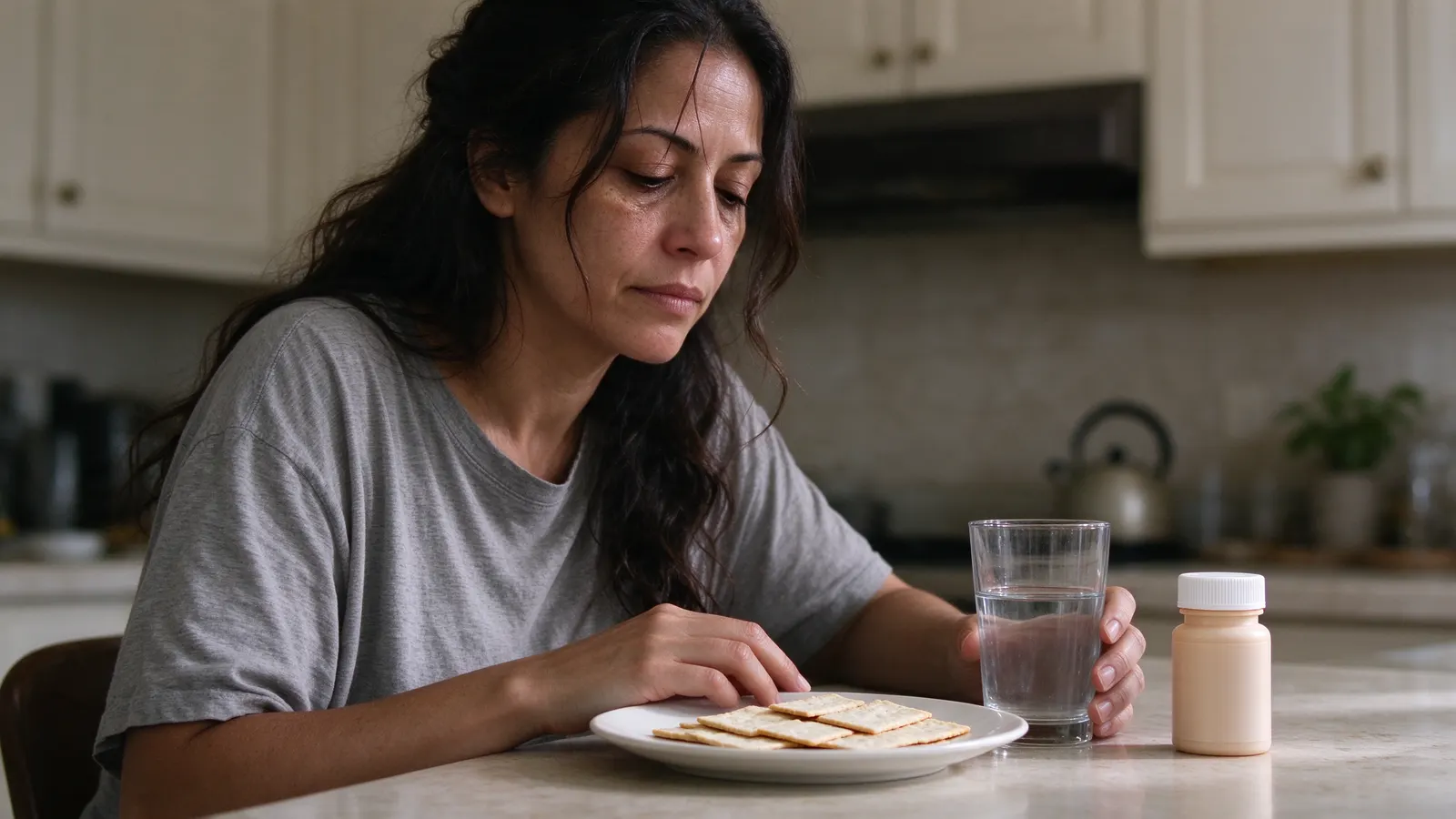
Five weeks exactly. If you've read since day 14, the count has caught up with the calendar. If you're starting here, welcome: most people do.
Your baby
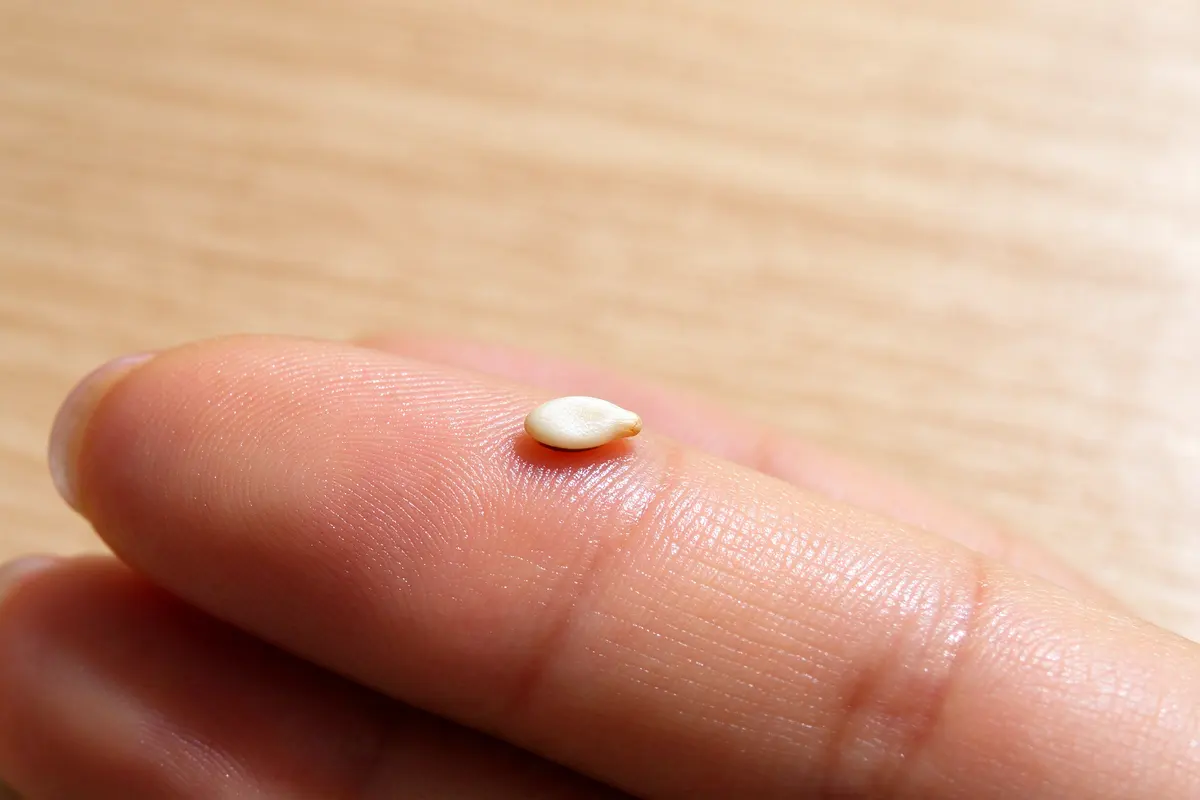
Around 2mm long, about the size of a sesame seed (NHS). The nervous system, brain and spinal cord are forming, and the placenta is starting to form, supplying nutrients and oxygen and removing waste (NHS). Week 5 is also the start of the embryonic period, when the major systems begin to develop; MedlinePlus calls it the time of highest risk from harmful exposures in the first trimester (MedlinePlus).
Your body
Many people learn they're pregnant around this week, often after a late period (NHS). A home test measures the hormone hCG in urine, with up to 97% accuracy, and small amounts of hCG are present even before the first missed period (NICHD). Most home tests don't give accurate results one day after a missed period, and waiting one week after the missed period usually gives a more accurate result (OWH). If the test is positive, NICHD's line is simple: call your health care provider to schedule an appointment (NICHD).
How you feel this week varies. The NHS lists fatigue, sore breasts, nausea, mood changes, a stronger sense of smell, and more frequent urination (NHS). NICHD adds that symptoms differ from person to person: every common symptom, a few, or none at all (NICHD). Feeling nothing means nothing.
Try today
The found-out page
Time: 5 minutes
Write today's date, and the first day of your last period. Pregnancy is counted from that day (OWH).
Write how you found out: the test, the late period, the feeling. Then who you told first, or that you've told no one yet.
Add your provider's office number. A positive home test means a call to schedule the first visit (NICHD).
Keep the page; it's the first entry of a record.
Make it work:If the test was negative and your period is still late, repeat it after a week; testing first thing in the morning may improve accuracy (OWH).
Watch for
Normal
light spotting or cramping can occur around now (NHS).
Call your provider
about any bleeding; the NHS says it should be checked by a doctor (NHS).
Normal
a few drops of spotting, not enough to cover a panty liner (MedlinePlus).
Call your provider right away
about spotting before an ultrasound has confirmed the pregnancy, because it can signal an ectopic pregnancy, which untreated can be life-threatening (MedlinePlus).
Normal
a late period with no other sign yet.
Call your provider
either way: a missed period can also come from birth control pills, diabetes, PCOS, eating disorders, and certain medications, and women who miss a period should see their provider (NICHD).
For you
If you've read from day 14, nothing in those three weeks was wasted. The folic acid you started is the same 400mcg a day the NHS asks for until at least week 12, and stopping smoking and alcohol and cutting back on caffeine are on this week's list too (NHS).
If you're starting here, you can read back through your first month another day. For now, three things: the folic acid, the call, and asking for help if you feel anxious or low, which is on the NHS's list too (NHS).
If you're the partner: the page is hers to write. Ask whether she wants company for it, or ten quiet minutes first.
Sources
- NHS. "Week 5." Week-by-week guide to pregnancy, Best Start in Life. https://www.nhs.uk/best-start-in-life/pregnancy/week-by-week-guide-to-pregnancy/1st-trimester/week-5/
- MedlinePlus. "Fetal development." Medical Encyclopedia, National Library of Medicine. https://medlineplus.gov/ency/article/002398.htm
- National Institute of Child Health and Human Development. "How do I know if I'm pregnant?" National Institutes of Health, 2017. https://www.nichd.nih.gov/health/topics/pregnancy/conditioninfo/know
- Office on Women's Health. "Knowing if you are pregnant." U.S. Department of Health and Human Services. https://womenshealth.gov/pregnancy/you-get-pregnant/knowing-if-you-are-pregnant
- National Institute of Child Health and Human Development. "What are some common signs of pregnancy?" National Institutes of Health. https://www.nichd.nih.gov/health/topics/pregnancy/conditioninfo/signs
- Office on Women's Health. "Stages of pregnancy." U.S. Department of Health and Human Services. https://womenshealth.gov/pregnancy/youre-pregnant-now-what/stages-pregnancy
- MedlinePlus. "Vaginal bleeding in early pregnancy." National Library of Medicine. https://medlineplus.gov/ency/patientinstructions/000614.htm
This guide is general education that summarizes published research and guidance from groups like the American Academy of Pediatrics, the CDC, and the WHO. It isn’t medical advice, and every child develops on their own timeline. Your pediatrician knows your child; if something feels wrong, call them. In an emergency, call 911.
Get each day’s note the morning it applies
Add your due date to a free Chorevia household, and every morning until the birth the day's note arrives in the app and by email: what's forming, what your body is doing, one thing to try, what to watch for, and a word for you.
Create your household