Day 41 of 280 · 5 weeks + 6 days
The partner's week
Last reviewed · 3 min read · 8 sources · Plain-text version
The last day of week 5 is for the other adult in the house: one question for the first visit, and a few plain words about how the news lands.
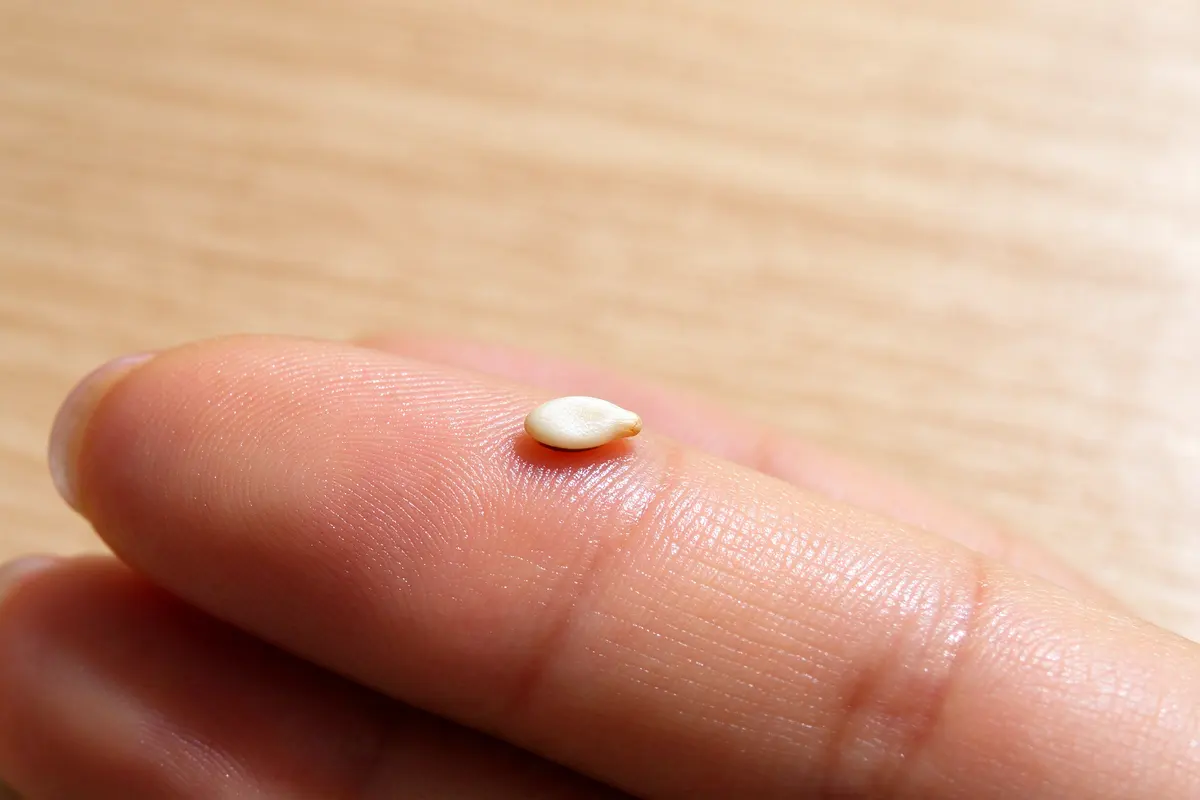
- Size this week
- about the size of a sesame seed
- Length this week
- around 2 mm from head to bottom
Five weeks and six days, the last day of the week. Most of these notes are to her. This one is to you, the partner, with her reading over your shoulder.
Your baby
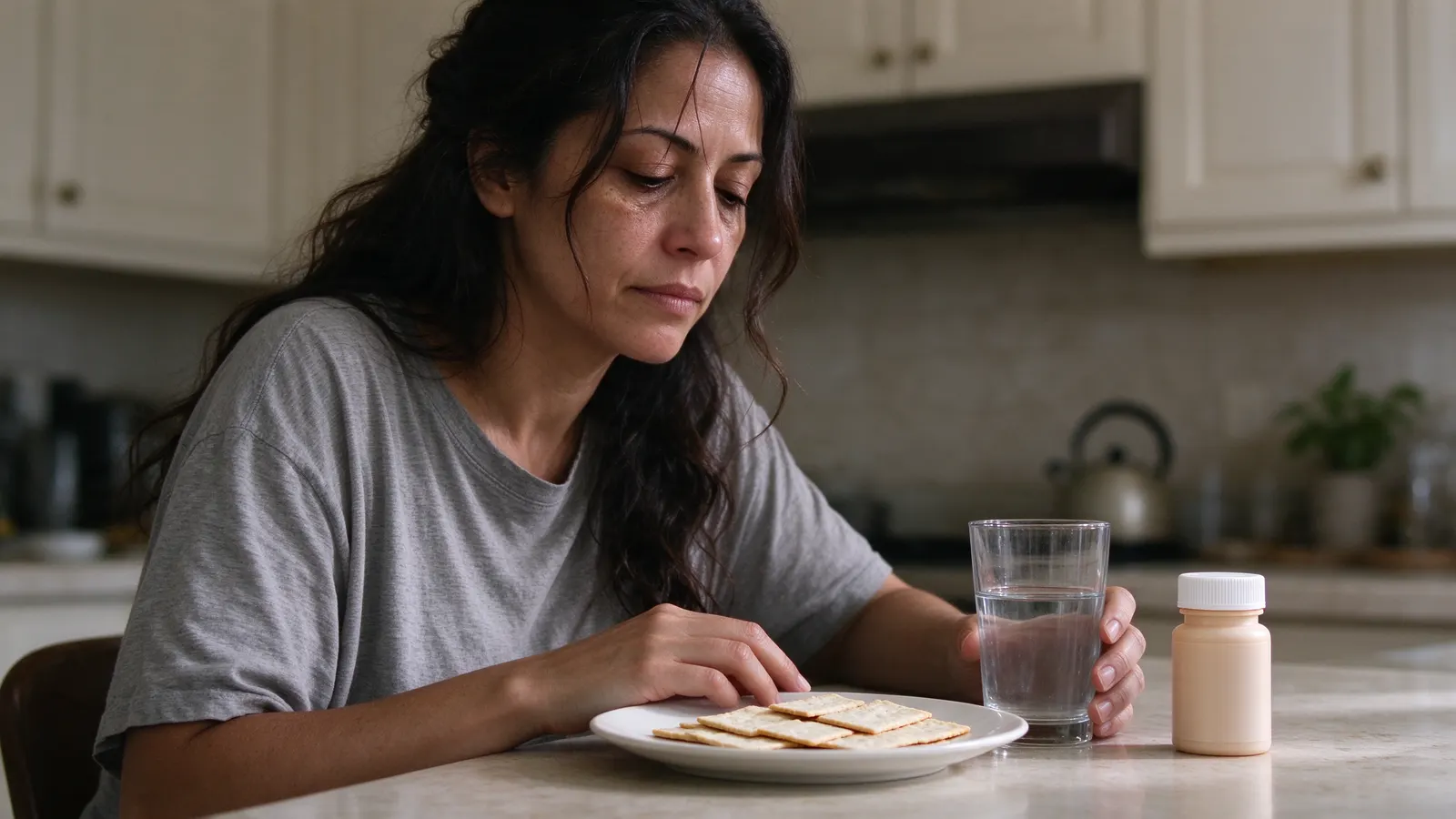
Your body
Hers, this week: fatigue, sore breasts, nausea, mood changes (NHS). The tiredness is real and early: NICHD says fatigue can appear as early as 1 week after conception, linked to rising progesterone and increased blood flow, and breast tenderness, swelling, or tingling can begin 1 to 2 weeks after conception (NICHD). If she's asleep at nine, that's physiology.
One line from the NHS for anyone in the house with a long-term condition: tell your specialist or GP, and don't stop regular medication without advice (NHS). The CDC says the same from the other side: talk to your providers before starting or stopping any medicines (CDC). If she takes something every day, make sure it's written on the first-visit list, not just remembered.
Try today
The partner's question
Time: 5 minutes
Partner: write the one question you most want answered at the first visit. Not the one you think you should ask; the one you'd ask at 3am.
Read it to her. If it's already on her list, pick your second.
Add it to the first-visit list in your own handwriting, so it isn't lost in hers.
Ask the office whether you can come. The first visit typically covers her health history, an exam, and lab tests (MedlinePlus), and two sets of ears help.
Make it work:If you can't be there, send the question with her, and ask for the answer word for word that evening.
Watch for
Normal
tiredness that puts her to bed early (NHS).
Go to the ER
or seek care immediately for overwhelming tiredness; it's on the CDC's list of urgent maternal warning signs (CDC).
Normal
a headache, which can show up even before a missed period (OWH).
Go to the ER
or seek care immediately for a headache that won't go away or gets worse over time, or for changes in vision (CDC).
Normal
light spotting or cramping (NHS).
Call your provider
about any bleeding; the NHS says it should be checked by a doctor (NHS). Partner: you make the call if she can't.
For you
To the partner: the news lands differently for each of you, and at different speeds. She may be feeling it in her body every hour; you may be feeling nothing yet, or everything at once, or mostly the money. All of that is allowed. Pretending to match her mood isn't useful.
Two things you can carry this week. First, her worry has a page from yesterday; yours doesn't yet, and it should. Second, support is available for her, and the NHS says plainly to ask for help with anxiety or low mood (NHS); the AAP adds that little support is itself a risk factor for depression and anxiety in pregnancy (AAP). You are a large part of her support. Be reachable.
To her: if there's no partner, or not one who's in this, the question is yours to write, and the person you tell it to can be anyone on your who-knows list.
Sources
- NHS. "Week 5." Week-by-week guide to pregnancy, Best Start in Life. https://www.nhs.uk/best-start-in-life/pregnancy/week-by-week-guide-to-pregnancy/1st-trimester/week-5/
- NHS. "Week 6." Week-by-week guide to pregnancy, Best Start in Life. https://www.nhs.uk/best-start-in-life/pregnancy/week-by-week-guide-to-pregnancy/1st-trimester/week-6/
- National Institute of Child Health and Human Development. "What are some common signs of pregnancy?" National Institutes of Health. https://www.nichd.nih.gov/health/topics/pregnancy/conditioninfo/signs
- Centers for Disease Control and Prevention. "Medicine and Pregnancy: An Overview." https://www.cdc.gov/medicine-and-pregnancy/about/index.html
- MedlinePlus. "Prenatal Care." National Library of Medicine. https://medlineplus.gov/prenatalcare.html
- Centers for Disease Control and Prevention. "Urgent Maternal Warning Signs and Symptoms." HEAR HER campaign, 2024. https://www.cdc.gov/hearher/maternal-warning-signs/index.html
- Office on Women's Health. "Knowing if you are pregnant." U.S. Department of Health and Human Services. https://womenshealth.gov/pregnancy/you-get-pregnant/knowing-if-you-are-pregnant
- American Academy of Pediatrics. "Depression and Anxiety During Pregnancy and After Birth: FAQs." HealthyChildren.org, 2019. https://www.healthychildren.org/English/ages-stages/prenatal/Pages/Depression-and-Anxiety-During-Pregnancy-and-After-Birth-FAQs.aspx
This guide is general education that summarizes published research and guidance from groups like the American Academy of Pediatrics, the CDC, and the WHO. It isn’t medical advice, and every child develops on their own timeline. Your pediatrician knows your child; if something feels wrong, call them. In an emergency, call 911.
Get each day’s note the morning it applies
Add your due date to a free Chorevia household, and every morning until the birth the day's note arrives in the app and by email: what's forming, what your body is doing, one thing to try, what to watch for, and a word for you.
Create your household