Day 60 of 280 · 8 weeks + 4 days
The honest page
Last reviewed · 3 min read · 7 sources · Plain-text version
The one page in this series about miscarriage: what the numbers say, what bleeding does and doesn't mean, and the card for the fridge.
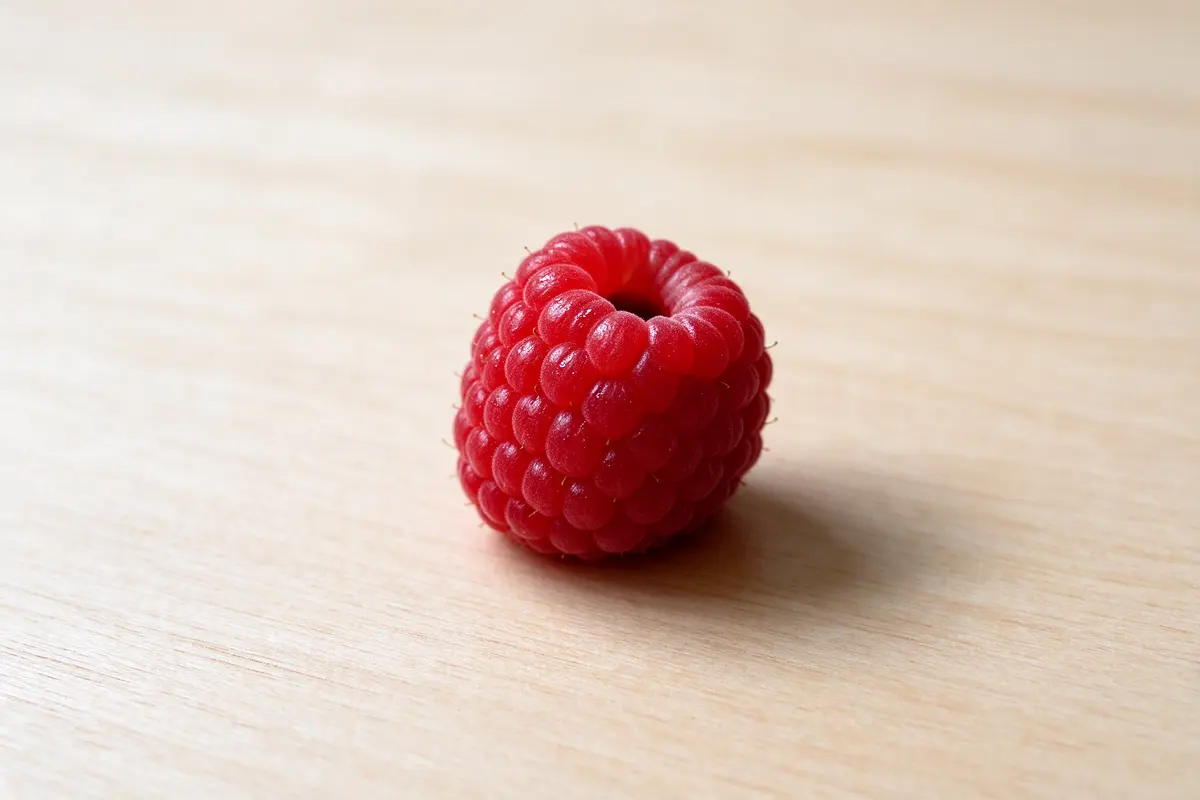
- Size this week
- about the size of a raspberry
- Length this week
- around 16 mm from head to bottom
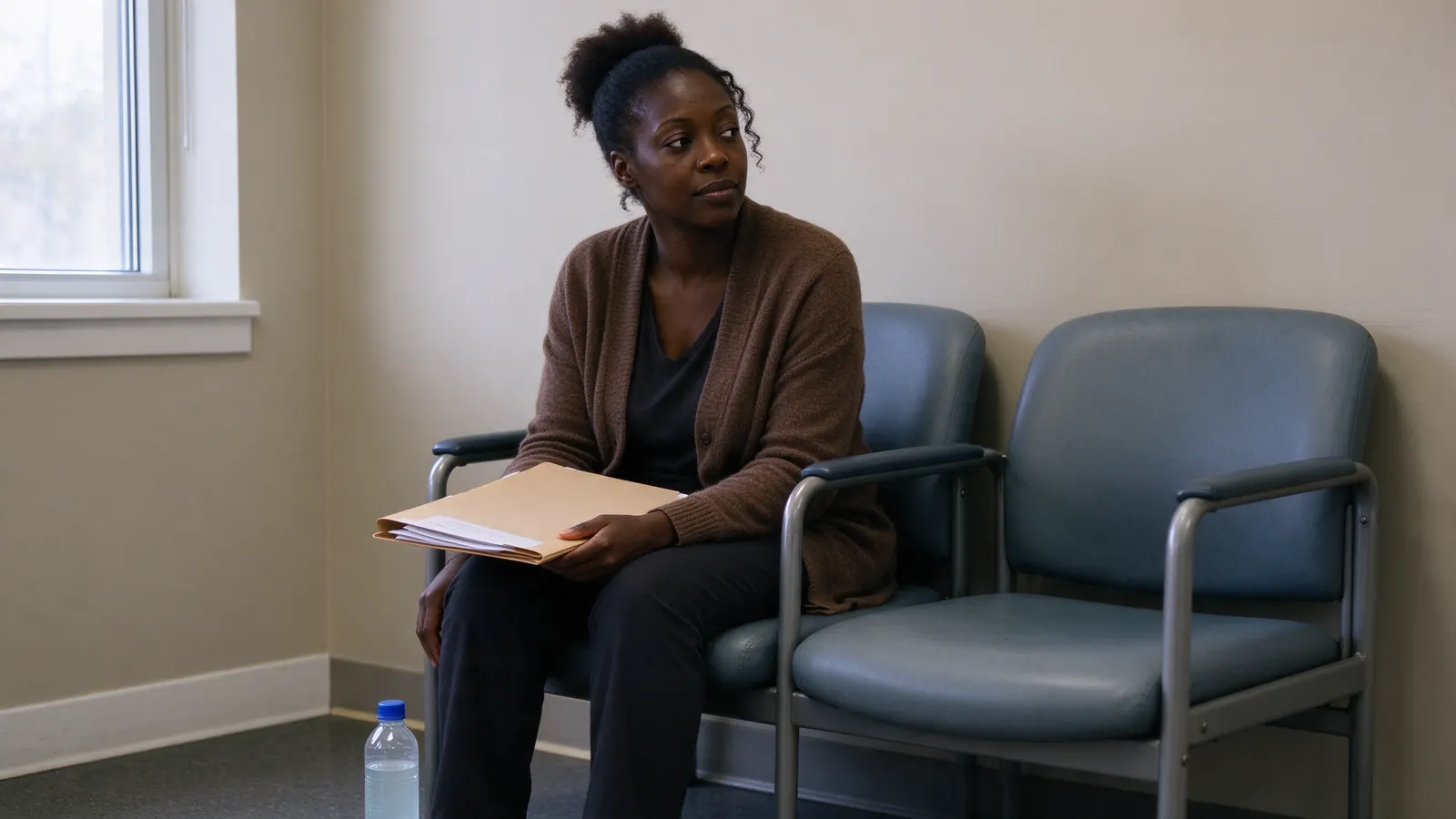
Eight weeks and four days. This is the only page in the series that names miscarriage. It's here once, with the numbers and the call line, so you don't have to carry the question every other day.
Your baby
Your body
Miscarriage is pregnancy loss from natural causes before 20 weeks, and the Office on Women's Health's figure is that as many as 20 percent of pregnancies end in miscarriage (OWH). Which also means most do not.
Bleeding is more common than loss: up to 1 in 4 women have vaginal bleeding at some point in pregnancy, most often in the first 3 months (MedlinePlus). The NICHD's line is that vaginal bleeding does not necessarily mean a miscarriage, and that anyone with it, at any point in pregnancy, should contact their provider (NICHD). The difference between spotting and bleeding is simple: spotting is a few drops, not enough to cover a panty liner; bleeding is heavier and needs a liner or pad (MedlinePlus). Almost all women who miscarry have bleeding first (MedlinePlus), which is why the call line below exists. One comfort: mild morning sickness does not harm the baby and may be linked to a lower risk of miscarriage (MedlinePlus).
Try today
The call-line card
Time: 10 minutes
Write your provider's daytime number and the after-hours number. If you don't have the second, call the office and ask.
Write the nearest emergency room and how you'd get there. MedlinePlus's rule: if you cannot reach your provider, go to the emergency room (MedlinePlus).
Add the signs that mean go now: heavy bleeding, bleeding with pain or cramping, dizziness with bleeding, belly or pelvic pain (MedlinePlus).
Put one card on the fridge and a copy in both phones.
Make it work:Add the name of the person who would drive. Then put the card away; it's for a day that most likely won't come.
Watch for
Normal
light spotting, which is on the NHS's list of ordinary symptoms this week (NHS).
Call your provider right away
for heavy bleeding; if you can't reach yours, go to the emergency room (MedlinePlus).
Normal
light cramping on its own (NHS).
Call your provider right away
for bleeding with pain or cramping (MedlinePlus).
Normal
bleeding that turns out to be nothing; it does not necessarily mean a miscarriage (NICHD).
Call your provider right away
for dizziness with bleeding (MedlinePlus), and if bleeding and cramping are severe, drink only fluids on the way (MedlinePlus).
Normal
not yet knowing your blood type.
Call your provider
about any bleeding once you know you're Rh-negative, because you may need Rho(D) immune globulin (MedlinePlus).
For you
If this is the page you've been dreading, read it once and put it down. The card is on the fridge so the fear doesn't have to be in your head.
If a loss does happen, help doesn't stop at the clinic. The National Maternal Mental Health Hotline, 1-833-TLC-MAMA, is free and confidential, staffed by trained counselors 24 hours a day in English, Spanish and more than 60 other languages, for before, during and after pregnancy (NICHD).
If you're the partner: the card is yours too. You'd be the one driving, and the one talking to the desk. Read it once today, then go back to the raspberry.
Sources
- NHS. "Week 8." Week-by-week guide to pregnancy, Best Start in Life. https://www.nhs.uk/best-start-in-life/pregnancy/week-by-week-guide-to-pregnancy/1st-trimester/week-8/
- Office on Women's Health. "Pregnancy complications." U.S. Department of Health and Human Services. https://womenshealth.gov/pregnancy/youre-pregnant-now-what/pregnancy-complications
- MedlinePlus. "Vaginal bleeding in pregnancy." Medical Encyclopedia, National Library of Medicine. https://medlineplus.gov/ency/article/003264.htm
- National Institute of Child Health and Human Development. "What are some common complications of pregnancy?" National Institutes of Health. https://www.nichd.nih.gov/health/topics/pregnancy/conditioninfo/complications
- MedlinePlus. "Vaginal bleeding in early pregnancy." National Library of Medicine. https://medlineplus.gov/ency/patientinstructions/000614.htm
- MedlinePlus. "Morning sickness." National Library of Medicine. https://medlineplus.gov/ency/patientinstructions/000604.htm
- National Institute of Child Health and Human Development. "What should I know about postpartum depression?" National Institutes of Health. https://www.nichd.nih.gov/health/topics/pregnancy/conditioninfo/postpartum
This guide is general education that summarizes published research and guidance from groups like the American Academy of Pediatrics, the CDC, and the WHO. It isn’t medical advice, and every child develops on their own timeline. Your pediatrician knows your child; if something feels wrong, call them. In an emergency, call 911.
Get each day’s note the morning it applies
Add your due date to a free Chorevia household, and every morning until the birth the day's note arrives in the app and by email: what's forming, what your body is doing, one thing to try, what to watch for, and a word for you.
Create your household