Day 48 of 280 · 6 weeks + 6 days
Vitamin D, and the sun
Last reviewed · 3 min read · 8 sources · Plain-text version
Folic acid has a number you know by now. Vitamin D has one too, and two countries say it differently. Today you find yours on the label.
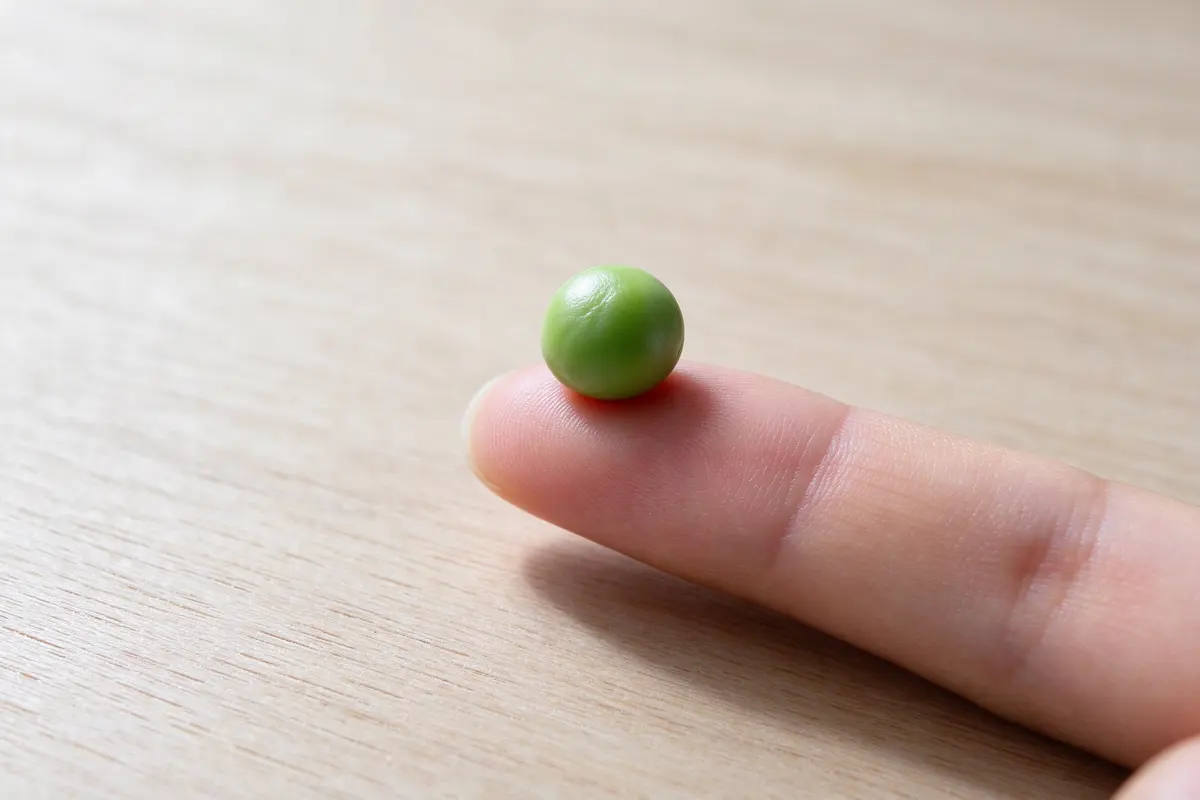
- Size this week
- about the size and shape of a pea
- Length this week
- around 6 mm from head to bottom

Six weeks and six days, the last day of week 6. Folic acid has been on the list since before you knew. Today is the other vitamin the NHS names this week, and three minutes with a label.
Your baby
Your body
The NHS's to-do list for this week says to take folic acid and vitamin D (NHS). Its number for vitamin D is 10 micrograms a day from October to early March, or year-round if you're advised to (NHS); the calendar it names is the dark half of the year. In the US the figure is written differently: MedlinePlus says all women, pregnant or not, should be getting 600 IU of vitamin D per day (MedlinePlus).
While the label is out, two more lines. During pregnancy you need 600 mcg of folic acid per day from foods and/or vitamins, and most people need a supplement to reach it (MedlinePlus); iron is 27 mg per day, because blood volume rises (MedlinePlus). The NHS's folic acid line is 400mcg daily until at least week 12 (NHS). If the pill upsets your stomach, take it at night with food; the iron can irritate the stomach (MedlinePlus).
Try today
The vitamin D line
Time: 3 minutes
Find the vitamin D line on your prenatal vitamin's label and write the amount in your notes, in whichever unit the label uses.
Beside it, write the two reference numbers: 600 IU a day (MedlinePlus) and the NHS's 10 micrograms a day from October to early March (NHS).
Add one question to the first-visit list: "Is the amount in my vitamin right for me?" Only take the supplements a provider recommends (MedlinePlus).
While the bottle is out, note the folic acid and iron lines too (MedlinePlus).
Make it work:Don't convert the units yourself or top up with a second bottle. Write the question and let the provider do the arithmetic.
Watch for
Normal
a prenatal vitamin that sits heavily; the iron can irritate the stomach (MedlinePlus).
Call your provider
before adding any other supplement or herbal remedy; the AAP says to take vitamins only in the doses your doctor recommends and to make sure they know about anything else you take (AAP).
Normal
tired eyes at the end of a long day.
Call your provider
for changes in your vision; it is on the CDC's list of urgent maternal warning signs (CDC).
Normal
the sore breasts and headaches on this week's list (NHS).
Call your provider right away
for constant, severe abdominal pain, or pain with bleeding or fever (MedlinePlus); severe belly pain that doesn't go away is on the CDC's urgent list too (CDC).
For you
There is a lot of advice about vitamins, most of it from people who aren't your provider. The AAP's rule is the simple one: take vitamins only in the doses recommended by your doctor, and make sure your doctor knows about any other supplements you take, including herbal remedies (AAP). MedlinePlus says the same in fewer words: only take the supplements a health care provider recommends (MedlinePlus).
If you're the partner: this is a reading job, and you can do it. Take the bottle, find the line, write the number. Then stop. The question is for the visit, not for the internet tonight.
Sources
- NHS. "Week 6." Week-by-week guide to pregnancy, Best Start in Life. https://www.nhs.uk/best-start-in-life/pregnancy/week-by-week-guide-to-pregnancy/1st-trimester/week-6/
- NHS. "Week 14." Week-by-week guide to pregnancy, Best Start in Life. https://www.nhs.uk/best-start-in-life/pregnancy/week-by-week-guide-to-pregnancy/2nd-trimester/week-14/
- NHS. "Week 7." Week-by-week guide to pregnancy, Best Start in Life. https://www.nhs.uk/best-start-in-life/pregnancy/week-by-week-guide-to-pregnancy/1st-trimester/week-7/
- MedlinePlus. "Pregnancy and Nutrition." National Library of Medicine. https://medlineplus.gov/pregnancyandnutrition.html
- MedlinePlus. "Morning sickness." National Library of Medicine. https://medlineplus.gov/ency/patientinstructions/000604.htm
- American Academy of Pediatrics. "Nutrition and Exercise During Pregnancy." HealthyChildren.org. https://www.healthychildren.org/English/ages-stages/prenatal/Pages/Nutrition-and-Exercise-During-Pregnancy.aspx
- Centers for Disease Control and Prevention. "Urgent Maternal Warning Signs and Symptoms." HEAR HER campaign, 2024. https://www.cdc.gov/hearher/maternal-warning-signs/index.html
- MedlinePlus. "Aches and pains during pregnancy." National Library of Medicine. https://medlineplus.gov/ency/patientinstructions/000580.htm
This guide is general education that summarizes published research and guidance from groups like the American Academy of Pediatrics, the CDC, and the WHO. It isn’t medical advice, and every child develops on their own timeline. Your pediatrician knows your child; if something feels wrong, call them. In an emergency, call 911.
Get each day’s note the morning it applies
Add your due date to a free Chorevia household, and every morning until the birth the day's note arrives in the app and by email: what's forming, what your body is doing, one thing to try, what to watch for, and a word for you.
Create your household