Day 56 of 280 · 8 weeks
Paddle hands
Last reviewed · 3 min read · 8 sources · Plain-text version
Eight weeks: the embryo is now a foetus, and the booking visit is in sight. Today you write the five questions you'll take to it.
- Size this week
- about the size of a raspberry
- Length this week
- around 16 mm from head to bottom
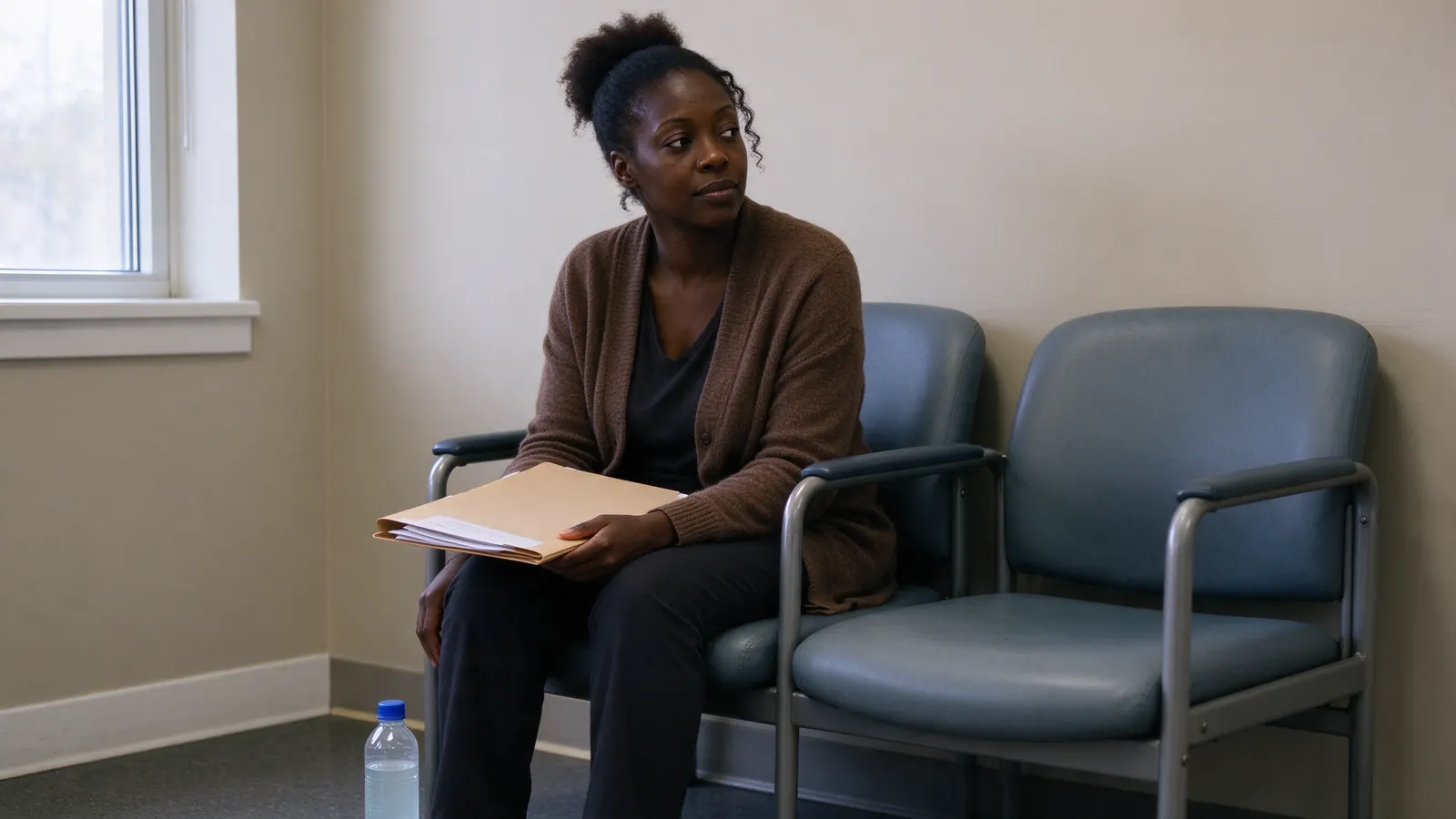
Eight weeks. The NHS changes its word this week: the embryo is now called a foetus (NHS). Today is the list you'll carry into the first long appointment.
Your baby

Your body
You may feel bloated, have swollen breasts, and feel tired or sick (NHS). This is also the week the NHS's booking appointment window opens: it usually falls between weeks 8 and 12 and lasts about an hour (NHS).
In the US, the first visit typically includes a review of your health history, a physical exam, and lab tests, and your due date is calculated at 40 weeks (MedlinePlus). The Office on Women's Health lists a full physical exam, blood tests, and the due date calculation, possibly with a Pap test and pelvic and breast exams, plus screening for blood type and Rh factor, anemia, several infections, and immunity to rubella and chickenpox (OWH). After that, checkups run about monthly through week 28 (OWH).
Try today
The appointment list
Time: 15 minutes
Write the first day of your last period and any dates you're unsure of; the dating scan comes between 8 and 14 weeks (NHS).
List every medicine and supplement, with doses. The NHS's own lines: 400 micrograms of folic acid daily until at least week 12, plus vitamin D (NHS).
Write your five questions. Start with whatever these notes have left you carrying: the smell, the craving, the headache, the mood.
Add anything about your job you want checked: what you lift, how long you stand, which chemicals you handle (MedlinePlus).
Leave the list where your partner can add a line.
Make it work:Bring it on paper. The NHS says the booking appointment lasts about an hour (NHS), and an hour of questions is easier to steer with a page in your hand.
Watch for
Normal
light cramping or spotting, both on the NHS's list for this week (NHS).
Call your provider
about any bleeding; the NHS says to contact your doctor (NHS).
Normal
spotting, meaning a few drops of blood, not enough to cover a panty liner (MedlinePlus).
Call your provider right away
for bleeding that needs a liner or pad, for bleeding with pain or cramping, or for belly or pelvic pain; if you can't reach them, go to the emergency room (MedlinePlus).
Normal
feeling bloated, swollen-breasted, tired or sick (NHS).
Call your provider
for fever or chills, which MedlinePlus lists among the first-trimester reasons to call (MedlinePlus); the CDC's urgent threshold is a fever of 100.4°F (38°C) or higher (CDC).
For you
Telling your employer is your choice and your timing. Nothing on the appointment list requires it, and most pregnant women can keep working, some until delivery (MedlinePlus). If a question about your job goes on the list today, it's so a provider can answer it, not so anyone at work has to know yet.
One small freedom from the NHS's page this week: there's no need to eat for two, and if you're starting to move more, about 10 minutes a day is the place to begin, working toward 150 minutes a week (NHS).
If you're the partner: ask the office whether you can come to the booking visit, and block the hour now.
Sources
- NHS. "Week 8." Week-by-week guide to pregnancy, Best Start in Life. https://www.nhs.uk/best-start-in-life/pregnancy/week-by-week-guide-to-pregnancy/1st-trimester/week-8/
- NHS. "Week 7." Week-by-week guide to pregnancy, Best Start in Life. https://www.nhs.uk/best-start-in-life/pregnancy/week-by-week-guide-to-pregnancy/1st-trimester/week-7/
- MedlinePlus. "Prenatal Care." National Library of Medicine. https://medlineplus.gov/prenatalcare.html
- Office on Women's Health. "Prenatal care and tests." U.S. Department of Health and Human Services. https://womenshealth.gov/pregnancy/youre-pregnant-now-what/prenatal-care-and-tests
- MedlinePlus. "Pregnancy and work." National Library of Medicine. https://medlineplus.gov/ency/patientinstructions/000609.htm
- MedlinePlus. "Vaginal bleeding in early pregnancy." National Library of Medicine. https://medlineplus.gov/ency/patientinstructions/000614.htm
- MedlinePlus. "Prenatal care in your first trimester." National Library of Medicine. https://medlineplus.gov/ency/patientinstructions/000544.htm
- Centers for Disease Control and Prevention. "Urgent Maternal Warning Signs and Symptoms." HEAR HER campaign, 2024. https://www.cdc.gov/hearher/maternal-warning-signs/index.html
This guide is general education that summarizes published research and guidance from groups like the American Academy of Pediatrics, the CDC, and the WHO. It isn’t medical advice, and every child develops on their own timeline. Your pediatrician knows your child; if something feels wrong, call them. In an emergency, call 911.
Get each day’s note the morning it applies
Add your due date to a free Chorevia household, and every morning until the birth the day's note arrives in the app and by email: what's forming, what your body is doing, one thing to try, what to watch for, and a word for you.
Create your household