Day 57 of 280 · 8 weeks + 1 day
The dating scan
Last reviewed · 3 min read · 6 sources · Plain-text version
The first ultrasound is due between 8 and 14 weeks. What it looks for, why it may be a vaginal scan, and the full-bladder trick.
- Size this week
- about the size of a raspberry
- Length this week
- around 16 mm from head to bottom
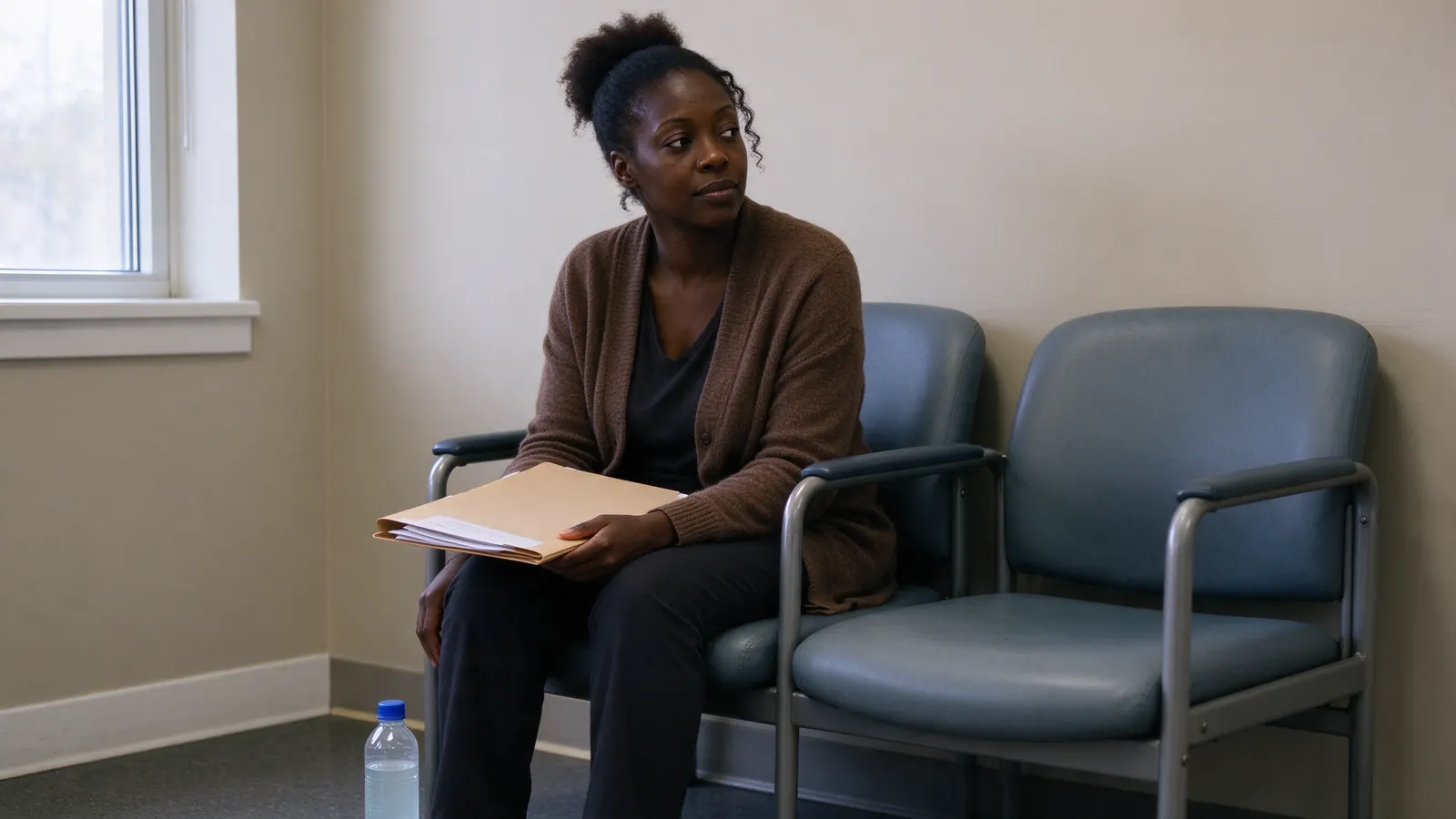
Eight weeks and one day. The dating scan can be booked from this week. Today is what it does, what it doesn't, and the one bit of preparation some clinics ask for.
Your baby

Around 16mm, about the size of a raspberry, and the NHS adds: "By next week, they will be twice the size!" (NHS). In the first 12 weeks, an ultrasound can confirm a normal pregnancy, work out the baby's age, check the heart rate, and look for a multiple pregnancy or an ectopic one (MedlinePlus). The heartbeat usually can't be heard or seen on ultrasound until at least 6 to 7 weeks (MedlinePlus), so checking the heart rate is on the list from now on.
Your body
The NHS's first dating scan is due between 8 and 14 weeks (NHS). In the US, a first-trimester ultrasound, usually vaginal, is recommended to estimate the due date (MedlinePlus). A pregnancy ultrasound uses sound waves to picture the baby in the uterus; MedlinePlus's line is that "current ultrasound techniques appear to be safe" and that ultrasound does not involve radiation (MedlinePlus).
The practical part: you may be asked to drink 2 to 3 glasses of liquid an hour before the test and not urinate, because a full bladder gives the best image (MedlinePlus). Not every scan needs it, so ask when you book. Scans without a medical need, the keepsake kind, are something doctors advise against (OWH); the right scanning schedule for you is a conversation with your provider (MedlinePlus).
Try today
The full-bladder plan
Time: 5 minutes now, an hour before the scan later
When the scan is booked, ask whether they want a full bladder for it.
If yes, set an alarm for one hour before the appointment and put 2 to 3 glasses of water where you'll see them (MedlinePlus).
Drink them when the alarm goes, then don't pee until after the scan; a full bladder gives the best image (MedlinePlus).
Pack the appointment list and any notes about your last period; the scan is the test that sets the due date (MedlinePlus).
Make it work:This early, the scan is usually a vaginal one (MedlinePlus). Ask what to expect when you book, so nothing surprises you on the day.
Watch for
Normal
light cramping, on the NHS's list for the week (NHS).
Call your provider
right away for severe belly pain that doesn't go away; the CDC says to seek care immediately (CDC).
Normal
the discharge you've always had.
Call your provider
for increased or foul-smelling discharge, one of MedlinePlus's first-trimester reasons to call (MedlinePlus).
Normal
being a little out of breath on the stairs is not on any list, but these two are.
Call 911
or seek care immediately for trouble breathing, or chest pain or a fast-beating heart (CDC).
For you
The scan can move your dates. Hold the due date loosely from the start: it is only an estimate, and normal term labor can start anywhere from 3 weeks before it to 2 weeks after (MedlinePlus). If the scan says you're a few days behind or ahead of the count from your last period, the count changes; nothing else does.
If you're the partner: this is the appointment to be at. Ask whether you can be in the room, and if there's a screen, ask the sonographer to say what you're both looking at.
Sources
- NHS. "Week 8." Week-by-week guide to pregnancy, Best Start in Life. https://www.nhs.uk/best-start-in-life/pregnancy/week-by-week-guide-to-pregnancy/1st-trimester/week-8/
- MedlinePlus. "Ultrasound pregnancy." Medical Encyclopedia, National Library of Medicine. https://medlineplus.gov/ency/article/003778.htm
- MedlinePlus. "Prenatal care in your first trimester." National Library of Medicine. https://medlineplus.gov/ency/patientinstructions/000544.htm
- Office on Women's Health. "Prenatal care and tests." U.S. Department of Health and Human Services. https://womenshealth.gov/pregnancy/youre-pregnant-now-what/prenatal-care-and-tests
- Centers for Disease Control and Prevention. "Urgent Maternal Warning Signs and Symptoms." HEAR HER campaign, 2024. https://www.cdc.gov/hearher/maternal-warning-signs/index.html
- MedlinePlus. "Am I in labor?" National Library of Medicine. https://medlineplus.gov/ency/patientinstructions/000508.htm
This guide is general education that summarizes published research and guidance from groups like the American Academy of Pediatrics, the CDC, and the WHO. It isn’t medical advice, and every child develops on their own timeline. Your pediatrician knows your child; if something feels wrong, call them. In an emergency, call 911.
Get each day’s note the morning it applies
Add your due date to a free Chorevia household, and every morning until the birth the day's note arrives in the app and by email: what's forming, what your body is doing, one thing to try, what to watch for, and a word for you.
Create your household