Day 40 of 280 · 5 weeks + 5 days
The worry that comes with the news
Last reviewed · 3 min read · 5 sources · Plain-text version
Worry and anxiety are common in early pregnancy, and not something you caused. Today you get every worry onto one page and sort it.
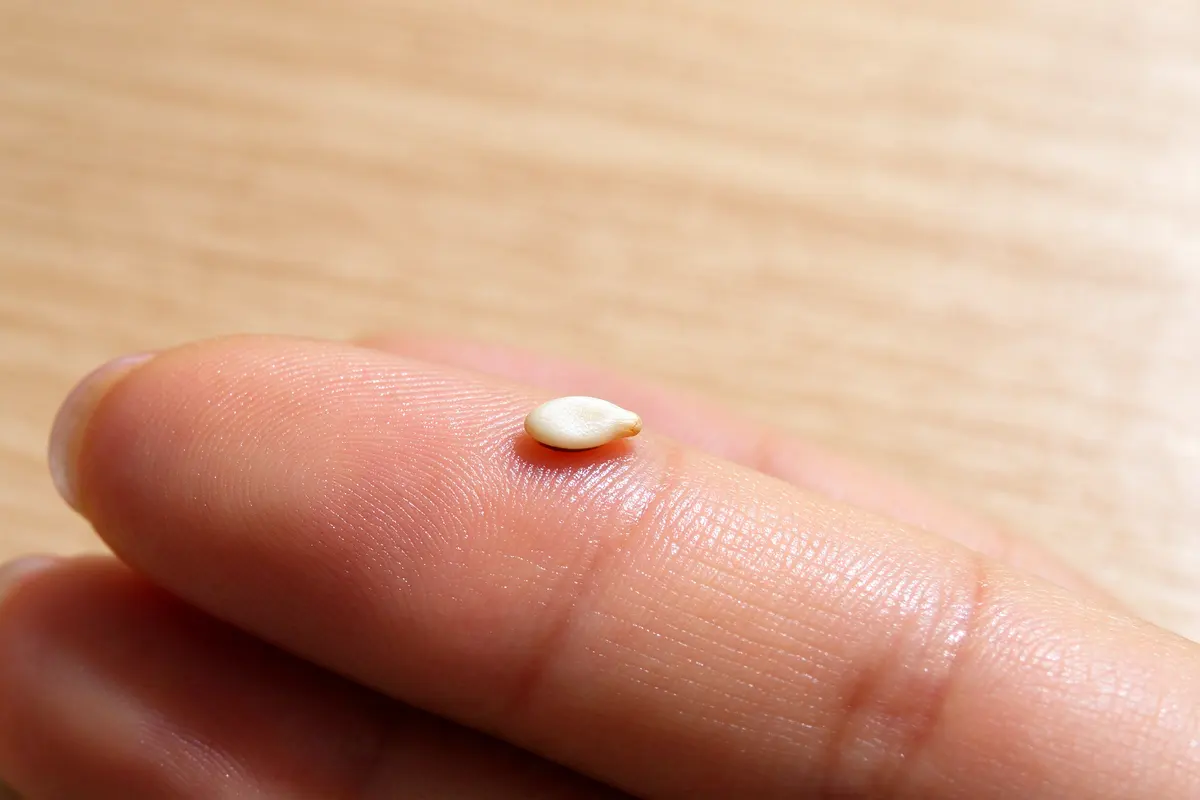
- Size this week
- about the size of a sesame seed
- Length this week
- around 2 mm from head to bottom
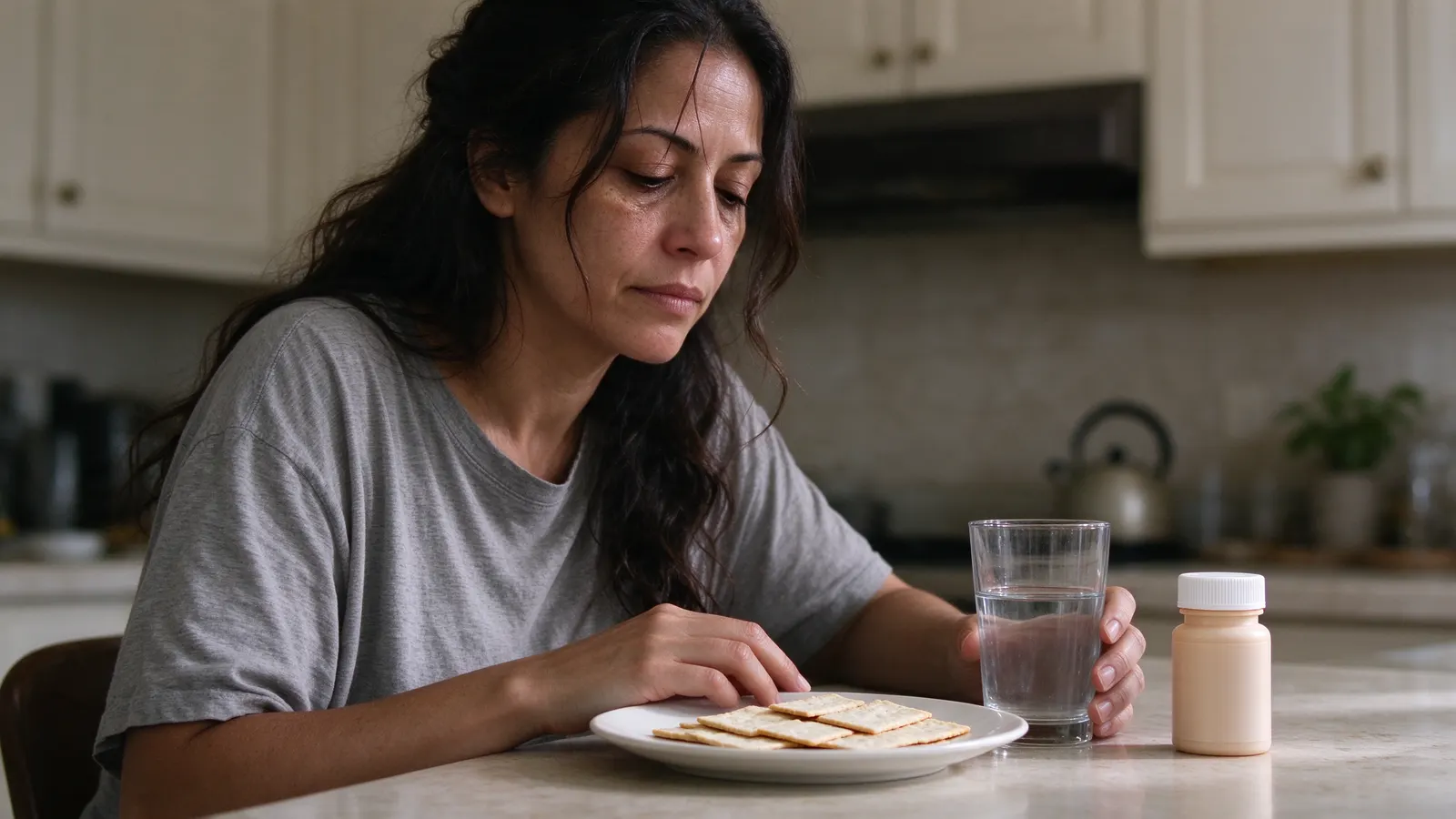
Five weeks and five days. Nobody warns you that the news comes with a second delivery: a steady supply of worry, arriving at 3am. Today you give it a page instead of the ceiling.
Your baby
Your body
The NHS says it in one line on this week's page: worries and anxiety are common, and support is available (NHS). The AAP goes further: anxiety during and after pregnancy is as common as depression, and "these feelings are not something you caused by doing or not doing something" (AAP). Some of it is chemistry: mood swings from hormonal changes can begin a few weeks after conception (NICHD).
The difference between a worried week and something that needs help is persistence. The AAP's line is that depression and anxiety are long lasting and won't go away on their own, but can be treated if you seek help, and the sooner you start, the more quickly you'll start to feel better (AAP). Counseling is an option, and several medications treat depression and anxiety effectively and are safe for pregnant women (AAP).
Try today
The worry inventory
Time: 15 minutes, alone
One page. Write every worry, large and absurd, one per line, until nothing else comes. Don't edit.
Mark a P beside each one a provider could answer at the first visit: dates, the scan, the medicine you take, the glass of wine before you knew. Copy those onto the first-visit list.
Mark an M beside the practical ones: money, leave, the flat, the car. Those get a date to talk, not a solution today.
What's left is the feeling kind. Circle the biggest one and say it out loud to one person this week.
Make it work:If the page fills with scary, upsetting thoughts that don't go away, that's on the AAP's list of warning signs, not a list to keep privately (AAP). Call your provider.
Watch for
Normal
worry that comes and goes; it's common, and support is available (NHS).
Call your provider
if it doesn't lift, or brings extreme sadness or anger, guilt about failing as a parent, or lost interest in things you enjoy; the AAP lists these as warning signs (AAP).
Normal
mood swings from hormonal changes (NICHD).
Call your provider
as soon as possible if you think you have depression; the CDC says most people, even with severe depression, improve with treatment (CDC).
Normal
a bad night.
For you
Asking for help if you feel anxious or low is on the NHS's to-do list for this week, between the folic acid and the antenatal classes (NHS). It's an ordinary item.
Some of what feeds worry is circumstance, not character. The AAP names a history of depression or anxiety, relationship or financial problems, little support, and an unplanned pregnancy among the risk factors (AAP). If several are yours, that's a reason to say so at the first visit, not a verdict.
If you're the partner: don't fix the page. Ask which line she circled, and listen to the end.
Sources
- NHS. "Week 5." Week-by-week guide to pregnancy, Best Start in Life. https://www.nhs.uk/best-start-in-life/pregnancy/week-by-week-guide-to-pregnancy/1st-trimester/week-5/
- American Academy of Pediatrics. "Depression and Anxiety During Pregnancy and After Birth: FAQs." HealthyChildren.org, 2019. https://www.healthychildren.org/English/ages-stages/prenatal/Pages/Depression-and-Anxiety-During-Pregnancy-and-After-Birth-FAQs.aspx
- National Institute of Child Health and Human Development. "What are some common signs of pregnancy?" National Institutes of Health. https://www.nichd.nih.gov/health/topics/pregnancy/conditioninfo/signs
- Centers for Disease Control and Prevention. "Symptoms of Depression Among Women." Reproductive Health, 2024. https://www.cdc.gov/reproductive-health/depression/index.html
- Centers for Disease Control and Prevention. "Urgent Maternal Warning Signs and Symptoms." HEAR HER campaign, 2024. https://www.cdc.gov/hearher/maternal-warning-signs/index.html
This guide is general education that summarizes published research and guidance from groups like the American Academy of Pediatrics, the CDC, and the WHO. It isn’t medical advice, and every child develops on their own timeline. Your pediatrician knows your child; if something feels wrong, call them. In an emergency, call 911.
Get each day’s note the morning it applies
Add your due date to a free Chorevia household, and every morning until the birth the day's note arrives in the app and by email: what's forming, what your body is doing, one thing to try, what to watch for, and a word for you.
Create your household