Day 174 of 280 · 24 weeks + 6 days
A pound and a half
Last reviewed · 3 min read · 8 sources · Plain-text version
What 1½ pounds feels like in your hands, why you're hungry, and why the NHS still says no extra food until week 28.
- Size this week
- about the size of a corn on the cob
- Length this week
- around 30 cm from head to heel
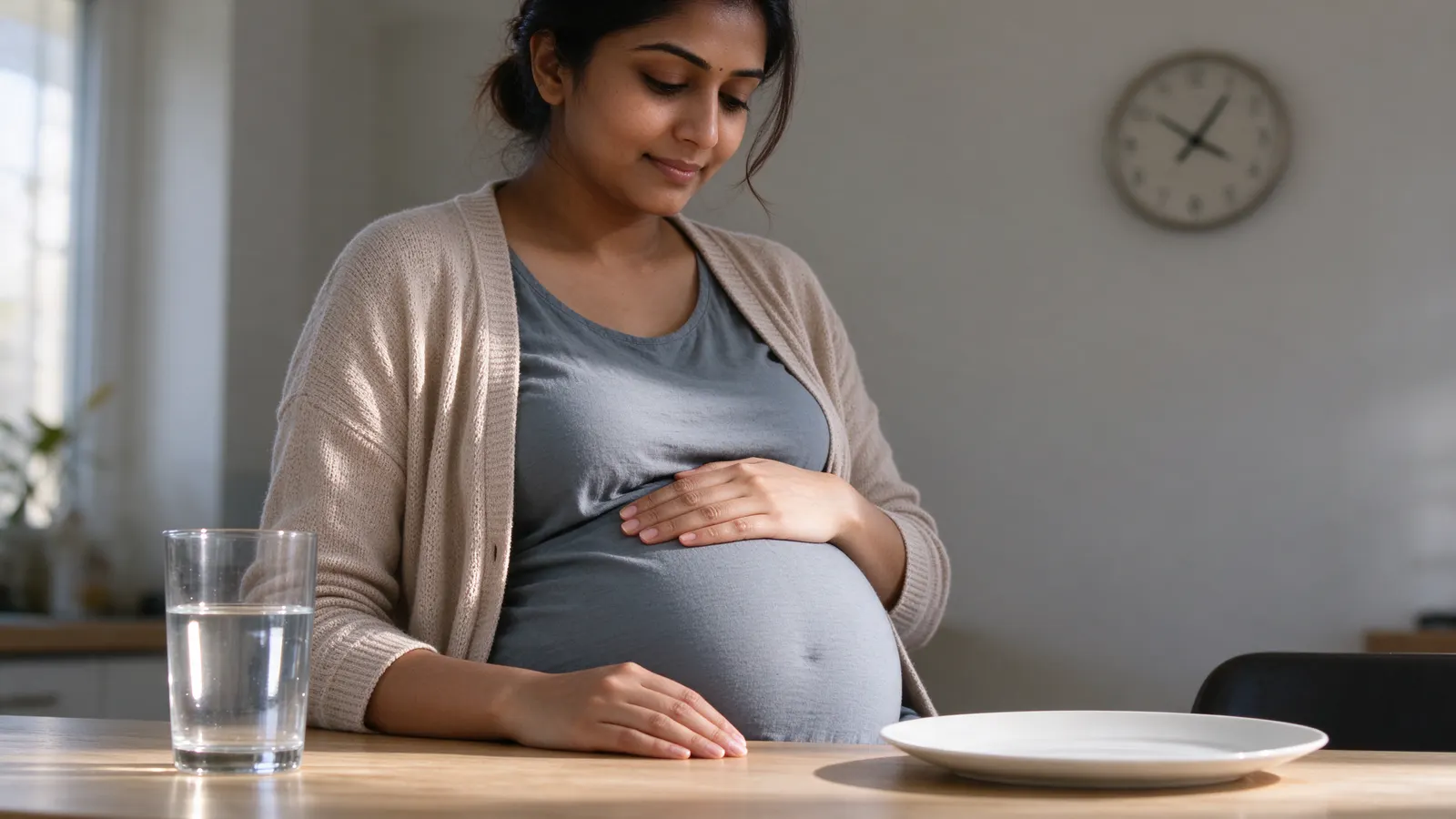
Twenty-four weeks and six days, the last day of week 24. Today is about weight: your baby's, and the number on your own scale, which are not the same thing.
Your baby
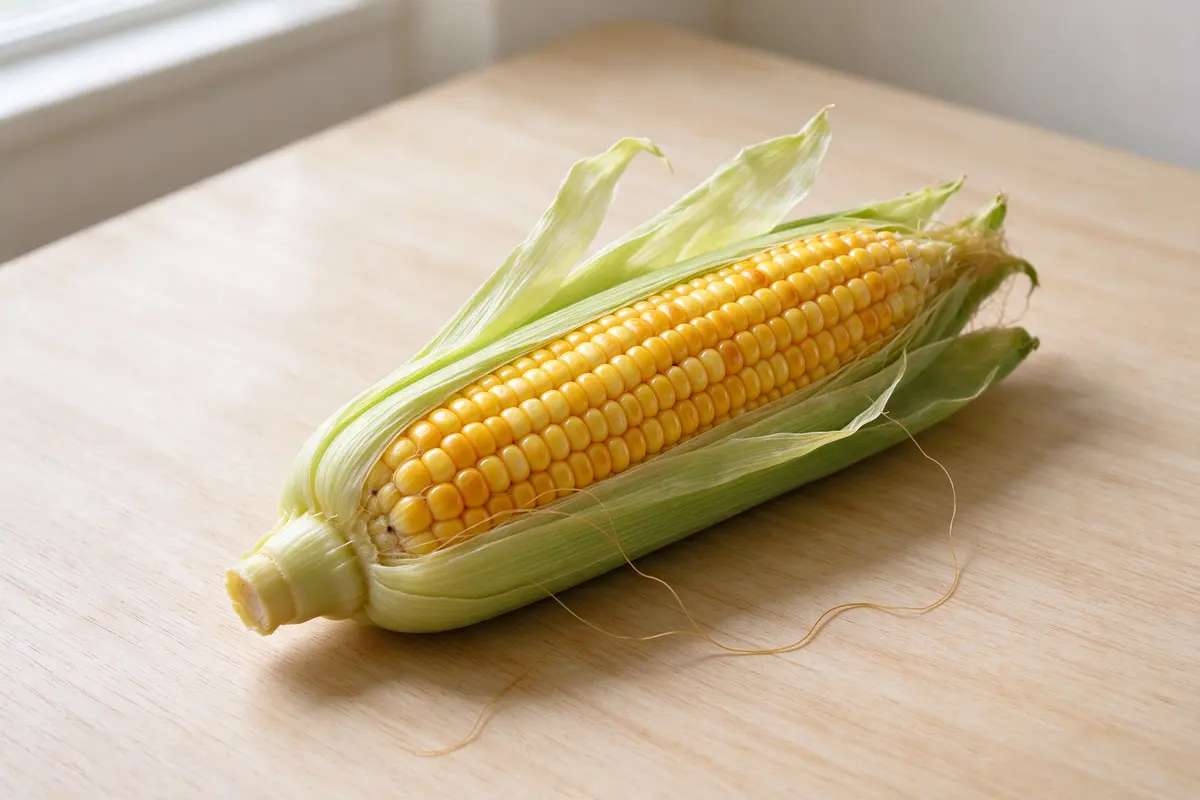
Around 30cm long from head to heel, about the size of a corn on the cob; everything is in proportion, but your baby is smaller than a baby who's been in the womb for longer (NHS). The Office on Women's Health gives the weight: at 24 weeks, about 12 inches and about 1½ pounds, with the lungs formed but not yet working (OWH).
Your body
You may feel very hungry, but you don't need extra food until week 28, and you're likely putting on weight (NHS). The pace most women see is about 1 lb (0.5 kg) a week for the rest of pregnancy after the first trimester (MedlinePlus).
Where it goes is the useful part. Of a 35 lb (16 kg) gain, the baby accounts for about 8 lb (3.5 kg) and fat stores for 5 to 9 lb (2.5 to 4 kg) (MedlinePlus); the placenta alone will weigh about 500g by the end (NHS). So the 1½ pounds your baby weighs this week is a small share of what the scale shows, and most of the rest is the equipment that keeps the baby growing.
Try today
The pound-and-a-half
Time: 5 minutes
Put a bowl on the kitchen scale and add rice, flour or sugar until it reads 1 pound 8 ounces.
Lift the bowl with both hands. That is about what your baby weighs this week (OWH).
Keep adding until it reads 8 pounds: roughly the baby's share of a 35-pound pregnancy by the end (MedlinePlus). Lift that too.
Pour it all back in the jar. There is nothing else to do.
Make it work:If weighing yourself is a sore point, leave your own number out of it. The CDC's advice is to track weight gain with your provider against the range for your starting weight, not against anyone else (CDC).
Watch for
Normal
light spotting is on the NHS's list of earlier symptoms that may continue, with the note to seek advice for any bleeding (NHS).
Call your provider right away
about any bleeding now; MedlinePlus says to treat bleeding in months 4 to 9 as a potential emergency (MedlinePlus).
Normal
headaches, on the NHS's symptom list for this week (NHS).
Call your provider
for a headache that won't go away or gets worse over time (CDC).
Normal
a moment of dizziness, also on that list (NHS).
Call your provider
for dizziness or fainting (CDC).
For you
The hunger is real and so is the rule, and holding both is the job this month. The CDC's line is plain: don't try to lose weight if you're already pregnant, because some weight gain is needed for a healthy baby (CDC). Fill the hungry hours with the foods the CDC lists, whole grains, vegetables, fruit, low-fat dairy and lean protein, and limit added sugars and solid fats (CDC).
Tomorrow is week 25 and a new vegetable.
Sources
- NHS. "Week 24." Week-by-week guide to pregnancy, Best Start in Life. https://www.nhs.uk/best-start-in-life/pregnancy/week-by-week-guide-to-pregnancy/2nd-trimester/week-24/
- NHS. "Week 17." Week-by-week guide to pregnancy, Best Start in Life. https://www.nhs.uk/best-start-in-life/pregnancy/week-by-week-guide-to-pregnancy/2nd-trimester/week-17/
- Office on Women's Health. "Stages of pregnancy." U.S. Department of Health and Human Services. https://womenshealth.gov/pregnancy/youre-pregnant-now-what/stages-pregnancy
- MedlinePlus. "Managing your weight gain during pregnancy." National Library of Medicine. https://medlineplus.gov/ency/patientinstructions/000603.htm
- Centers for Disease Control and Prevention. "Weight Gain During Pregnancy." https://www.cdc.gov/maternal-infant-health/pregnancy-weight/index.html
- Centers for Disease Control and Prevention. "Gestational Diabetes." https://www.cdc.gov/diabetes/about/gestational-diabetes.html
- MedlinePlus. "Vaginal bleeding in pregnancy." Medical Encyclopedia, National Library of Medicine. https://medlineplus.gov/ency/article/003264.htm
- Centers for Disease Control and Prevention. "Urgent Maternal Warning Signs and Symptoms." HEAR HER campaign, 2024. https://www.cdc.gov/hearher/maternal-warning-signs/index.html
This guide is general education that summarizes published research and guidance from groups like the American Academy of Pediatrics, the CDC, and the WHO. It isn’t medical advice, and every child develops on their own timeline. Your pediatrician knows your child; if something feels wrong, call them. In an emergency, call 911.
Get each day’s note the morning it applies
Add your due date to a free Chorevia household, and every morning until the birth the day's note arrives in the app and by email: what's forming, what your body is doing, one thing to try, what to watch for, and a word for you.
Create your household