Day 182 of 280 · 26 weeks
Eyes open
Last reviewed · 3 min read · 3 sources · Plain-text version
Twenty-six weeks. Your baby's eyes are opening for the first time. Blue eyes at birth are a myth, and today you dig out the eye-colour bet.
- Size this week
- about the size of a cucumber
- Length this week
- around 35.6 cm from head to heel
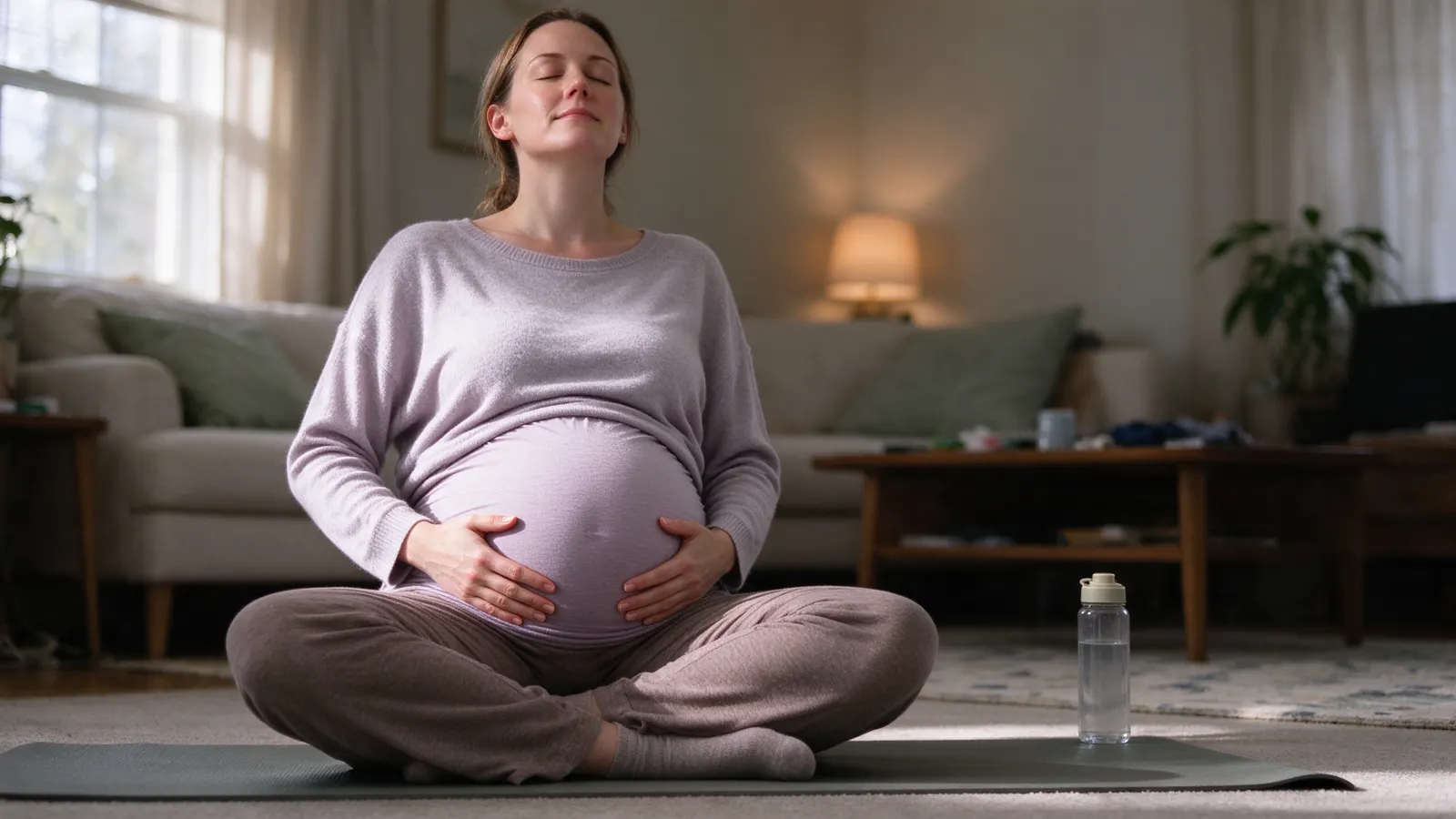
Twenty-six weeks. This week's news is small and rather lovely: behind the wall of your belly, your baby is opening their eyes.
Your baby

Around now your baby is around 35.6cm from head to heel, about the size of a cucumber (NHS). Their eyes are opening for the first time, and blinking is the next skill to develop (NHS).
What colour those eyes will be is already written: eye colour is inherited (NHS). The NHS calls blue eyes at birth a myth, notes that brown is a very common eye colour, and says colour can keep changing into adulthood but usually settles by age 3 (NHS). So the colour you see in the delivery room is not the final answer.
Your body
Tiredness, clumsiness and reduced coordination are common this week, linked to the extra weight you're carrying and a shifted centre of gravity (NHS). Looser joints play a part too, and the NHS suggests naps to make up for poor sleep at night (NHS). If you've been knocking into door frames or dropping your keys, that's the body recalculating, not you getting worse at being a person.
Try today
The eye-colour myth
Time: 5 minutes
Find the eye-colour bet you sealed back in your third month. If you never made one, take two slips of paper now and each write a guess.
Read the rules out loud before anyone gets attached: inherited, not blue by default, and usually settled by age 3 (NHS).
Each of you writes your own eye colour and your parents' on a new slip. That's the family the colour comes from.
Anyone want to change their guess? Allow one switch each, add the new slip, and reseal.
Write the opening date on the front: the third birthday.
Make it work:Don't settle the bet at the hospital. The NHS says colour can keep changing into adulthood (NHS), so the envelope waits.
Watch for
Normal
tired eyes at the end of a long day.
Call your provider
for changes in your vision; the CDC lists them as an urgent maternal warning sign (CDC).
Normal
a headache that eases with rest and water.
Call your provider
for a headache that won't go away despite medicine and fluids, or that comes with blurred vision or dizziness (CDC).
Normal
feeling tired and a bit clumsy this week (NHS).
Seek care immediately
for overwhelming tiredness, which is also on the CDC's urgent list (CDC).
For you
Today is a light one on purpose. Not every week brings a test or a decision; some just bring a baby opening their eyes and a paper bet on the shelf.
Take the nap if you can get it. The NHS suggests it, and a tired body is a clumsier one (NHS).
If you're the partner: clear the floor between the bed and the bathroom tonight, shoes and bags and the laundry basket, so the night trip is an empty corridor.
Sources
- NHS. "Week 26." Week-by-week guide to pregnancy, Best Start in Life. https://www.nhs.uk/best-start-in-life/pregnancy/week-by-week-guide-to-pregnancy/2nd-trimester/week-26/
- NHS. "Week 21." Week-by-week guide to pregnancy, Best Start in Life. https://www.nhs.uk/best-start-in-life/pregnancy/week-by-week-guide-to-pregnancy/2nd-trimester/week-21/
- Centers for Disease Control and Prevention. "Urgent Maternal Warning Signs and Symptoms." HEAR HER campaign, 2024. https://www.cdc.gov/hearher/maternal-warning-signs/index.html
This guide is general education that summarizes published research and guidance from groups like the American Academy of Pediatrics, the CDC, and the WHO. It isn’t medical advice, and every child develops on their own timeline. Your pediatrician knows your child; if something feels wrong, call them. In an emergency, call 911.
Get each day’s note the morning it applies
Add your due date to a free Chorevia household, and every morning until the birth the day's note arrives in the app and by email: what's forming, what your body is doing, one thing to try, what to watch for, and a word for you.
Create your household