Day 175 of 280 · 25 weeks
Hiccups
Last reviewed · 3 min read · 6 sources · Plain-text version
Small rhythmic jumps in the same spot are probably your baby's hiccups. Why loud noises make them kick, and the courgette that is a zucchini.
- Size this week
- about the size of a courgette
- Length this week
- around 34.6 cm from head to heel

Twenty-five weeks. A new size, a new vegetable, and a sensation you may already have felt without knowing what it was.
Your baby
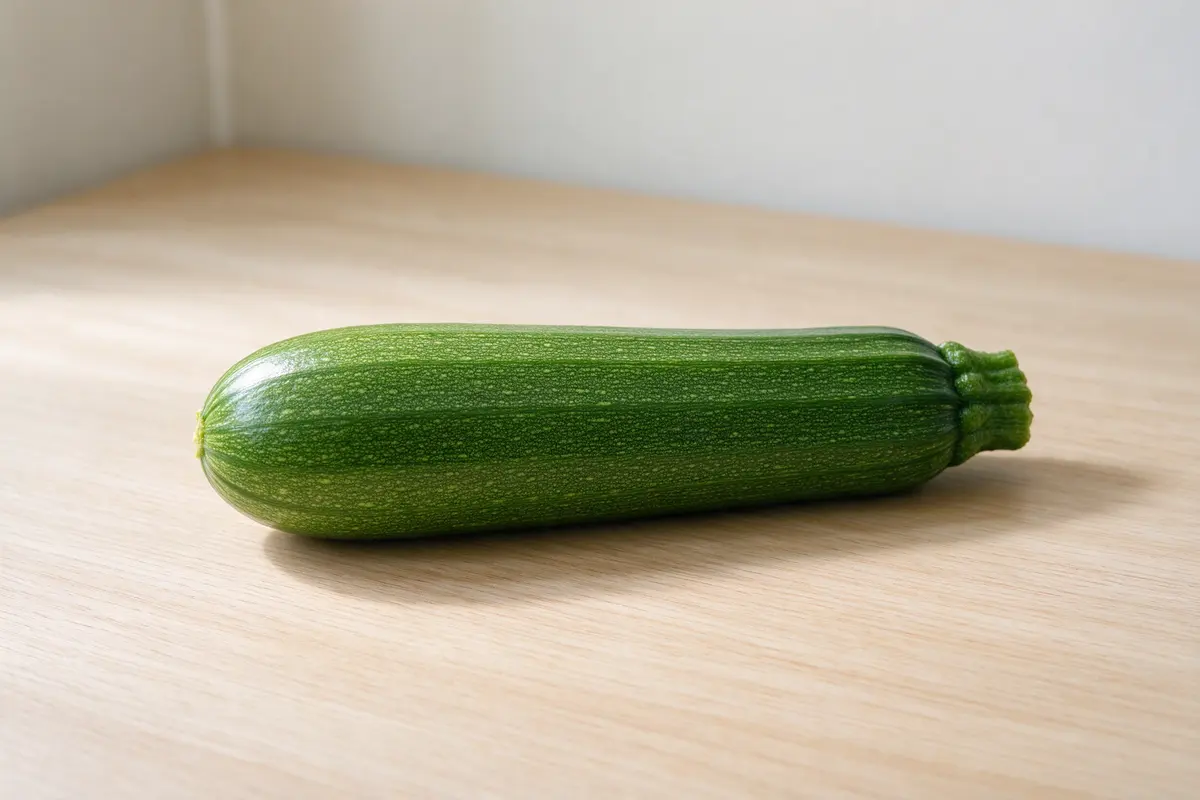
Around 34.6cm long from head to heel, approximately the size of a courgette (NHS). In the US the same vegetable is a zucchini; the NHS writes from Britain, so its pages say courgette, and this note says so once and moves on.
Your baby is very active now, and loud noises can make them jump and kick, which shouldn't hurt but may startle you (NHS). You may also feel hiccups (NHS).
Your body
Burping, fullness, heartburn, bloating and nausea after eating are common now because the baby takes up stomach space (NHS). Pregnancy can bring on heartburn or make it worse, and MedlinePlus says heartburn that happens 2 or more days a week should be treated, because reflux can damage the lining of the esophagus; ask your provider what's suitable rather than reaching for whatever is in the cupboard (MedlinePlus). Later this week there's a whole note on eating smaller.
Try today
The hiccup watch
Time: 5 minutes, whenever you notice them
When you feel small jumps in the same spot, stop and pay attention to whether they repeat at a steady beat. Kicks wander; hiccups tend to stay put.
Note the time and what you were doing.
Note what happens when a door slams or the music goes up; loud noises can make your baby jump and kick (NHS).
Keep the notes for a week. From 28 weeks you'll be asked to track movements properly (OWH); this is the easy version.
Make it work:Hiccups are not something to fix or stop. If you never notice them, that's fine too; the NHS says you "may" feel them, not that you will (NHS).
Watch for
Normal
hiccups, a jump at a loud noise, and a baby who is very active (NHS).
Normal
fullness, burping and heartburn after a meal (NHS).
Call 911
or go to the emergency room for severe chest pain or shortness of breath that does not go away; MedlinePlus lists it as a sign of a serious complication (MedlinePlus).
Normal
nausea after eating (NHS).
Call your provider
for severe nausea and throwing up, and in particular if you can't keep fluids down for more than 8 hours or food for more than 24 (CDC).
For you
The courgette is "approximately" the size, in the NHS's own word (NHS). Babies come in a range, vegetables come in a range, and nobody is measuring either against the other. Enjoy the picture and don't audit it.
If you're the partner: when she says "now", put your hand where hers is and wait. Hiccups are one of the few things in there that happen on a schedule you can catch.
Sources
- NHS. "Week 25." Week-by-week guide to pregnancy, Best Start in Life. https://www.nhs.uk/best-start-in-life/pregnancy/week-by-week-guide-to-pregnancy/2nd-trimester/week-25/
- NHS. "Week 23." Week-by-week guide to pregnancy, Best Start in Life. https://www.nhs.uk/best-start-in-life/pregnancy/week-by-week-guide-to-pregnancy/2nd-trimester/week-23/
- MedlinePlus. "Heartburn." Medical Encyclopedia, National Library of Medicine. https://medlineplus.gov/ency/article/003114.htm
- Office on Women's Health. "Prenatal care and tests." U.S. Department of Health and Human Services. https://womenshealth.gov/pregnancy/youre-pregnant-now-what/prenatal-care-and-tests
- MedlinePlus. "Common symptoms during pregnancy." National Library of Medicine. https://medlineplus.gov/ency/patientinstructions/000583.htm
- Centers for Disease Control and Prevention. "Urgent Maternal Warning Signs and Symptoms." HEAR HER campaign, 2024. https://www.cdc.gov/hearher/maternal-warning-signs/index.html
This guide is general education that summarizes published research and guidance from groups like the American Academy of Pediatrics, the CDC, and the WHO. It isn’t medical advice, and every child develops on their own timeline. Your pediatrician knows your child; if something feels wrong, call them. In an emergency, call 911.
Get each day’s note the morning it applies
Add your due date to a free Chorevia household, and every morning until the birth the day's note arrives in the app and by email: what's forming, what your body is doing, one thing to try, what to watch for, and a word for you.
Create your household