Day 67 of 280 · 9 weeks + 4 days
A bit of colour in the eyes
Last reviewed · 3 min read · 9 sources · Plain-text version
Nine weeks and four days. The NHS says the eyes are bigger and have a bit of colour now. A light day: each of you guesses the colour they'll end up, and seals it.
- Size this week
- about the size of a strawberry
- Length this week
- around 22 mm from head to bottom
Nine weeks and four days. A light one today. The eyes have a bit of colour in them now, and that's an excuse for a bet.
Your baby
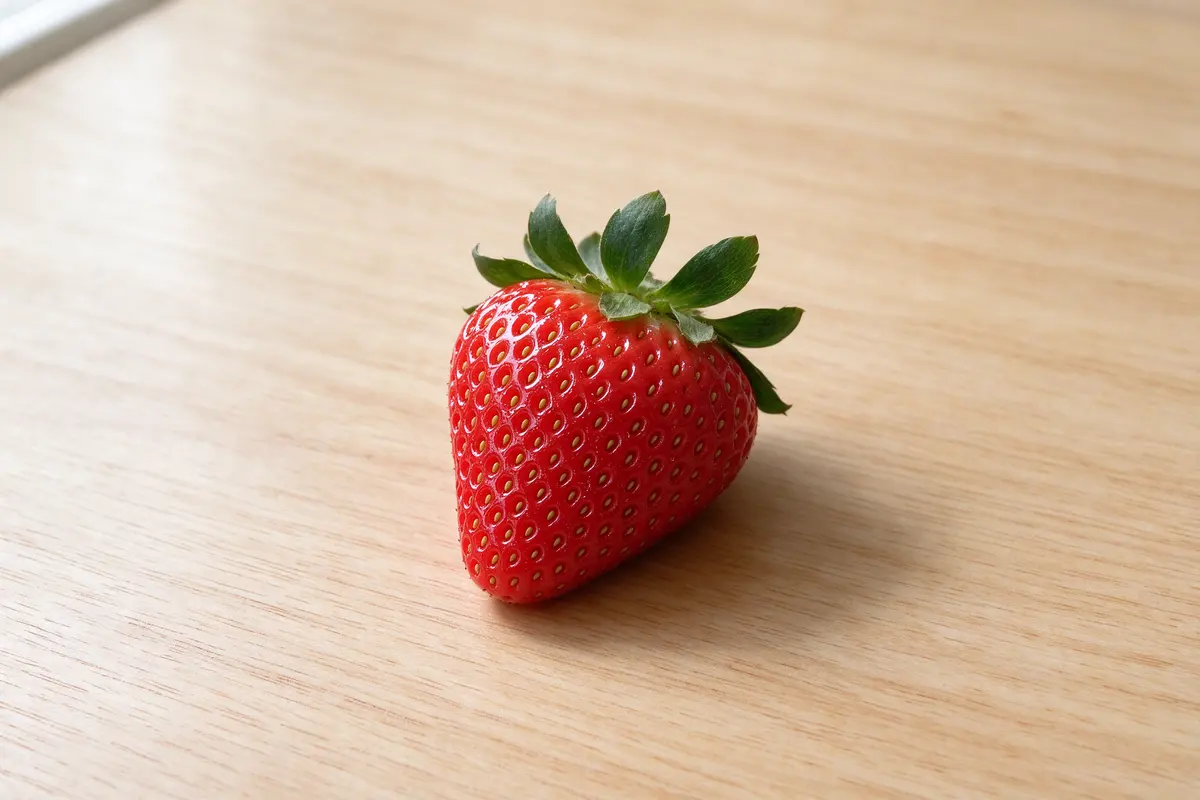
Around 22mm from head to bottom, about the size of a strawberry (NHS). The NHS says: "Your baby's eyes are getting bigger and will have a bit of colour in them now" (NHS). They stay shut for a long while; the NHS's week 26 page is where the eyes open for the first time (NHS).
That same page has the facts for today's bet: eye colour is inherited; "blue eyes at birth" is a myth; brown is a very common eye colour; and a baby's eye colour can keep changing, usually settling by age 3 (NHS).
Your body
The week-9 trio is still with you: tiredness, nausea and mood swings from rising hormones, which should ease over the coming weeks (NHS). Nausea can start 2 to 8 weeks after conception and can occur at any time of day (NICHD). Mild morning sickness does not harm the baby (MedlinePlus).
On the remedies: a Cochrane review of 41 trials found a lack of high-quality evidence to back any particular one; ginger was possibly helpful, but the evidence was limited and inconsistent (Cochrane). That is not the same as nothing working; it means try what's gentle, and ask before any medicine (MedlinePlus).
Try today
The eye-colour bet
Time: 5 minutes
Each of you writes a guess at the baby's eventual eye colour on a slip of paper, with your name.
Seal both slips in one envelope and write the opening date on the front: the third birthday, since the NHS says eye colour usually settles by age 3 (NHS).
Agree the stake. Small and silly works best: one breakfast, one lie-in.
Put the envelope somewhere it will survive a house move.
Make it work:Don't bet on what you see at birth. Blue eyes at birth are a myth, and the colour can keep changing (NHS).
Watch for
Normal
tired eyes at the end of a tired day (NHS).
Call your provider
for changes in your vision; it's one of CDC's urgent warning signs (CDC).
Normal
nausea most days (NICHD).
Call your provider
for fever or chills (MedlinePlus).
Normal
mood swings (NHS).
Call your provider
for scary, upsetting thoughts that don't go away, extreme sadness or anger, or losing interest in things you enjoy; these are warning signs of depression or anxiety, and both can be treated (AAP).
For you
While you're guessing: the sex won't be known until the anomaly scan (NHS), which in the US is the ultrasound typically done between 18 and 20 weeks, when the baby's sex can often be found (NICHD). You may add that to the envelope or keep it as a separate bet.
If you're the partner: your guess counts for exactly as much as hers. That's the point of a light day.
Sources
- NHS. "Week 9." Week-by-week guide to pregnancy, Best Start in Life. https://www.nhs.uk/best-start-in-life/pregnancy/week-by-week-guide-to-pregnancy/1st-trimester/week-9/
- NHS. "Week 26." Week-by-week guide to pregnancy, Best Start in Life. https://www.nhs.uk/best-start-in-life/pregnancy/week-by-week-guide-to-pregnancy/2nd-trimester/week-26/
- National Institute of Child Health and Human Development. "What are some common signs of pregnancy?" National Institutes of Health. https://www.nichd.nih.gov/health/topics/pregnancy/conditioninfo/signs
- MedlinePlus. "Morning sickness." National Library of Medicine, 2024. https://medlineplus.gov/ency/patientinstructions/000604.htm
- Cochrane. "Interventions for nausea and vomiting in early pregnancy." 2015. https://www.cochrane.org/evidence/CD007575_interventions-nausea-and-vomiting-early-pregnancy
- Centers for Disease Control and Prevention. "Urgent Maternal Warning Signs and Symptoms." HEAR HER campaign, 2024. https://www.cdc.gov/hearher/maternal-warning-signs/index.html
- MedlinePlus. "Prenatal care in your first trimester." National Library of Medicine. https://medlineplus.gov/ency/patientinstructions/000544.htm
- American Academy of Pediatrics. "Depression and Anxiety During Pregnancy and After Birth: FAQs." HealthyChildren.org, 2019. https://www.healthychildren.org/English/ages-stages/prenatal/Pages/Depression-and-Anxiety-During-Pregnancy-and-After-Birth-FAQs.aspx
- National Institute of Child Health and Human Development. "About Pregnancy." National Institutes of Health. https://www.nichd.nih.gov/health/topics/pregnancy/conditioninfo
This guide is general education that summarizes published research and guidance from groups like the American Academy of Pediatrics, the CDC, and the WHO. It isn’t medical advice, and every child develops on their own timeline. Your pediatrician knows your child; if something feels wrong, call them. In an emergency, call 911.
Get each day’s note the morning it applies
Add your due date to a free Chorevia household, and every morning until the birth the day's note arrives in the app and by email: what's forming, what your body is doing, one thing to try, what to watch for, and a word for you.
Create your household