Day 23 of 60 · Week 4
What your baby watches
Last reviewed · 3 min read · 10 sources · Plain-text version
Faces first, then bold patterns: what your baby looks at near the end of the first month, and a small pleasure to plan for yourself today.
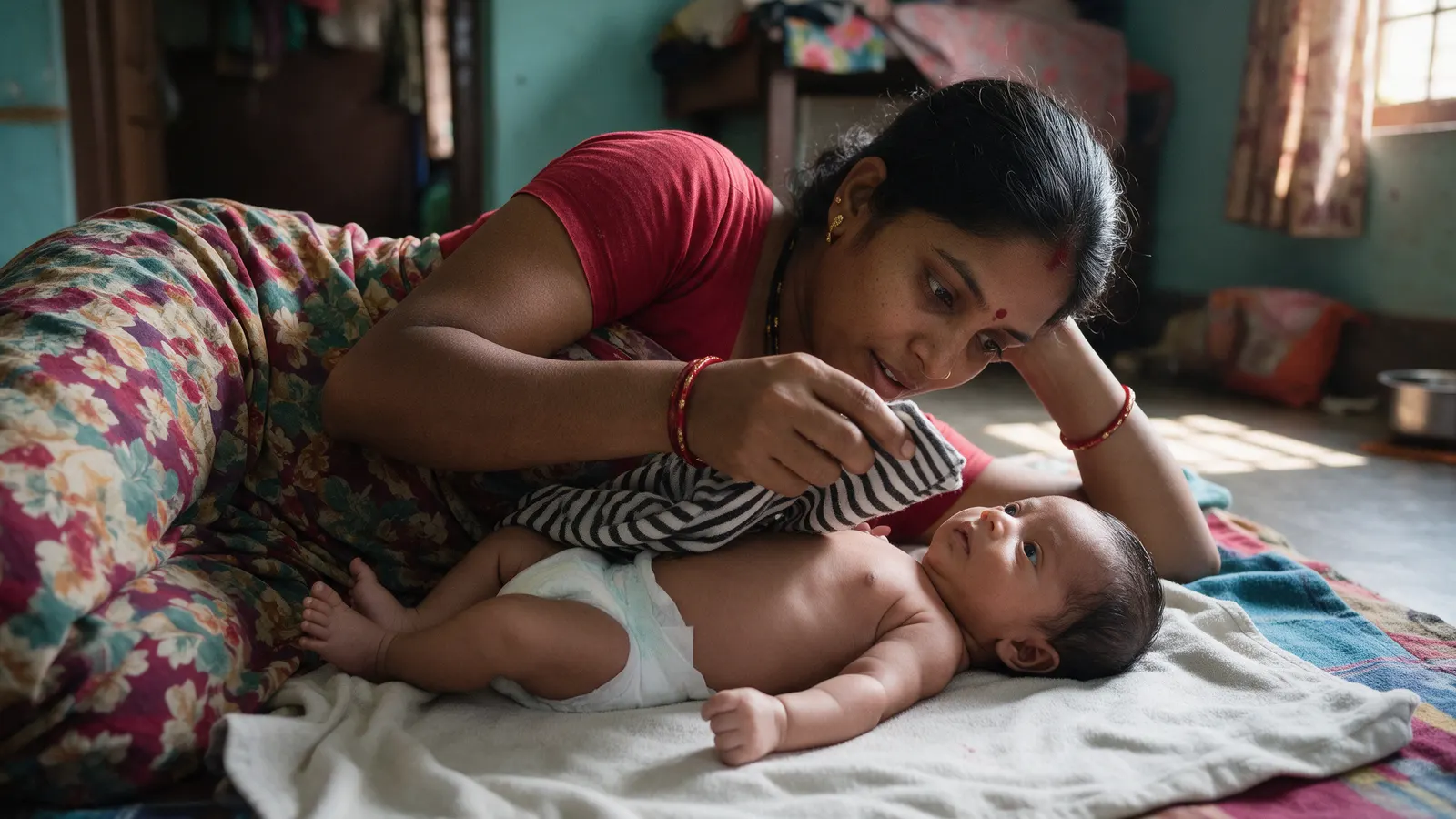
Watch your baby watching. Near the end of the first month, the quiet, alert stretches get a little longer, and what they look at tells you a lot about how they're wired. Today is about eyes: theirs on you, and a few minutes of yours on something you enjoy.
Heart
Your face still wins. Newborns prefer the human face to other patterns (AAP), and within an hour of birth they followed a moving face-like pattern farther than scrambled versions (Johnson et al., 1991). By about one month, many babies may also look or turn toward familiar sounds and voices (AAP). When you walk in talking, you may notice the search begin.
Head
The other thing newborns reliably look at is contrast. Infants under 5 days old consistently looked longer at black-and-white patterns than at plain colored surfaces (Fantz, 1963). That's a preference, not proof that special products make babies smarter. A striped shirt works as well as anything sold for the purpose.
Everything still happens close up. Your baby sees best at 8 to 12 inches (AAP). Farther away, you're mostly a shape and a voice.
Body
Eyes may wander or cross at times; that should fade by 2 to 3 months (AAP). Following a moving object is something the AAP expects by about 3 months, so don't expect much tracking yet (AAP). The other senses are busy too: newborns prefer sweet smells and soft touch (AAP), so a warm hand on the chest while they look at you counts.
Try today
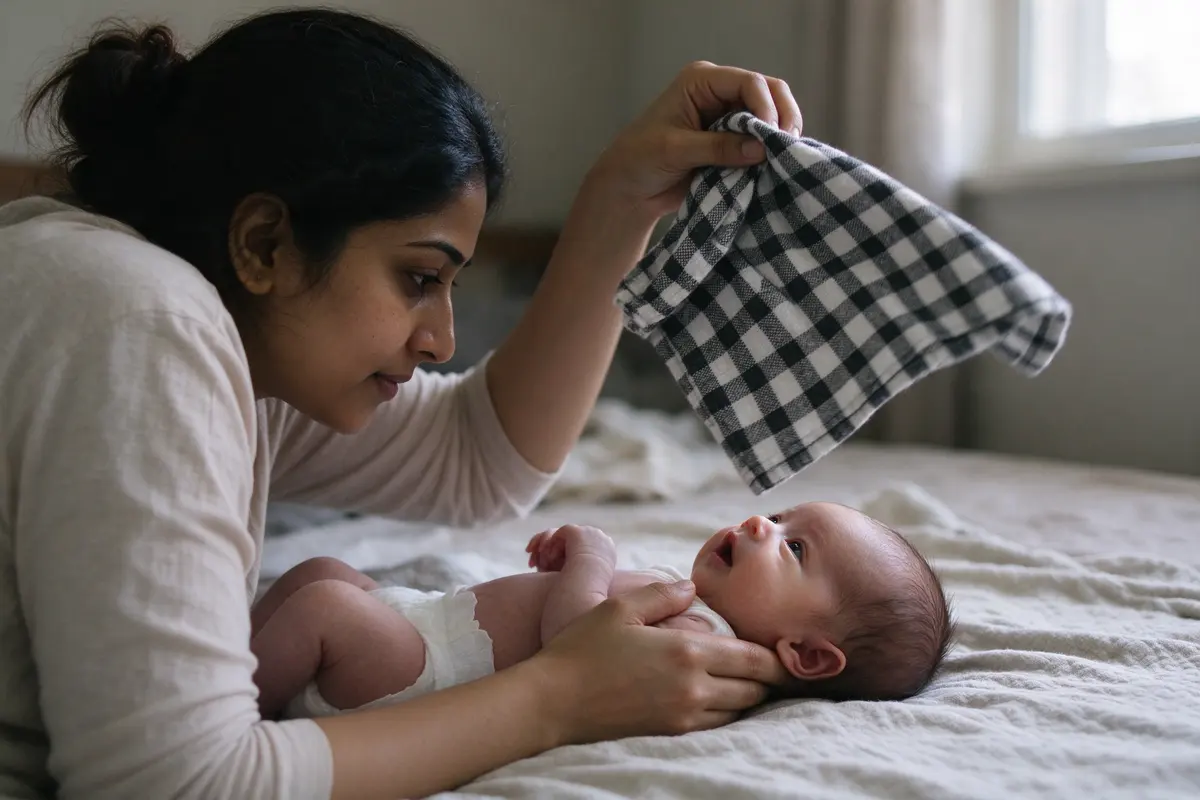
High-contrast looking
Time: A minute or two · High-contrast looking in the guide
Find something bold: a striped shirt, a black-and-white book, a checkered dish towel.
Hold it 8 to 12 inches from your baby's face while they're alert (AAP).
Hold it still at first, then move it slowly, or swap in a new pattern.
Stop when they look away.
Make it work:No cards or screens needed, and your face counts as a pattern too (AAP). Keep pictures and toys out of the crib.
Watch for
Normal
eyes that drift apart or cross now and then, fading by 2 to 3 months.
Tell your pediatrician
if your baby isn't following a moving object by 3 months (AAP).
Normal
swollen breasts in a boy or a girl, sometimes leaking a few drops of milk, from the birthing parent's estrogen (AAP); the swelling often lasts 2 to 4 weeks, and you shouldn't squeeze them.
Call your pediatrician right away
if a swollen breast turns red, streaky, or tender (AAP).
Normal
a baby who takes several seconds to turn toward a sound; in one small study of 21 alert newborns, the turn took a median of 2.5 seconds to start (Muir & Field, 1979).
Tell your pediatrician
if your baby never seems to react to sounds, and if they didn't pass the newborn hearing screen, they need a full hearing test before 3 months of age (CDC).
For you
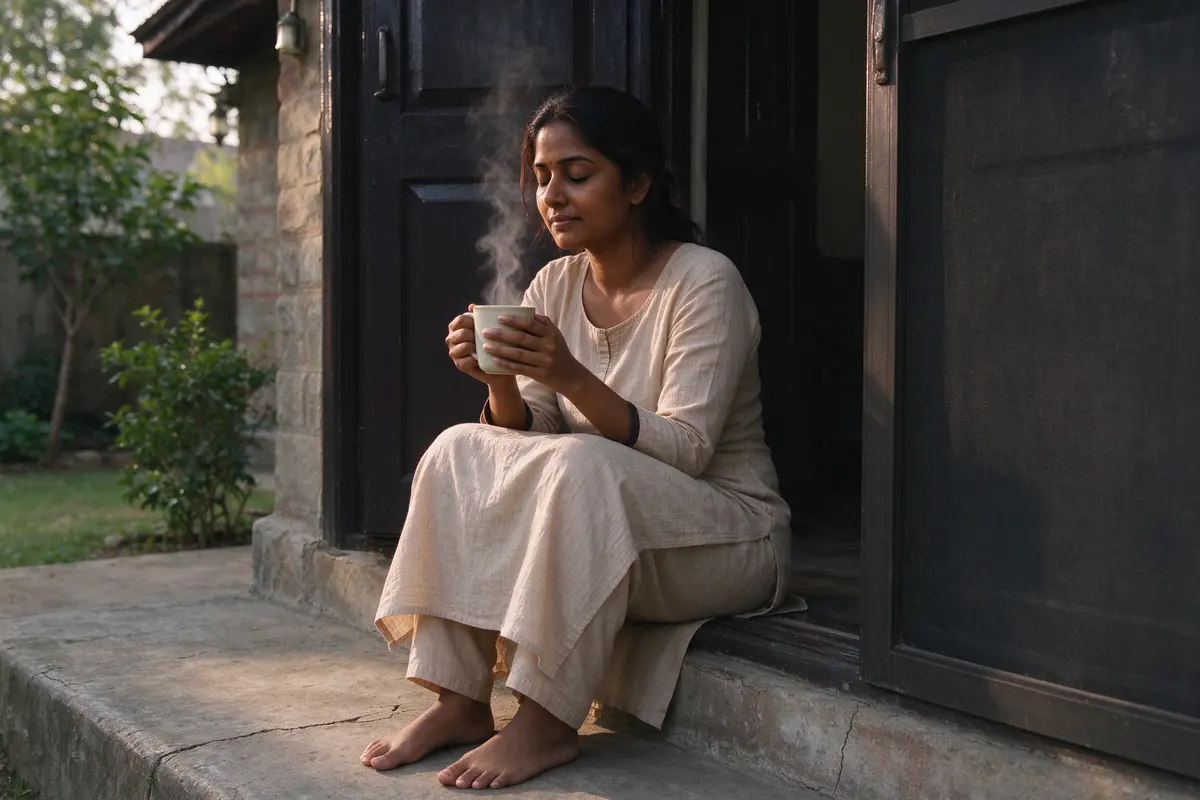
Plan one small pleasure today, on purpose, and protect it. A coffee finished while it's hot. A shower with the door shut. Ten pages of a book. A song with headphones. The point isn't the thing; it's that you chose it and it happened.
While you're checking in with yourself: the baby blues should be well behind you by now. If sadness lasts more than two weeks, go to the doctor; don't wait for the postpartum visit (Office on Women's Health). Tiredness that feels overwhelming, not ordinary new-parent tired, is on the CDC's list of reasons to seek care (CDC).
If you're the partner: ask her what the small pleasure is, then make it happen. Take the baby, close the door, and don't check in.
Sources
- American Academy of Pediatrics. "Developmental Milestones: 1 Month." HealthyChildren.org. https://www.healthychildren.org/English/ages-stages/baby/Pages/Developmental-Milestones-1-Month.aspx
- Johnson MH, et al. "Newborns' preferential tracking of face-like stimuli and its subsequent decline." Cognition, 1991. https://pubmed.ncbi.nlm.nih.gov/1786670/
- Fantz RL. "Pattern Vision in Newborn Infants." Science, 1963. https://pubmed.ncbi.nlm.nih.gov/17788054/
- American Academy of Pediatrics. "Baby's Vision Development." HealthyChildren.org. https://www.healthychildren.org/English/ages-stages/baby/Pages/Babys-Vision-Development.aspx
- American Academy of Pediatrics. "Newborn Appearance Questions" (symptom checker). HealthyChildren.org. https://www.healthychildren.org/English/tips-tools/symptom-checker/Pages/symptomviewer.aspx?symptom=Newborn+Appearance+Questions
- American Academy of Pediatrics. "How Your Newborn Looks." HealthyChildren.org. https://www.healthychildren.org/English/ages-stages/baby/Pages/How-Your-Newborn-Looks.aspx
- Muir D, Field J. "Newborn infants orient to sounds." Child Development, 1979. https://pubmed.ncbi.nlm.nih.gov/487883/
- Centers for Disease Control and Prevention. "Newborn Hearing Screening." 2024. https://www.cdc.gov/hearing-loss-children-guide/parents-guide/newborn-hearing-screening.html
- Office on Women's Health. "Recovering from birth." U.S. Department of Health and Human Services. https://womenshealth.gov/pregnancy/childbirth-and-beyond/recovering-birth
- Centers for Disease Control and Prevention. "Urgent Maternal Warning Signs and Symptoms." HEAR HER campaign. https://www.cdc.gov/hearher/maternal-warning-signs/index.html
This guide is general education that summarizes published research and guidance from groups like the American Academy of Pediatrics, the CDC, and the WHO. It isn’t medical advice, and every child develops on their own timeline. Your pediatrician knows your child; if something feels wrong, call them. In an emergency, call 911.
Get each day’s note the morning it applies
Add your baby to a free Chorevia household with their date of birth, and every morning for 60 days the day’s note arrives in the app and by email: what’s developing, one thing to try, what to watch for, and a word for you.
Create your household