Day 30 of 60 · One month
One month
Last reviewed · 3 min read · 10 sources · Plain-text version
A month in. What many babies can do by about now, what you have done, and a keepsake to make today before the tiny grip fades.
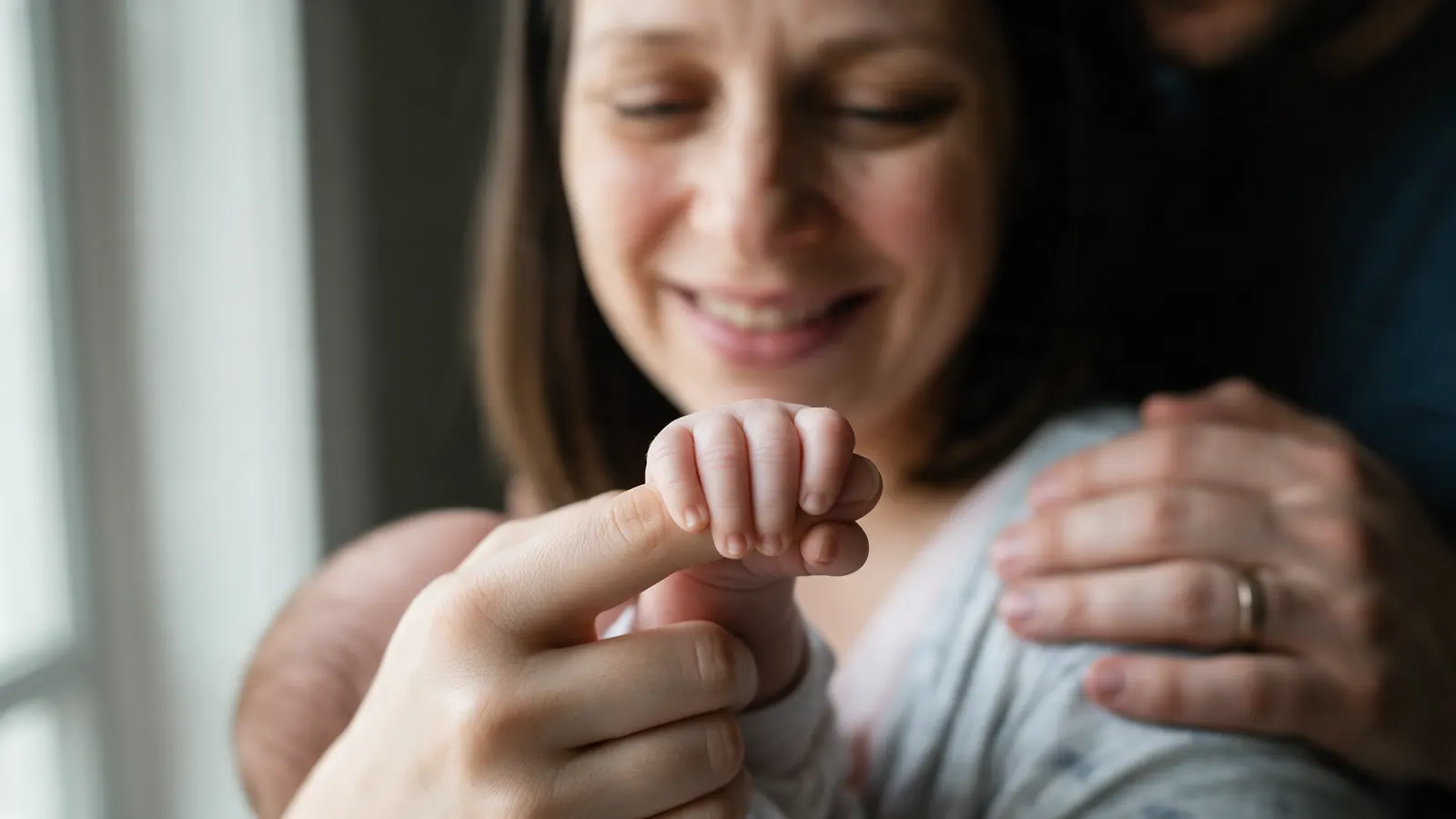
One month. This is the last note in the series, and it's a short one, because the main thing to say is simple: look what you did.
Heart
By about one month, many babies react to loud sounds, may look or turn toward familiar sounds and voices, prefer the human face to any other pattern, and bring their hands to their mouth (AAP). No scoring. Some of these your baby does, some are still coming, and either is fine.
What they have learned for certain is you. Through a month of feeding and comfort, your baby has learned who helps them feel safe (AAP). Keep responding, keep repeating. That's still the whole curriculum.
Head
Count what you've done, roughly. If you're breastfeeding, that's usually 8 to 12 feeds in every 24 hours (AAP), for thirty days. You've answered somewhere between 1 and 4 hours of crying most days (AAP). You've done tummy time, diaper after diaper, the 3 a.m. feed, and a checkup or two. None of it came with a certificate. This note is the closest thing.
Body
Your baby's newborn toolkit is about to start changing. The grasp reflex, that grip on your finger, fades around 5 to 6 months; the Moro startle and the stepping reflex fade around 2 months (AAP). True social smiles usually arrive in the second month (AAP). So today's activity is a keepsake, while the grip is still automatic.
Safe sleep doesn't change: back to sleep for every sleep, on a firm, flat, bare surface, in your room but not your bed, for at least the first 6 months (Moon et al., 2022).
Try today
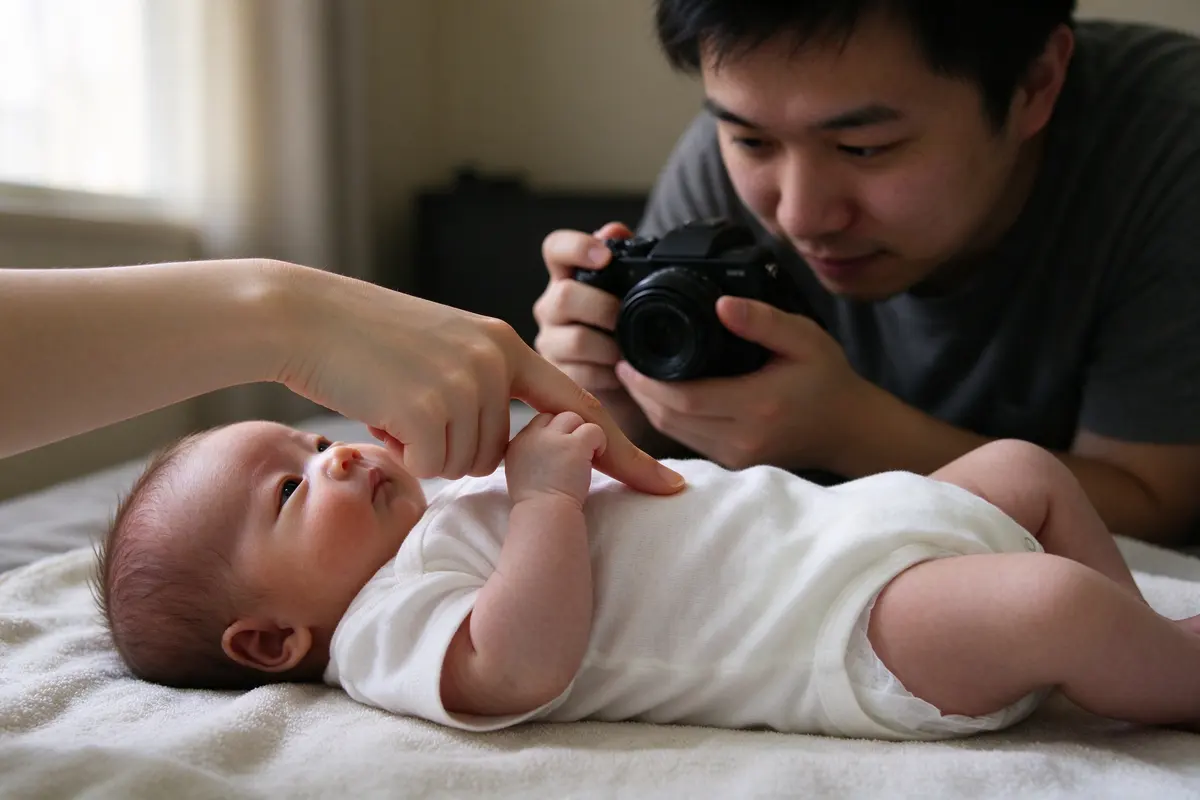
A keepsake moment
Time: A few quiet minutes · What's developing in the guide
Lay your baby on their back on a soft towel, with warm hands and a warm room.
Gently open their palm and let them grip your finger (AAP).
Take a photo of the grip, with your hand in it.
Write a short note to your baby: what today looked like, one thing they did, one thing you're proud of. Date it.
Put the photo and the note somewhere you'll find them in a year.
Make it work:If your baby gets sleepy during this, move them to their back in their own sleep space.
Watch for
Normal
eyes that don't track much yet.
Tell your pediatrician
if your baby isn't following a moving object by 3 months (AAP).
Normal
long, deep sleeps between feeds.
Call 911
if your baby can't be woken enough to feed (Nationwide Children's).
Normal
the small daily worries that come with knowing this baby better than anyone.
Call anyway
if your baby just doesn't seem right to you. Trust your instincts; they're a month better than they were (Lurie Children's).
For you
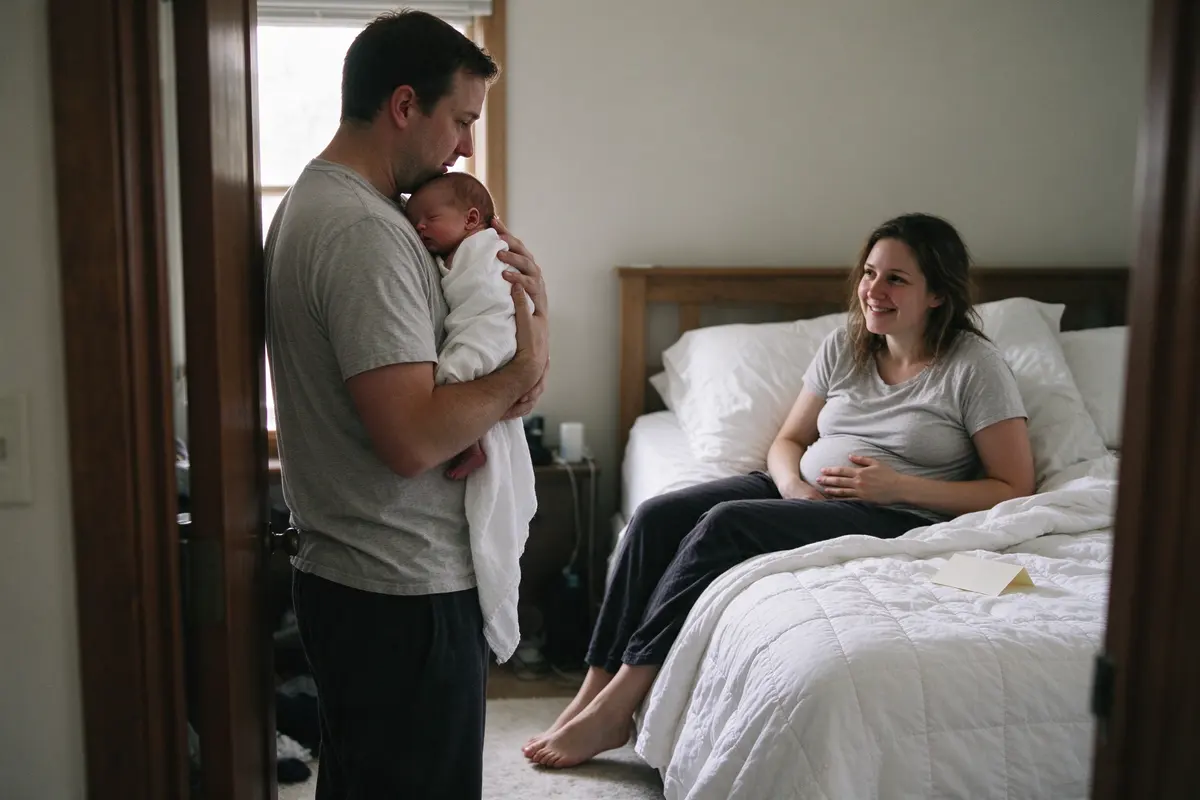
You did this. Not perfectly, because nobody does, but every day, which is the only standard that matters.
Keep the two numbers in your phone. If a hard day turns into a hard week, call or text the National Maternal Mental Health Hotline at 1-833-TLC-MAMA (1-833-852-6262), or call or text 988 (CDC). Asking early is strength, not weakness.
If you're the partner: tell her, specifically, one thing you watched her do this month that you couldn't have. Then take the baby for an hour.
Month two is in the next guide: 1 month. See you there.
Sources
- American Academy of Pediatrics. "Developmental Milestones: 1 Month." HealthyChildren.org. https://www.healthychildren.org/English/ages-stages/baby/Pages/Developmental-Milestones-1-Month.aspx
- American Academy of Pediatrics. "Emotional and Social Development: Birth to 3 Months." HealthyChildren.org. https://www.healthychildren.org/English/ages-stages/baby/Pages/Emotional-and-Social-Development-Birth-to-3-Months.aspx
- American Academy of Pediatrics. "How Often to Breastfeed." HealthyChildren.org. https://www.healthychildren.org/English/ages-stages/baby/breastfeeding/Pages/How-Often-to-Breastfeed.aspx
- American Academy of Pediatrics. "Responding to Your Baby's Cries." HealthyChildren.org. https://www.healthychildren.org/English/ages-stages/baby/crying-colic/Pages/Responding-to-Your-Babys-Cries.aspx
- American Academy of Pediatrics. "Newborn Reflexes." HealthyChildren.org. https://www.healthychildren.org/English/ages-stages/baby/Pages/newborn-reflexes.aspx
- Moon RY, Carlin RF, Hand I. "Sleep-Related Infant Deaths: Updated 2022 Recommendations for Reducing Infant Deaths in the Sleep Environment." Pediatrics, 2022. https://pubmed.ncbi.nlm.nih.gov/35726558/
- American Academy of Pediatrics. "Baby's Vision Development." HealthyChildren.org. https://www.healthychildren.org/English/ages-stages/baby/Pages/Babys-Vision-Development.aspx
- Nationwide Children's Hospital. "Newborn Warning Signs." https://www.nationwidechildrens.org/conditions/health-library/newborn-warning-signs
- Lurie Children's Hospital of Chicago. "When to Call the Pediatrician for Your Newborn." 2022. https://www.luriechildrens.org/en/blog/when-to-call-the-pediatrician-for-your-newborn/
- Centers for Disease Control and Prevention. "Symptoms of Depression Among Women." 2024. https://www.cdc.gov/reproductive-health/depression/index.html
This guide is general education that summarizes published research and guidance from groups like the American Academy of Pediatrics, the CDC, and the WHO. It isn’t medical advice, and every child develops on their own timeline. Your pediatrician knows your child; if something feels wrong, call them. In an emergency, call 911.
Get each day’s note the morning it applies
Add your baby to a free Chorevia household with their date of birth, and every morning for 60 days the day’s note arrives in the app and by email: what’s developing, one thing to try, what to watch for, and a word for you.
Create your household