Day 216 of 300 · Week 29
Mamamama
Last reviewed · 3 min read · 10 sources · Plain-text version
Lots of different sounds like 'mamamama' and 'bababababa' are a 9-month skill, and babies reshape their babble within minutes when it's answered right away. The syllable volley.
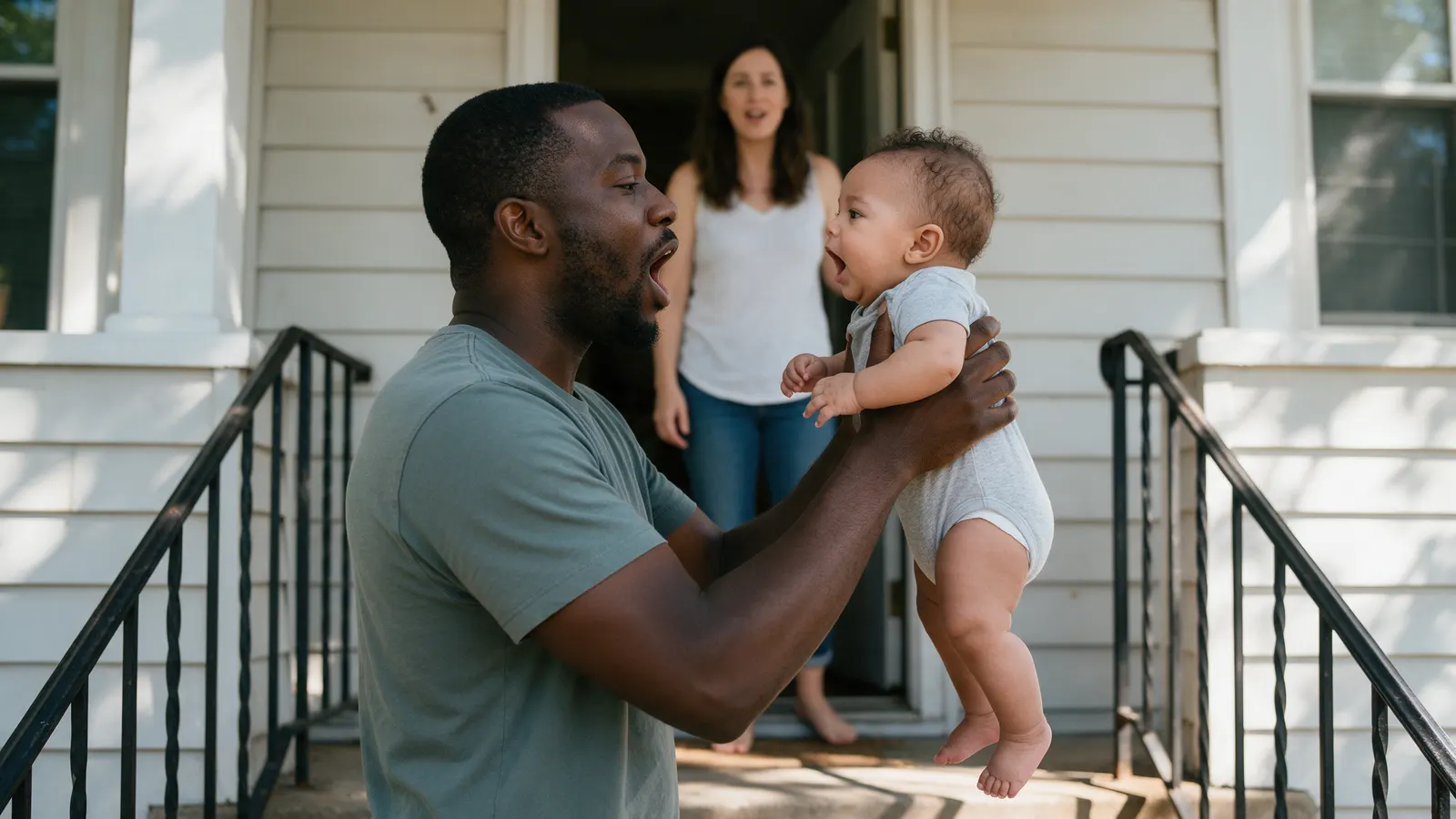
There's a sound coming out of the crib in the mornings now that isn't crying and isn't a coo. Today is that sound, and the one thing you can do with it that research says changes it.
Heart
By 9 months, most babies make lots of different sounds like "mamamama" and "bababababa" (CDC). Coos turn into syllables like "ba," "da," and "ma," and babies understand more than they can say (AAP). From about 6 or 7 months, they get much better at imitating the sounds you make (AAP). "Mamamama" this month is a sound, not yet a name; calling a parent "mama," "dada," or another special name is a 12-month milestone (CDC). Take it anyway.
Head
In a lab experiment, 9.5-month-olds whose mothers answered their babble right away quickly reshaped it using sounds from their mothers' speech; babies answered at random times didn't (Goldstein & Schwade, 2008). The timing was the whole difference: the same attention, given a few seconds off the beat, did nothing. In a randomized trial of 71 families, coaching parents at 6, 10, and 14 months increased parentese and back-and-forth turns (Ferjan Ramírez et al., 2020), and in a follow-up of 59 children, the coached group had larger vocabularies through 30 months (Huber et al., 2023). Small studies, one lab group, but they point the same way: answer, then pause.
Body
The how is short. Repeat their sounds, add simple words, and describe what they see (CDC). Keep names consistent ("cat" today, not "kitty" tomorrow), ask questions, and wait for an answer (AAP). And the one line to hold on to: the AAP advises telling your pediatrician if your baby doesn't babble or imitate any sounds by 7 months, since that can signal a hearing problem (AAP). Your baby is 7 months old, so if the mornings are silent, that's a call this week, not a wait.
Try today
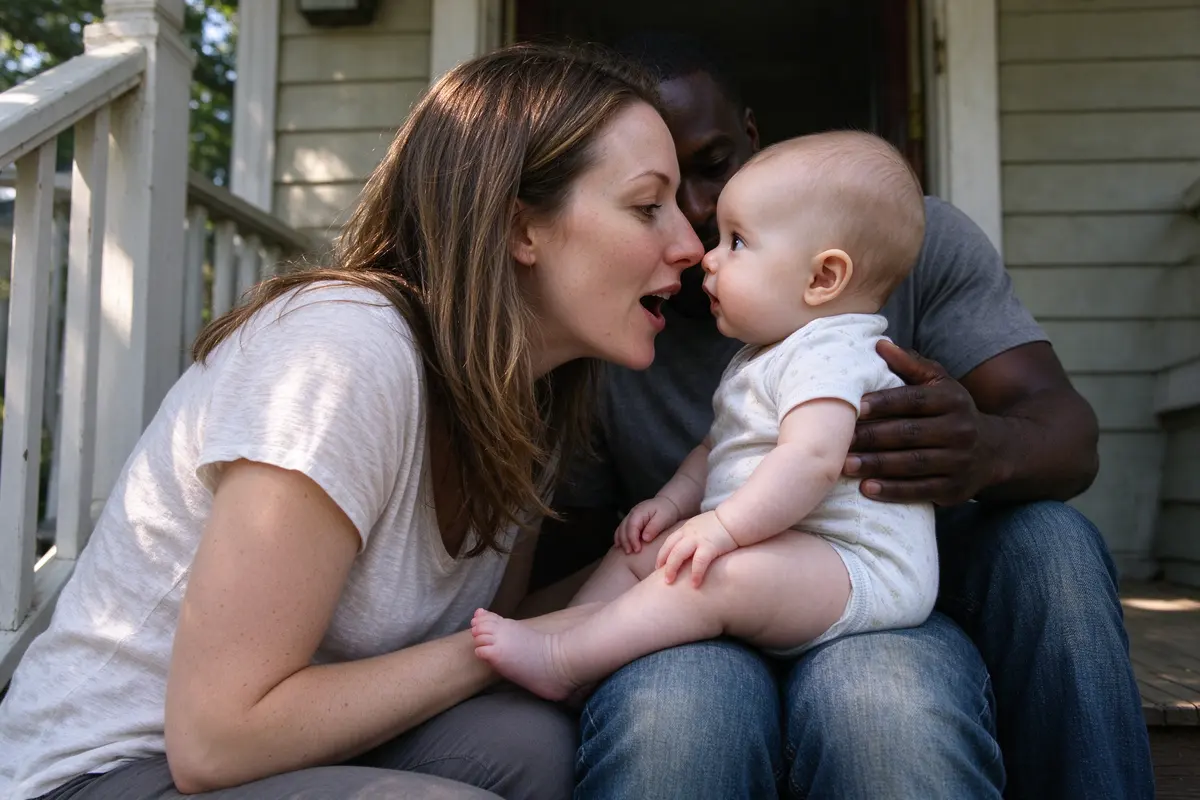
The syllable volley
Time: 2 minutes, whenever the babble starts · Talk back with words in the guide
When a string comes ("bababa"), look at your baby and answer right away with the same string (Goldstein & Schwade, 2008).
Add one word on the end: "Bababa. Ball."
Stop and wait. The pause is their turn; count to five in your head if you have to.
Whatever comes back, repeat it and add one word again. Five volleys, then let it go.
Make it work:Right away is the point. The babies answered at random times didn't change their babble (Goldstein & Schwade, 2008).
Watch for
For you
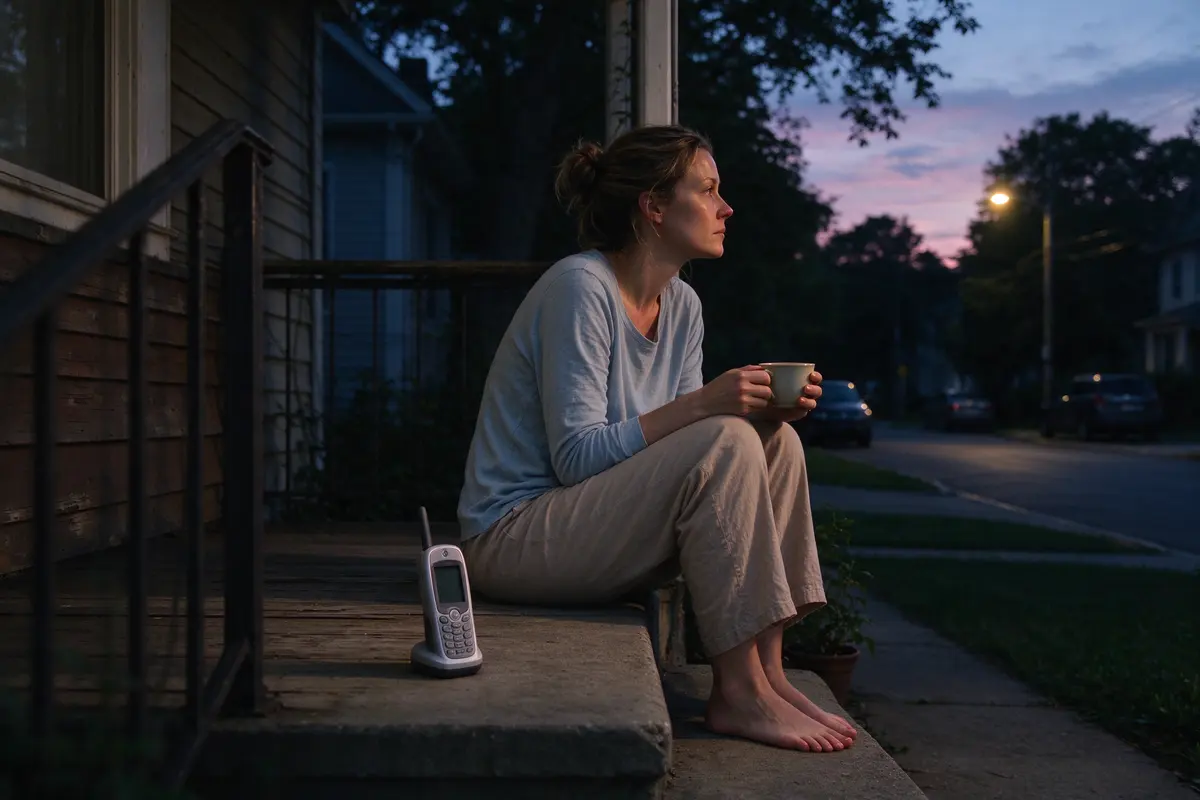
The pause after your reply is where the learning is. In the experiment, the mothers who changed their babies' babble weren't the ones who talked most; they were the ones who answered on time and then let the baby go next (Goldstein & Schwade, 2008). The coaching trial measured back-and-forth turns, not words per hour (Ferjan Ramírez et al., 2020). So the days you're too tired to narrate are fine. Answer the string, add one word, and be quiet. The quiet counts.
It works the other way too. Say your own hard sentence to someone today, and let them answer before you fill the silence.
If you're the partner: five volleys at bath time. Same string back, one word, wait.
Sources
- Centers for Disease Control and Prevention. "Milestones by 9 Months." Learn the Signs. Act Early. program, updated 2026. https://www.cdc.gov/act-early/milestones/9-months.html
- American Academy of Pediatrics. "Language Development: 8 to 12 Months." HealthyChildren.org, updated 2009. https://www.healthychildren.org/English/ages-stages/baby/Pages/Language-Development-8-to-12-Months.aspx
- American Academy of Pediatrics. "Language Development: 4 to 7 Months." HealthyChildren.org, updated 2009. https://www.healthychildren.org/English/ages-stages/baby/Pages/Language-Development-4-to-7-Months.aspx
- Centers for Disease Control and Prevention. "Milestones by 1 Year." Learn the Signs. Act Early. program, updated 2026. https://www.cdc.gov/act-early/milestones/1-year.html
- Goldstein MH, Schwade JA. "Social feedback to infants' babbling facilitates rapid phonological learning." Psychological Science, 2008. https://pubmed.ncbi.nlm.nih.gov/18466414/
- Ferjan Ramírez N, Lytle SR, Kuhl PK. "Parent coaching increases conversational turns and advances infant language development." Proceedings of the National Academy of Sciences, 2020. https://pubmed.ncbi.nlm.nih.gov/32015127/
- Huber E, Ferjan Ramírez N, Corrigan NM, Kuhl PK. "Parent coaching from 6 to 18 months improves child language outcomes through 30 months of age." Developmental Science, 2023. https://pubmed.ncbi.nlm.nih.gov/36999222/
- American Academy of Pediatrics. "Developmental Milestones: 7 Months." HealthyChildren.org, updated 2009. https://www.healthychildren.org/English/ages-stages/baby/Pages/Developmental-Milestones-7-Months.aspx
- American Academy of Pediatrics. "Checkup Checklist: 9 Months Old." HealthyChildren.org, updated 2021. https://www.healthychildren.org/English/ages-stages/Your-Childs-Checkups/Pages/Your-Checkup-Checklist-9-Months-Old.aspx
- American Academy of Pediatrics. "Fever" (symptom checker). HealthyChildren.org, accessed 2026. https://www.healthychildren.org/English/tips-tools/symptom-checker/Pages/symptomviewer.aspx?symptom=Fever
This guide is general education that summarizes published research and guidance from groups like the American Academy of Pediatrics, the CDC, and the WHO. It isn’t medical advice, and every child develops on their own timeline. Your pediatrician knows your child; if something feels wrong, call them. In an emergency, call 911.
Get each day’s note the morning it applies
Add your baby to a free Chorevia household with their date of birth, and every morning for 300 days the day’s note arrives in the app and by email: what’s developing, one thing to try, what to watch for, and a word for you.
Create your household