Day 227 of 300 · Week 31
Separation anxiety, early
Last reviewed · 4 min read · 8 sources · Plain-text version
Separation anxiety usually gets stronger around 9 months and peaks between 10 and 18 months. Never sneak away, say the same short goodbye every time, and practice it on a trip to the kitchen.
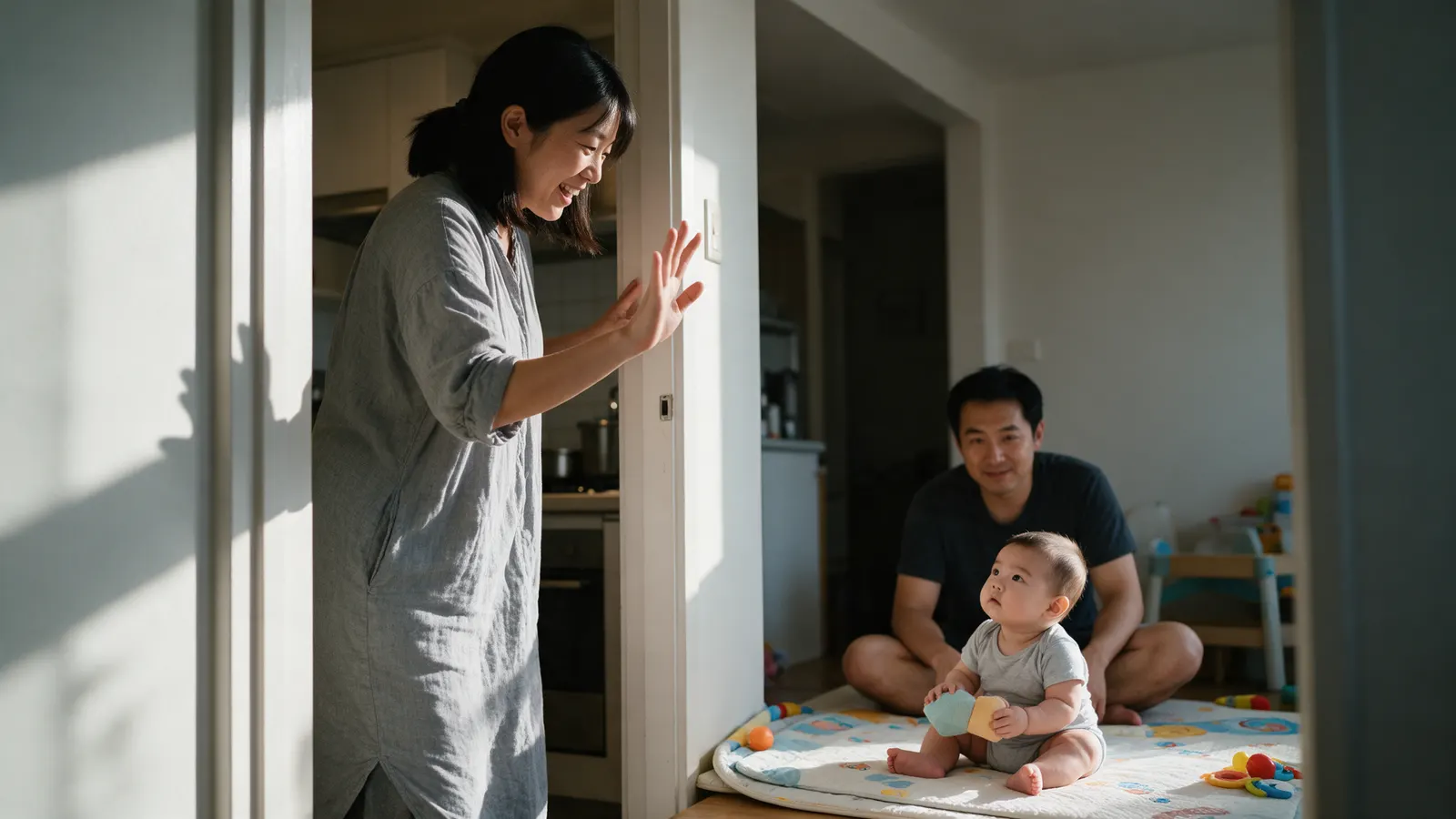
Yesterday was the new face. Today is the other half of the same milestone: the face that leaves.
Heart
By 9 months, most babies react when you leave, by looking, reaching for you, or crying (CDC). Separation anxiety usually gets stronger around 9 months (Swanson, AAP) and peaks between 10 and 18 months; the AAP calls it a sign of attachment, not of spoiling (AAP). At thirty-one weeks, some babies already cry at the kitchen doorway and many don't yet. Either is on time. Your baby now knows you exist when you're gone but has little sense of time, so they don't know when you'll be back (AAP); the tears are the gap between those two facts.
Head
The rules are the same whether you're leaving for work or for the laundry. Never sneak away: say a quick, cheerful goodbye, even if your baby cries (CDC). Use the same short ritual every time, and come back when you said you would (Swanson, AAP). Tears usually stop within minutes of your leaving (AAP), which is the part you don't see from the car, and the part the person who stays behind can tell you. Sneaking out skips the tears at the door and buys a baby who keeps checking whether you've vanished.
Body
Timing matters. Separations are harder when babies are tired, hungry, or sick (AAP), so the sitter arrives after the nap, not during the pre-nap fuss. If child care starts in this stage, the AAP suggests easing in slowly and taking a little extra time at drop-off (AAP). The guide's version is Practice goodbyes, and the practice is the point: a goodbye your baby has heard fifty times on trips to the kitchen is a goodbye they recognize at the daycare door.
Try today
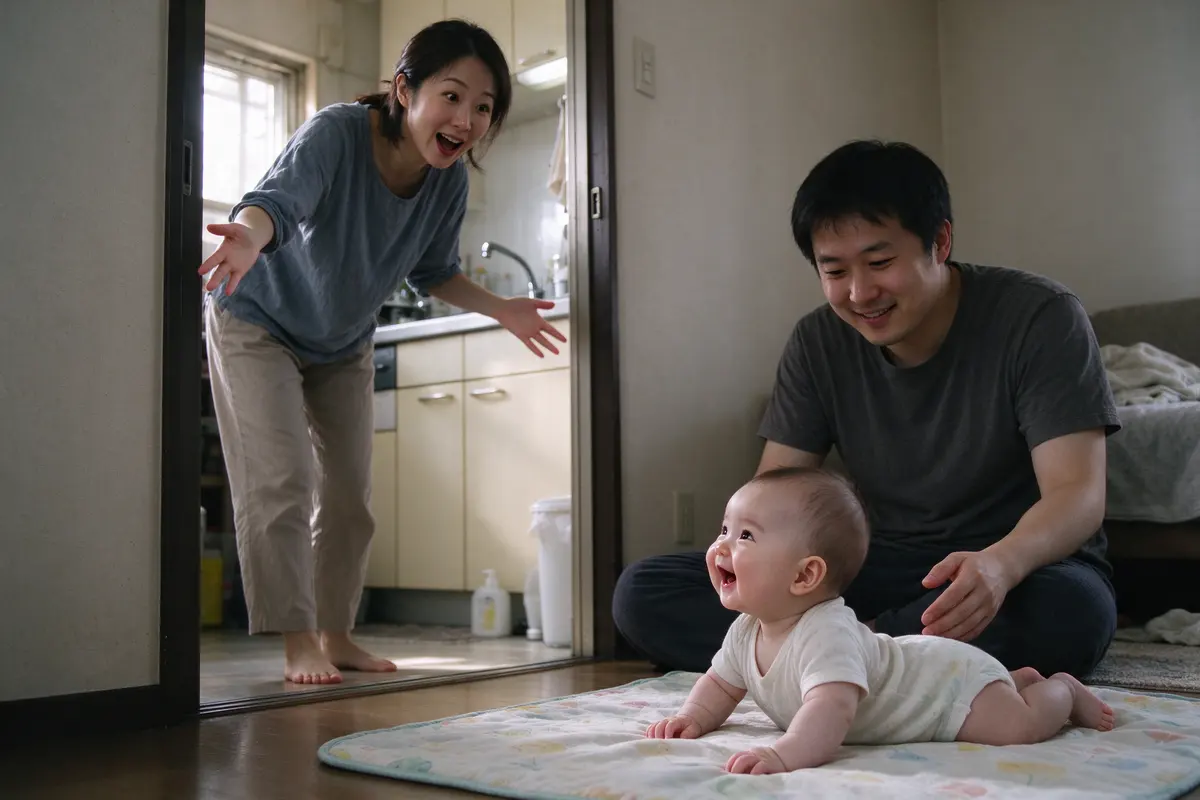
The next-room goodbye
Time: 30 seconds, several times today · Practice goodbyes in the guide
Pick your goodbye and keep it to three beats: a sentence, a kiss, a wave. "Bye-bye! I'm going to the kitchen. Back in a minute." (Swanson, AAP)
Say it, do it, and go, even if your baby fusses; don't sneak, and don't come back halfway (CDC).
If they cry, call out from the next room ("I'm here, I'm coming back") instead of rushing in.
Come back when you said you would, with a big hello. Repeat the same three beats every trip today, so the words stop changing.
Make it work:The baby stays on the floor in a safe spot with the other adult, or in the crib on their back, never on a bed or sofa while you're out of the room (Moon, AAP).
Watch for
Normal
a wail at the doorway that stops before you've filled the kettle (AAP).
Call your pediatrician right away
if your baby cries nonstop, or cries when touched or moved (AAP).
Normal
a baby who doesn't seem to mind yet when you leave; reacting to your leaving is a 9-month skill, and your baby is 7 months (CDC).
Ask your pediatrician
about developmental screening if anything about how your baby responds to people worries you; you can also call your state's early intervention program for a free evaluation without a referral (CDC).
Normal
new tears at goodbye on a day with a cold, when everything is harder (AAP).
Go to the ER now
if your baby has any trouble breathing, including ribs pulling in with each breath or loud wheezing (AAP).
For you
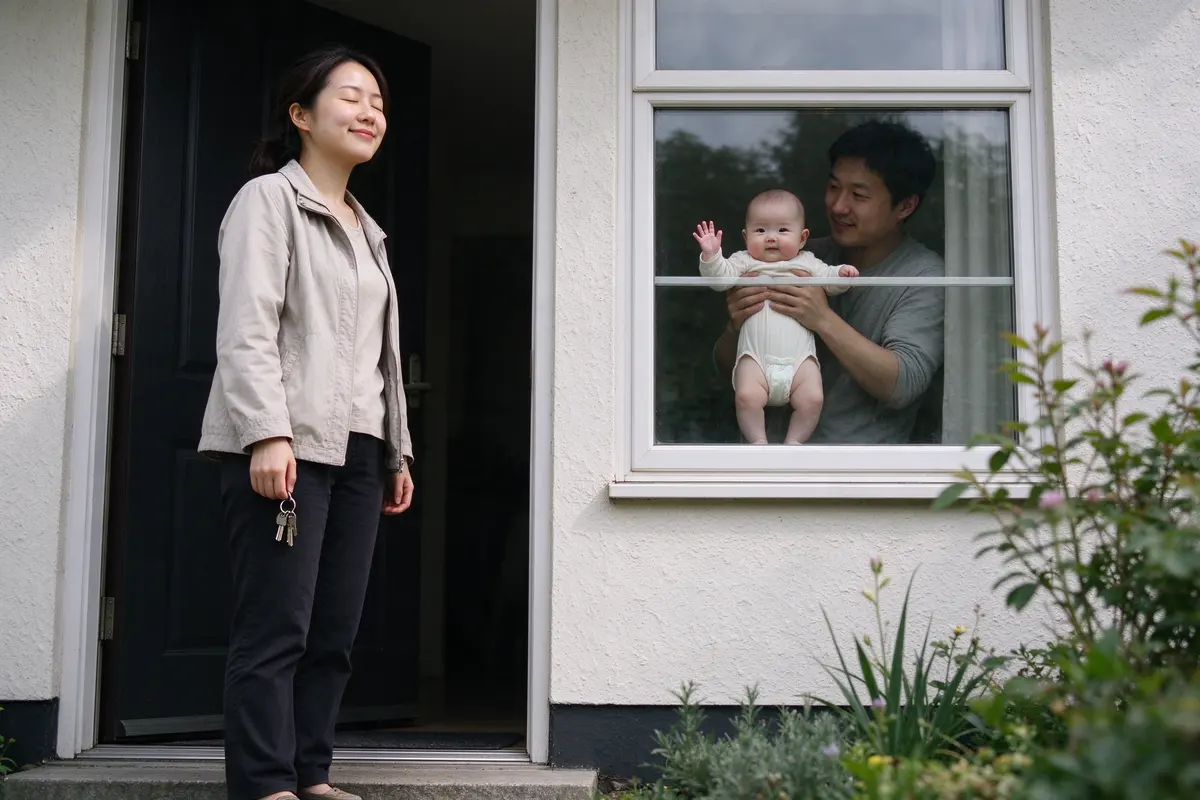
The goodbye is for you too. A ritual gives you something to do at the door besides stand there deciding, and the AAP's advice to make it quick and the same each time (Swanson, AAP) is as much a kindness to the parent as to the baby. Say it, kiss, wave, walk. The crying you hear through the door usually stops within minutes (AAP), and the thing that makes it stop is you being gone, so leaving is the help. Standing on the step for a minute with your eyes closed afterward is allowed.
If you're the partner: you're the one who texts "stopped crying, playing with the block" two minutes after she leaves. Every time. It's the most useful message you'll send this month.
Sources
- Centers for Disease Control and Prevention. "Milestones by 9 Months." Learn the Signs. Act Early. program, updated 2026. https://www.cdc.gov/act-early/milestones/9-months.html
- Swanson WS. "How to Ease Your Child's Separation Anxiety." HealthyChildren.org, updated 2026. https://www.healthychildren.org/English/ages-stages/toddler/Pages/Soothing-Your-Childs-Separation-Anxiety.aspx
- American Academy of Pediatrics. "Emotional and Social Development: 8 to 12 Months." HealthyChildren.org, updated 2009. https://www.healthychildren.org/English/ages-stages/baby/Pages/Emotional-and-Social-Development-8-12-Months.aspx
- American Academy of Pediatrics. "Making Baby Drop Off at Child Care Easier." HealthyChildren.org, updated 2022. https://www.healthychildren.org/English/family-life/work-and-child-care/Pages/making-baby-drop-off-at-child-care-easier.aspx
- Moon RY. "How to Keep Your Sleeping Baby Safe: AAP Policy Explained." HealthyChildren.org, updated 2026. https://www.healthychildren.org/English/ages-stages/baby/sleep/Pages/a-parents-guide-to-safe-sleep.aspx
- American Academy of Pediatrics. "Fever" (symptom checker). HealthyChildren.org, accessed 2026. https://www.healthychildren.org/English/tips-tools/symptom-checker/Pages/symptomviewer.aspx?symptom=Fever
- Centers for Disease Control and Prevention. "Concerned About Your Child's Development?" Updated 2026. https://www.cdc.gov/act-early/families/concerned.html
- American Academy of Pediatrics. "Breathing Trouble" (symptom checker). HealthyChildren.org, accessed 2026. https://www.healthychildren.org/English/tips-tools/symptom-checker/Pages/symptomviewer.aspx?symptom=Breathing+Trouble
This guide is general education that summarizes published research and guidance from groups like the American Academy of Pediatrics, the CDC, and the WHO. It isn’t medical advice, and every child develops on their own timeline. Your pediatrician knows your child; if something feels wrong, call them. In an emergency, call 911.
Get each day’s note the morning it applies
Add your baby to a free Chorevia household with their date of birth, and every morning for 300 days the day’s note arrives in the app and by email: what’s developing, one thing to try, what to watch for, and a word for you.
Create your household