Day 166 of 300 · Week 23
Clean gums, first tooth
Last reviewed · 3 min read · 11 sources · Plain-text version
Wipe the gums after feeds, no bottles in bed, no shared spoons. When the first tooth shows, a rice-grain smear of fluoride toothpaste twice a day and a dentist by the first birthday.
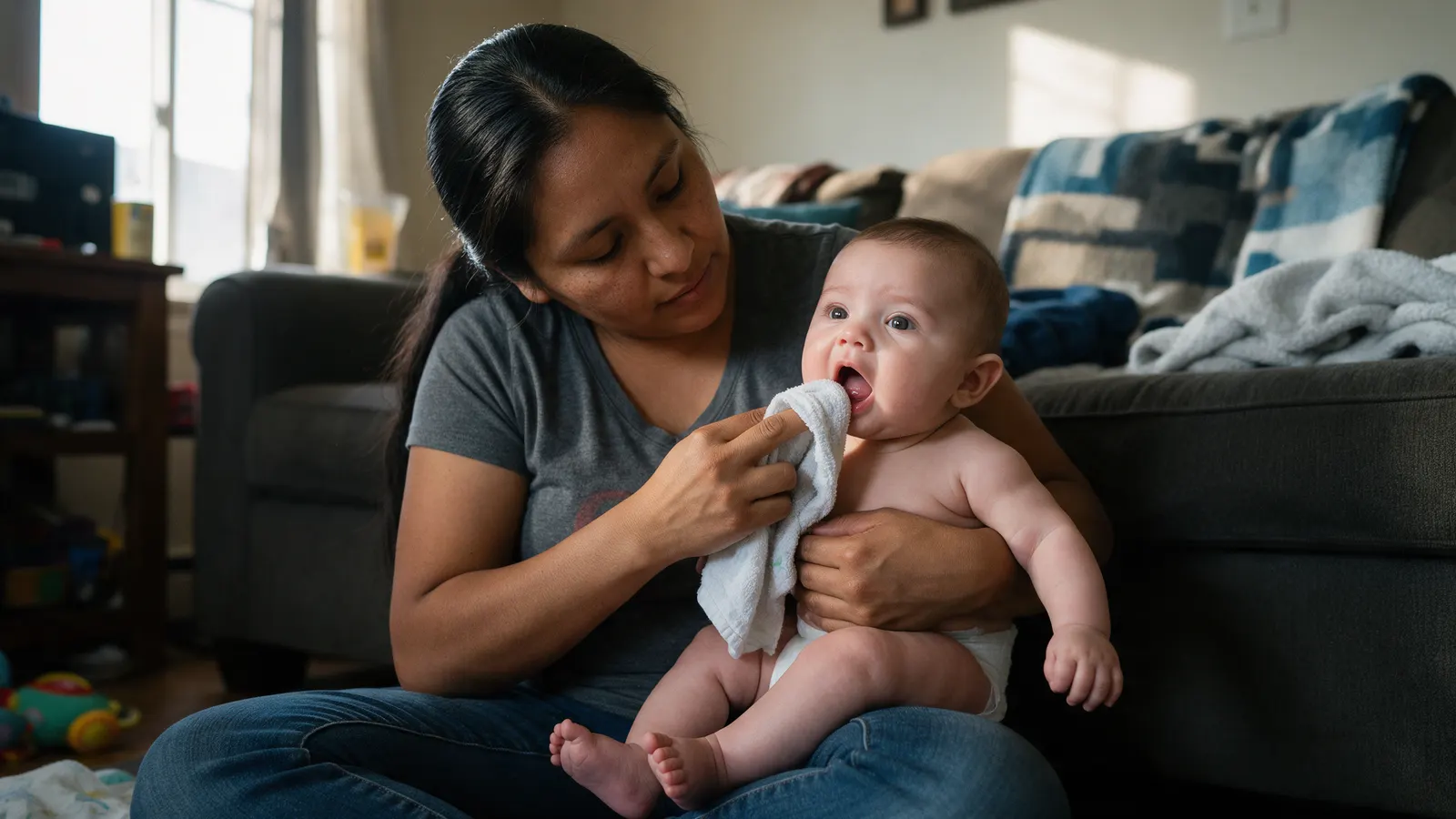
There's no tooth yet, probably. That makes today the easy day to start the habit that will be waiting when one arrives.
Heart
Wipe your baby's gums with a clean, damp washcloth after feedings, skip bottles in bed, and don't share spoons or pacifiers mouth to mouth (AAP). That's the whole program until a tooth shows. Once one appears, brush twice a day with a rice-grain smear of fluoride toothpaste (AAP), ask your pediatrician about fluoride varnish, and book a dental visit after the first tooth and by the first birthday (AAP).
Head
The timing is why today is a rehearsal. First teeth usually appear between 6 and 10 months, starting with the bottom front two (AAP), and some babies have none by their first birthday (AAP). A wipe that is already part of the day is a brush that gets done. The AAP's bedtime shape is Brush, Book, Bed: a short, repeatable routine at a regular bedtime helps your baby know what comes next (AAP). The gum wipe is the first step of that, weeks before there's anything to brush.
Body
Two of the three rules are about the mouth, and one is about the crib. A bottle in bed is a tooth-decay rule (AAP) and a safe-sleep one: the crib holds a baby on their back, a firm flat surface, and a fitted sheet, nothing else (Moon, AAP). A pacifier at sleep time is fine and lowers SIDS risk (Moon, AAP); just don't clean it in your own mouth first.
Try today
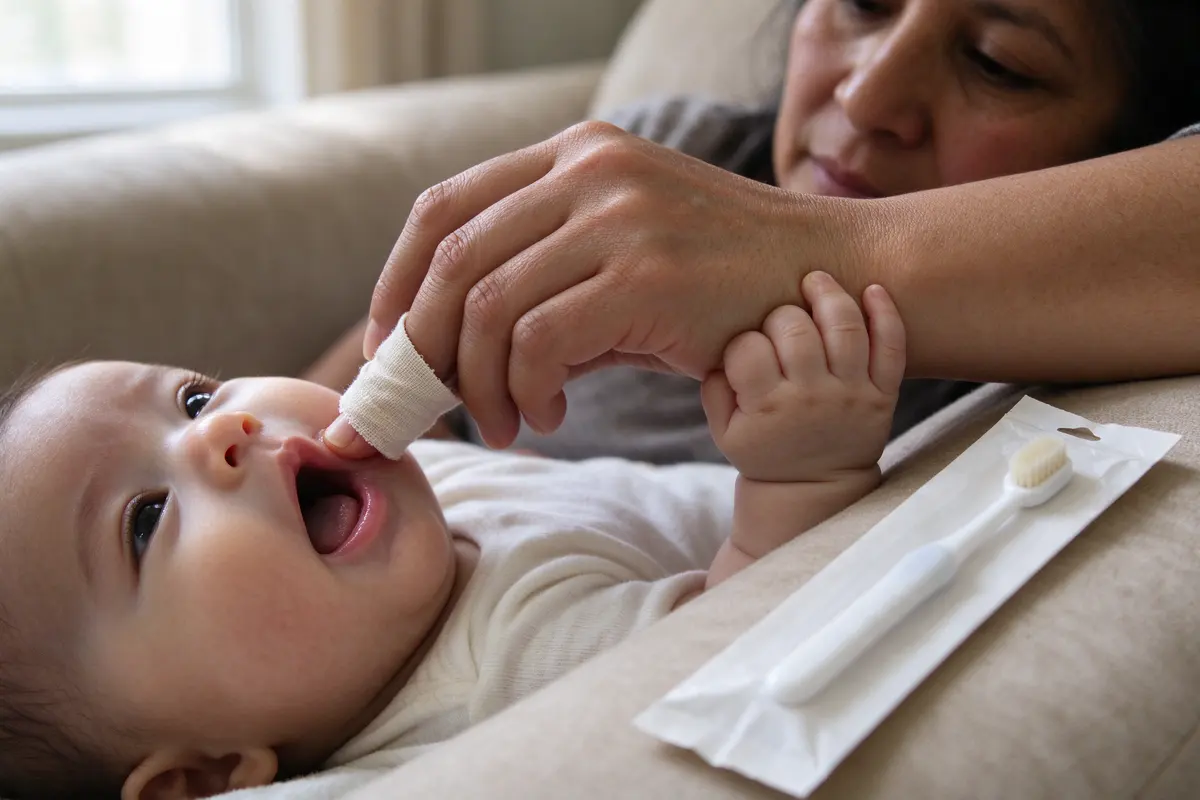
The gum wipe
Time: 1 minute after a feed · Clean gums now, brush the first tooth in the guide
After a feed, wet a clean washcloth and wrap it around one finger.
Wipe the gums, front and back, top and bottom, while you name what you're doing: "Top gums. Bottom gums." (AAP).
Make it the first step of the bedtime routine tonight, before the book (AAP).
Check the drawer: a soft baby toothbrush and a fluoride toothpaste, ready for a rice-grain smear the day a tooth shows (AAP).
Make it work:If your baby clamps down on your finger, that's gum-rubbing, which they like. Let them.
Watch for
Normal
swollen or tender-looking gums for a few days (AAP).
Call your pediatrician right away
if your baby has had no urine in more than 8 hours, a very dry mouth, or no tears (AAP).
Normal
gnawing the washcloth and trying to swallow it; keep hold of the other end.
Call your doctor right away
after any head injury, including a fall from a bed, couch, or changing table (AAP).
Normal
a pacifier at naps and bedtime (Moon, AAP).
Call 911
if your baby is struggling for each breath, has stopped breathing, or has bluish lips or face (AAP).
For you
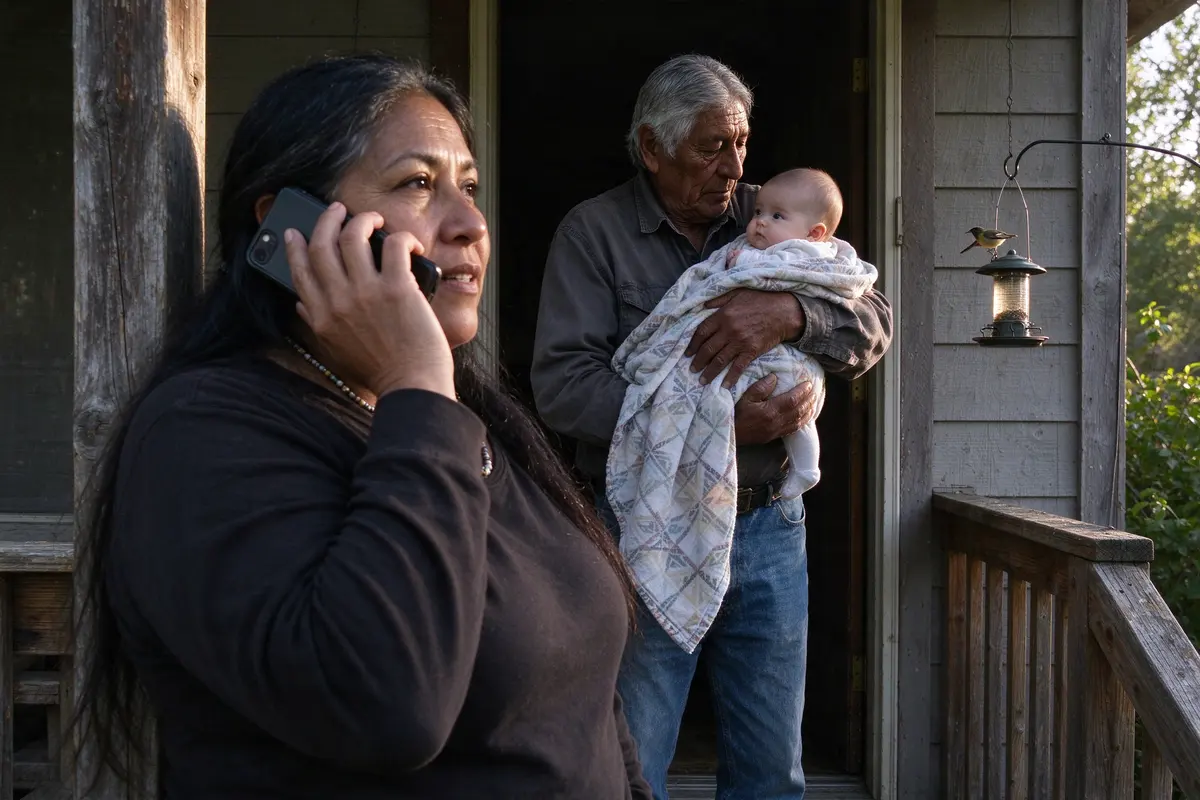
Your own dental visit. For a lot of mothers the dentist is the appointment that fell off the calendar sometime in pregnancy and never climbed back on, and twenty-three weeks of a baby hasn't helped. Book it today, while you're thinking about teeth. When you go, tell them you had a baby this year; the CDC's advice is to tell any provider you were pregnant within the last year, and it applies to the dentist too (CDC). The postpartum visit at about six weeks after birth was for one part of you (OWH); the rest of you still has appointments.
If you're the partner: you have the baby for that hour, and you book your own while you're at it.
Sources
- Braun P. "Why It's Important to Take Care of Baby Teeth." HealthyChildren.org, 2026. https://www.healthychildren.org/English/ages-stages/baby/teething-tooth-care/Pages/How-to-Prevent-Tooth-Decay-in-Your-Baby.aspx
- American Academy of Pediatrics Section on Oral Health. "Fluoride for Children: Parent FAQs." HealthyChildren.org, 2025. https://www.healthychildren.org/English/healthy-living/oral-health/Pages/FAQ-Fluoride-and-Children.aspx
- DiMaggio D, Cernigliaro J. "Baby's First Tooth: 7 Facts Parents Should Know." HealthyChildren.org, 2022. https://www.healthychildren.org/English/ages-stages/baby/teething-tooth-care/Pages/Babys-First-Tooth-Facts-Parents-Should-Know.aspx
- American Academy of Pediatrics Section on Oral Health. "Teething Pain Relief: How to Soothe Your Baby's Discomfort." HealthyChildren.org, 2025. https://www.healthychildren.org/English/ages-stages/baby/teething-tooth-care/Pages/Teething-Pain.aspx
- American Academy of Pediatrics. "Brush, Book, Bed: How to Structure Your Child's Nighttime Routine." HealthyChildren.org, 2024. https://www.healthychildren.org/English/healthy-living/oral-health/Pages/Brush-Book-Bed.aspx
- Moon RY. "How to Keep Your Sleeping Baby Safe: AAP Policy Explained." HealthyChildren.org, 2026. https://www.healthychildren.org/English/ages-stages/baby/sleep/Pages/a-parents-guide-to-safe-sleep.aspx
- American Academy of Pediatrics. "Fever" (symptom checker). HealthyChildren.org, 2026. https://www.healthychildren.org/English/tips-tools/symptom-checker/Pages/symptomviewer.aspx?symptom=Fever
- American Academy of Pediatrics. "Head Injury" (symptom checker). HealthyChildren.org, 2026. https://www.healthychildren.org/English/tips-tools/symptom-checker/Pages/symptomviewer.aspx?symptom=Head+Injury
- American Academy of Pediatrics. "Breathing Trouble" (symptom checker). HealthyChildren.org, 2026. https://www.healthychildren.org/English/tips-tools/symptom-checker/Pages/symptomviewer.aspx?symptom=Breathing+Trouble
- Centers for Disease Control and Prevention. "Urgent Maternal Warning Signs and Symptoms." HEAR HER, 2024. https://www.cdc.gov/hearher/maternal-warning-signs/index.html
- Office on Women's Health. "Recovering from birth." US Department of Health and Human Services, 2021. https://womenshealth.gov/pregnancy/childbirth-and-beyond/recovering-birth
This guide is general education that summarizes published research and guidance from groups like the American Academy of Pediatrics, the CDC, and the WHO. It isn’t medical advice, and every child develops on their own timeline. Your pediatrician knows your child; if something feels wrong, call them. In an emergency, call 911.
Get each day’s note the morning it applies
Add your baby to a free Chorevia household with their date of birth, and every morning for 300 days the day’s note arrives in the app and by email: what’s developing, one thing to try, what to watch for, and a word for you.
Create your household