Day 172 of 300 · Week 24
Water, one inch
Last reviewed · 3 min read · 8 sources · Plain-text version
Babies can drown silently in an inch or two of water, and most bathtub drownings involve babies under 1. The setup that keeps your hand where it belongs for the whole bath.

Yesterday was the splash. Today is the number behind the one-hand rule, because a rule you understand is a rule you keep at the end of a long day.
Heart
Babies can drown silently in 1 or 2 inches of water, and more than half of bathtub drowning deaths involve babies under 1 (AAP). Silently is the word that matters. A baby who rolls, rocks, kicks, and reaches for anything shiny (AAP) can tip in a tub in the time it takes to turn around, and you'll hear nothing. That's why the rule is a hand, not an ear.
Head
Bath seats look like the answer and aren't. They can tip over or let a baby slip out (AAP). In a federal review of 32 bath-seat drownings, the caregiver had stepped away for 6 minutes on average, often to answer the phone or fetch a towel (CPSC, 1997). Not an hour. Six minutes, for a towel. The seat made the step away feel safe, which is the danger of it. The AAP's 2026 guidance is plain: keep a hand on your baby, bath seat or not (AAP, 2026).
Body
Water in a house isn't only in the tub. Empty buckets right away, keep toilet lids down, and set the water heater so the faucet runs no hotter than 120°F (AAP). A bucket with an inch of mop water is deep enough. None of this needs a product; it needs the towel on the rim before the tap goes on, and if you must leave the room for any reason, the baby comes with you, wet and wrapped (AAP). The bath time and water section is short because the rules are.
Try today
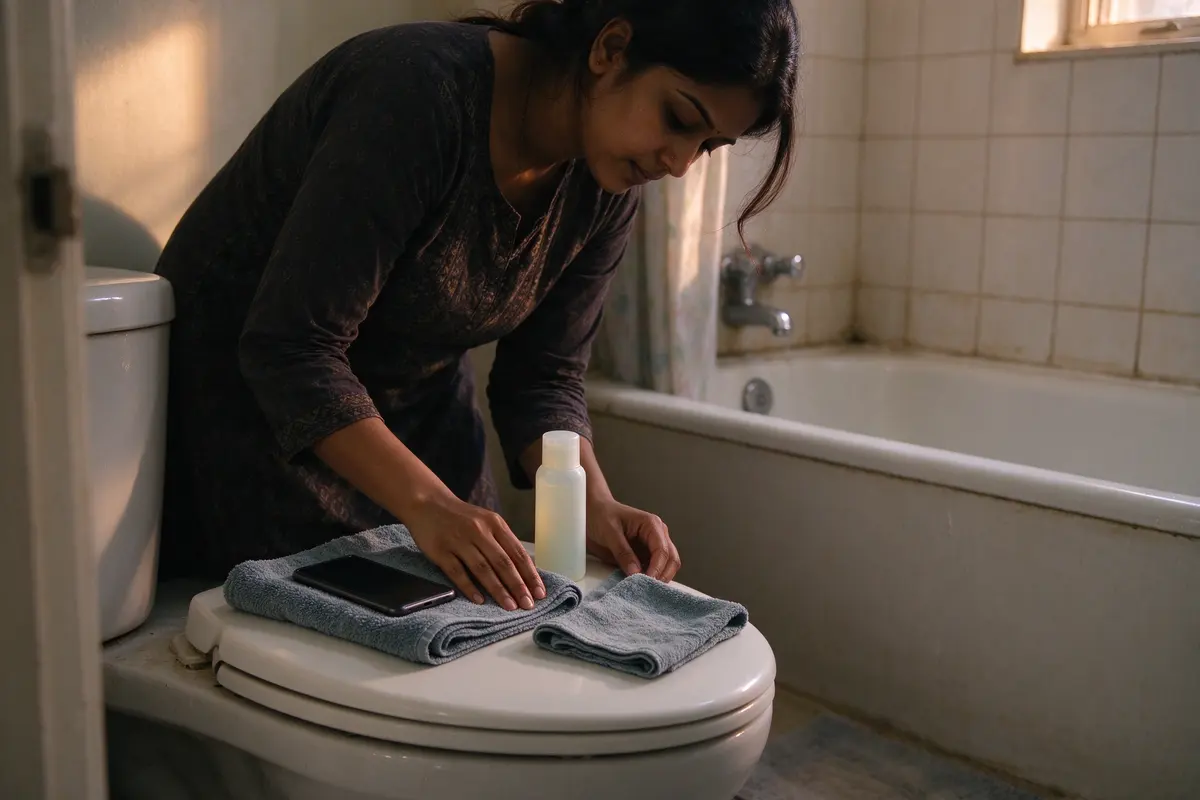
The bath setup
Time: 2 minutes before every bath · Bath time and water in the guide
Before any water runs: towel, washcloth, soap, clean diaper, and clothes within arm's reach of the tub (AAP).
Phone in the room, face down, so there's no reason to leave for it; or out of earshot, so there's no pull.
Run the water shallow and test it with your wrist or elbow; the faucet should run no hotter than 120°F (AAP).
One hand on your baby from the moment they go in until they're out and wrapped. If you have to leave, they leave with you.
Drain the tub and empty any bucket before you walk away (AAP).
Make it work:Say the list out loud for a week: "towel, cloth, soap, phone, hand." A bath seat, if you own one, changes nothing on the list.
Watch for
Normal
a baby who slaps the water and startles at the splash, then does it again.
Call 911
if your baby is not moving or is very weak, or can't be woken (AAP).
Normal
a wobble in the tub as they try to sit forward on their hands; that's tripod sitting, and your hand is the backrest (AAP).
Call your pediatrician now
for any head injury in a baby under 1, including a slip in the tub, even if they seem fine (AAP).
Normal
a cough and a grimace after a mouthful of bath water.
Call 911
if your baby is struggling for each breath or has pale or blue skin (AAP).
For you

Nobody steps away for the phone. Not you, not the partner, not the grandparent who "only looked away for a second." Six minutes was the average in that federal review (CPSC, 1997), and every one of those caregivers loved their baby. The rule isn't about care. It's about a ringtone and a towel, and the fix is to put both where they can't call you away.
Take the call later, with a clean, wrapped baby on your chest. If you feel like something just isn't right with you, or you aren't sure whether it's serious, that's a call to your own provider, too (CDC).
If you're the partner: ask whoever bathes the baby what the list is. If they can say it, you're done.
Sources
- American Academy of Pediatrics Council on Injury, Violence and Poison Prevention. "Infant Drowning Prevention & Water Safety: How to Protect Your Baby." HealthyChildren.org, 2026. https://www.healthychildren.org/English/safety-prevention/at-play/Pages/Infant-Water-Safety.aspx
- American Academy of Pediatrics. "Movement Milestones: Babies 4 to 7 Months." HealthyChildren.org, 2021. https://www.healthychildren.org/English/ages-stages/baby/Pages/Movement-4-to-7-Months.aspx
- US Consumer Product Safety Commission. "CPSC Announces Study Results of Drowning Danger Using Infant Bathtub Seats." 1997. https://www.cpsc.gov/Newsroom/News-Releases/1998/CPSC-Announces-Study-Results-of-Drowning-Danger-Using-Infant-Bathtub-Seats
- American Academy of Pediatrics. "AAP Releases Updated Drowning Prevention Recommendations." HealthyChildren.org, 2026. https://www.healthychildren.org/English/news/Pages/AAP-releases-updated-drowning-prevention-recommendations.aspx
- American Academy of Pediatrics. "Fever" (symptom checker). HealthyChildren.org, 2026. https://www.healthychildren.org/English/tips-tools/symptom-checker/Pages/symptomviewer.aspx?symptom=Fever
- American Academy of Pediatrics. "Head Injury" (symptom checker). HealthyChildren.org, 2026. https://www.healthychildren.org/English/tips-tools/symptom-checker/Pages/symptomviewer.aspx?symptom=Head+Injury
- American Academy of Pediatrics. "Breathing Trouble" (symptom checker). HealthyChildren.org, 2026. https://www.healthychildren.org/English/tips-tools/symptom-checker/Pages/symptomviewer.aspx?symptom=Breathing+Trouble
- Centers for Disease Control and Prevention. "Urgent Maternal Warning Signs and Symptoms." HEAR HER, 2024. https://www.cdc.gov/hearher/maternal-warning-signs/index.html
This guide is general education that summarizes published research and guidance from groups like the American Academy of Pediatrics, the CDC, and the WHO. It isn’t medical advice, and every child develops on their own timeline. Your pediatrician knows your child; if something feels wrong, call them. In an emergency, call 911.
Get each day’s note the morning it applies
Add your baby to a free Chorevia household with their date of birth, and every morning for 300 days the day’s note arrives in the app and by email: what’s developing, one thing to try, what to watch for, and a word for you.
Create your household