Day 69 of 120 · Week 10
Cause and effect
Last reviewed · 3 min read · 11 sources · Plain-text version
A classic experiment: 3-month-olds learn that a kick moves the mobile, and remember it. This month's first lesson: my actions make things happen. Kick and see.
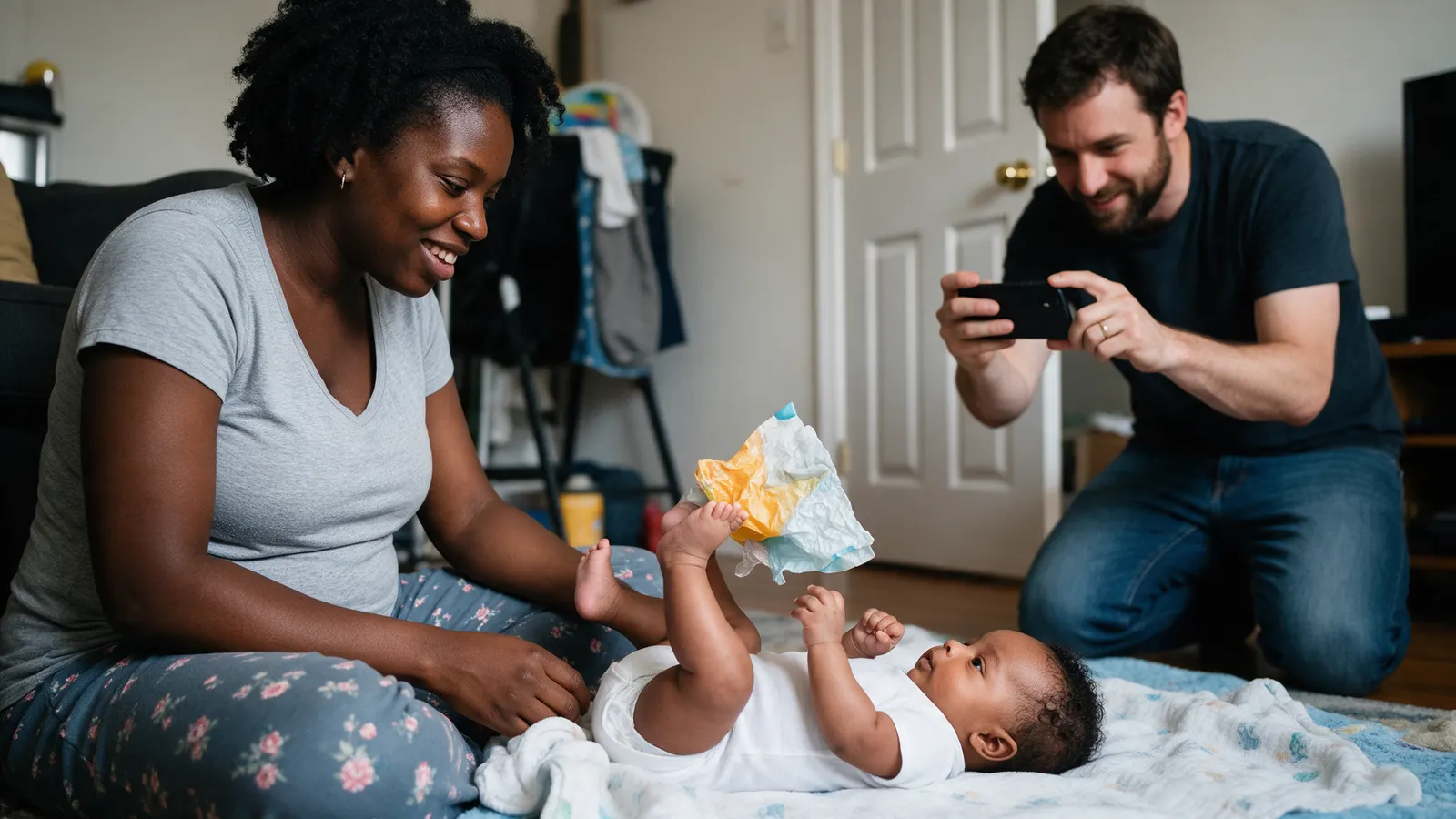
Today's idea is small and enormous: what your baby does changes what happens next.
Heart
In a classic experiment, 3-month-olds learned to make a crib mobile move by kicking. They usually forgot the trick after about 8 days, but a brief reminder the day before testing let them remember it after 2 or even 4 weeks (Rovee-Collier et al., 1980). How long babies remember this kind of lesson grows steadily from 2 to 18 months (Hartshorn et al., 1998). A baby who forgets the trick next week hasn't lost anything; a reminder brings it back.
Head
"My actions make things happen" is the first lesson on this month's list: a kick shakes the toy; a swipe makes the rattle sound (Rovee-Collier et al., 1980). Simple cause-and-effect play is real learning. It works best as a conversation: everyday back-and-forth with you helps build connections in the brain (Harvard Center on the Developing Child).
Body
Try today
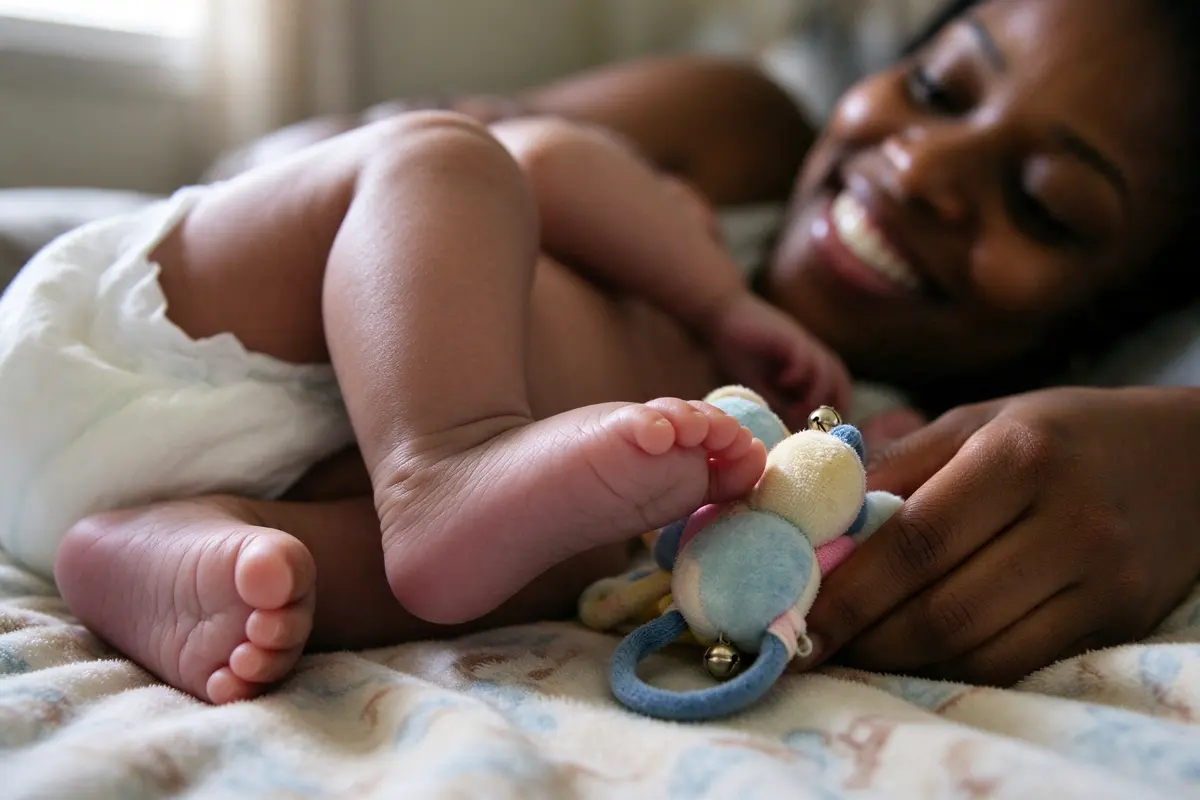
Kick and see
Time: A few minutes during floor play · Kick and see in the guide
Lay your baby on their back on a blanket on the floor.
Place a crinkly or jingly soft toy where their feet can reach it.
When a kick makes a sound, say so: "You did that!"
Tomorrow, set the same toy in the same place and watch for a faster kick.
Make it work:Stay right there, and put the toy away when play is over (CDC).
Watch for
Normal
harder kicking from one leg on some days.
Call your pediatrician
if your baby uses only one side of the body, or doesn't move both arms and both legs (AAP).
Normal
a trick that seems forgotten a week later (Rovee-Collier et al., 1980).
Ask your pediatrician about developmental screening
if your baby has lost skills they used to have (CDC).
Normal
Call 911
if your baby is struggling for each breath (AAP).
For you
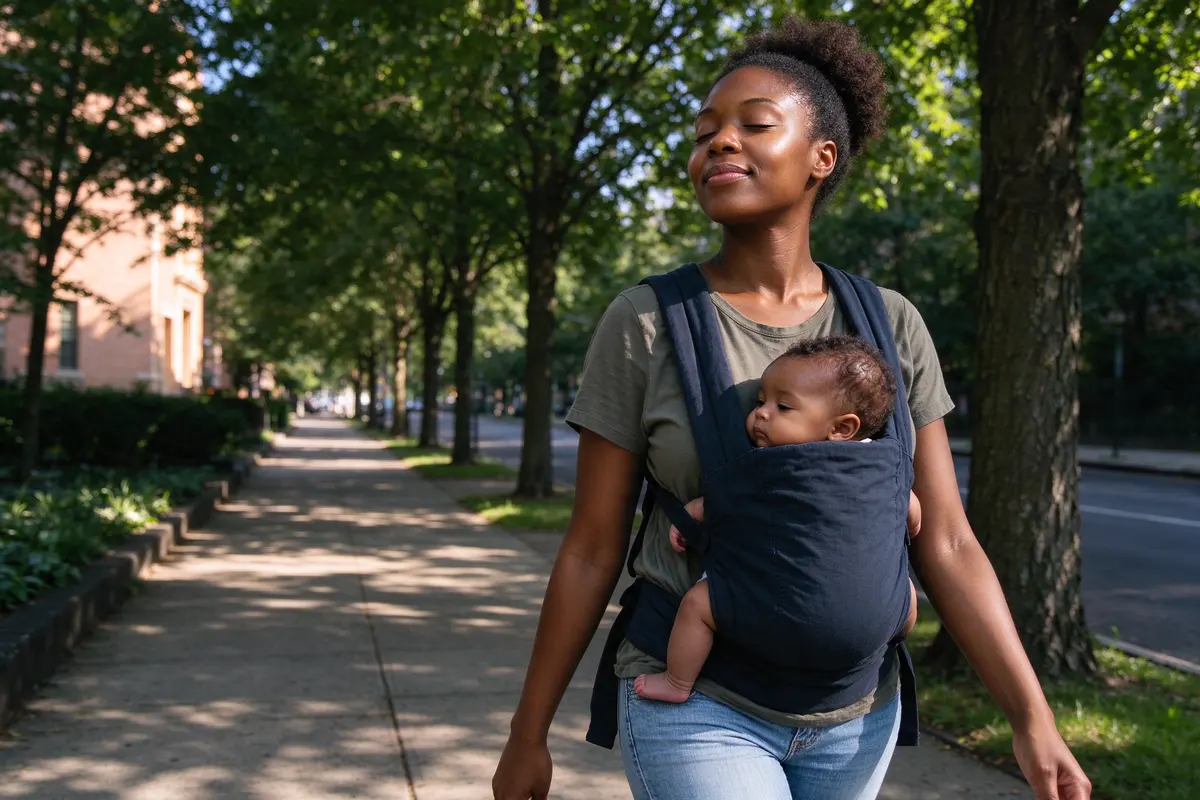
Cause and effect for you: one small thing that changes your day. Two with some evidence behind them. In a small lab study of 12 babies 1 to 6 months old, babies cried and moved less when their mother walked while carrying them than when she held them sitting (Esposito et al., 2013). And in one study of 56 babies 6 to 12 weeks old, those who slept better at night got more daytime light, especially in the early afternoon, a link that doesn't prove cause (Harrison, 2004). Put together: a walk after lunch with the baby in the carrier might change the afternoon and the night.
Water counts too: plenty of it, with fresh fruits and vegetables, is the plain advice for constipation (Office on Women's Health).
If you're the partner: pick the one thing and do it unasked. Then notice what changed.
Sources
- Rovee-Collier CK, Sullivan MW, Enright M, Lucas D, Fagen JW. "Reactivation of infant memory." Science, 1980. https://pubmed.ncbi.nlm.nih.gov/7375924/
- Hartshorn K, Rovee-Collier C, Gerhardstein P, et al. "The ontogeny of long-term memory over the first year-and-a-half of life." Developmental Psychobiology, 1998. https://pubmed.ncbi.nlm.nih.gov/9526683/
- Center on the Developing Child at Harvard University. "Serve and Return." 2026. https://developingchild.harvard.edu/key-concept/serve-and-return/
- Wusthoff CJ. "Movement Milestones: Birth to 3 Months." HealthyChildren.org, 2020. https://www.healthychildren.org/English/ages-stages/baby/Pages/Movement-Birth-to-Three-Months.aspx
- Centers for Disease Control and Prevention. "Milestones by 4 Months." Learn the Signs. Act Early., 2026. https://www.cdc.gov/act-early/milestones/4-months.html
- Moon RY. "How to Keep Your Sleeping Baby Safe: AAP Policy Explained." HealthyChildren.org, 2026. https://www.healthychildren.org/English/ages-stages/baby/sleep/Pages/a-parents-guide-to-safe-sleep.aspx
- American Academy of Pediatrics. "Baby Pacifiers & Thumb Sucking: What Parents Need to Know." HealthyChildren.org, 2026. https://www.healthychildren.org/English/ages-stages/baby/crying-colic/Pages/Pacifiers-and-Thumb-Sucking.aspx
- American Academy of Pediatrics. "Breathing Trouble" (symptom checker). HealthyChildren.org, 2026. https://www.healthychildren.org/English/tips-tools/symptom-checker/Pages/symptomviewer.aspx?symptom=Breathing+Trouble
- Esposito G, Yoshida S, Ohnishi R, et al. "Infant calming responses during maternal carrying in humans and mice." Current Biology, 2013. https://pubmed.ncbi.nlm.nih.gov/23602481/
- Harrison Y. "The relationship between daytime exposure to light and night-time sleep in 6-12-week-old infants." Journal of Sleep Research, 2004. https://pubmed.ncbi.nlm.nih.gov/15560769/
- Office on Women's Health. "Recovering from birth." US Department of Health and Human Services. https://womenshealth.gov/pregnancy/childbirth-and-beyond/recovering-birth
This guide is general education that summarizes published research and guidance from groups like the American Academy of Pediatrics, the CDC, and the WHO. It isn’t medical advice, and every child develops on their own timeline. Your pediatrician knows your child; if something feels wrong, call them. In an emergency, call 911.
Get each day’s note the morning it applies
Add your baby to a free Chorevia household with their date of birth, and every morning for 120 days the day’s note arrives in the app and by email: what’s developing, one thing to try, what to watch for, and a word for you.
Create your household