Day 73 of 120 · Week 10
Goodbye, swaddle
Last reviewed · 4 min read · 9 sources · Plain-text version
Rolling can start as early as 2 months, and the swaddle has to end at the first sign of it. What the evidence says, what to switch to, and a plan for making the change tonight.
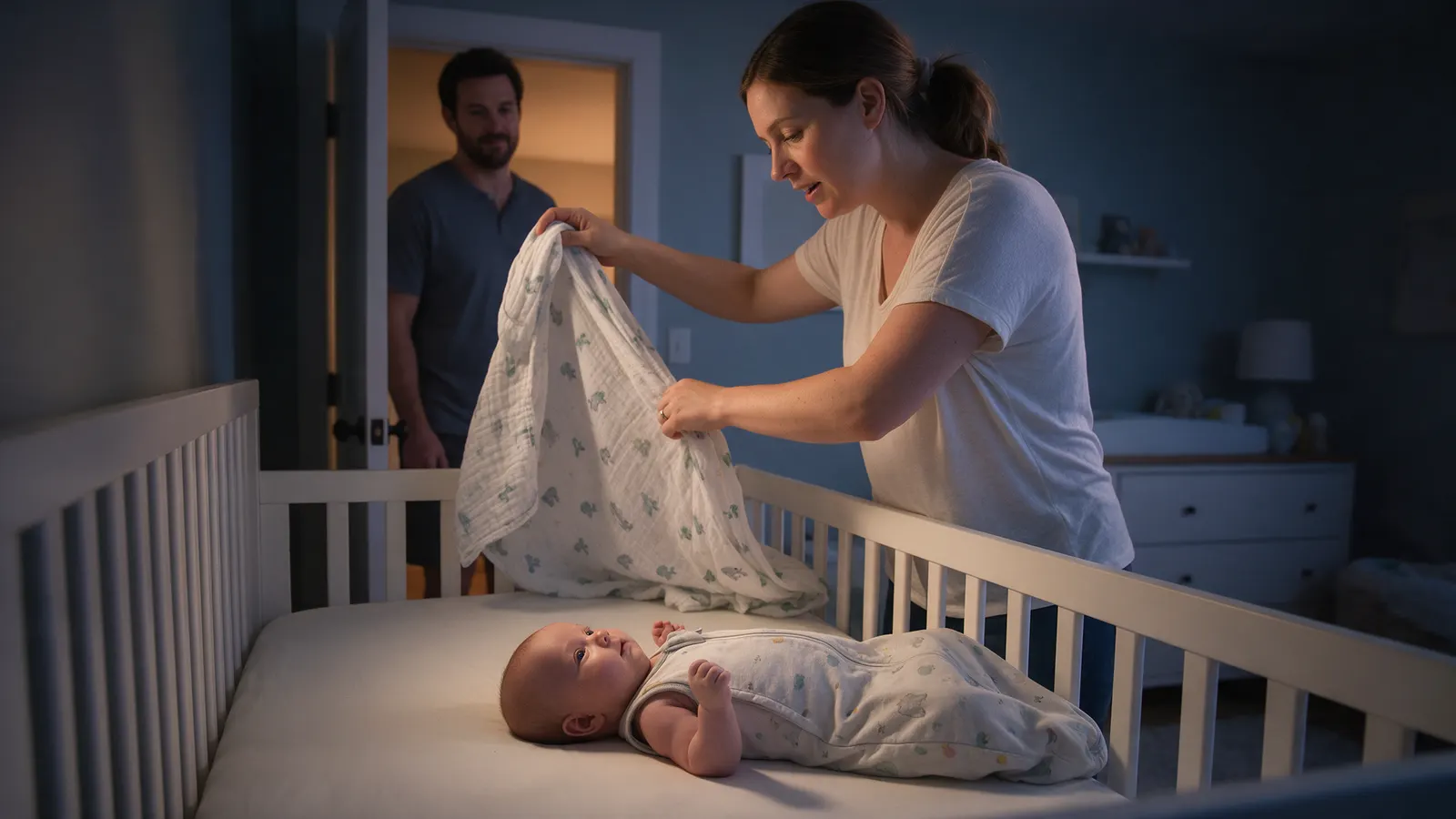
For many families, the swaddle has been the thing that worked. This week, or soon, it has to stop, and better to plan it than be surprised by it.
Heart
The rule is about rolling, not age: stop swaddling as soon as your baby shows any sign of trying to roll, and some babies start working on it as early as 2 months (Moon & Glassy, AAP). Rolling usually happens around 3 to 4 months but can come earlier (Moon, AAP). By month three, kicks get stronger, and some babies begin rolling, usually tummy to back first (AAP). A big kick that tips the hips, or an arm wrestling out of the wrap, is a sign.
Head
Why the rule is strict: rolling while swaddled raises the risk of suffocation and SIDS (Moon & Glassy, AAP). In a meta-analysis of four studies, SIDS risk with swaddling was highest when swaddled babies were placed on their stomach or side, and limited evidence suggested it rose with age (Pease et al., 2016). This is also the highest-risk window overall: 72% of SIDS deaths happen in months 1 to 4 (NICHD). So the change isn't a loss of a comfort; it's the comfort's expiry date.
Body
What to switch to: a sleep sack that doesn't swaddle. Ones that let your baby move freely can be used as long as you like; ones that compress the arms and chest should stop at signs of rolling. One arm out is a comfort step, not a safety step; there's no evidence about SIDS risk with arms in versus out (Moon & Glassy, AAP). No weighted sleep sacks, swaddles, or blankets (Moon, AAP). Everything else about the crib stays as it was: back, firm and flat, a fitted sheet and nothing else (Moon, AAP).
Try today
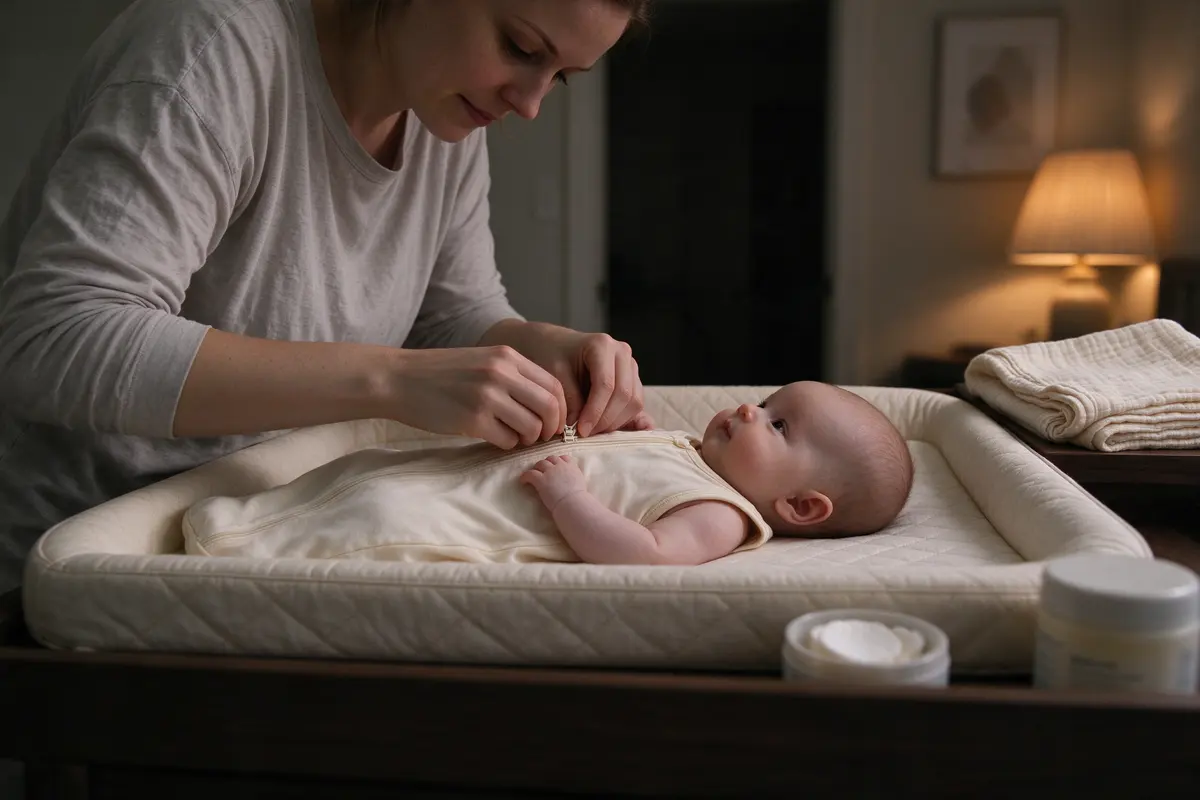
The sleep-sack switch
Time: Tonight's bedtime · Moving on from the swaddle in the guide
Choose a wearable blanket that leaves the arms free, and nothing weighted (Moon & Glassy, AAP; Moon, AAP).
Keep the rest of the wind-down exactly as it was: same order, same song, same dim room.
Lay your baby on their back in the bare crib, and offer a pacifier if they take one; it lowers SIDS risk (Moon, AAP).
If the first night is rougher, keep going. One arm out of a swaddle is a comfort step you can use while they adjust, not a safety step (Moon & Glassy, AAP).
Make it work:Starting child care soon? Many centers don't swaddle, and babies swaddled for the first time at an older age may have a harder time waking, so this change helps there too (Moon & Glassy, AAP).
Watch for
- Normal: waking in the night and getting back to sleep; that's the AAP's definition of a good sleeper at this age (AAP). Call 911 if you can't wake your baby enough to feed (Nationwide Children's).
- Normal: a half roll from tummy to back during play (AAP). Call 911 if your baby is struggling for each breath, has stopped breathing, or has bluish lips or face (AAP).
- Normal: a cooler baby without the wrap, dressed in one more layer than you're wearing. Sweating, a hot chest, or flushed skin means too warm (Moon, AAP).
For you
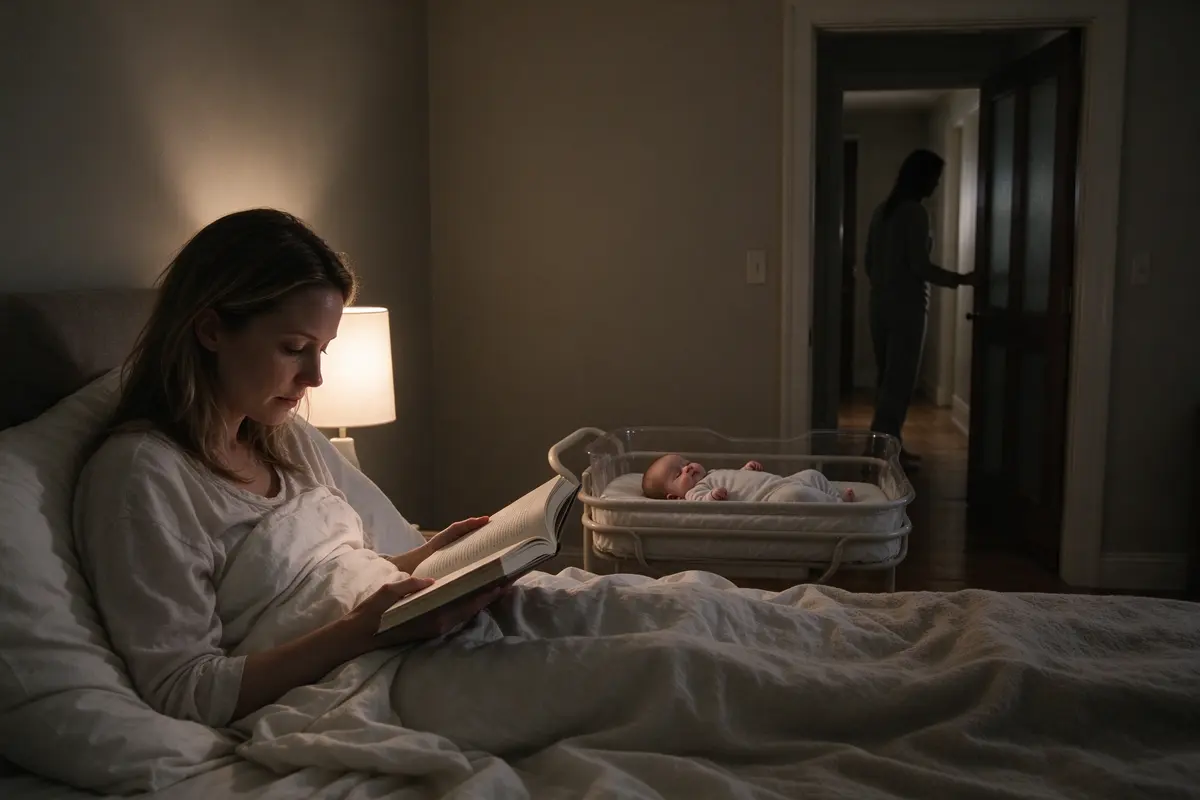
A sleep-safe room is a room you can leave. Once your baby is on their back in a bare crib in your room, nothing in it needs you standing guard; room-sharing without bed-sharing is the AAP's rule for at least the first 6 months (Moon, AAP). Take the shower. Read a chapter. The monitor can stay on, but there's no evidence home monitors lower SIDS risk (Moon, AAP), so don't let it keep you in the chair.
For the nights that go badly: avoid feeding on a couch or armchair, and if you doze off while feeding, put your baby on their back in their own space as soon as you wake (AAP).
If you're the partner: own the new sleep sack. Zip it, check the room, and tell her it's done so she can stop checking.
Sources
- Moon RY, Glassy D. "Swaddling: Is it Safe for Your Baby?" HealthyChildren.org, updated 2022. https://www.healthychildren.org/English/ages-stages/baby/diapers-clothing/Pages/Swaddling-Is-it-Safe.aspx
- Moon RY. "How to Keep Your Sleeping Baby Safe: AAP Policy Explained." HealthyChildren.org, updated 2026. https://www.healthychildren.org/English/ages-stages/baby/sleep/Pages/a-parents-guide-to-safe-sleep.aspx
- Wusthoff CJ. "Movement Milestones: Birth to 3 Months." HealthyChildren.org, updated 2020. https://www.healthychildren.org/English/ages-stages/baby/Pages/Movement-Birth-to-Three-Months.aspx
- Pease AS, Fleming PJ, Hauck FR, et al. "Swaddling and the Risk of Sudden Infant Death Syndrome: A Meta-analysis." Pediatrics, 2016. https://pubmed.ncbi.nlm.nih.gov/27244847/
- Eunice Kennedy Shriver National Institute of Child Health and Human Development. "Infographic: SIDS by Baby's Age (Text Alternative)." Safe to Sleep, accessed 2026. https://safetosleep.nichd.nih.gov/resources/social-digital/sids-by-babys-age-infographic-text-alternative
- American Academy of Pediatrics. "Sleeping Through the Night." HealthyChildren.org, updated 2013. https://www.healthychildren.org/English/ages-stages/baby/sleep/Pages/Sleeping-Through-the-Night.aspx
- Nationwide Children's Hospital. "Newborn Warning Signs." 2023. https://www.nationwidechildrens.org/conditions/health-library/newborn-warning-signs
- American Academy of Pediatrics. "Breathing Trouble" (symptom checker). HealthyChildren.org, accessed 2026. https://www.healthychildren.org/English/tips-tools/symptom-checker/Pages/symptomviewer.aspx?symptom=Breathing+Trouble
- Moon RY. "Safe Sleep Tips for Sleep-Deprived New Parents." HealthyChildren.org, updated 2026. https://www.healthychildren.org/English/ages-stages/baby/sleep/Pages/safe-sleep-tips-for-sleep-deprived-parents.aspx
This guide is general education that summarizes published research and guidance from groups like the American Academy of Pediatrics, the CDC, and the WHO. It isn’t medical advice, and every child develops on their own timeline. Your pediatrician knows your child; if something feels wrong, call them. In an emergency, call 911.
Get each day’s note the morning it applies
Add your baby to a free Chorevia household with their date of birth, and every morning for 120 days the day’s note arrives in the app and by email: what’s developing, one thing to try, what to watch for, and a word for you.
Create your household