Day 34 of 60 · Week 5
Hands
Last reviewed · 3 min read · 7 sources · Plain-text version
Fists start to open, hands start to catch your baby's attention, and some find the mouth. A short hand game for diaper changes, and a note on your own hands.

Watch the hands this week. Somewhere in month two they start to open, to drift into view, and to become the most interesting thing in the room.
Heart
Head
The grasp reflex is still there: a finger placed in the palm gets gripped, and that reflex fades around 5 to 6 months (AAP). Sucking on fingers is useful too; CDC suggests letting babies suck on their fingers to self-soothe (CDC). A fist in the mouth isn't always hunger. Early hunger cues are lip smacking, sucking motions, rooting, and squirming, and crying is a late sign (AAP).
Body
Hands come up during changes, feeds, and play without any lesson plan. What helps is giving them something to do: your finger, a soft toy, each other. No fine-motor expectations yet; the goal is looking and feeling. The brief uncurling you see today is the beginning of reaching, months off. Opening the hands briefly is on the 2-month list (CDC), and that's the whole bar for now.
Try today
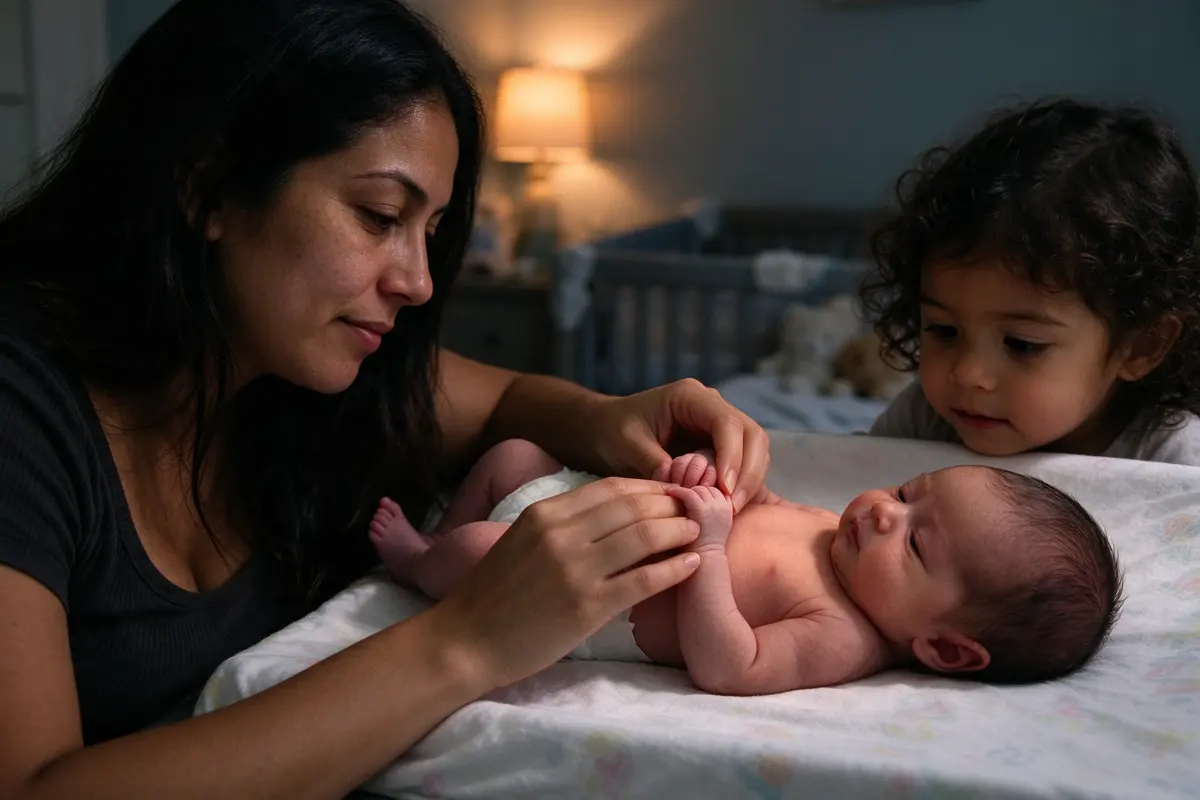
Hand discovery
Time: A minute or two, during changes or play · Hand discovery in the guide
Gently open your baby's palm and place your finger or a soft toy in it.
Bring both hands together over their chest so they can feel them touch.
Let your baby look at and suck on their hands (CDC).
Narrate: "There's your hand. There's your other hand."
Make it work:The activity hasn't been studied; the milestone has (CDC). Stop when your baby looks away or fusses. The toy stays in your hand or theirs, not in the crib.
Watch for
Normal
hands mostly in fists, opening now and then.
Bring it up
if your baby doesn't move both arms and both legs, or uses only one side (AAP).
Normal
a fist in the mouth soon after a feed.
Call your pediatrician right away
if your baby is feeding poorly or has a new weak suck (Nationwide Children's).
Normal
a scratch or two on the cheeks from nails that grow fast.
Call your pediatrician right away
if any skin looks infected, or for tiny blisters or purple or blood-colored spots (AAP).
For you
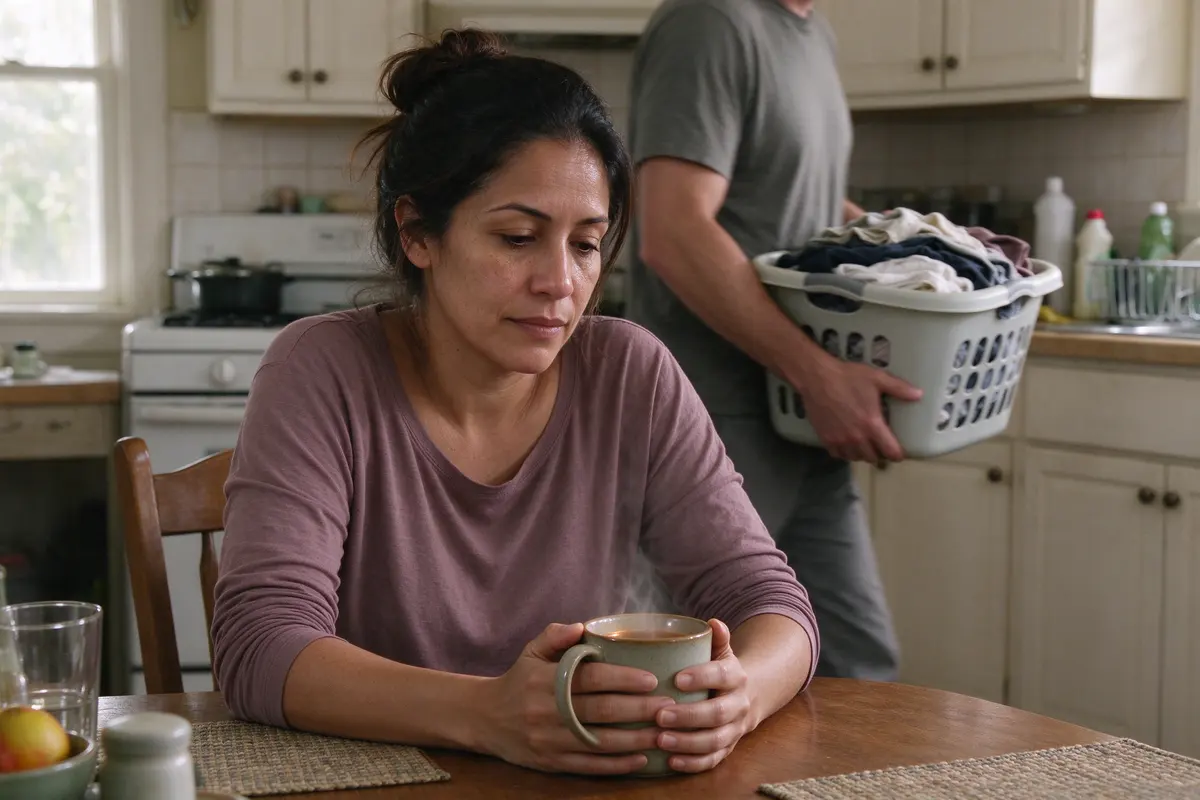
Your own hands and wrists: a month of lifting, latching, and cradling a head in one cupped hand adds up. Notice how you hold the baby during feeds, and switch hands and sides. Rest a hand that aches, and put pillows under your arms so your wrists aren't holding the weight. Pain or numbness that keeps on is worth a mention at your postpartum visit.
Ask for the heavy lifting to be done by someone else. After a C-section, don't lift anything heavier than your baby for the first 6 to 8 weeks (MedlinePlus). Even after a vaginal birth, the car seat, the stroller, and the laundry basket are good things to hand off this week.
If you're the partner: the car seat is yours. The grocery bags are yours. Say it before she asks.
Sources
- American Academy of Pediatrics. "Movement Milestones: Birth to 3 Months." HealthyChildren.org, updated 2020. https://www.healthychildren.org/English/ages-stages/baby/Pages/Movement-Birth-to-Three-Months.aspx
- Centers for Disease Control and Prevention. "Milestones by 2 Months." Learn the Signs. Act Early. program, updated 2026. https://www.cdc.gov/act-early/milestones/2-months.html
- American Academy of Pediatrics. "Newborn Reflexes." HealthyChildren.org, updated 2022. https://www.healthychildren.org/English/ages-stages/baby/Pages/newborn-reflexes.aspx
- American Academy of Pediatrics. "How Often to Breastfeed." HealthyChildren.org, updated 2015. https://www.healthychildren.org/English/ages-stages/baby/breastfeeding/Pages/How-Often-to-Breastfeed.aspx
- Nationwide Children's Hospital. "Newborn Warning Signs." 2023. https://www.nationwidechildrens.org/conditions/health-library/newborn-warning-signs
- American Academy of Pediatrics. "Newborn Rashes and Birthmarks" (symptom checker). HealthyChildren.org, accessed 2026. https://www.healthychildren.org/English/tips-tools/symptom-checker/Pages/symptomviewer.aspx?symptom=Newborn+Rashes+and+Birthmarks
- MedlinePlus. "Going home after a C-section." National Library of Medicine. https://medlineplus.gov/ency/patientinstructions/000624.htm
This guide is general education that summarizes published research and guidance from groups like the American Academy of Pediatrics, the CDC, and the WHO. It isn’t medical advice, and every child develops on their own timeline. Your pediatrician knows your child; if something feels wrong, call them. In an emergency, call 911.
Get each day’s note the morning it applies
Add your baby to a free Chorevia household with their date of birth, and every morning for 60 days the day’s note arrives in the app and by email: what’s developing, one thing to try, what to watch for, and a word for you.
Create your household