Day 44 of 60 · Week 6
Sounds
Last reviewed · 3 min read · 10 sources · Plain-text version
Reacting to loud sounds and turning toward a voice: what hearing looks like at six weeks, the follow-up test that can't wait, and why you need a quiet hour too.
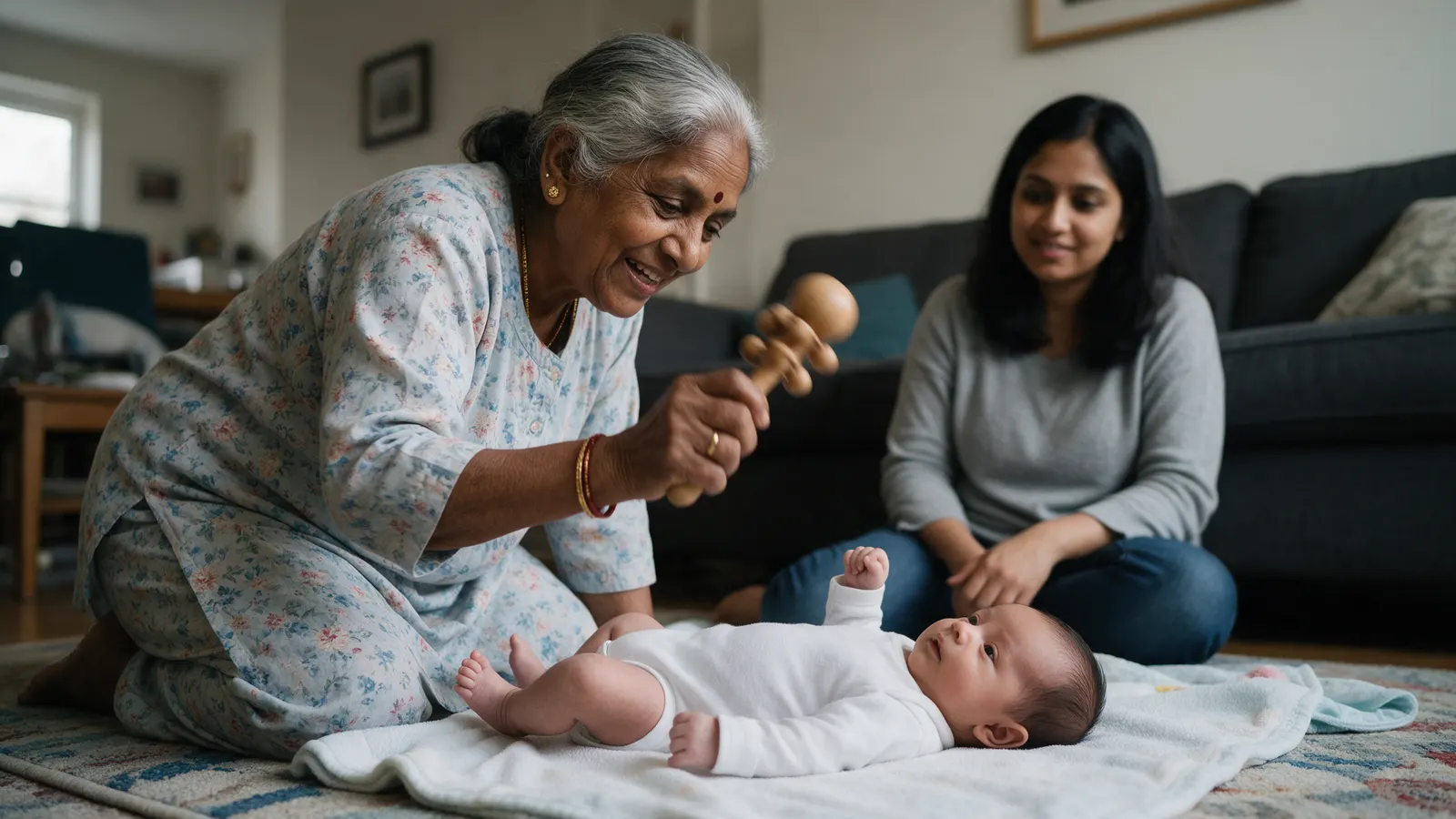
Your baby's hearing was mature at birth. What's changing now is what they do with it.
Heart
Head
The turn is slow. In a small lab study, most of 21 alert newborns turned their heads toward a sound played to one side, but the turn took a median of 2.5 seconds to start (Muir & Field, 1979). Give them time before you decide they didn't hear. The flinch you still see at a slammed door is the Moro reflex, which fades around 2 months (AAP).
One piece of housekeeping: if your baby didn't pass the newborn hearing screen, they need a full test by an audiologist before 3 months of age, and if hearing loss is found, starting support before 6 months helps babies communicate better (CDC). Three months is a few weeks away now.
Body
About the sound in the room. White noise can help babies settle: in a 1990 trial of 40 newborns, 80% fell asleep within 5 minutes with white noise, versus 25% without (Spencer et al., 1990). But keep sound machines quiet and away from the crib; at full volume, some exceed safe noise levels (Hugh et al., 2014).
Try today
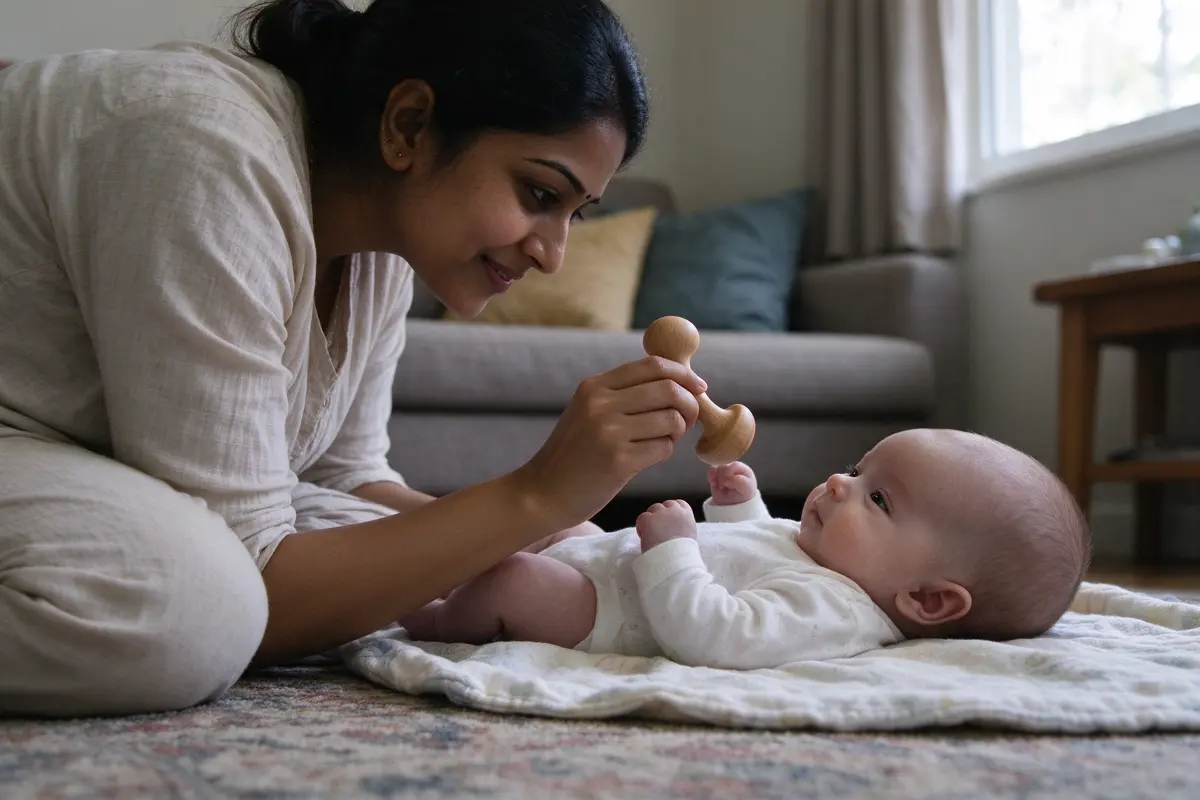
Rattle sound hunt
Time: 1 to 2 minutes · Rattle sound hunt in the guide
Hold a sturdy rattle off to one side of your baby's head, out of view (CDC).
Shake it gently and watch for a glance or a pause, then keep waiting; the turn can take several seconds (Muir & Field, 1979).
Switch sides.
When they find it, bring it into view, smile, and name it: "That's the rattle."
Make it work:Keep sounds gentle, since loud noises make babies startle (AAP). No reaction on some tries is normal.
Watch for
Normal
no turn on some tries, especially when tired.
Tell your pediatrician
if your baby doesn't react to loud sounds (CDC).
Normal
a hearing screen that was passed in the hospital.
Book the full test before 3 months
if your baby didn't pass it (CDC).
Normal
squeaks, sighs, and grunts, even in sleep (AAP).
Call 911
for new grunting, wheezing, or whistling sounds with each breath, or a baby struggling to breathe (Nationwide Children's).
For you
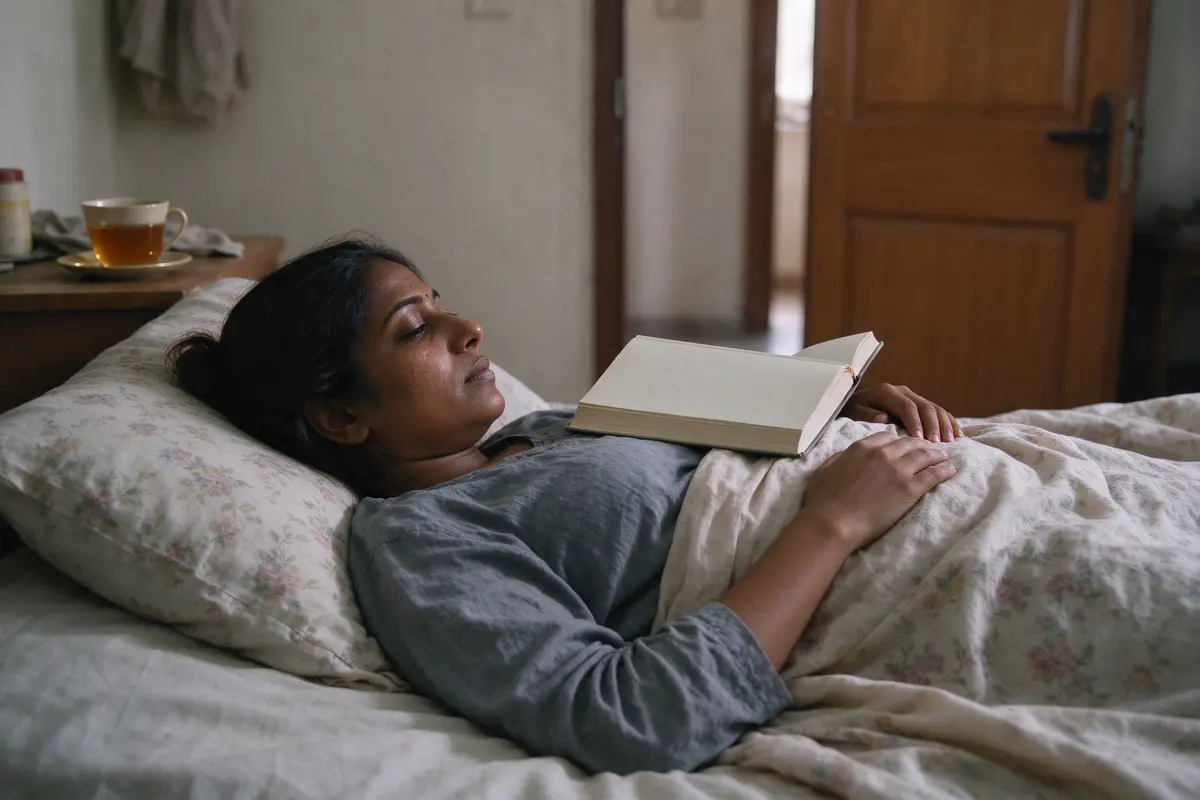
A quiet hour, again. Six weeks of a baby's noise, a monitor's noise, and your own thoughts at 3 a.m. is a lot of sound. Hand the baby to someone, close a door, and let the hour be silent. Not productive. Silent.
Tiredness that rest doesn't touch is different. The CDC lists overwhelming tiredness among the urgent warning signs in the year after a birth; if that's what you have, get care and say you were recently pregnant (CDC).
If you're the partner: this is the hour to give. Take the baby out of earshot, or outside, and don't bring them back early.
Sources
- Centers for Disease Control and Prevention. "Milestones by 2 Months." Learn the Signs. Act Early., 2026. https://www.cdc.gov/act-early/milestones/2-months.html
- American Academy of Pediatrics. "Developmental Milestones at 1 Month Old." HealthyChildren.org, 2026. https://www.healthychildren.org/English/ages-stages/baby/Pages/Developmental-Milestones-1-Month.aspx
- Muir D, Field J. "Newborn infants orient to sounds." Child Development, 1979. https://pubmed.ncbi.nlm.nih.gov/487883/
- American Academy of Pediatrics. "Newborn Reflexes." HealthyChildren.org, 2022. https://www.healthychildren.org/English/ages-stages/baby/Pages/newborn-reflexes.aspx
- Centers for Disease Control and Prevention. "Newborn Hearing Screening." 2024. https://www.cdc.gov/hearing-loss-children-guide/parents-guide/newborn-hearing-screening.html
- Spencer JA, Moran DJ, Lee A, Talbert D. "White noise and sleep induction." Archives of Disease in Childhood, 1990. https://pubmed.ncbi.nlm.nih.gov/2405784/
- Hugh SC, Wolter NE, Propst EJ, et al. "Infant sleep machines and hazardous sound pressure levels." Pediatrics, 2014. https://pubmed.ncbi.nlm.nih.gov/24590753/
- American Academy of Pediatrics. "How Your Newborn Behaves." HealthyChildren.org, 2021. https://www.healthychildren.org/English/ages-stages/baby/Pages/How-Your-Newborn-Behaves.aspx
- Nationwide Children's Hospital. "Newborn Warning Signs." 2023. https://www.nationwidechildrens.org/conditions/health-library/newborn-warning-signs
- Centers for Disease Control and Prevention. "Urgent Maternal Warning Signs and Symptoms." HEAR HER campaign. https://www.cdc.gov/hearher/maternal-warning-signs/index.html
This guide is general education that summarizes published research and guidance from groups like the American Academy of Pediatrics, the CDC, and the WHO. It isn’t medical advice, and every child develops on their own timeline. Your pediatrician knows your child; if something feels wrong, call them. In an emergency, call 911.
Get each day’s note the morning it applies
Add your baby to a free Chorevia household with their date of birth, and every morning for 60 days the day’s note arrives in the app and by email: what’s developing, one thing to try, what to watch for, and a word for you.
Create your household