Day 318 of 365 · Week 43
Nights and naps at eleven months
Last reviewed · 4 min read · 11 sources · Plain-text version
12 to 16 hours a day, usually 9 to 12 at night plus two naps. Separation anxiety wakes; reassure quietly and leave. Write the naps and bedtime on paper and look for the shape. The nap-to-bedtime map.
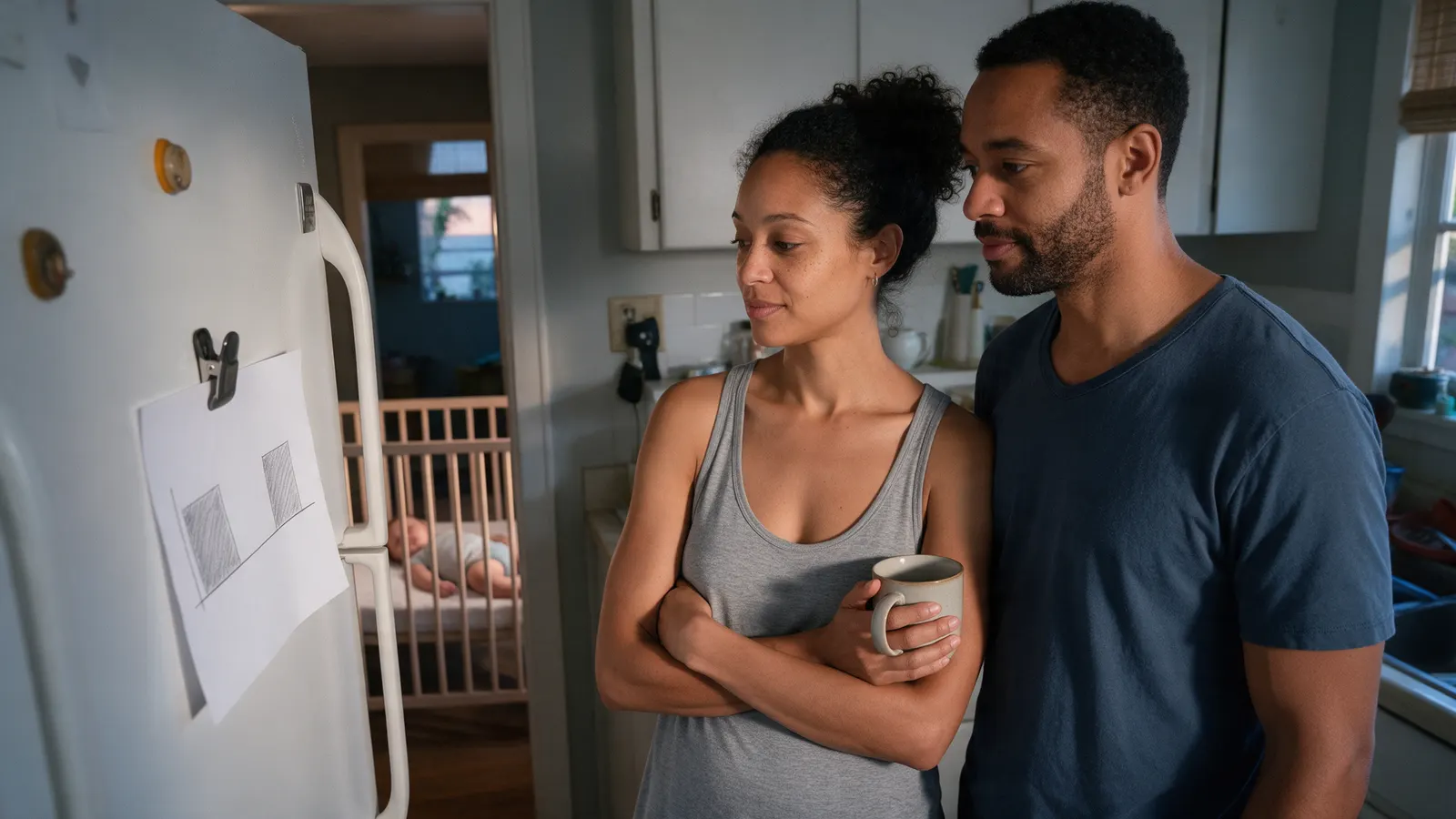
Sleep at this age has a shape, and most of the time you can only see it from a distance. Today is the numbers, the one new reason for waking, and a sheet of paper that shows you the shape.
Heart
Babies 4 to 12 months need 12 to 16 hours of sleep a day, naps included (CDC; WHO), usually 9 to 12 hours at night plus two naps (Nemours KidsHealth). That's a range of four hours, and your baby lives somewhere inside it; a ten-month-old on the low end isn't short of sleep, and one on the high end isn't lazy. What matters for planning is where your baby's own numbers fall, and you can't know that from one bad night or one good one.
Head
The reason wakings may be back: separation anxiety can bring back night waking (AAP), and it peaks between 10 and 18 months (AAP). KidsHealth's answer is to reassure your baby quietly, then leave (Nemours KidsHealth). For the nights overall, keep a short bedtime routine, like a bath, then stories or songs, and put your baby down drowsy but awake (Nemours KidsHealth); in a survey of mothers of 10,085 young children, more consistent routines went with better sleep, though a survey can't prove cause (Mindell et al., 2015).
Body
A ten-month-old who wakes is not a ten-month-old who's behind. In a study of 388 babies, 27.9% to 57.0% of 6- and 12-month-olds didn't sleep 6 or 8 hours straight, and that wasn't linked to their development (Pennestri et al., 2018). The AAP's safe-sleep rules don't change for a waking baby: on the back for every sleep until age 1, a bare crib, and the mattress at its lowest before they stand (AAP; AAP). The guide's section is Naps, nights, and night feeds.
Try today
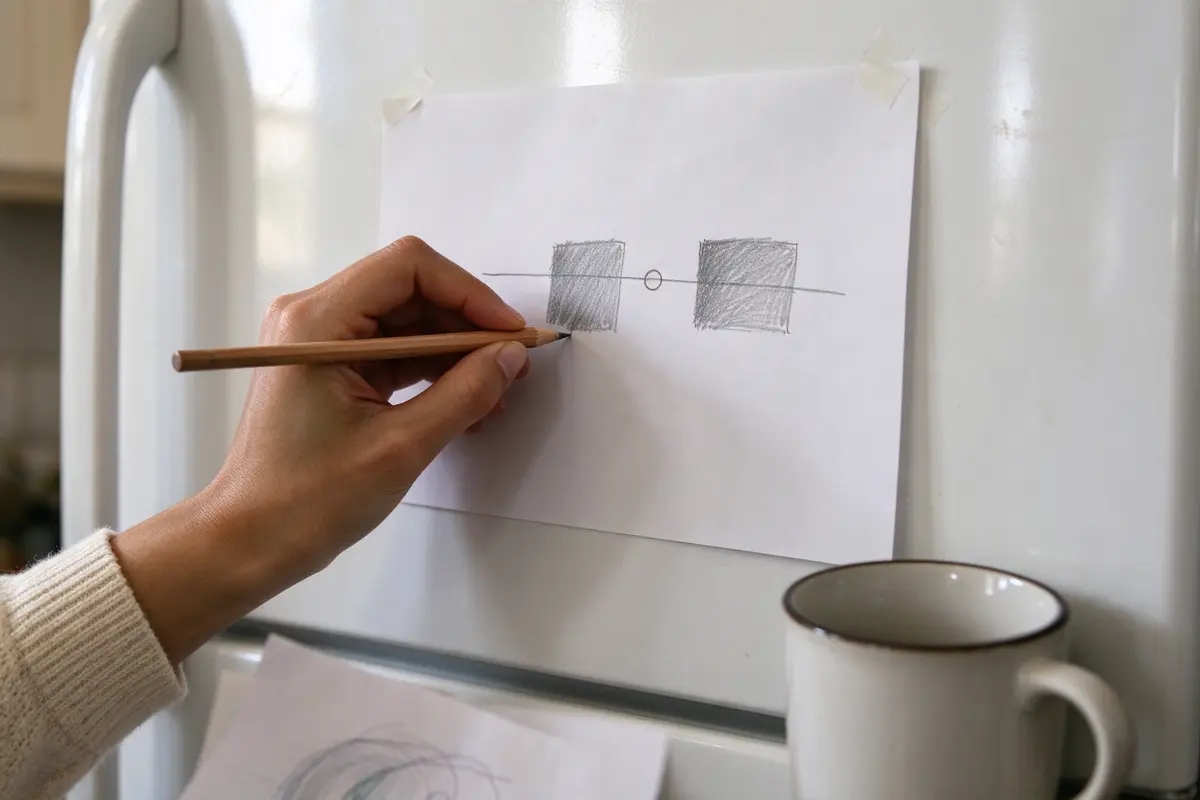
The nap-to-bedtime map
Time: 2 minutes, three times today, then a week · Naps, nights, and night feeds in the guide
Draw one line across a sheet of paper, 6 a.m. to 8 p.m., and tape it to the fridge.
Each time your baby falls asleep and wakes today, shade the block. Circle bedtime and write the morning wake-up at the left end.
Add the night's wakings as ticks under the line, with a note: hungry, scared, teeth, unknown.
Tomorrow, a new line under today's. After a week, look at the stack: where the two naps settle, how long the night is, and whether the total sits inside 12 to 16 hours (Nemours KidsHealth; CDC).
Plan next week's outings and the bedtime routine around the shape you can see, not the day you remember.
Make it work:Shade honestly. A 20-minute car nap is a nap, and it belongs on the map.
Watch for
Normal
a baby who wakes, grumbles, and goes back to sleep after a few minutes without you (AAP).
Call 911
if your baby has purple or blood-colored spots or dots on the skin (AAP).
Normal
two naps of different lengths, one of them short, in a map that still adds up (Nemours KidsHealth).
Go to the ER now
if your baby had a seizure with a fever, has a stiff neck, or has a bulging soft spot (AAP).
Normal
a waking at the hour you left for work, with crying that stops at a quiet word (AAP).
Call your pediatrician right away
if your baby cries nonstop, or cries when touched or moved (AAP).
For you

The pattern you can see is the pattern you can plan around, and the second shaded block on the map is yours. Not for the laundry: for the thing you'd do if someone else were watching the baby, done while the baby is asleep, with the monitor on. The routine you're keeping for the baby went with better sleep in the survey (Mindell et al., 2015); it's allowed to be the frame for your own day too. And if the map shows a baby sleeping well while you lie awake, flat and dreading the morning, that isn't the baby's sleep problem, it's yours, and it has a number: 1-833-TLC-MAMA (1-833-852-6262), call or text, or 988 (CDC).
If you're the partner: shade the night ticks yourself. You were awake for half of them, and the map tells the truth better when two people draw it.
Sources
- Centers for Disease Control and Prevention. "Milestones by 9 Months." Learn the Signs. Act Early. program, updated 2026. https://www.cdc.gov/act-early/milestones/9-months.html
- World Health Organization. "To grow up healthy, children need to sit less and play more." 2019. https://www.who.int/news/item/24-04-2019-to-grow-up-healthy-children-need-to-sit-less-and-play-more
- Nemours KidsHealth. "Baby Sleep: 8- to 12-Month-Olds." Reviewed 2025. https://kidshealth.org/en/parents/sleep812m.html
- American Academy of Pediatrics. "Separation Anxiety & Sleeping Trouble in Young Children." HealthyChildren.org, updated 2022. https://www.healthychildren.org/English/healthy-living/sleep/Pages/separation-anxiety-and-sleeping.aspx
- American Academy of Pediatrics. "Emotional and Social Development: 8 to 12 Months." HealthyChildren.org, updated 2009. https://www.healthychildren.org/English/ages-stages/baby/Pages/Emotional-and-Social-Development-8-12-Months.aspx
- Mindell JA, Li AM, Sadeh A, et al. "Bedtime routines for young children: a dose-dependent association with sleep outcomes." Sleep, 2015. https://pubmed.ncbi.nlm.nih.gov/25325483/
- Pennestri MH, Laganière C, Bouvette-Turcot AA, et al. "Uninterrupted Infant Sleep, Development, and Maternal Mood." Pediatrics, 2018. https://pubmed.ncbi.nlm.nih.gov/30420470/
- American Academy of Pediatrics. "Getting Your Baby to Sleep." HealthyChildren.org, updated 2024. https://www.healthychildren.org/English/ages-stages/baby/sleep/Pages/getting-your-baby-to-sleep.aspx
- American Academy of Pediatrics. "Make Baby's Room Safe: Parent Checklist." HealthyChildren.org, updated 2020. https://www.healthychildren.org/English/safety-prevention/at-home/Pages/Make-Babys-Room-Safe.aspx
- American Academy of Pediatrics. "Fever" (symptom checker). HealthyChildren.org, accessed 2026. https://www.healthychildren.org/English/tips-tools/symptom-checker/Pages/symptomviewer.aspx?symptom=Fever
- Centers for Disease Control and Prevention. "Symptoms of Depression Among Women." 2024. https://www.cdc.gov/reproductive-health/depression/index.html
This guide is general education that summarizes published research and guidance from groups like the American Academy of Pediatrics, the CDC, and the WHO. It isn’t medical advice, and every child develops on their own timeline. Your pediatrician knows your child; if something feels wrong, call them. In an emergency, call 911.
Get each day’s note the morning it applies
Add your baby to a free Chorevia household with their date of birth, and every morning for 365 days the day’s note arrives in the app and by email: what’s developing, one thing to try, what to watch for, and a word for you.
Create your household