Day 326 of 365 · Week 44
Fever at ten months
Last reviewed · 4 min read · 6 sources · Plain-text version
A thermometer, not a hand on the forehead. The within-24-hours rules, the 104°F line, what to do in a febrile seizure, and why any head injury under 1 means a call. The fever card: three rules.
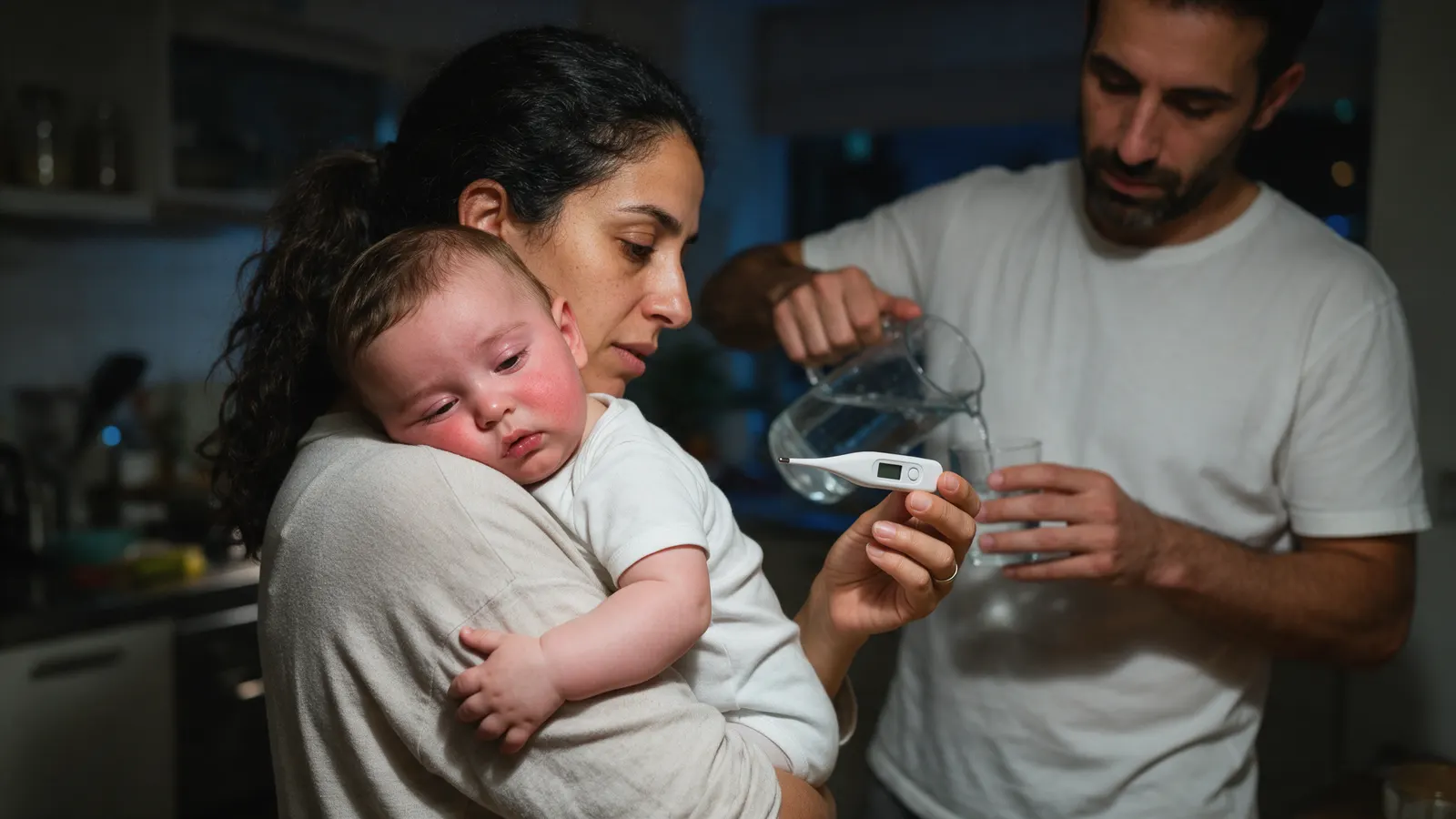
A fever in a baby who stands, cruises, and falls is two questions at once: how high, and did they hit their head on the way down. Today is the AAP's fever rules for this age, the seizure that frightens every parent who sees one, and a card that puts the rules where you'll find them at 2 a.m.
Heart
Use a thermometer; feeling the forehead isn't accurate (AAP). Call within 24 hours if your baby has a fever with no other symptoms for more than 2 days, any fever that lasts more than 3 days, or a fever that comes back after a day without one (AAP). Call your pediatrician right away for a fever over 104°F (40°C) (AAP); the AAP also says you may need to call about a temperature of 103°F (39.4°C) or higher in babies over 6 months (AAP). The guide's section is Fever and febrile seizures.
Head
Febrile seizures affect 3 or 4 of every 100 children between 6 months and 5 years. If one happens, lay your baby on the floor, turn their head to the side, put nothing in their mouth, and call 911 if it lasts more than 5 minutes (AAP). Even after a short seizure, get your baby seen right away (AAP). The four steps are easy to read and hard to remember while it's happening, which is why they go on the card and not only in your head.
Body
The month's extra rule is about falls, because a feverish baby still pulls to stand, and a well one falls often: filmed during free play, 12- to 19-month-olds averaged 2,368 steps and 17 falls per hour (Adolph et al., 2012). For a baby under 1, any head injury means a call to your pediatrician, even if your baby seems fine (AAP). Dehydration goes on the card too: call right away for no urine in more than 8 hours, dark urine, a very dry mouth, and no tears (AAP).
Try today
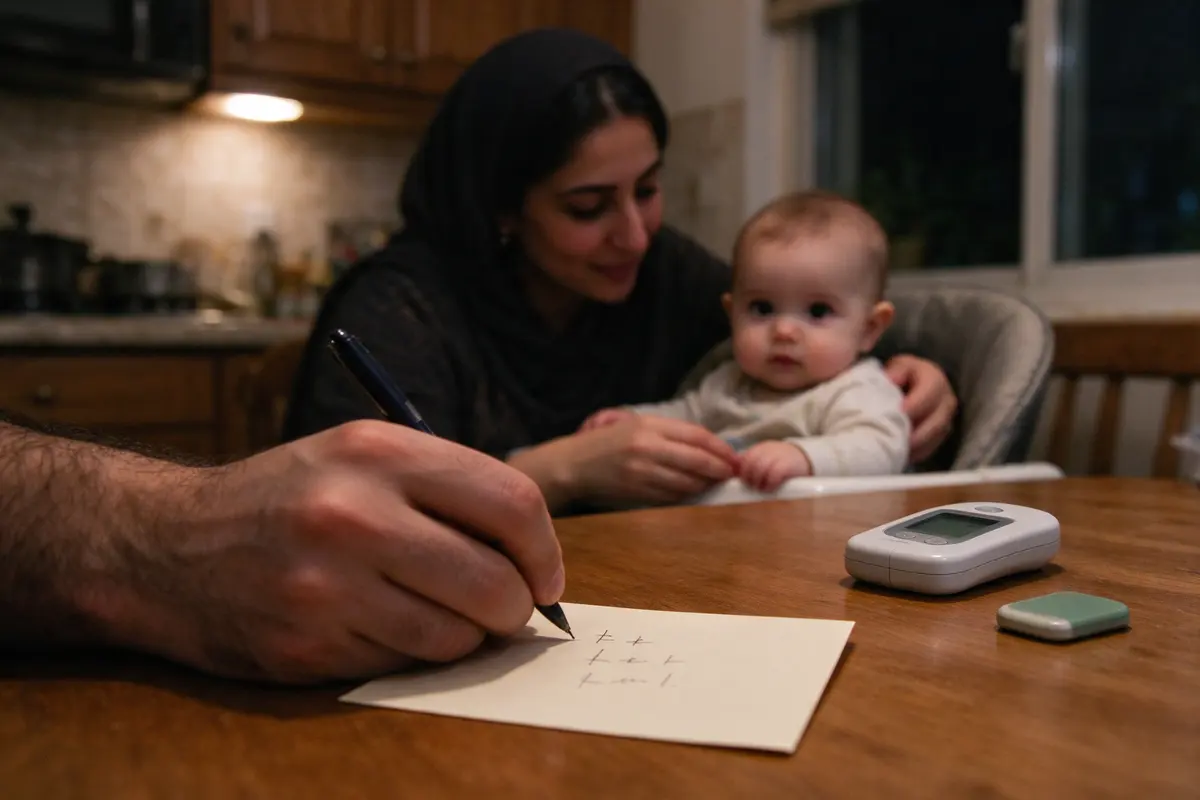
The fever card
Time: 10 minutes · Fever and febrile seizures in the guide
One index card, three rules. Rule one: thermometer, never a hand (AAP).
Rule two, the "call within 24 hours" line: fever alone for more than 2 days, any fever for more than 3 days, or a fever that comes back after a day without one (AAP).
On the back: the seizure steps. Floor, head to the side, nothing in the mouth, 911 past 5 minutes, seen afterward either way (AAP).
Magnet it to the fridge, photograph it for both phones, and read it aloud once to whoever else does nights.
Make it work:Write the pediatrician's after-hours number at the bottom. The card is for the night you can't think.
Watch for
Normal
a low fever at bedtime that's gone by morning.
Call within 24 hours
if it comes back after a day without one, or if any fever lasts more than 3 days (AAP).
Normal
a clingy, off-their-food day with a fever and a baby who still drinks and still smiles at you between naps.
Call your pediatrician right away
for shaking chills lasting more than 30 minutes, or great trouble swallowing fluids or spit (AAP).
Normal
a baby who wants to be held all day and perks up as the fever drops.
Go to the ER now
if your baby is hard to wake, isn't alert when awake, or seems confused, or has a stiff neck or a bulging soft spot (AAP).
Normal
a fever the baby seems not to notice, still cruising the sofa and reaching for the cup.
For you
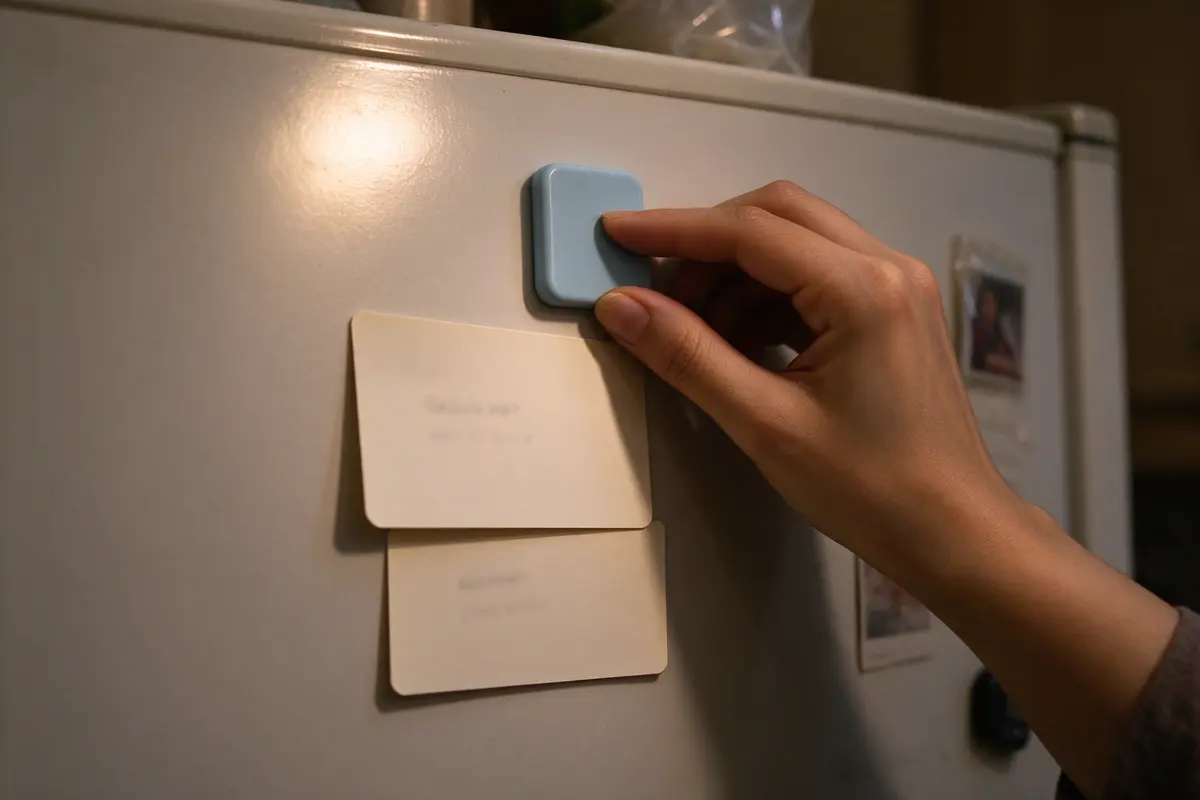
Your own card stays on the fridge beside the baby's. A fever of 100.4°F or higher is on the CDC's list of urgent maternal warning signs, and that list runs for a full year after birth, along with a headache that won't go away or gets worse, chest pain or a fast-beating heart, trouble breathing, and thoughts about harming yourself or your baby (CDC). A sick baby makes a sick mother ignore herself; the card is there so the thermometer gets used on you too, and so whoever reads it knows to tell any provider you were pregnant within the last year (CDC).
If you're the partner: on a fever night you take the thermometer and the card, and she takes the baby. Reading the rules is a job; it shouldn't be hers at the same time as holding.
Sources
- American Academy of Pediatrics. "Fever and Your Baby." HealthyChildren.org, updated 2025. https://www.healthychildren.org/English/health-issues/conditions/fever/Pages/Fever-and-Your-Baby.aspx
- American Academy of Pediatrics. "Fever" (symptom checker). HealthyChildren.org, accessed 2026. https://www.healthychildren.org/English/tips-tools/symptom-checker/Pages/symptomviewer.aspx?symptom=Fever
- Di Giovine M, Catenaccio E. "Febrile Seizures in Children." HealthyChildren.org, updated 2025. https://www.healthychildren.org/English/health-issues/conditions/fever/Pages/Febrile-Seizures.aspx
- Adolph KE, Cole WG, Komati M, et al. "How do you learn to walk? Thousands of steps and dozens of falls per day." Psychological Science, 2012. https://pubmed.ncbi.nlm.nih.gov/23085640/
- American Academy of Pediatrics. "Head Injury" (symptom checker). HealthyChildren.org, accessed 2026. https://www.healthychildren.org/English/tips-tools/symptom-checker/Pages/symptomviewer.aspx?symptom=Head+Injury
- Centers for Disease Control and Prevention. "Urgent Maternal Warning Signs and Symptoms." HEAR HER, 2024. https://www.cdc.gov/hearher/maternal-warning-signs/index.html
This guide is general education that summarizes published research and guidance from groups like the American Academy of Pediatrics, the CDC, and the WHO. It isn’t medical advice, and every child develops on their own timeline. Your pediatrician knows your child; if something feels wrong, call them. In an emergency, call 911.
Get each day’s note the morning it applies
Add your baby to a free Chorevia household with their date of birth, and every morning for 365 days the day’s note arrives in the app and by email: what’s developing, one thing to try, what to watch for, and a word for you.
Create your household