Day 133 of 300 · Week 18
The name game
Last reviewed · 3 min read · 10 sources · Plain-text version
Your baby knows the sound of their own name long before they turn to it. Why to say it often, what a lab study found at 4½ months, and a one-minute game.
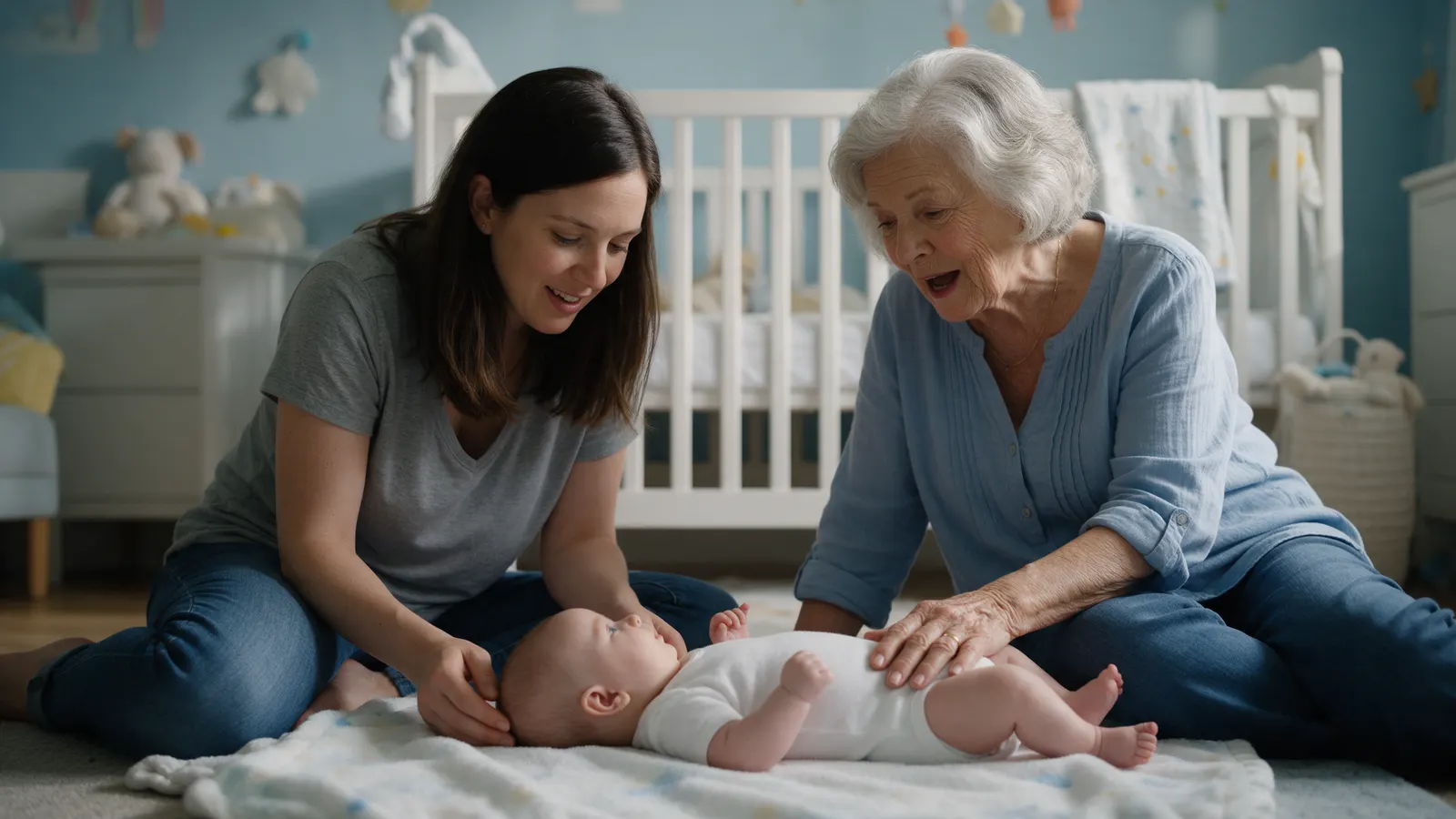
You've said it a thousand times, to a baby who seems not to notice. They notice. Today is about the name.
Heart
Say your baby's name often; that's CDC's advice for this age, alongside copying their sounds and keeping a rhythm to the day (CDC). By 4 months, most babies turn their head toward your voice (CDC), and your voice carrying their name is the version they hear most. Use it at the changing table, at the window, in the dark at 3 a.m. It's the first word that will ever belong to them.
Head
Babies know their name before they show it. In a lab, 4½-month-olds preferred listening to their own name over other names, even names with the same rhythm (Mandel et al., 1995). Looking when you call their name doesn't show up on CDC's checklist until 9 months (CDC). So the gap between what your baby hears and what they can show you is months wide. When they still, or their eyes drift toward you, that's the name landing; the head turn comes later. Repeated games stick: in a classic study, a brief reminder let 3-month-olds remember a learned game for 2 to 4 weeks (Rovee-Collier et al., 1980).
Body
Hearing is what the name rides on. By 4 months, most babies turn toward your voice, coo, and make sounds back when you talk (CDC). If your baby didn't pass the newborn hearing screen, follow-up testing should have happened by 3 months (Hecht, AAP); if that appointment slipped, today is the day to call. Every answered sound builds brain circuits (Harvard Center on the Developing Child), and the name is the sound they'll hear more than any other.
Try today
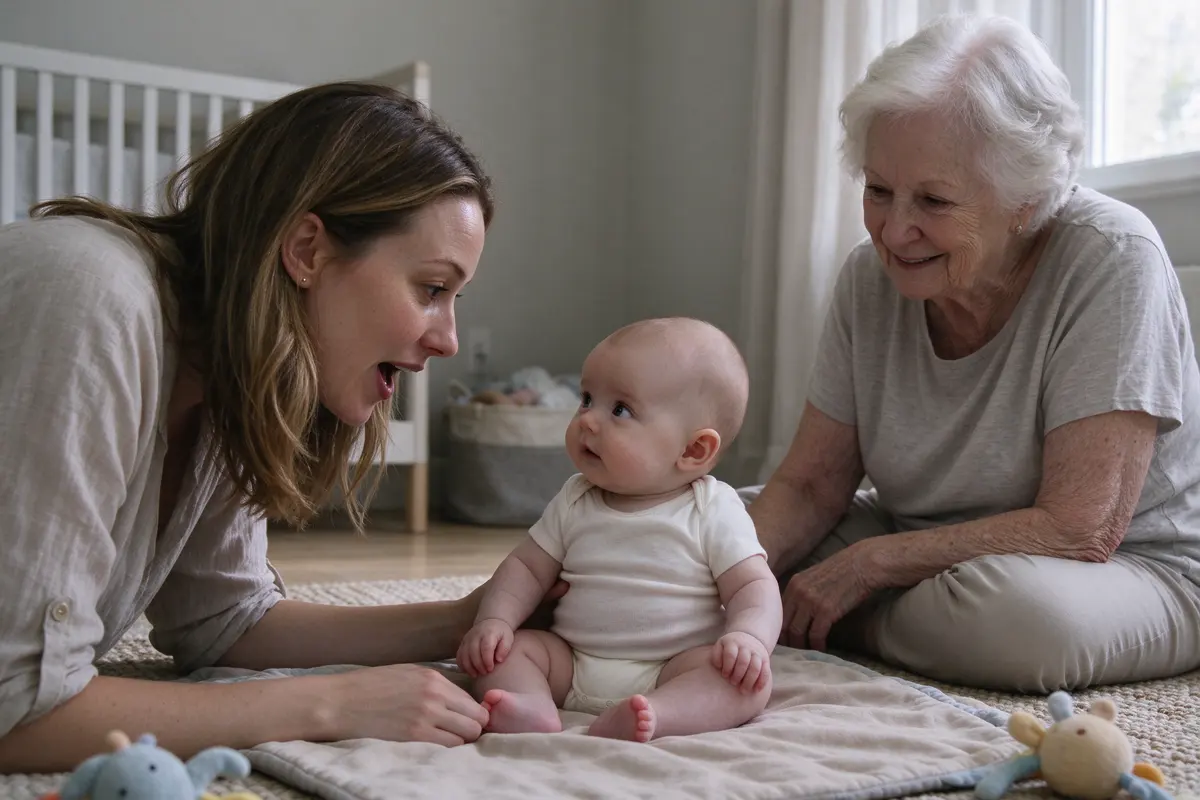
The name game
Time: A minute, any time · The name game in the guide
From one side, out of your baby's line of sight, softly say their name in a sing-song voice (CDC).
Wait. Watch for a stilling, a glance, or a head turn, and count any of the three.
When they look or still, lean in, smile, and say, "That's you!"
Try from the other side, then let someone else take a turn with their own voice.
Make it work:No scoring. Turning to the name is a 9-month skill (CDC); you're planting it, not testing it.
Watch for
Normal
no head turn to the name yet; that's a 9-month milestone (CDC).
Bring it up with your pediatrician
if your baby doesn't turn toward your voice, coo, or make sounds back when you talk (CDC).
Normal
going quiet and still at a new voice instead of looking.
Normal
a baby who ignores the game because they're hungry or tired.
Call your pediatrician right away
for signs of dehydration: no wet diaper in more than 8 hours, a very dry mouth, or no tears (AAP).
For you
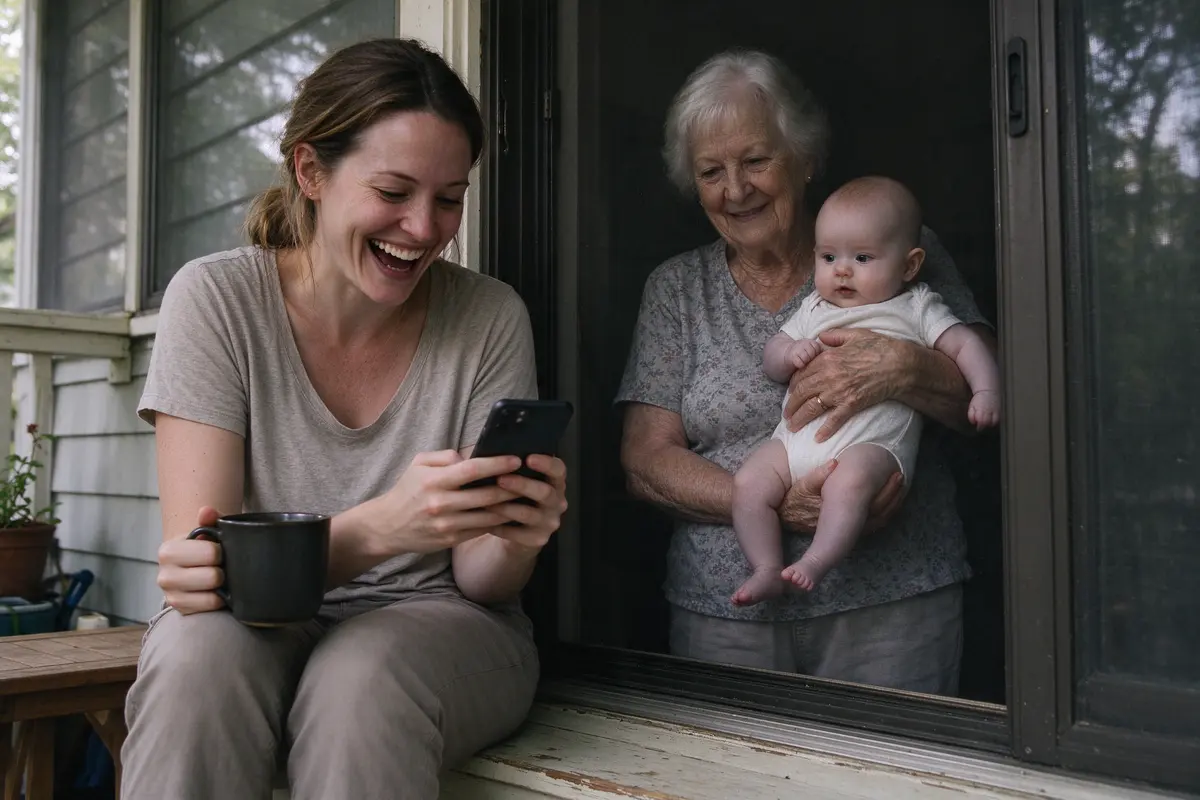
Your own name, said by someone today. For eighteen weeks you've been "Mom," "the baby's mother," "you" on the phone with the clinic. Text a friend who calls you by your first name and ask for ten minutes of talk that isn't about the baby. If no one has said your name in a while and that thought lands heavier than it should, that's worth saying aloud to someone: call or text 1-833-TLC-MAMA (1-833-852-6262), or 988 (CDC).
And if you feel like something just isn't right with your own body, or you aren't sure if it's serious, talk to your health care provider (CDC).
If you're the partner: use her name tonight, not "Mom." Then take the baby for the name game while she hears it from someone else.
Sources
- Centers for Disease Control and Prevention. "Milestones by 4 Months." Learn the Signs. Act Early., updated 2026. https://www.cdc.gov/act-early/milestones/4-months.html
- Centers for Disease Control and Prevention. "Milestones by 9 Months." Learn the Signs. Act Early., accessed 2026. https://www.cdc.gov/act-early/milestones/9-months.html
- Mandel DR, Jusczyk PW, Pisoni DB. "Infants' recognition of the sound patterns of their own names." Psychological Science, 1995. https://pubmed.ncbi.nlm.nih.gov/25152566/
- Rovee-Collier CK, Sullivan MW, Enright M, Lucas D, Fagen JW. "Reactivation of infant memory." Science, 1980. https://pubmed.ncbi.nlm.nih.gov/7375924/
- Hecht JL. "Purpose of Newborn Hearing Screening." HealthyChildren.org, 2022. https://www.healthychildren.org/English/ages-stages/baby/Pages/Purpose-of-Newborn-Hearing-Screening.aspx
- Center on the Developing Child at Harvard University. "Serve and Return." Accessed 2026. https://developingchild.harvard.edu/key-concept/serve-and-return/
- American Academy of Pediatrics. "Developmental Milestones: 7 Months." HealthyChildren.org, updated 2009. https://www.healthychildren.org/English/ages-stages/baby/Pages/Developmental-Milestones-7-Months.aspx
- American Academy of Pediatrics. "Fever" (symptom checker). HealthyChildren.org, accessed 2026. https://www.healthychildren.org/English/tips-tools/symptom-checker/Pages/symptomviewer.aspx?symptom=Fever
- Centers for Disease Control and Prevention. "Symptoms of Depression Among Women." 2024. https://www.cdc.gov/reproductive-health/depression/index.html
- Centers for Disease Control and Prevention. "Urgent Maternal Warning Signs and Symptoms." HEAR HER, 2024. https://www.cdc.gov/hearher/maternal-warning-signs/index.html
This guide is general education that summarizes published research and guidance from groups like the American Academy of Pediatrics, the CDC, and the WHO. It isn’t medical advice, and every child develops on their own timeline. Your pediatrician knows your child; if something feels wrong, call them. In an emergency, call 911.
Get each day’s note the morning it applies
Add your baby to a free Chorevia household with their date of birth, and every morning for 300 days the day’s note arrives in the app and by email: what’s developing, one thing to try, what to watch for, and a word for you.
Create your household