Day 242 of 300 · Week 33
Looks when you call
Last reviewed · 3 min read · 6 sources · Plain-text version
Looking when you call their name is a 9-month skill, and babies recognized the sound of their own name in a lab at 4.5 months. The name from across the room, and when a no-look is a call.
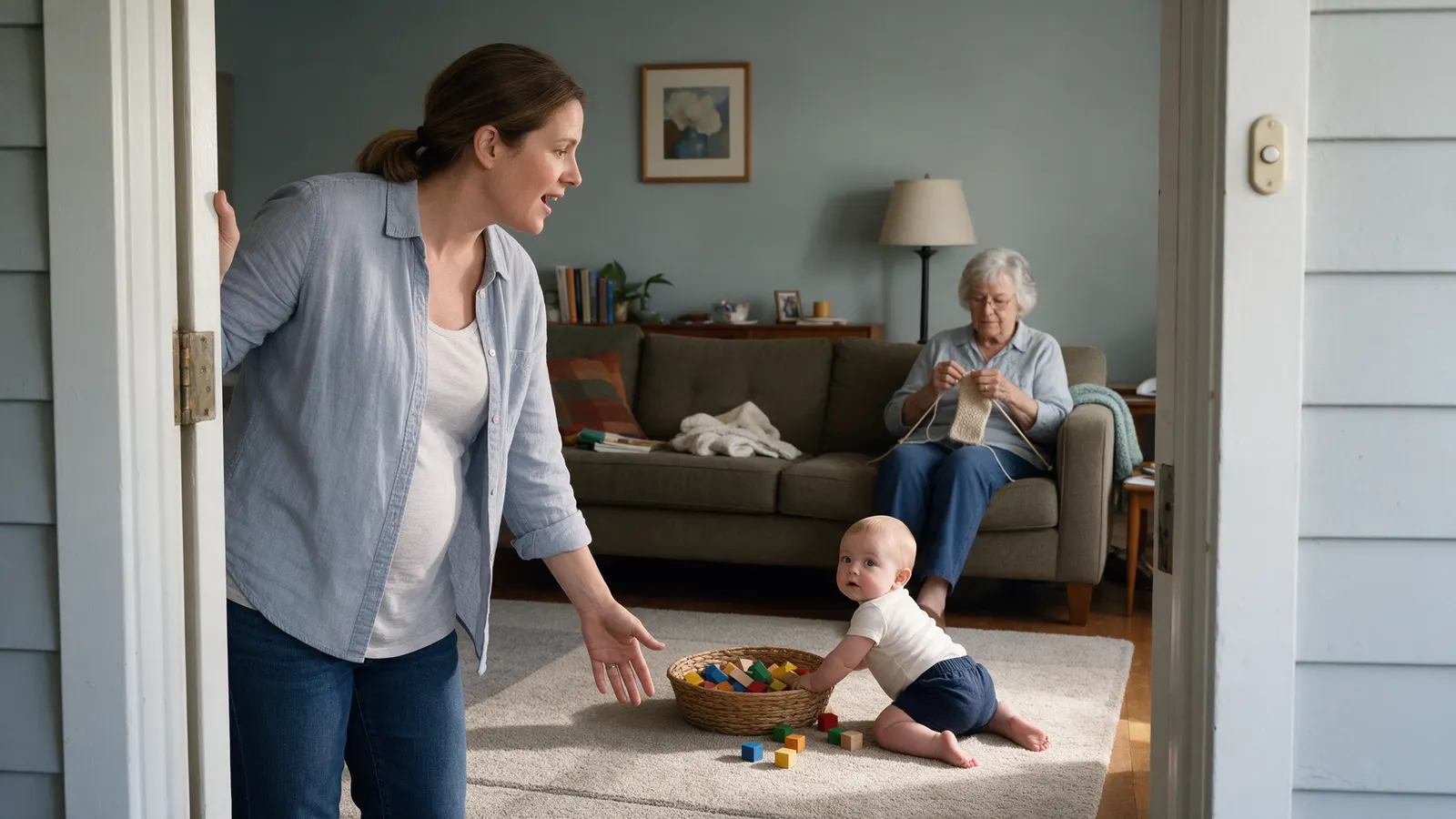
Somewhere in the last few weeks, a sound you've been saying since the hospital started to land. Today is the name, and the honest timing of when a baby turns toward it.
Heart
By 9 months, most babies look when you call their name (CDC). The recognizing came long before the looking: in a lab, 4½-month-olds preferred listening to their own name over other names, even names with the same rhythm (Mandel et al., 1995). So your baby has known the sound for months; what's arriving now is the turn of the head to go with it. A look, a pause in what they're doing, or a glance up all count, and some of the time is enough at 8 months.
Head
The name is on the short list of things that get raised early. The CDC's advice is to bring it up if by 9 months your baby doesn't look when you call their name (CDC), and the AAP's 9-month checklist includes a baby who seems not to see or hear well (AAP). Hearing is the reason it matters: the AAP advises telling your pediatrician if your baby doesn't babble or imitate any sounds by 7 months, since that can signal a hearing problem (AAP). A baby who turns to a rattle but not to a voice, or who turns only when they can see you, is worth a sentence at the visit this month.
Body
How to help is the same as always. Repeat their sounds, add simple words, and describe what they see (CDC). Keep names consistent, ask questions, and wait for an answer (AAP). The baby's own name is the most consistent word in the house; say it before you say anything else to them, and say it the same way every time, so it's the sound that always means "this is for you."
Try today
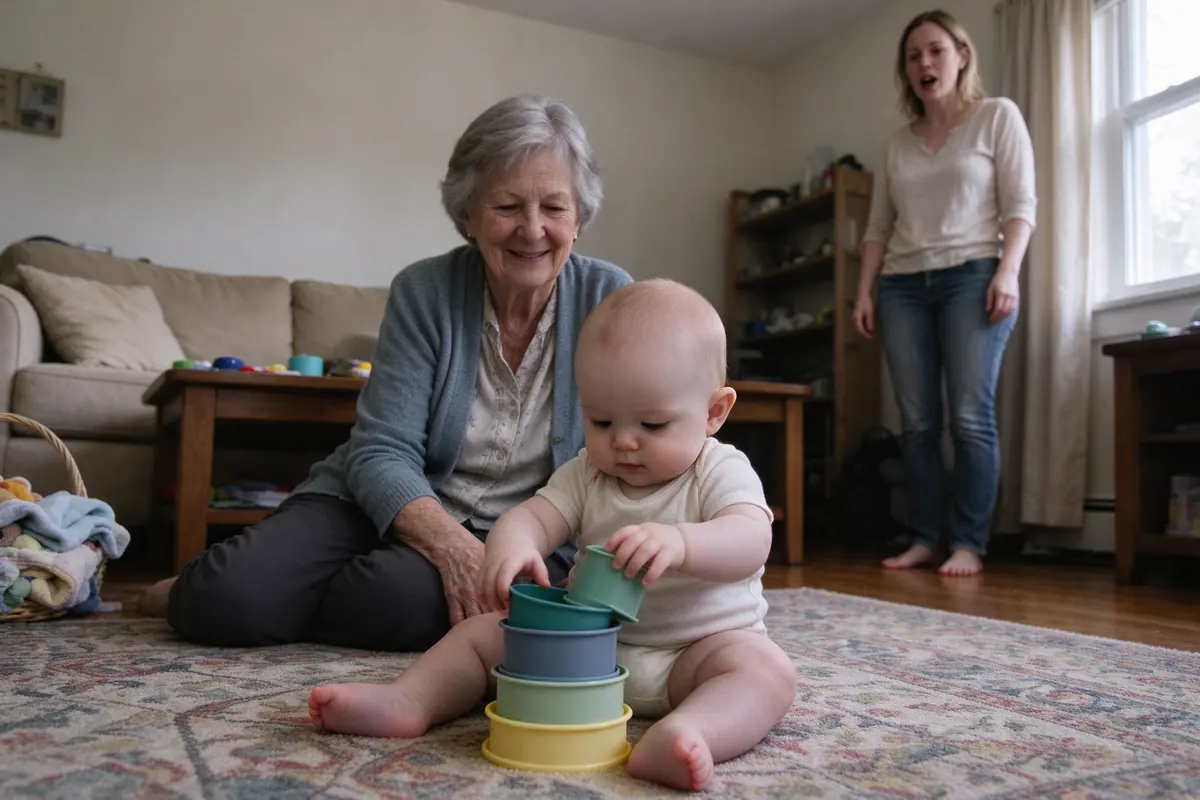
The name from across the room
Time: 1 minute, three times today
Wait until your baby is busy with a toy and you're across the room, behind them or off to the side, out of their line of sight.
Say their name once, in your normal voice, and nothing else.
Count to three. A look, a turn, or a pause in the play all count; looking when called is a 9-month skill, so "some of the time" is the goal (CDC).
If nothing happens, say it again from closer, then go to them and say it face to face, smiling. The game ends with a hello either way.
Make it work:Try it once in the morning, once at a meal, once at bath time. Three different rooms tell you more than three tries in one.
Watch for
Normal
a baby who turns to the name when the room is quiet and ignores it when a sibling is louder (CDC).
Bring it up
if your baby seems not to see or hear well (AAP).
Normal
"bababa" and "dadada" all day and no "mama" yet (CDC).
Talk with your pediatrician
if your baby doesn't babble or imitate any sounds by 7 months (AAP).
Normal
a hoarse, quieter babble for a few days with a cold.
Call 911
if your baby is struggling for each breath or can barely cry (AAP).
For you
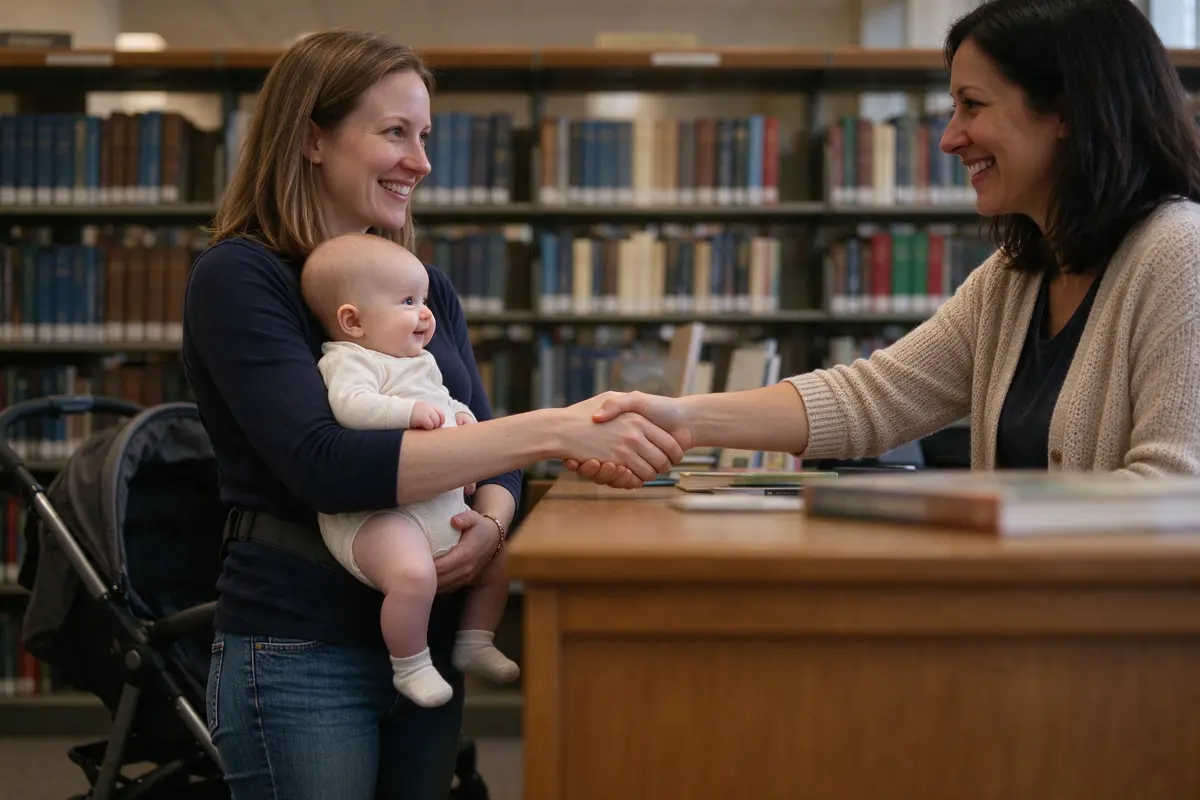
Say your own name to a stranger this week. The librarian, the person at the next table, the other parent at the pharmacy. Eight months of being called "Mom" by nurses and "the baby's mother" by forms can thin a name down; your baby knew theirs at 4½ months because they heard it over and over, in your voice, from people who meant them (Mandel et al., 1995). Yours works the same way. Hold out a hand and say it. Then say the baby's.
If you're the partner: use her name tonight, not "Mama," at least once, where the baby can hear it. It's a word the baby will need, and so is she.
Sources
- Centers for Disease Control and Prevention. "Milestones by 9 Months." Learn the Signs. Act Early. program, updated 2026. https://www.cdc.gov/act-early/milestones/9-months.html
- Mandel DR, Jusczyk PW, Pisoni DB. "Infants' recognition of the sound patterns of their own names." Psychological Science, 1995. https://pubmed.ncbi.nlm.nih.gov/25152566/
- American Academy of Pediatrics. "Checkup Checklist: 9 Months Old." HealthyChildren.org, updated 2021. https://www.healthychildren.org/English/ages-stages/Your-Childs-Checkups/Pages/Your-Checkup-Checklist-9-Months-Old.aspx
- American Academy of Pediatrics. "Language Development: 4 to 7 Months." HealthyChildren.org, updated 2009. https://www.healthychildren.org/English/ages-stages/baby/Pages/Language-Development-4-to-7-Months.aspx
- American Academy of Pediatrics. "Language Development: 8 to 12 Months." HealthyChildren.org, updated 2009. https://www.healthychildren.org/English/ages-stages/baby/Pages/Language-Development-8-to-12-Months.aspx
- American Academy of Pediatrics. "Fever" (symptom checker). HealthyChildren.org, accessed 2026. https://www.healthychildren.org/English/tips-tools/symptom-checker/Pages/symptomviewer.aspx?symptom=Fever
This guide is general education that summarizes published research and guidance from groups like the American Academy of Pediatrics, the CDC, and the WHO. It isn’t medical advice, and every child develops on their own timeline. Your pediatrician knows your child; if something feels wrong, call them. In an emergency, call 911.
Get each day’s note the morning it applies
Add your baby to a free Chorevia household with their date of birth, and every morning for 300 days the day’s note arrives in the app and by email: what’s developing, one thing to try, what to watch for, and a word for you.
Create your household