Day 261 of 300 · Week 35
Bye-bye and pat-a-cake
Last reviewed · 4 min read · 7 sources · Plain-text version
Waving bye-bye and playing pat-a-cake are 12-month milestones, and babies copy the gestures they see toward the end of the first year. Thirty-five weeks: the wave, done for them until they do it.
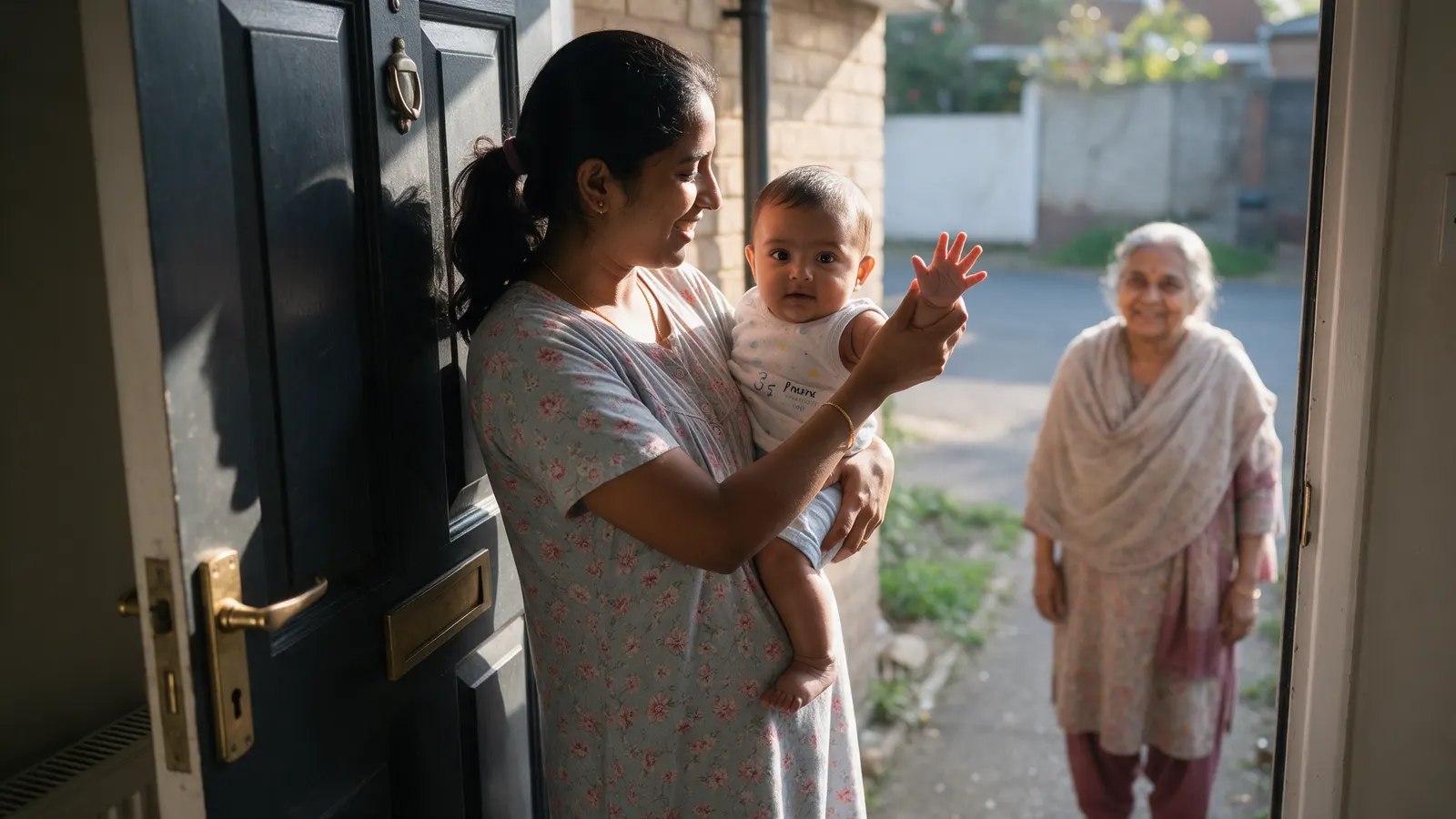
Thirty-five weeks. The hand that used to grab your face now opens and closes in your direction when you leave the room, and it's hard to say whether that's a wave or a reach. Today is the gestures that are coming, and the one thing you can do about them.
Heart
Waving bye-bye and playing games with you, like pat-a-cake, are 12-month milestones (CDC). That's three months from now, so a baby who stares at your wave and does nothing is on schedule. What is on the 9-month list is one gesture: lifting their arms to be picked up (CDC). That's the first one most babies make on purpose, and it's a request. Toward the end of the first year, babies start using pointing and gestures to say what they want, and they copy the gestures they see you use (AAP). Pointing to ask for things comes later still, a 15-month milestone (CDC).
Head
Gestures talk. CDC's own suggestion for this age is to wave bye-bye, shake your head for "no," and lift your arms to say "up" (CDC), so your baby sees the same movement attached to the same moment, over and over. In a study of 24 babies followed monthly from 9 to 15 months, time spent sharing attention with their mothers predicted the earliest gestures and words (Carpenter et al., 1998). Whether practicing a wave speeds the wave up hasn't been tested (CDC). What's known is that the gesture comes from watching you, and that the watching is already happening.
Body
A thirty-five-week-old can do the parts. By 9 months, most babies move things from one hand to the other and bang two things together (CDC), and two hands brought together is most of a clap. So pat-a-cake today is you clapping their hands for them, gently, and the wave is you lifting their wrist at the door. The copying, when it comes, will look like a late, floppy version of yours. Count it.
Try today
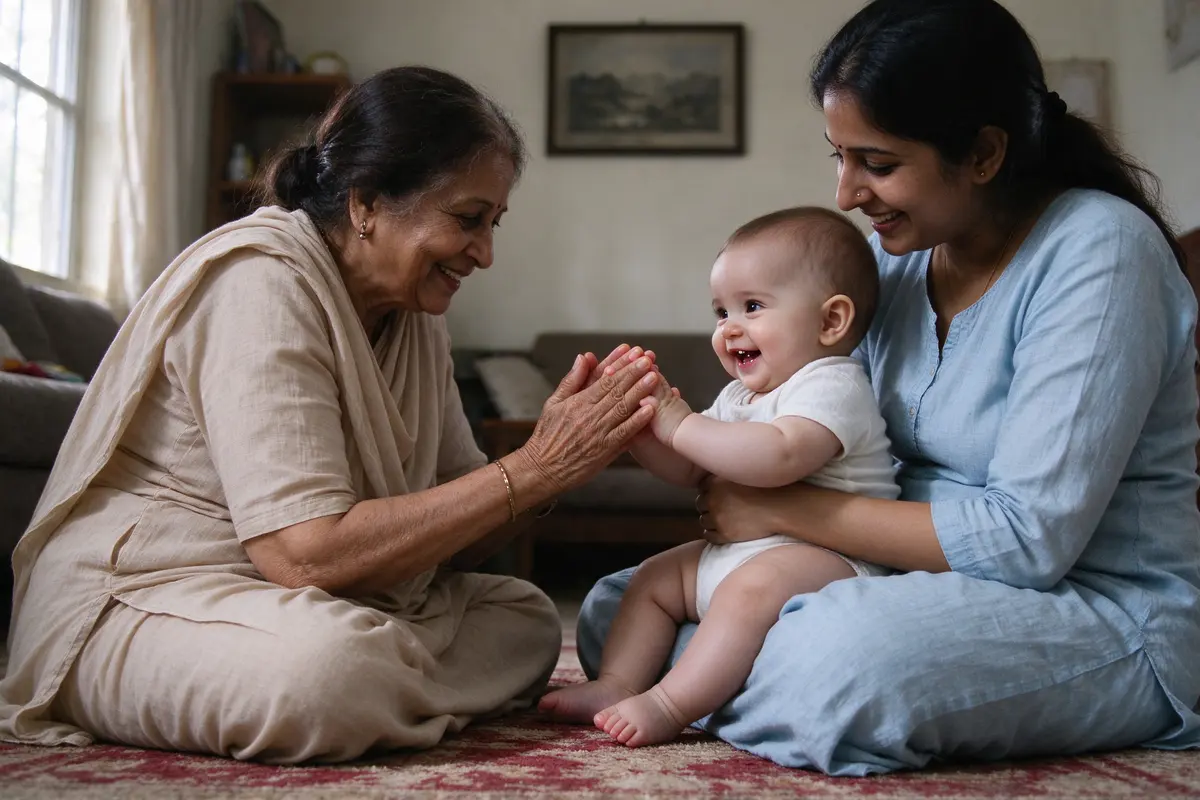
Bye-bye and pat-a-cake
Time: A minute or two, many times a day · Bye-bye and pat-a-cake in the guide
Wave and say "bye-bye" whenever anyone leaves the room, the house, or the car, and lift your baby's hand to wave too (CDC).
Sit face to face and sing "Pat-a-cake," clapping your baby's hands together in yours for the first few rounds.
Raise your arms for "So big!" and wait a slow five seconds for a copy. Nothing yet is the usual answer.
Do the same three gestures the same way all week, so the movement and the moment arrive together.
Make it work:Keep it to real goodbyes and real games. A gesture practiced on its own has no meaning to copy; one attached to the mail carrier leaving does.
Watch for
Normal
a wave that's really a grab at your sleeve, and no clap at all; both are 12-month skills (CDC).
Normal
a baby who waved once last week and hasn't since; new skills come and go before they stay.
Bring it up
if your baby has lost skills they used to have (CDC).
Normal
a hot, cross baby at the end of a long day out.
Call your pediatrician right away
for a fever over 104°F (40°C), or if your baby looks or acts very sick (AAP).
For you
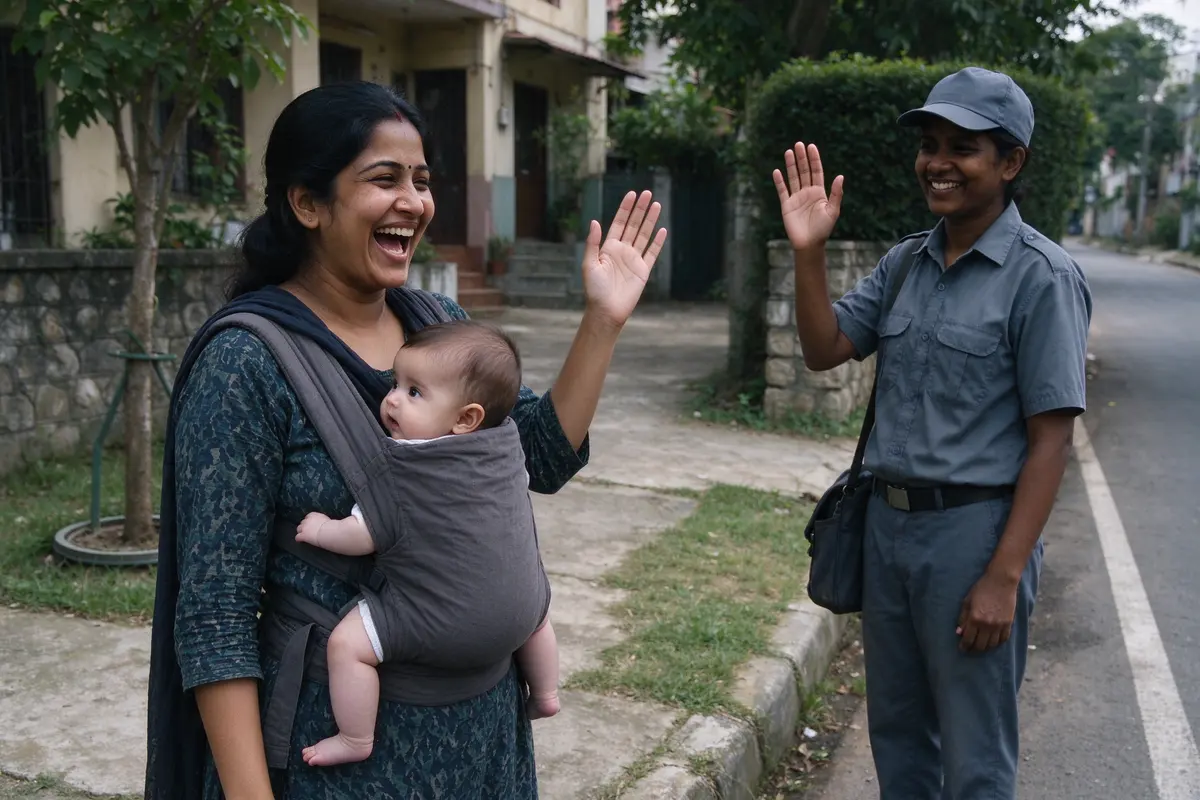
Wave at everyone. The bus driver, the neighbor's dog, the pharmacist, your partner going to the bathroom. It feels foolish for about a day and then it's just what your hand does, and that's the point: babies copy the gestures they see you use (AAP), so the more waves there are to see, the more there is to copy. There's a side effect. People wave back, and a mother who's been mostly indoors for thirty-five weeks gets a dozen small hellos a day she didn't have to earn.
If you're the partner: you're the best goodbye there is, because you actually leave. Wave from the door, every time, and say the word.
Sources
- Centers for Disease Control and Prevention. "Milestones by 1 Year." Learn the Signs. Act Early. program, updated 2026. https://www.cdc.gov/act-early/milestones/1-year.html
- Centers for Disease Control and Prevention. "Milestones by 9 Months." Learn the Signs. Act Early. program, updated 2026. https://www.cdc.gov/act-early/milestones/9-months.html
- American Academy of Pediatrics. "Language Development: 8 to 12 Months." HealthyChildren.org, updated 2009. https://www.healthychildren.org/English/ages-stages/baby/Pages/Language-Development-8-to-12-Months.aspx
- Centers for Disease Control and Prevention. "Milestones by 15 Months." Learn the Signs. Act Early. program, accessed 2026. https://www.cdc.gov/act-early/milestones/15-months.html
- Carpenter M, Nagell K, Tomasello M. "Social cognition, joint attention, and communicative competence from 9 to 15 months of age." Monographs of the Society for Research in Child Development, 1998. https://pubmed.ncbi.nlm.nih.gov/9835078/
- American Academy of Pediatrics. "Developmental Milestones: 7 Months." HealthyChildren.org, updated 2009. https://www.healthychildren.org/English/ages-stages/baby/Pages/Developmental-Milestones-7-Months.aspx
- American Academy of Pediatrics. "Fever" (symptom checker). HealthyChildren.org, accessed 2026. https://www.healthychildren.org/English/tips-tools/symptom-checker/Pages/symptomviewer.aspx?symptom=Fever
This guide is general education that summarizes published research and guidance from groups like the American Academy of Pediatrics, the CDC, and the WHO. It isn’t medical advice, and every child develops on their own timeline. Your pediatrician knows your child; if something feels wrong, call them. In an emergency, call 911.
Get each day’s note the morning it applies
Add your baby to a free Chorevia household with their date of birth, and every morning for 300 days the day’s note arrives in the app and by email: what’s developing, one thing to try, what to watch for, and a word for you.
Create your household