Day 258 of 300 · Week 35
Sleep training, if you're doing it now
Last reviewed · 4 min read · 10 sources · Plain-text version
Sleep training is a choice, not a requirement. Trials of 43 and 326 children found no lasting harm either way. Routine first, then pick a method you can keep, and write it down.
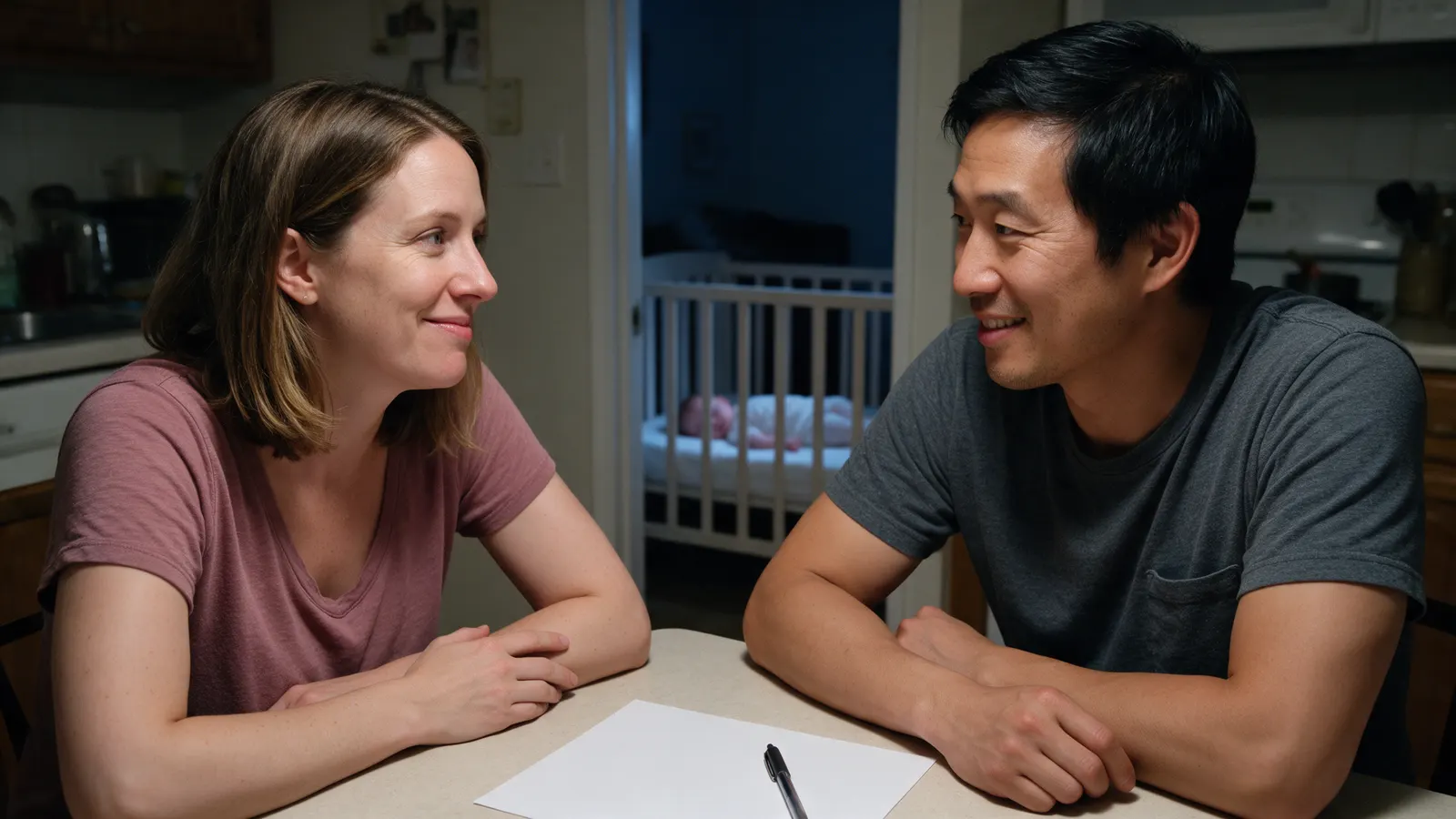
Some families decide this month to sleep train. Some decide not to. Today is what the trials found, and the one page that makes either plan survive 2 a.m.
Heart
Sleep training is a choice, not a requirement; the largest trial found no lasting harms or benefits either way (Price et al., 2012). Night waking at this age is common and often comes from separation anxiety (Nemours KidsHealth), and when that brings new waking, the AAP's advice is to reassure calmly and consistently (AAP). So you can do nothing formal and be doing fine. If the nights aren't working for your family, you have options, and the research is calmer than the arguments.
Head
The trials are small but steady. In 43 babies 6 to 16 months old, graduated extinction and bedtime fading improved sleep with no effect on attachment a year later (Gradisar et al., 2016). A trial of 326 children with sleep problems at 7 months found no lasting harms or benefits at age 6 (Price et al., 2012). Read that second one twice: no lasting harms, and no lasting benefits either. The sleep you gain is for the months you're in, which is reason enough, and not a verdict on anyone.
Body
Routine first. The AAP's version is "Brush, Book, Bed" at a regular bedtime (AAP); in a survey of mothers of 10,085 young children, more consistent routines went with better sleep, though a survey can't prove cause (Mindell et al., 2015). For babies 4 months and older, the AAP suggests putting them down drowsy and giving them a few minutes to resettle after waking; you can still feed, change, or comfort them when needed (AAP). Then, if you choose a method, pick one you can stick with; the methods in the trials were graduated extinction and bedtime fading (Gradisar et al., 2016). Safe sleep doesn't change: back to sleep, bare crib (Moon, AAP).
Try today
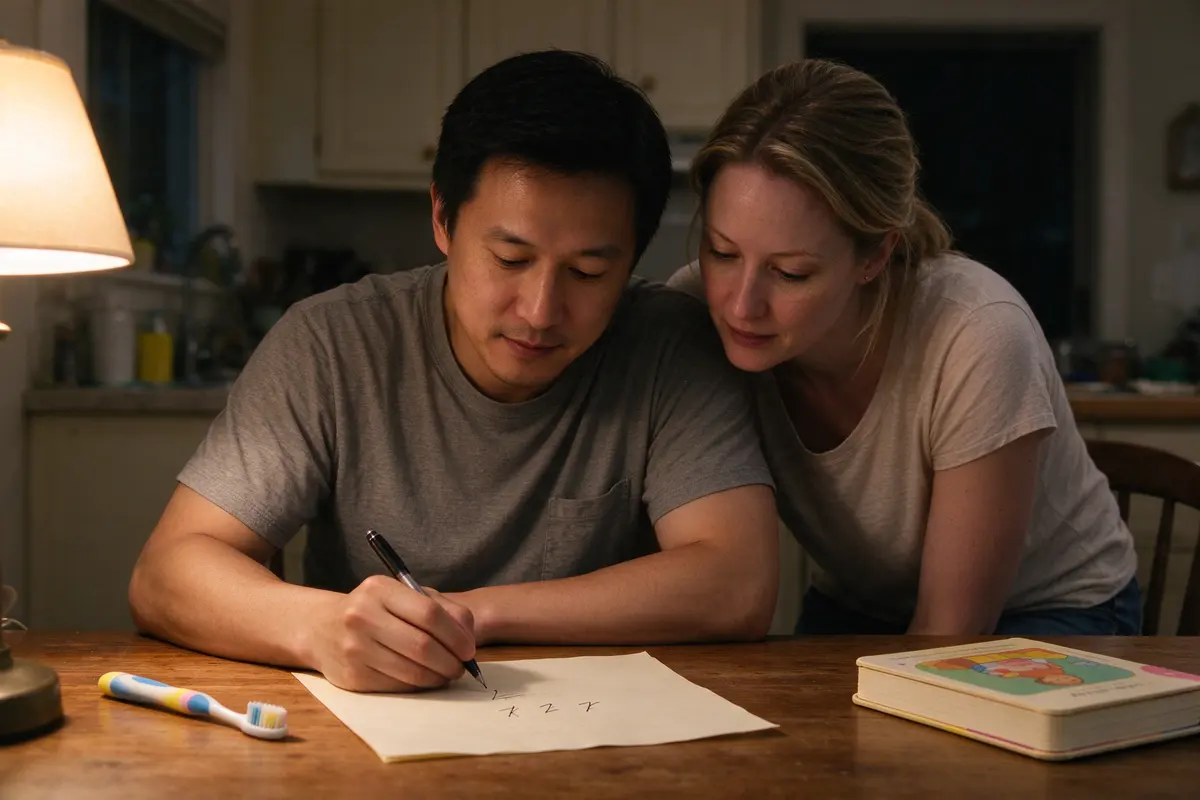
The method, written down
Time: 15 minutes, both adults, one sheet of paper · Sleep: routine first, then decide in the guide
Write the bedtime routine as three lines: brush, book, bed, with the time (AAP).
Write what happens at a waking, in one sentence. The wait before you go in, or the fading bedtime, or "a hand and a sentence, two minutes, out." Pick the one you can both do on a bad night.
Write the exceptions: hunger, a dirty diaper, illness, a fever. Those get met, every time (AAP).
Tape it by the nursery door and give it one week before you judge it. If you chose "no method," write that down too; it's a plan.
Make it work:The plan on the wall is for the parent at 2 a.m., who is not the parent who wrote it.
Watch for
Normal
a protest at bedtime in the first nights of a new plan; in the trial, sleep improved over the following weeks (Gradisar et al., 2016).
Call your pediatrician right away
if your baby cries nonstop, or cries when touched or moved (AAP).
Normal
a plan that falls apart the week separation anxiety arrives; reassure calmly and start again (AAP).
Talk with your pediatrician
before dropping night feeds if your baby isn't growing and gaining weight steadily (AAP).
Normal
a baby who rolls to their tummy after you put them down on their back, in a bare crib (Moon, AAP).
Go to the ER now
if your baby is hard to wake, isn't alert when awake, or seems confused (AAP).
For you
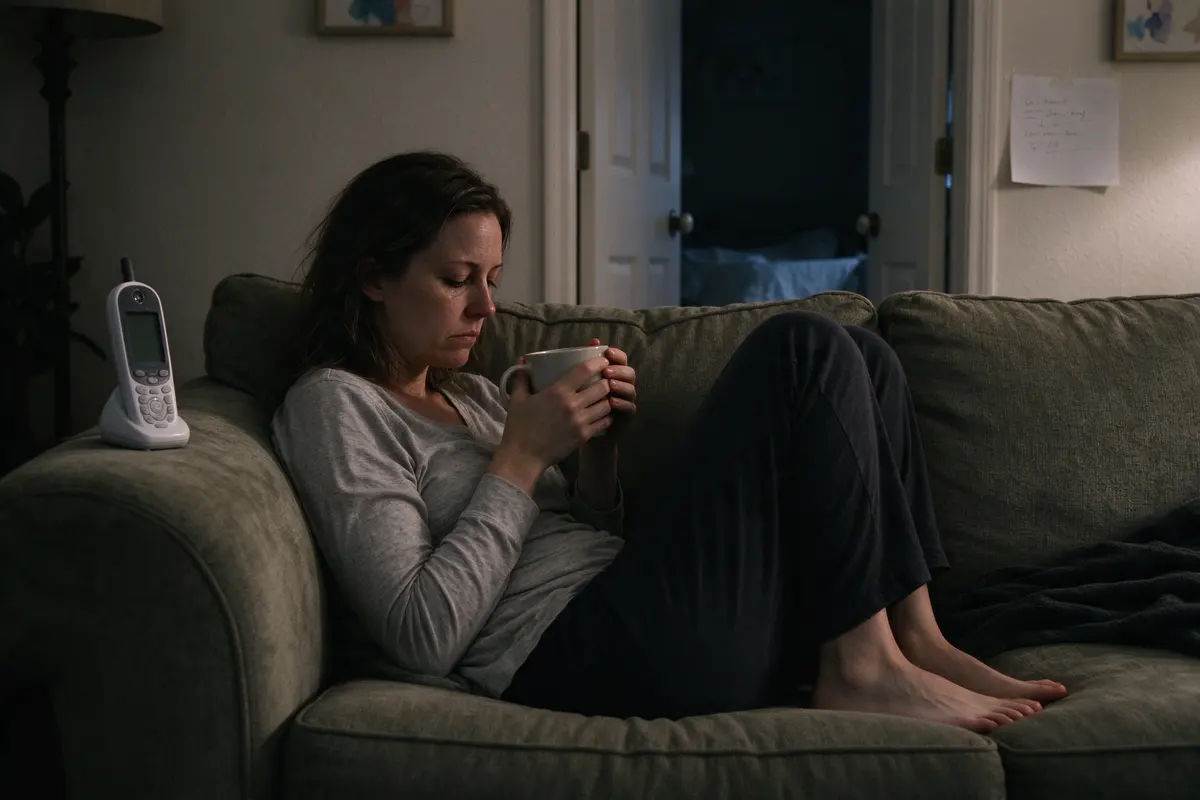
No method is a verdict. The five-year follow-up found the trained and untrained children the same at age 6 (Price et al., 2012), which means the choice is about your family's nights now, not your baby's future. If you train, you're not harming them. If you don't, you're not failing them. What's worth protecting is the two adults agreeing; a plan one of you resents doesn't survive a week.
If you're the partner: whoever feels steadier about the plan takes the first night. The other one sleeps with earplugs in the far room, by agreement, and takes the second.
Sources
- Price AMH, Wake M, Ukoumunne OC, Hiscock H. "Five-year follow-up of harms and benefits of behavioral infant sleep intervention: randomized trial." Pediatrics, 2012. https://pubmed.ncbi.nlm.nih.gov/22966034/
- Nemours KidsHealth. "Baby Sleep: 8- to 12-Month-Olds." Reviewed 2025. https://kidshealth.org/en/parents/sleep812m.html
- American Academy of Pediatrics. "Separation Anxiety & Sleeping Trouble in Young Children." HealthyChildren.org, updated 2022. https://www.healthychildren.org/English/healthy-living/sleep/Pages/separation-anxiety-and-sleeping.aspx
- Gradisar M, Jackson K, Spurrier NJ, et al. "Behavioral Interventions for Infant Sleep Problems: A Randomized Controlled Trial." Pediatrics, 2016. https://pubmed.ncbi.nlm.nih.gov/27221288/
- American Academy of Pediatrics. "Brush, Book, Bed: How to Structure Your Child's Nighttime Routine." HealthyChildren.org, updated 2024. https://www.healthychildren.org/English/healthy-living/oral-health/Pages/Brush-Book-Bed.aspx
- Mindell JA, Li AM, Sadeh A, et al. "Bedtime routines for young children: a dose-dependent association with sleep outcomes." Sleep, 2015. https://pubmed.ncbi.nlm.nih.gov/25325483/
- American Academy of Pediatrics. "Getting Your Baby to Sleep." HealthyChildren.org, updated 2024. https://www.healthychildren.org/English/ages-stages/baby/sleep/Pages/getting-your-baby-to-sleep.aspx
- Moon RY. "How to Keep Your Sleeping Baby Safe: AAP Policy Explained." HealthyChildren.org, updated 2026. https://www.healthychildren.org/English/ages-stages/baby/sleep/Pages/a-parents-guide-to-safe-sleep.aspx
- American Academy of Pediatrics. "Fever" (symptom checker). HealthyChildren.org, accessed 2026. https://www.healthychildren.org/English/tips-tools/symptom-checker/Pages/symptomviewer.aspx?symptom=Fever
- American Academy of Pediatrics. "Sleeping Through the Night." HealthyChildren.org, updated 2013. https://www.healthychildren.org/English/ages-stages/baby/sleep/Pages/Sleeping-Through-the-Night.aspx
This guide is general education that summarizes published research and guidance from groups like the American Academy of Pediatrics, the CDC, and the WHO. It isn’t medical advice, and every child develops on their own timeline. Your pediatrician knows your child; if something feels wrong, call them. In an emergency, call 911.
Get each day’s note the morning it applies
Add your baby to a free Chorevia household with their date of birth, and every morning for 300 days the day’s note arrives in the app and by email: what’s developing, one thing to try, what to watch for, and a word for you.
Create your household