Day 250 of 300 · Week 34
Cups in
Last reviewed · 4 min read · 9 sources · Plain-text version
Offer a cup at meals now and finish moving off bottles between 12 and 18 months, says the AAP; open, straw, or valveless sippy all work. The meal cup, and a plan for the bottles instead of a fight.
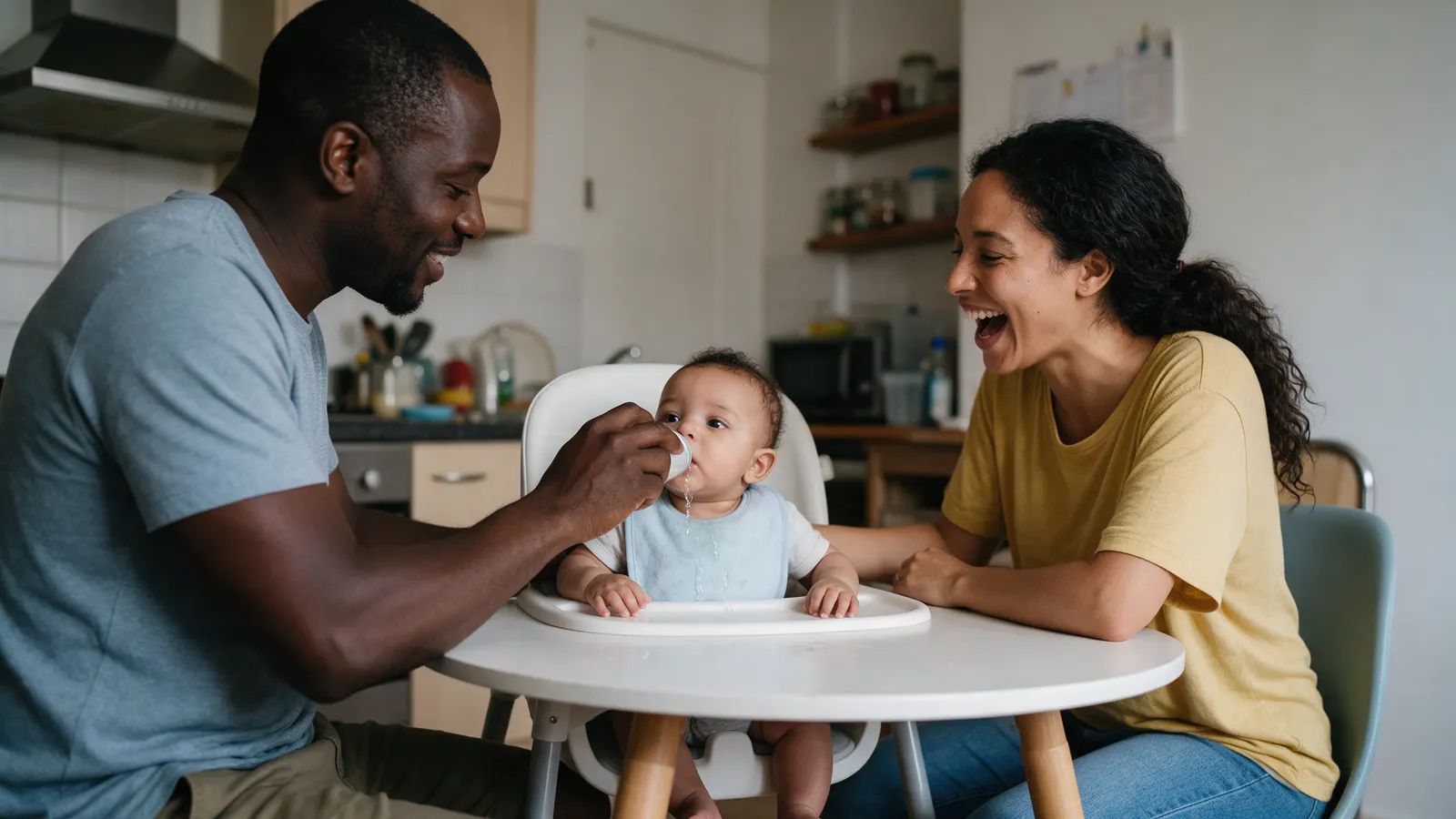
Ten days into month nine. The bottle, or the breast, is still where most of the day's nutrition comes from. Today is the cup that sits beside it at every meal from here, and a bottle plan nobody needs to fight about.
Heart
The AAP's advice is to offer a cup at meals now and finish moving off bottles between 12 and 18 months (Shu, AAP). The cup at 8 months isn't a replacement for anything; breast milk or formula is still the main drink, plus 4 to 8 ounces of water a day (Muth, AAP). It's practice. Drinking from a cup without a lid as you hold it is a 12-month milestone (CDC), and the baby who's held a cup at a hundred meals by then has had a hundred chances at it.
Head
Why the AAP sets a deadline on bottles at all: bottles that go on longer are linked to cavities, skipped meals, and more resistance later. The method is gradual. Keep bottles at meals at first, drop the ones at naps and bedtime, and offer extra cuddles and stories instead; an open cup, a straw cup, or a sippy cup without a valve all work (Shu, AAP). One rule starts today, not in four months: never put your baby to bed with a bottle, because sugary residue left in the mouth overnight promotes tooth decay (AAP). The guide's answer is When should my baby stop using a bottle?
Body
What goes in the cup is water, for now. Juice waits until after 12 months (AAP), and at 12 months most babies can switch from formula to whole milk (AAP), which is when the cup starts carrying something that matters. If you're breastfeeding, none of this is a schedule for stopping; the AAP supports continuing as long as you both want, to 2 years or beyond (Muth, AAP).
Try today
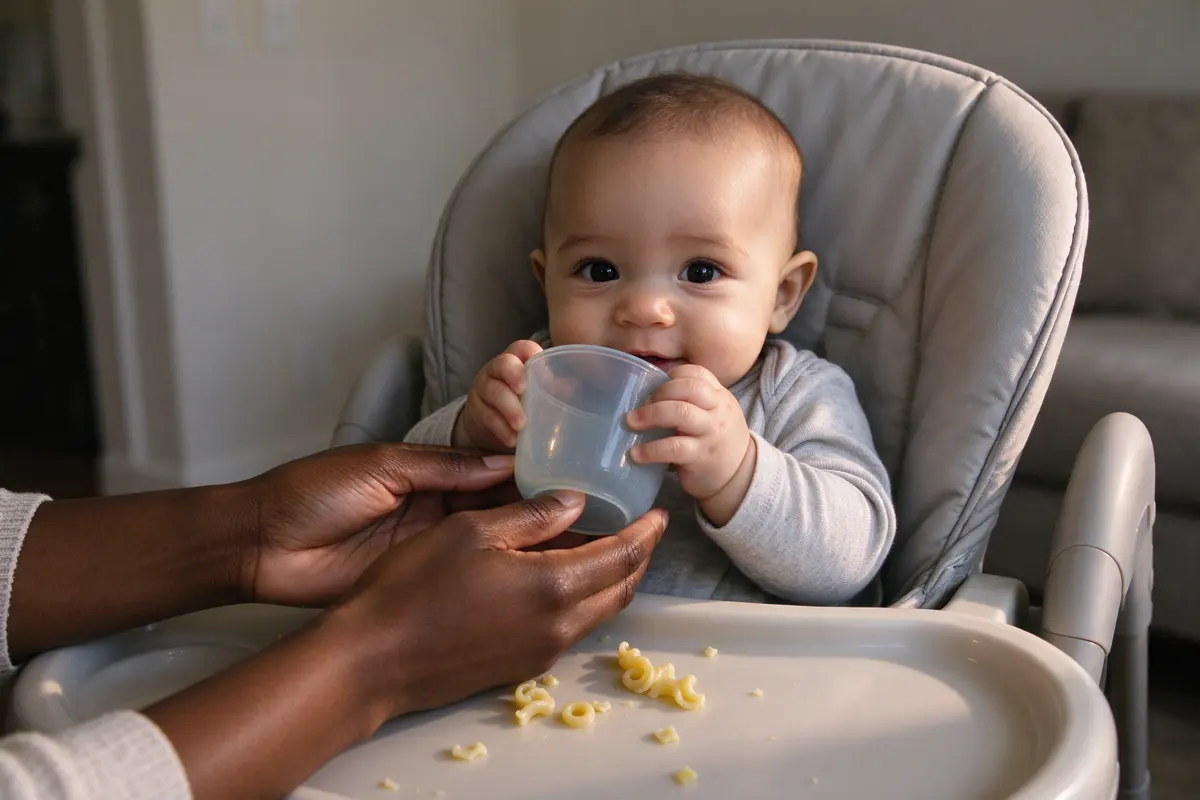
The meal cup
Time: Every meal, a minute each · When should my baby stop using a bottle? in the guide
Pick one cup and keep it: open, straw, or a sippy without a valve (Shu, AAP). Put a tablespoon of water in it.
Set it on the tray at the start of every meal today, beside the food, before the bottle or the breast comes out.
Hold the base and tip a sip when your baby reaches for it; let them hold it the rest of the time, spills included.
When the meal ends, the cup leaves with the plate. The bottle or the feed comes after, as usual.
Make it work:Count tonight how many meals the cup was on the tray. The number of sips doesn't matter yet; the number of meals does.
Watch for
Normal
water down the chin and most of the cup on the tray; the milestone is a year away (CDC).
Bring it up at the 9-month visit
if you're unsure about night feeds; ask before cutting them, and check first if your baby isn't growing and gaining weight steadily (AAP).
Normal
a baby who wants the bottle, not the cup, and says so loudly.
Call your pediatrician right away
for a fever over 104°F (40°C), or trouble breathing that isn't severe, or great trouble swallowing fluids or spit (AAP).
Normal
a cough on a sip that went down fast, then a grin.
Normal
knowing this baby better than anyone alive.
Call anyway
if your baby just doesn't seem right to you. Trust your instincts; two hundred and fifty days have built them (Lurie Children's).
For you
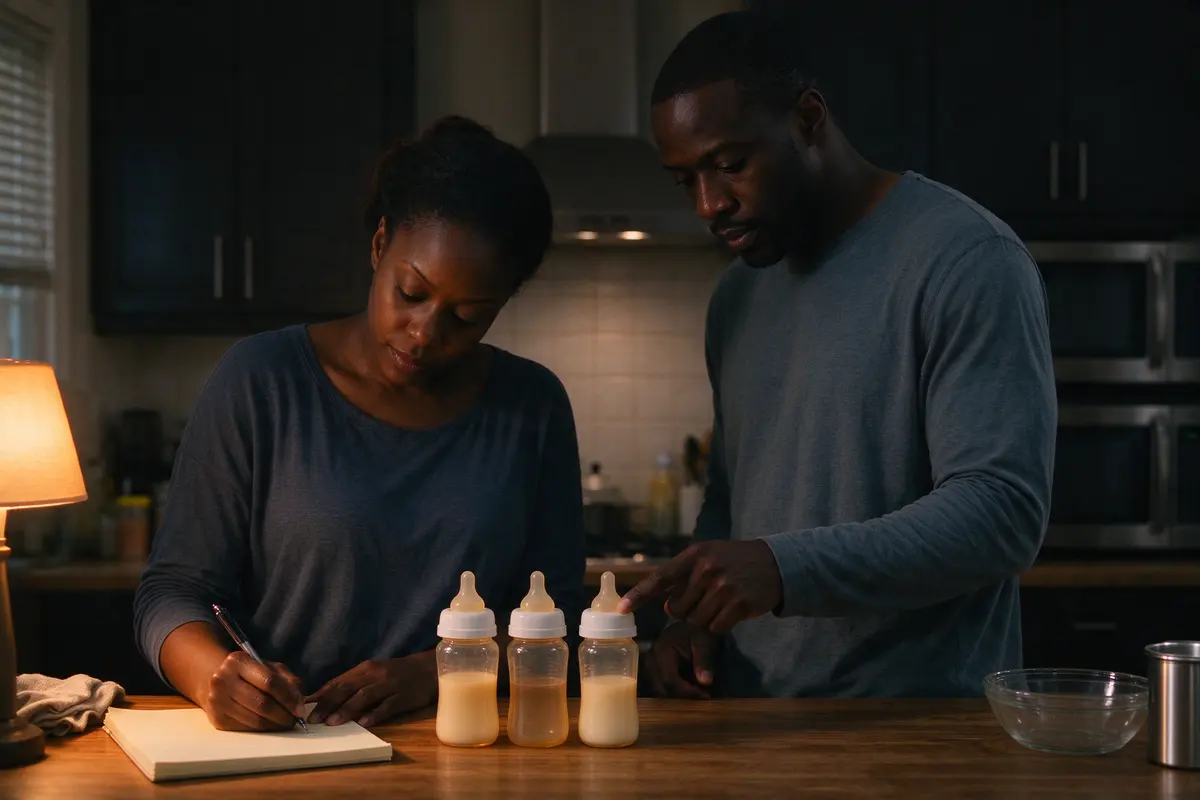
A plan for the bottles, not a fight. The window the AAP gives is 12 to 18 months (Shu, AAP), so there's no decision to make this month beyond putting a cup on the tray. Write the order down anyway, tonight, with your partner, so it's a plan on paper instead of an argument at midnight in four months: meal bottles first, the nap bottle next, the bedtime bottle last, with a story in its place (Shu, AAP). If the bottles are someone else's job, the plan is theirs to write and yours to read.
If you're the partner: this one's yours to draft. The bedtime bottle is the one you'll miss; put a book next to it on the list.
Sources
- Shu J. "From Bottle to Cup: Helping Your Child Make a Healthy Transition." HealthyChildren.org, updated 2023. https://www.healthychildren.org/English/ages-stages/baby/feeding-nutrition/Pages/Discontinuing-the-Bottle.aspx
- Muth ND. "Recommended Drinks for Children Age 5 & Younger." HealthyChildren.org, updated 2023. https://www.healthychildren.org/English/healthy-living/nutrition/Pages/Recommended-Drinks-for-Young-Children-Ages-0-5.aspx
- Centers for Disease Control and Prevention. "Milestones by 1 Year." Learn the Signs. Act Early. program, updated 2026. https://www.cdc.gov/act-early/milestones/1-year.html
- American Academy of Pediatrics. "Sleeping Through the Night." HealthyChildren.org, updated 2013. https://www.healthychildren.org/English/ages-stages/baby/sleep/Pages/Sleeping-Through-the-Night.aspx
- American Academy of Pediatrics. "When Can Babies Start Solid Foods? Readiness & Feeding Tips." HealthyChildren.org, updated 2026. https://www.healthychildren.org/English/ages-stages/baby/feeding-nutrition/Pages/Starting-Solid-Foods.aspx
- American Academy of Pediatrics. "Why Do Infants Need Baby Formula Instead of Cow's Milk?" HealthyChildren.org, updated 2024. https://www.healthychildren.org/English/ages-stages/baby/formula-feeding/Pages/Why-Formula-Instead-of-Cows-Milk.aspx
- American Academy of Pediatrics. "Fever" (symptom checker). HealthyChildren.org, accessed 2026. https://www.healthychildren.org/English/tips-tools/symptom-checker/Pages/symptomviewer.aspx?symptom=Fever
- Di Giovine M, Catenaccio E. "Febrile Seizures in Children." HealthyChildren.org, updated 2025. https://www.healthychildren.org/English/health-issues/conditions/fever/Pages/Febrile-Seizures.aspx
- Lurie Children's Hospital of Chicago. "When to Call the Pediatrician for Your Newborn." 2024. https://www.luriechildrens.org/en/blog/when-to-call-the-pediatrician-for-your-newborn/
This guide is general education that summarizes published research and guidance from groups like the American Academy of Pediatrics, the CDC, and the WHO. It isn’t medical advice, and every child develops on their own timeline. Your pediatrician knows your child; if something feels wrong, call them. In an emergency, call 911.
Get each day’s note the morning it applies
Add your baby to a free Chorevia household with their date of birth, and every morning for 300 days the day’s note arrives in the app and by email: what’s developing, one thing to try, what to watch for, and a word for you.
Create your household