Day 246 of 300 · Week 33
Pincer practice
Last reviewed · 4 min read · 12 sources · Plain-text version
The thumb-and-finger pincer usually arrives around 9 months, and picking up small bits of food with it is a 12-month skill. Pincer picking at the tray, and why the floor sweep is now a daily job.
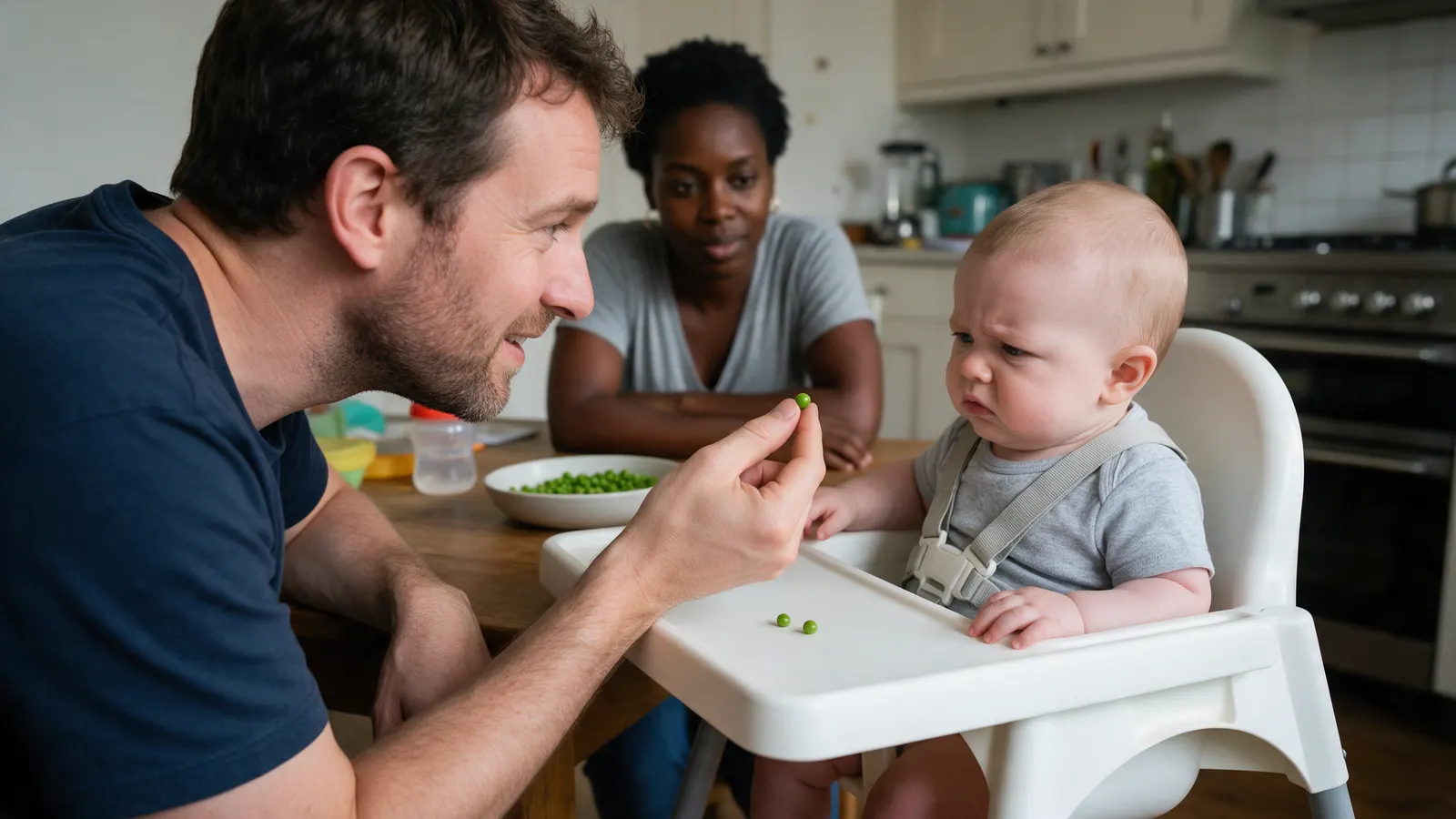
The whole-hand rake is giving way to something finer. Today is the pincer: what it is, when it comes, and what it means for everything on your floor.
Heart
Early in this stage, your baby rakes things in with the whole hand. By the end, most pinch with thumb and finger and practice on anything small, from cereal to dust balls (AAP). The finger-and-thumb pincer grasp usually arrives around 9 months (AAP), and picking up small bits of food between thumb and pointer finger is a 12-month milestone (CDC). So an 8-month-old who still fists a puff and can't get it out again is right on time; the rake is the stage before the pinch, and raking food toward themselves is the 9-month skill (CDC).
Head
The practice is the meal. The CDC encourages letting babies pinch or pick up food with their fingers (CDC), and soft finger foods cut into small pieces are fine once your baby sits up and brings things to their mouth (AAP). Practice hasn't been shown to speed the skill up; the point is that a tray of peas is where the pincer gets used once it arrives, and where you get to watch it change from a fist to a scoop to a pinch over the next few weeks. Once your baby can let go on purpose, dropping and throwing become favorite games (AAP), so the peas will leave the tray too.
Body
The same fingers that find peas find everything else. Everything still goes in the mouth, so check the floor often (AAP): floors and the gaps between cushions for coins, toy parts, and pen caps, and food cut no larger than half an inch, with you staying with your baby while they eat (AAP). A pincer that can lift a pea can lift a button battery; tape battery compartments shut and lock up spares (AAP).
Try today
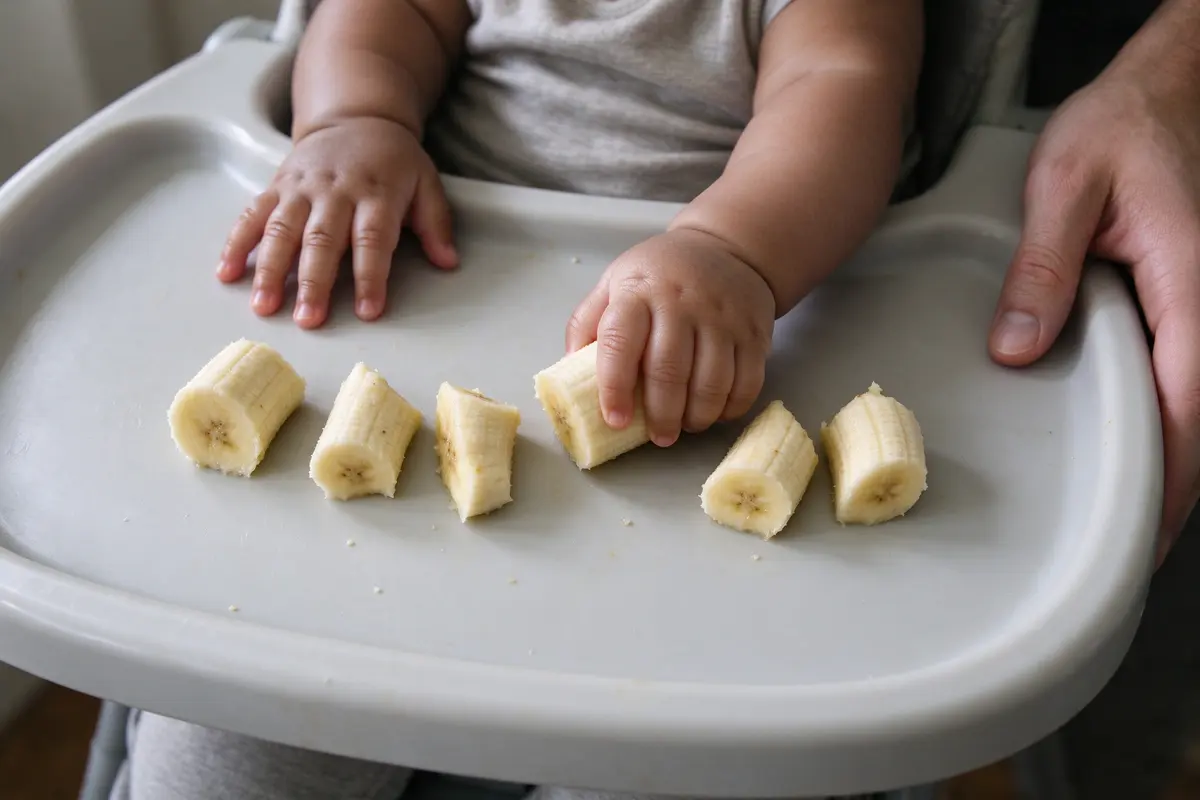
Pincer picking
Time: During a meal or snack · Pincer picking in the guide
With your baby upright and buckled in the high chair, put a few soft pieces of food on the tray, like cooked peas or bits of banana (CDC).
Let your baby work at picking them up. A rake, a fist, a scoop against the tray edge all count; don't put the food in their hand.
Name each food as they eat it: "Pea. Banana."
When the tray is clear or the interest is gone, stop. Three pieces that got eaten beat ten that got thrown.
Make it work:Keep pieces soft and no larger than half an inch, and stay with your baby while they eat (AAP).
Watch for
Normal
a pea raked into a fist and lost in the palm, then a baby who gnaws the fist to get at it; the pincer comes around 9 months (AAP).
Bring it up
if your baby reaches and picks up with only one hand (AAP).
Normal
a gag and a cough on a piece that went in sideways, with a red face and a recovery.
Call 911
if your baby is choking and can't breathe, cry, or make noise, turns bluish, or goes limp, and start back blows and chest thrusts while someone calls (AAP).
Normal
a dust ball pinched off the rug and inspected (AAP).
Go to the ER now
if your baby may have swallowed a button battery or magnets, and call the National Battery Ingestion Hotline (1-800-498-8666) on the way (CPSC); a battery stuck in the esophagus can cause severe damage in just 2 hours (Poison Control).
For you
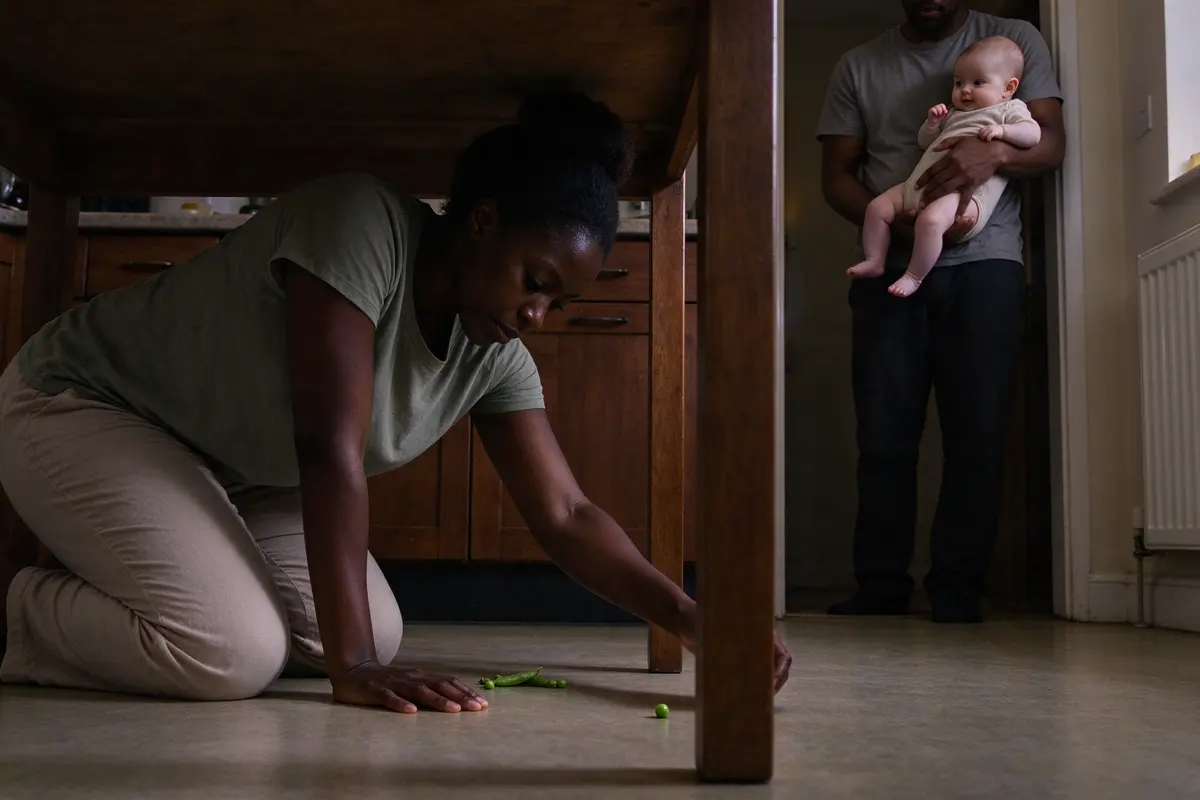
The floor sweep is now daily. Until this month, a coin under the sofa was a coin under the sofa. From here, with a hand that can pick up anything the size of a pea and a mouth that everything still goes into (AAP), it's a job, and the only version that works is the one small enough to repeat. Once a day, before the baby goes down on the floor, get to their height and look: under the table, between the cushions, along the baseboard (AAP). Two minutes. Not the whole house, just the room they'll be in.
If you're the partner: you take the evening sweep, after dinner, when the day's crumbs and the visitors' pocket change are on the floor. Hands and knees, every night, same route.
Sources
- American Academy of Pediatrics. "Hand and Finger Skills." HealthyChildren.org, updated 2009. https://www.healthychildren.org/English/ages-stages/baby/Pages/Hand-and-Finger-Skills.aspx
- American Academy of Pediatrics. "Movement Milestones: Babies 4 to 7 Months." HealthyChildren.org, updated 2021. https://www.healthychildren.org/English/ages-stages/baby/Pages/Movement-4-to-7-Months.aspx
- Centers for Disease Control and Prevention. "Milestones by 1 Year." Learn the Signs. Act Early. program, updated 2026. https://www.cdc.gov/act-early/milestones/1-year.html
- Centers for Disease Control and Prevention. "Milestones by 9 Months." Learn the Signs. Act Early. program, updated 2026. https://www.cdc.gov/act-early/milestones/9-months.html
- Centers for Disease Control and Prevention. "Tastes and Textures." 2026. https://www.cdc.gov/infant-toddler-nutrition/foods-and-drinks/tastes-and-textures.html
- American Academy of Pediatrics. "When Can Babies Start Solid Foods? Readiness & Feeding Tips." HealthyChildren.org, updated 2026. https://www.healthychildren.org/English/ages-stages/baby/feeding-nutrition/Pages/Starting-Solid-Foods.aspx
- American Academy of Pediatrics. "Cognitive Development in Infants: 8 to 12 Months." HealthyChildren.org, updated 2023. https://www.healthychildren.org/English/ages-stages/baby/Pages/Cognitive-Development-8-to-12-Months.aspx
- Bradin S. "Choking Prevention for Babies & Children: What Every Parent Needs to Know." HealthyChildren.org, updated 2026. https://www.healthychildren.org/English/health-issues/injuries-emergencies/Pages/Choking-Prevention.aspx
- American Academy of Pediatrics. "How Small Batteries Can Become Dangerous to Children." HealthyChildren.org, updated 2021. https://www.healthychildren.org/English/safety-prevention/at-home/Pages/Button-Battery-Injuries-in-Children-A-Growing-Risk.aspx
- American Academy of Pediatrics. "Movement Milestones in Babies 8 to 12 Months Old." HealthyChildren.org, updated 2021. https://www.healthychildren.org/English/ages-stages/baby/Pages/Movement-8-to-12-Months.aspx
- US Consumer Product Safety Commission. "Making Families Safer from Button Cell or Coin Battery Dangers; Reese's Law Leads to New Federal Mandatory Safety Standard." 2023. https://www.cpsc.gov/Newsroom/News-Releases/2023/Making-Families-Safer-from-Button-Cell-or-Coin-Battery-Dangers-Reeses-Law-Leads-to-New-Federal-Mandatory-Safety-Standard
- National Capital Poison Center. "Button Battery Ingestion." Poison Control, accessed 2026. https://www.poison.org/battery
This guide is general education that summarizes published research and guidance from groups like the American Academy of Pediatrics, the CDC, and the WHO. It isn’t medical advice, and every child develops on their own timeline. Your pediatrician knows your child; if something feels wrong, call them. In an emergency, call 911.
Get each day’s note the morning it applies
Add your baby to a free Chorevia household with their date of birth, and every morning for 300 days the day’s note arrives in the app and by email: what’s developing, one thing to try, what to watch for, and a word for you.
Create your household