Day 284 of 300 · Week 38
Thirty-eight weeks: more sounds, first "word"
Last reviewed · 4 min read · 7 sources · Plain-text version
Syllables like 'ba,' 'da,' and 'ma,' a baby who understands more than they say, and the AAP's rule that any sound used the same way each time counts. The consistent-name day, for every adult.
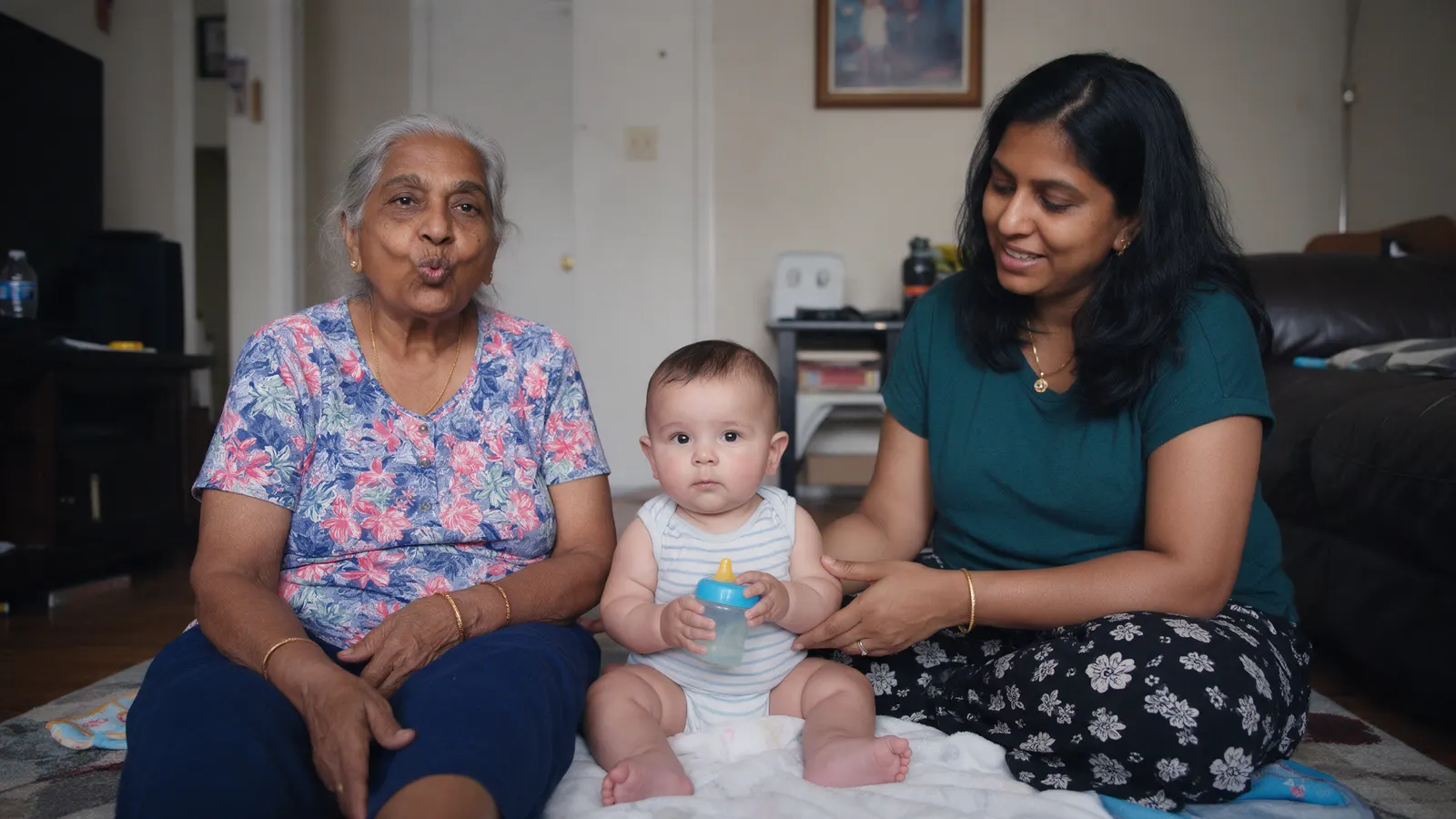
Thirty-eight weeks. The house has a new sound in it this week, or the same sound aimed at the same thing twice, which is the more interesting kind. Today is what counts as a word, and the one thing every adult in the house can do to help one land.
Heart
Coos turn into syllables like "ba," "da," and "ma," and babies understand more than they can say (AAP). By 9 months, most babies make lots of different sounds like "mamamama" and "bababababa" (CDC), and your baby is 9 months old, so the strings are probably long and varied by now. Calling a parent "mama" or "dada" or another special name is a 12-month milestone (CDC). But the AAP's definition of a word is wider than a dictionary's: any sound used the same way each time, so "mog" for milk counts (AAP). Listen for the sound that always goes with the same thing. That's it, whatever it sounds like.
Head
The AAP says some babies have 2 or 3 words by their first birthday, but most 12-month speech is babble with the ups and downs of real talk (AAP), and trying to say one or two words besides "mama" or "dada" is a 15-month milestone (CDC). So "mog" this month is a bonus, not a benchmark. What helps a sound attach to a thing is hearing the same name for it, over and over, from everyone: name what your baby sees, touches, and eats, the same way each time, and keep names consistent ("cat" today, not "kitty" tomorrow) (AAP). In a house with three adults and three names for the cat, the baby is learning three words for one thing.
Body
Then answer. Repeat their sounds, add simple words, and describe what they see (CDC); ask questions, and wait for an answer (AAP). The one line that isn't a wait: bring it up if your baby isn't babbling lots of different sounds by 9 months or doesn't look when you call their name (CDC). The guide's section is Babble, gestures, and first words.
Try today
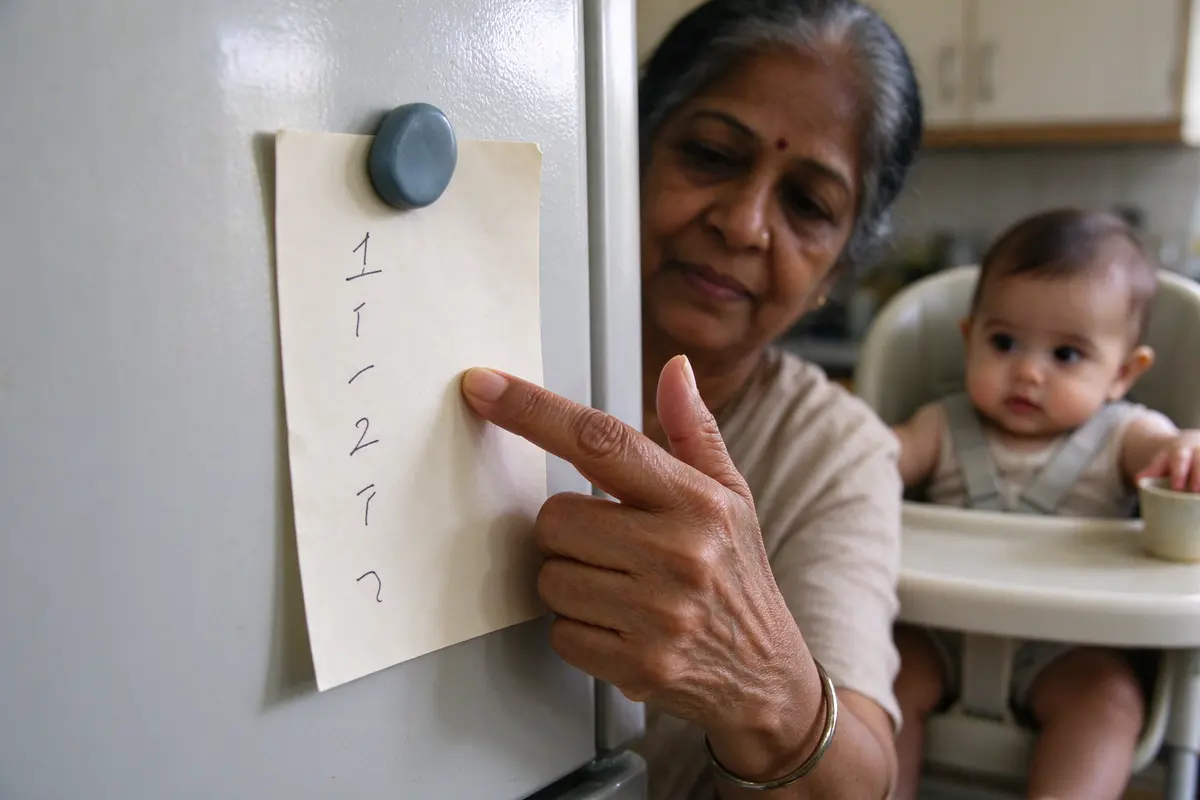
The consistent-name day
Time: 5 minutes to set up, then all day, every adult
Pick five things your baby meets every day: the cup, the dog, the ball, the bath, the cat. Write one name for each on a card on the fridge.
Every adult in the house uses that word and only that word today, including the grandparents and the sitter (AAP).
When your baby makes a sound at one of the five, answer right away with the card's word: "Ba? Ball. Here's the ball" (CDC).
At bedtime, write under the card any sound your baby used the same way twice. By the AAP's rule, that's a word (AAP).
Make it work:Five things, not fifty. The card is for the adults; the baby never has to see it.
Watch for
Normal
"mama" said to the dog, the spoon, and the father; calling a parent by name has until 12 months (CDC).
Talk with your pediatrician
if your baby still doesn't babble or imitate any sounds, which the AAP advises raising by 7 months (AAP).
Normal
a quiet day after a loud one; sounds come in waves.
Bring it up
if your baby seems not to hear well (AAP).
Normal
a croaky, half-voiced babble for a day or two with a cold.
Call your pediatrician right away
if your baby has great trouble swallowing fluids or spit, or trouble breathing that isn't severe (AAP).
For you
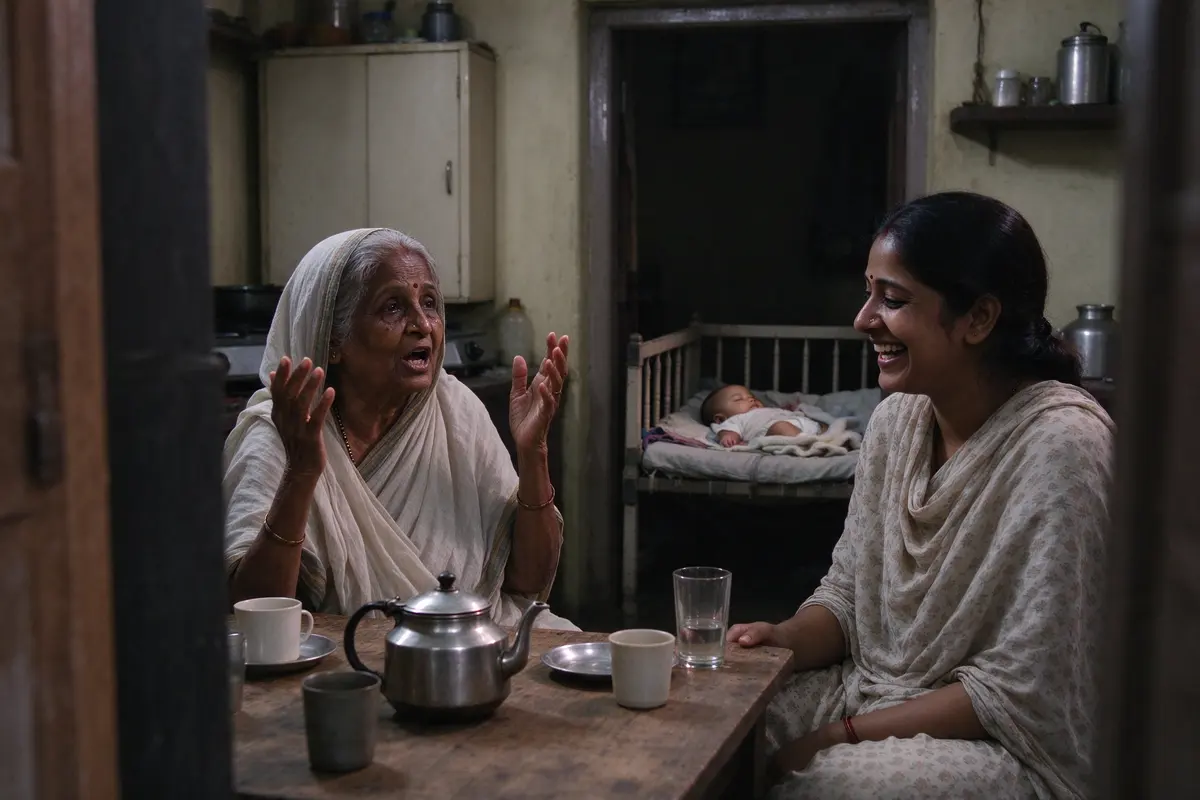
"Cat" today, not "kitty" tomorrow (AAP). That's easy to say and hard to ask of a grandmother who has called every cat "puss" for sixty years. So don't make it a correction. Make it a card on the fridge and a sentence at the door: "We're trying one name per thing this month; here's the list." Most people are glad to be told what the word is. The ones who aren't will forget by lunch, and the baby will still hear "cat" from you forty times before dinner. You're the majority vote.
If you're the partner: you have your own words for things, and some of them are better than hers. Pick the five together tonight, and then use hers for the ones she chose. Consistency beats being right.
Sources
- American Academy of Pediatrics. "Language Development: 8 to 12 Months." HealthyChildren.org, updated 2009. https://www.healthychildren.org/English/ages-stages/baby/Pages/Language-Development-8-to-12-Months.aspx
- Centers for Disease Control and Prevention. "Milestones by 9 Months." Learn the Signs. Act Early. program, updated 2026. https://www.cdc.gov/act-early/milestones/9-months.html
- Centers for Disease Control and Prevention. "Milestones by 1 Year." Learn the Signs. Act Early. program, updated 2026. https://www.cdc.gov/act-early/milestones/1-year.html
- Centers for Disease Control and Prevention. "Milestones by 15 Months." Learn the Signs. Act Early. program, accessed 2026. https://www.cdc.gov/act-early/milestones/15-months.html
- American Academy of Pediatrics. "Language Development: 4 to 7 Months." HealthyChildren.org, updated 2009. https://www.healthychildren.org/English/ages-stages/baby/Pages/Language-Development-4-to-7-Months.aspx
- American Academy of Pediatrics. "Checkup Checklist: 9 Months Old." HealthyChildren.org, updated 2021. https://www.healthychildren.org/English/ages-stages/Your-Childs-Checkups/Pages/Your-Checkup-Checklist-9-Months-Old.aspx
- American Academy of Pediatrics. "Fever" (symptom checker). HealthyChildren.org, accessed 2026. https://www.healthychildren.org/English/tips-tools/symptom-checker/Pages/symptomviewer.aspx?symptom=Fever
This guide is general education that summarizes published research and guidance from groups like the American Academy of Pediatrics, the CDC, and the WHO. It isn’t medical advice, and every child develops on their own timeline. Your pediatrician knows your child; if something feels wrong, call them. In an emergency, call 911.
Get each day’s note the morning it applies
Add your baby to a free Chorevia household with their date of birth, and every morning for 300 days the day’s note arrives in the app and by email: what’s developing, one thing to try, what to watch for, and a word for you.
Create your household