Day 291 of 300 · Week 39
Thirty-nine weeks: cups in, bottles out
Last reviewed · 4 min read · 7 sources · Plain-text version
The AAP's bottle plan: a cup at meals now, off bottles between 12 and 18 months, meal bottles kept longest, nap and bedtime ones dropped first. The bottle map, written tonight.
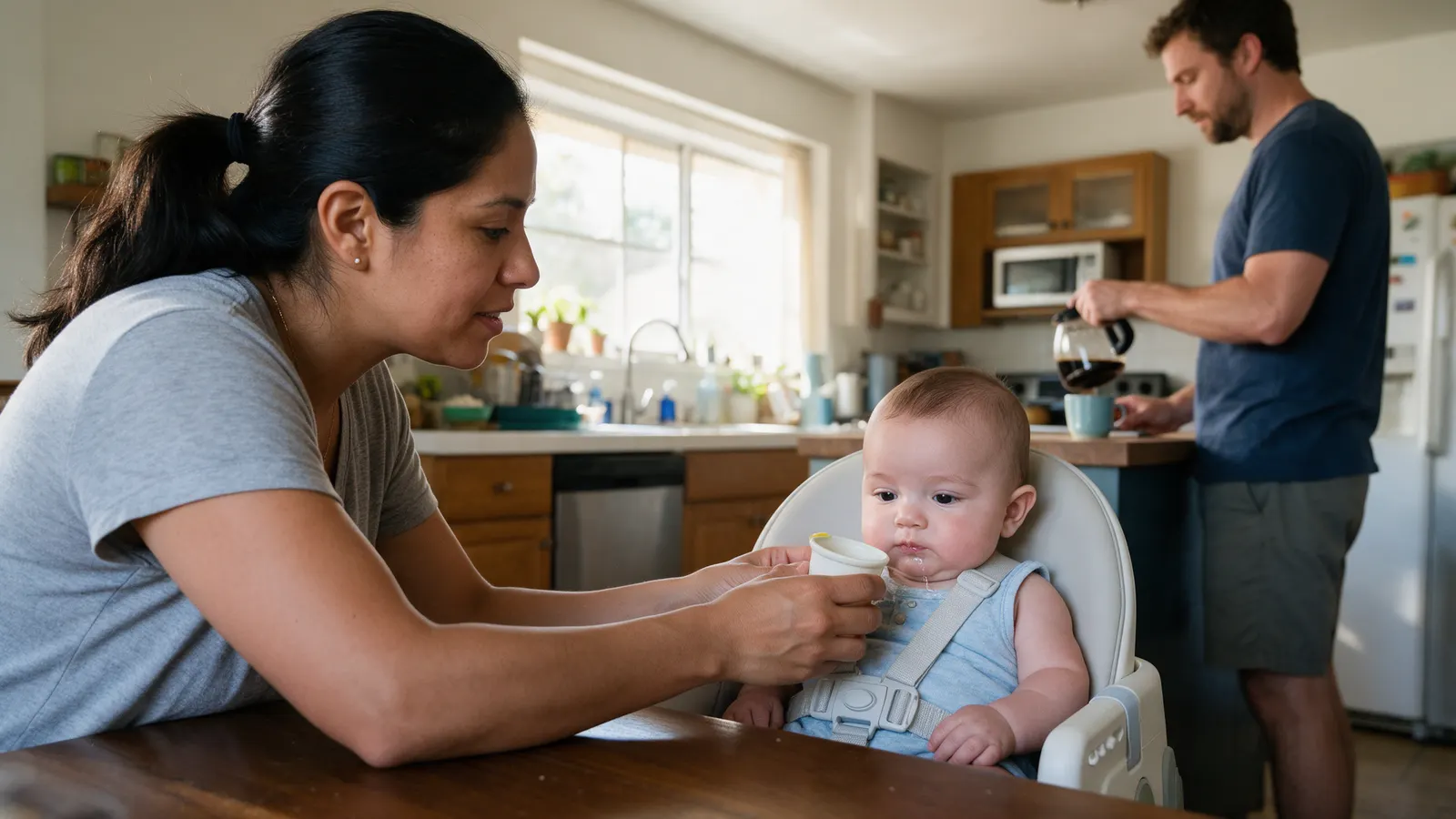
Thirty-nine weeks. The cup has sat on the tray at meals for weeks now, mostly as a toy. Today is the plan for the bottles: which stay, which go first, and the one that never happens.
Heart
The AAP's advice is to offer a cup at meals now and finish moving off bottles between 12 and 18 months (Shu, AAP). Nothing about what your baby drinks changes this week: breast milk or formula is still the main drink, plus 4 to 8 ounces of water a day (Muth, AAP). Drinking from a cup without a lid as you hold it is a 12-month milestone (CDC), and the cup on the tray is the practice. What changes today is that the bottles get names.
Head
Why the AAP sets a window at all: bottles that go on longer are linked to cavities, skipped meals, and more resistance later. The method is gradual. Keep bottles at meals at first, drop the ones at naps and bedtime, and offer extra cuddles and stories instead; an open cup, a straw cup, or a sippy cup without a valve all work (Shu, AAP). So the order writes itself: the bedtime and nap bottles are first out, the meal bottles last. The one rule already in force is the crib: never put your baby to bed with a bottle, because sugary residue left in the mouth overnight promotes tooth decay (AAP). The guide's answer is When should my baby stop using a bottle?
Body
Try today
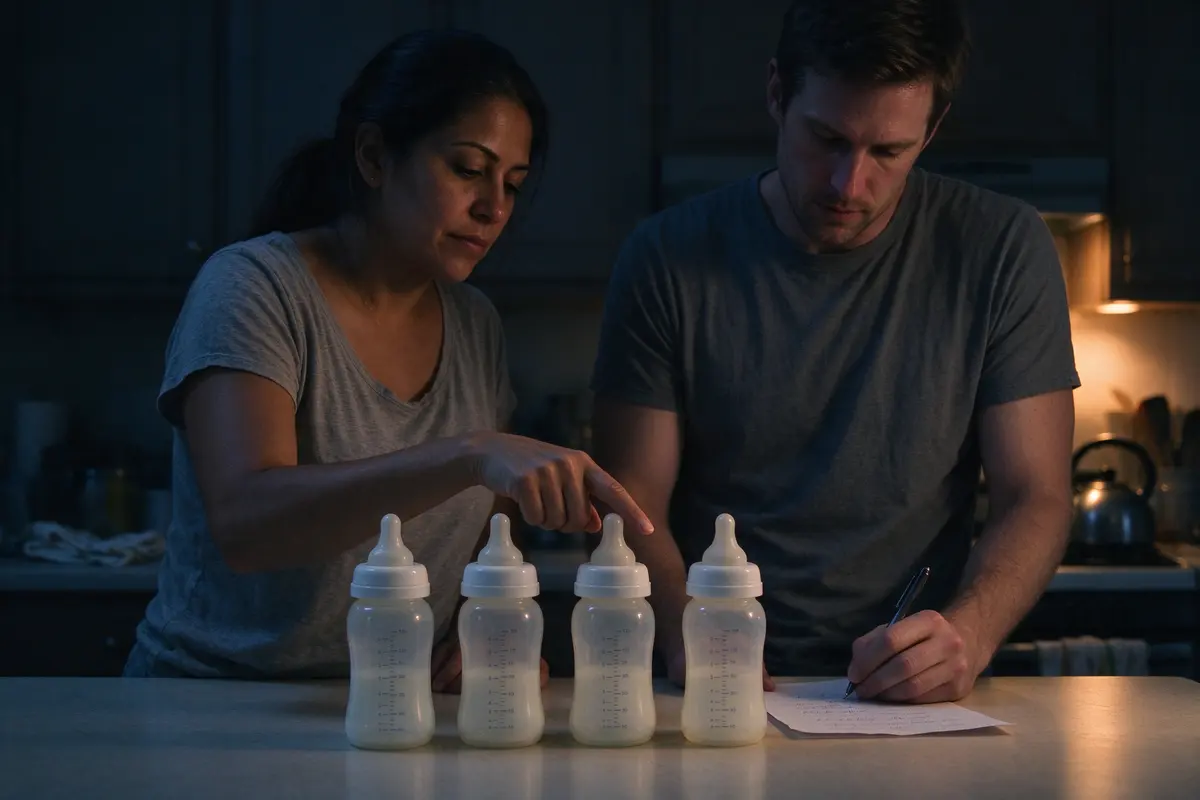
The bottle map
Time: 10 minutes after bedtime, both adults · Cups in, bottles out in the guide
List every bottle from today with its time and what it was for: a meal, a nap, bedtime, or comfort in between.
Write "stays" beside the meal bottles; they're the last to go (Shu, AAP).
Write "first" beside the nap and bedtime bottles, and next to each, what replaces it: a story, a song, a longer cuddle (Shu, AAP).
Write the date you'll start, anywhere from the first birthday, and the date it's finished, no later than 18 months (Shu, AAP).
Tape the map to the fridge where the sitter and the grandparents will read it.
Make it work:If there are no bottles because you breastfeed, the map is one line, "no plan needed," and it's true (Muth, AAP).
Watch for
Normal
a bottle refused with the cup in sight, then taken five minutes later.
Call your pediatrician right away
if your baby has great trouble swallowing fluids or spit (AAP).
Normal
one bottle still wanted at night; many babies this age don't need to eat at night, but some do.
Ask your pediatrician before cutting night feeds,
and check first if your baby isn't growing and gaining weight steadily (AAP).
Normal
a cough on a gulp of water that went down fast, over in a breath.
Call 911
if your baby is choking and can't breathe, cry, or make noise, turns bluish, or goes limp (AAP).
For you
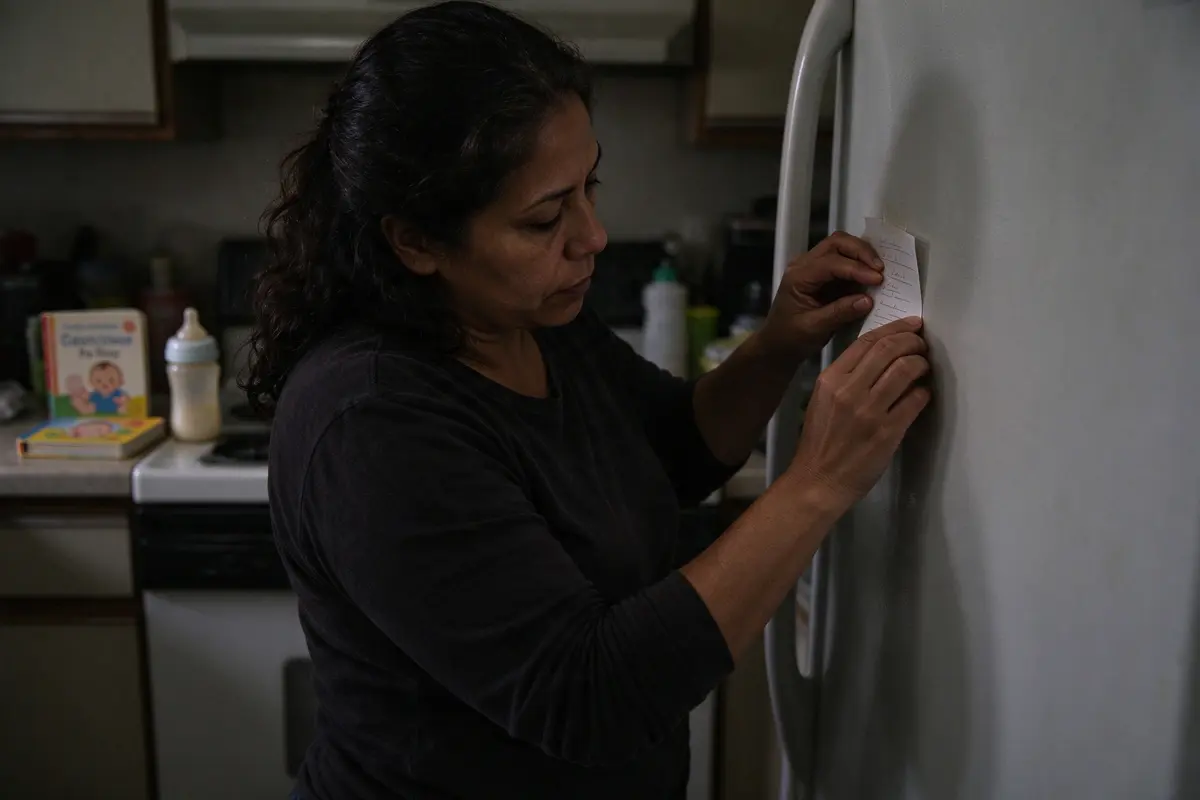
A plan, not a fight. The fight, when there is one, is rarely with the baby. It's with the grandmother who thinks a bedtime bottle is love, the sitter who takes the quick route at nap time, and the two of you at 7 p.m. when nobody has the energy for a story instead. The map ends all three, because the dates on it are the AAP's, 12 to 18 months (Shu, AAP), and everyone reads the same fridge. Nothing on it happens this month. The only rule for tonight was already a rule: no bottle in the crib (AAP).
If you're the partner: the bedtime bottle is yours on the map, which means the book that replaces it is too. Pick it now and put it next to the bottle on the counter, so the swap is already half made.
Sources
- Shu J. "From Bottle to Cup: Helping Your Child Make a Healthy Transition." HealthyChildren.org, updated 2023. https://www.healthychildren.org/English/ages-stages/baby/feeding-nutrition/Pages/Discontinuing-the-Bottle.aspx
- Muth ND. "Recommended Drinks for Children Age 5 & Younger." HealthyChildren.org, updated 2023. https://www.healthychildren.org/English/healthy-living/nutrition/Pages/Recommended-Drinks-for-Young-Children-Ages-0-5.aspx
- Centers for Disease Control and Prevention. "Milestones by 1 Year." Learn the Signs. Act Early. program, updated 2026. https://www.cdc.gov/act-early/milestones/1-year.html
- American Academy of Pediatrics. "Sleeping Through the Night." HealthyChildren.org, updated 2013. https://www.healthychildren.org/English/ages-stages/baby/sleep/Pages/Sleeping-Through-the-Night.aspx
- American Academy of Pediatrics. "Why Do Infants Need Baby Formula Instead of Cow's Milk?" HealthyChildren.org, updated 2024. https://www.healthychildren.org/English/ages-stages/baby/formula-feeding/Pages/Why-Formula-Instead-of-Cows-Milk.aspx
- American Academy of Pediatrics. "Fever" (symptom checker). HealthyChildren.org, accessed 2026. https://www.healthychildren.org/English/tips-tools/symptom-checker/Pages/symptomviewer.aspx?symptom=Fever
- Bradin S. "Choking Prevention for Babies & Children: What Every Parent Needs to Know." HealthyChildren.org, updated 2026. https://www.healthychildren.org/English/health-issues/injuries-emergencies/Pages/Choking-Prevention.aspx
This guide is general education that summarizes published research and guidance from groups like the American Academy of Pediatrics, the CDC, and the WHO. It isn’t medical advice, and every child develops on their own timeline. Your pediatrician knows your child; if something feels wrong, call them. In an emergency, call 911.
Get each day’s note the morning it applies
Add your baby to a free Chorevia household with their date of birth, and every morning for 300 days the day’s note arrives in the app and by email: what’s developing, one thing to try, what to watch for, and a word for you.
Create your household