Day 295 of 300 · Week 40
Water, month ten
Last reviewed · 4 min read · 6 sources · Plain-text version
Babies can drown in 1 or 2 inches of water, silently, within seconds. No bath seat, buckets and wading pools emptied, toilet lids latched, pools fenced on 4 sides. The water sweep, one walk.

A baby who pulls up can pull up on a bucket, a toilet, and the side of a wading pool. Today is the water in and around your house, and one walk to find all of it.
Heart
Babies can drown in 1 or 2 inches of water, silently, within seconds. Never leave your baby in the bath, even in a bath seat, which can tip (AAP). Most child drownings at home happen in bathtubs, and more than half of bathtub deaths involve babies under 1 (AAP). What's new this month is reach: by 1 year, most babies pull up to stand and walk while holding on to furniture (CDC), and nothing says the thing they pull up on has to be furniture.
Head
Outside the bathroom, the list is short and the AAP's: empty buckets and wading pools right after use, latch toilet lids, and fence pools on all 4 sides (AAP). Inside it, a bath seat is not a safety device. In a federal review of 32 bath-seat drownings, caregivers had stepped away for 6 minutes on average, often to answer the phone or get a towel (CPSC, 1997). Six minutes is a long time; the seat made it feel like a safe one.
Body
A standing baby's bath changes shape too. The tub rim is the best pull-up bar in the house, the tap is at face height, and the baby who sat still at seven months now lunges for the washcloth. One hand stays on your baby for the whole bath, and everything you'll need is on the floor before the tap turns (AAP). The guide's section is Water and drowning.
Try today
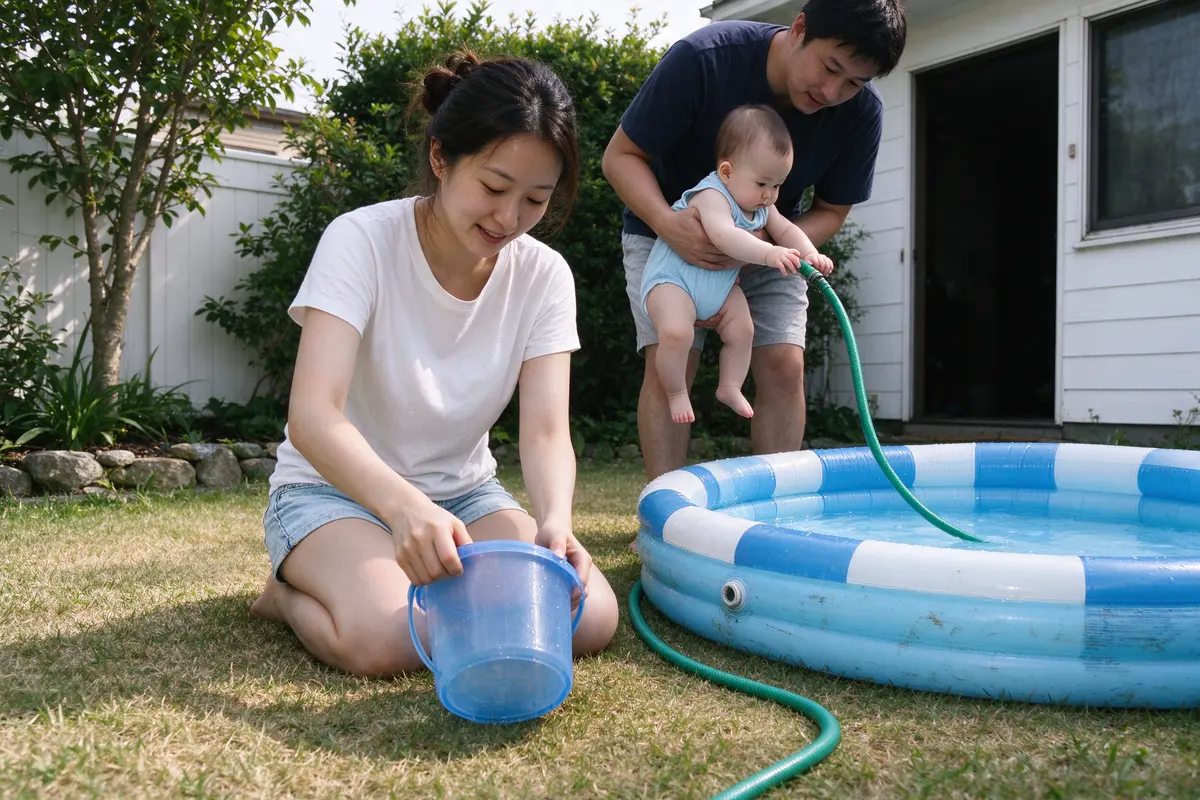
The water sweep
Time: 10 minutes, one walk through the house and yard · Water and drowning in the guide
Start outside: tip every bucket and the wading pool upside down, and from now on empty them right after use (AAP).
Bathroom: latch the toilet lid, drain the tub, and if there's a bath seat, know what it is: a seat, not a reason to step away (AAP).
Kitchen and laundry: any basin or bucket with water in it gets emptied, including the one soaking the pan.
If there's a pool, walk the fence on all 4 sides and try the gate (AAP).
Write "water sweep" on the list for every visit to a grandparent's house, where the bucket is wherever it was last summer.
Make it work:The sweep is for standing water. The bath rule is simpler and never changes: a hand on the baby, start to finish (AAP).
Watch for
Normal
a baby who pulls up on the tub rim to watch it fill, with your hand on their back (AAP).
Call 911
if your baby is not moving, is very weak, or can't be woken (AAP).
Normal
a mouthful of bathwater and a splutter, then a grin.
Call your pediatrician right away
for trouble breathing that isn't severe, and call 911 if your baby is struggling for each breath or can barely cry (AAP).
Normal
outrage at the toilet-lid latch, because the lid was the best pull-up spot in the house; pulling up to stand is a 12-month milestone (CDC).
Call your pediatrician now
for any head injury in a baby under 1 year, even if your baby seems fine (AAP).
For you
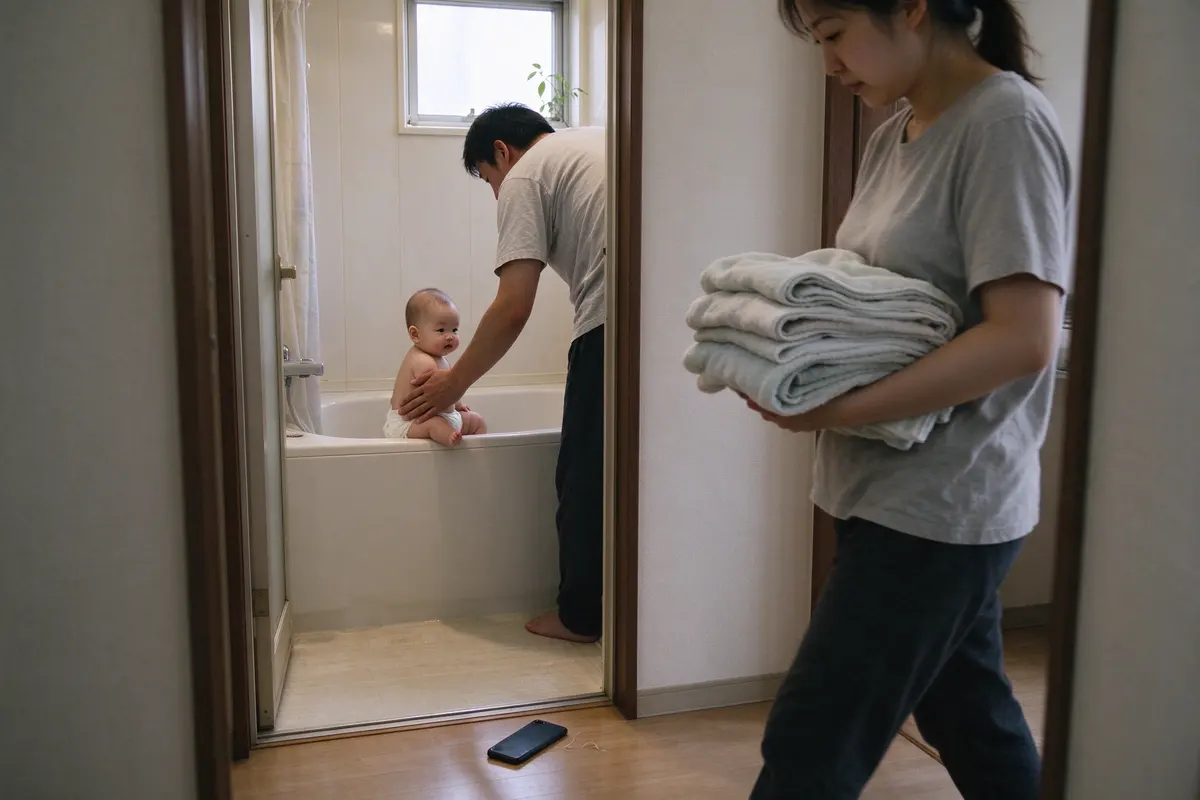
The phone stays in the hall, and now you know the number: 6 minutes, on average, was how long the caregivers in the CPSC review had been gone, often to answer the phone or get a towel (CPSC, 1997). So the towel goes on the floor beside the tub before the tap turns, and the phone goes where you can hear it ring and can't reach it. If you're alone and the doorbell goes, the baby comes out of the water wrapped in the towel and comes to the door with you; the bath can be restarted, and the AAP's rule has no exceptions for visitors (AAP).
If you're the partner: on bath night one adult has a hand on the baby and the other is the fetcher. Be the fetcher without being asked, and bring the towel before it's needed.
Sources
- American Academy of Pediatrics. "Infant Drowning Prevention & Water Safety: How to Protect Your Baby." HealthyChildren.org, updated 2026. https://www.healthychildren.org/English/safety-prevention/at-play/Pages/Infant-Water-Safety.aspx
- Centers for Disease Control and Prevention. "Milestones by 1 Year." Learn the Signs. Act Early. program, updated 2026. https://www.cdc.gov/act-early/milestones/1-year.html
- American Academy of Pediatrics. "Drowning Prevention for Curious Toddlers: What Parents Need to Know." HealthyChildren.org, updated 2026. https://www.healthychildren.org/English/safety-prevention/at-play/Pages/Water-Safety-And-Young-Children.aspx
- US Consumer Product Safety Commission. "CPSC Announces Study Results of Drowning Danger Using Infant Bathtub Seats." 1997. https://www.cpsc.gov/Newsroom/News-Releases/1998/CPSC-Announces-Study-Results-of-Drowning-Danger-Using-Infant-Bathtub-Seats
- American Academy of Pediatrics. "Fever" (symptom checker). HealthyChildren.org, accessed 2026. https://www.healthychildren.org/English/tips-tools/symptom-checker/Pages/symptomviewer.aspx?symptom=Fever
- American Academy of Pediatrics. "Head Injury" (symptom checker). HealthyChildren.org, accessed 2026. https://www.healthychildren.org/English/tips-tools/symptom-checker/Pages/symptomviewer.aspx?symptom=Head+Injury
This guide is general education that summarizes published research and guidance from groups like the American Academy of Pediatrics, the CDC, and the WHO. It isn’t medical advice, and every child develops on their own timeline. Your pediatrician knows your child; if something feels wrong, call them. In an emergency, call 911.
Get each day’s note the morning it applies
Add your baby to a free Chorevia household with their date of birth, and every morning for 300 days the day’s note arrives in the app and by email: what’s developing, one thing to try, what to watch for, and a word for you.
Create your household