Day 292 of 300 · Week 40
Cow's milk: not yet
Last reviewed · 4 min read · 6 sources · Plain-text version
Around 12 months most babies switch to whole milk; before that, no cow's milk or substitutes as a drink. After the first birthday, about 16 ounces a day. The milk question, written down.
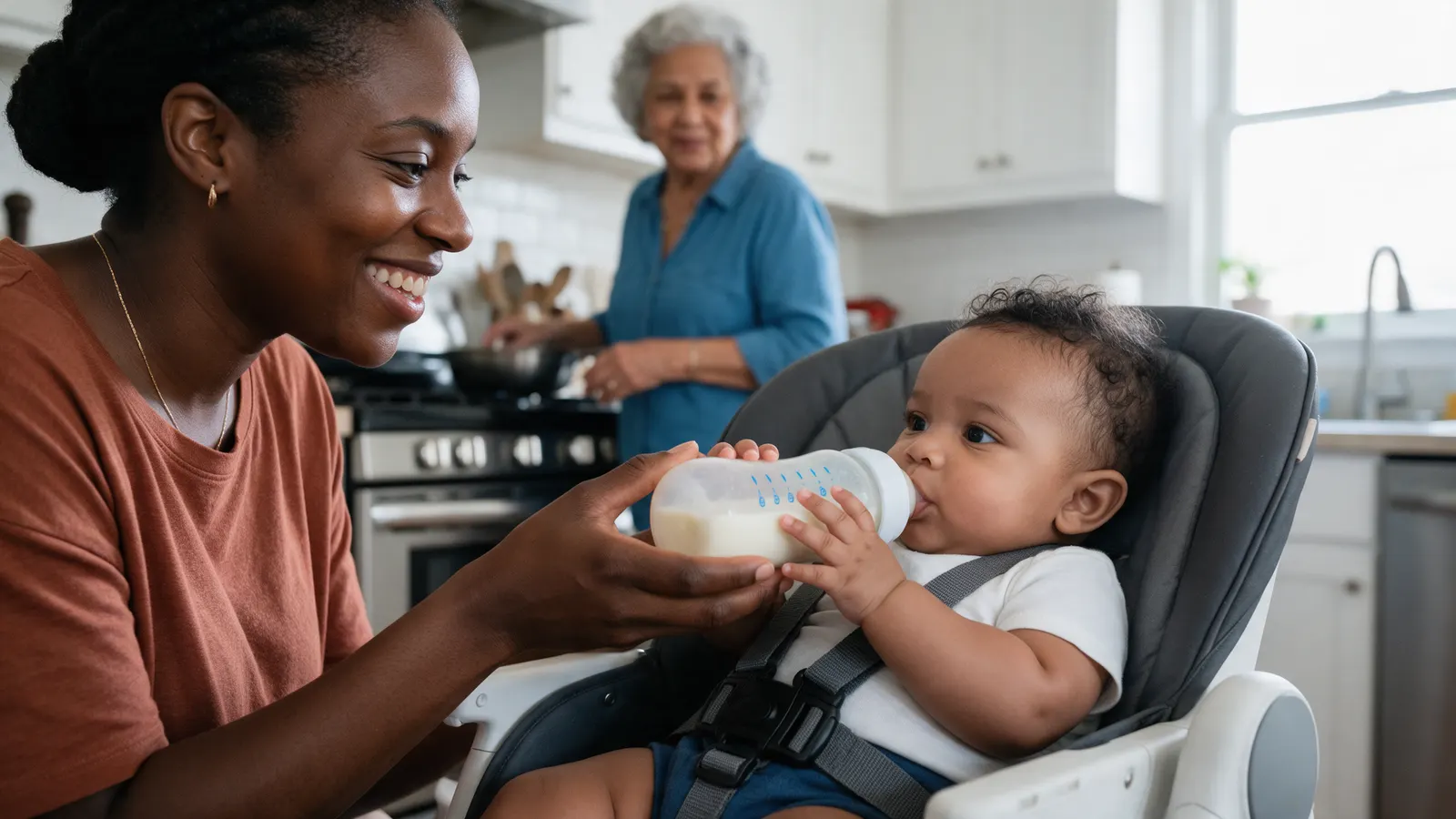
Yesterday was the bottles. Today is what will be in the cup after the first birthday, and why it isn't in there yet.
Heart
Around 12 months, most babies can switch to whole cow's milk; before that, the AAP says babies shouldn't drink cow's milk or other milk substitutes (AAP). At 40 weeks the main drink is still breast milk or formula, plus 4 to 8 ounces of water a day (Muth, AAP). The cup your baby bangs on the tray at lunch holds water now; in about ten weeks it can hold milk. The gap matters, and the reason is iron.
Head
Cow's milk lacks enough iron and other nutrients babies need, and in some babies it irritates the gut and causes iron-deficiency anemia (AAP). That's also why, at 12 months, your baby will be checked for anemia and, depending on risk, lead (AAP). The limit after the switch is as important as the switch: keep milk to about 16 ounces (2 cups) a day or less, because more than 24 ounces is linked to iron deficiency (AAP). Whole milk is recommended for most children from 12 to 24 months, though your pediatrician may suggest 2% for some (AAP; Muth, AAP).
Body
If you're breastfeeding, none of this is a stop date. The AAP supports continuing as long as you both want, to 2 years or beyond (Muth, AAP). If you use formula, the switch is the plan, and one thing to expect alongside it: near 12 months, growth slows and appetite often levels off (AAP), so a baby who wants less at the first birthday isn't refusing the new milk. The guide's answer is When can my baby drink cow's milk?
Try today
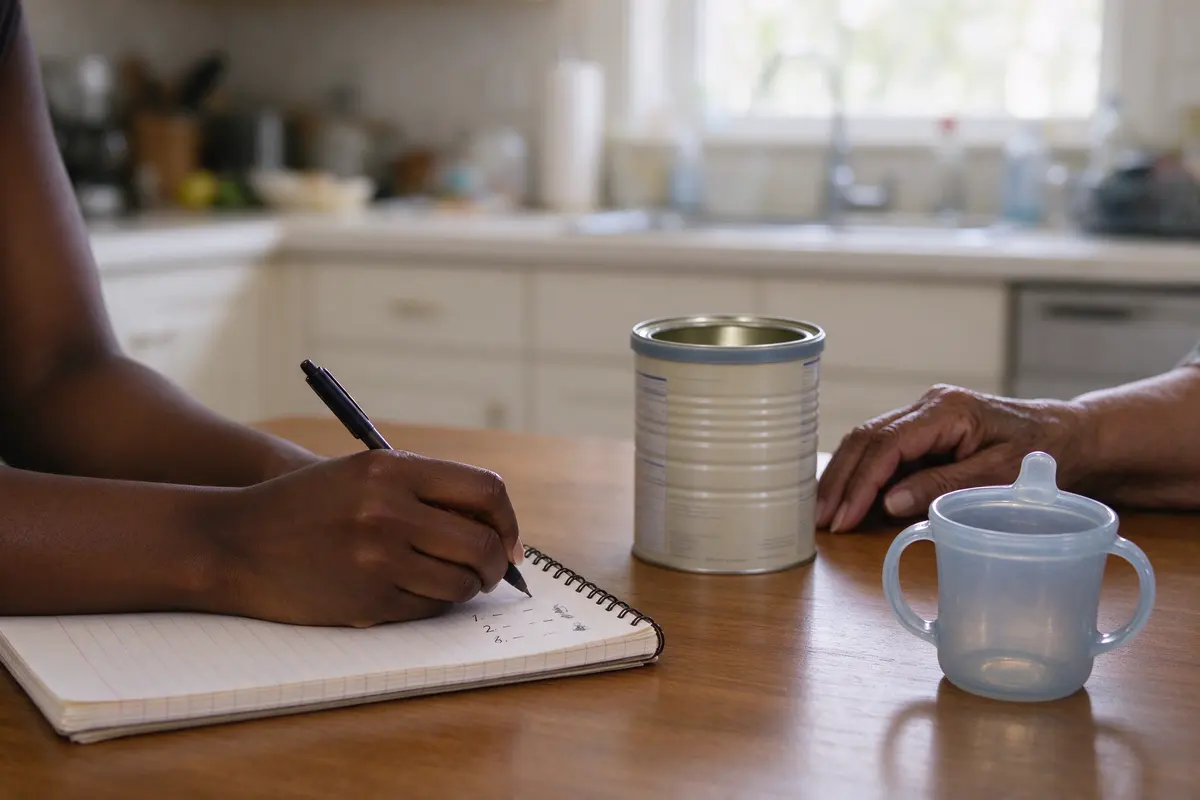
The milk question
Time: 5 minutes with a pen · Cups in, bottles out in the guide
Write the first question for the 12-month visit: whole milk or 2%, and from what date; whole milk is the recommendation for most children from 12 to 24 months (AAP).
Write how much, with the two numbers beside it: about 16 ounces a day or less, and more than 24 ounces is linked to iron deficiency (AAP).
Write the iron question: whether the anemia check at the visit changes anything about milk or food (AAP).
If you breastfeed, or use a substitute for a medical reason, write that instead and ask what the plan is for your baby.
Clip it to yesterday's bottle map.
Make it work:The question is for the visit, not for today. Nothing in the cup changes this month (AAP).
Watch for
Normal
a hand in your cereal bowl, going for the milk; cow's milk as a drink waits until around 12 months (AAP).
Check with your pediatrician first
if your baby isn't growing and gaining weight steadily (AAP).
Normal
a day of smaller milk feeds from a baby busy with three meals; milk is still the main drink, plus 4 to 8 ounces of water (Muth, AAP).
Call your pediatrician right away
for signs of dehydration: no urine in more than 8 hours, dark urine, a very dry mouth, and no tears (AAP).
Normal
a hot afternoon when the water cup empties twice.
Call 911
if your baby is not moving, is very weak, or can't be woken (AAP).
For you
Your own feeding plan is yours. Whether you breastfeed to the first birthday, to 2 years, or beyond, the AAP supports it (Muth, AAP), and whether you've used formula since the first week, the switch at 12 months is the same switch everyone makes. Nobody at the visit gets a vote beyond the questions on your list. One line that's still true at ten months: a tender, red, warm area on one breast is a call to your own provider, not something to wait out (MedlinePlus).
If you're the partner: the plan is hers to make. Yours is the list in your pocket at the visit and the pediatrician's number in your phone, so the question gets asked even if the baby is screaming when it's time.
Sources
- American Academy of Pediatrics. "Why Do Infants Need Baby Formula Instead of Cow's Milk?" HealthyChildren.org, updated 2024. https://www.healthychildren.org/English/ages-stages/baby/formula-feeding/Pages/Why-Formula-Instead-of-Cows-Milk.aspx
- Muth ND. "Recommended Drinks for Children Age 5 & Younger." HealthyChildren.org, updated 2023. https://www.healthychildren.org/English/healthy-living/nutrition/Pages/Recommended-Drinks-for-Young-Children-Ages-0-5.aspx
- American Academy of Pediatrics. "Checkup Checklist: First Birthday (12 Months Old)." HealthyChildren.org, updated 2021. https://www.healthychildren.org/English/ages-stages/Your-Childs-Checkups/Pages/Your-Checkup-Checklist-12-Months-Old.aspx
- American Academy of Pediatrics. "Sleeping Through the Night." HealthyChildren.org, updated 2013. https://www.healthychildren.org/English/ages-stages/baby/sleep/Pages/Sleeping-Through-the-Night.aspx
- American Academy of Pediatrics. "Fever" (symptom checker). HealthyChildren.org, accessed 2026. https://www.healthychildren.org/English/tips-tools/symptom-checker/Pages/symptomviewer.aspx?symptom=Fever
- MedlinePlus. "Going home after a C-section." National Library of Medicine, 2024. https://medlineplus.gov/ency/patientinstructions/000624.htm
This guide is general education that summarizes published research and guidance from groups like the American Academy of Pediatrics, the CDC, and the WHO. It isn’t medical advice, and every child develops on their own timeline. Your pediatrician knows your child; if something feels wrong, call them. In an emergency, call 911.
Get each day’s note the morning it applies
Add your baby to a free Chorevia household with their date of birth, and every morning for 300 days the day’s note arrives in the app and by email: what’s developing, one thing to try, what to watch for, and a word for you.
Create your household