Day 118 of 120 · Week 16
Getting your attention
Last reviewed · 3 min read · 11 sources · Plain-text version
By 4 months most babies look, move, or make sounds to get and keep your attention, and smile on their own to pull you in. A game that lets them call you first.
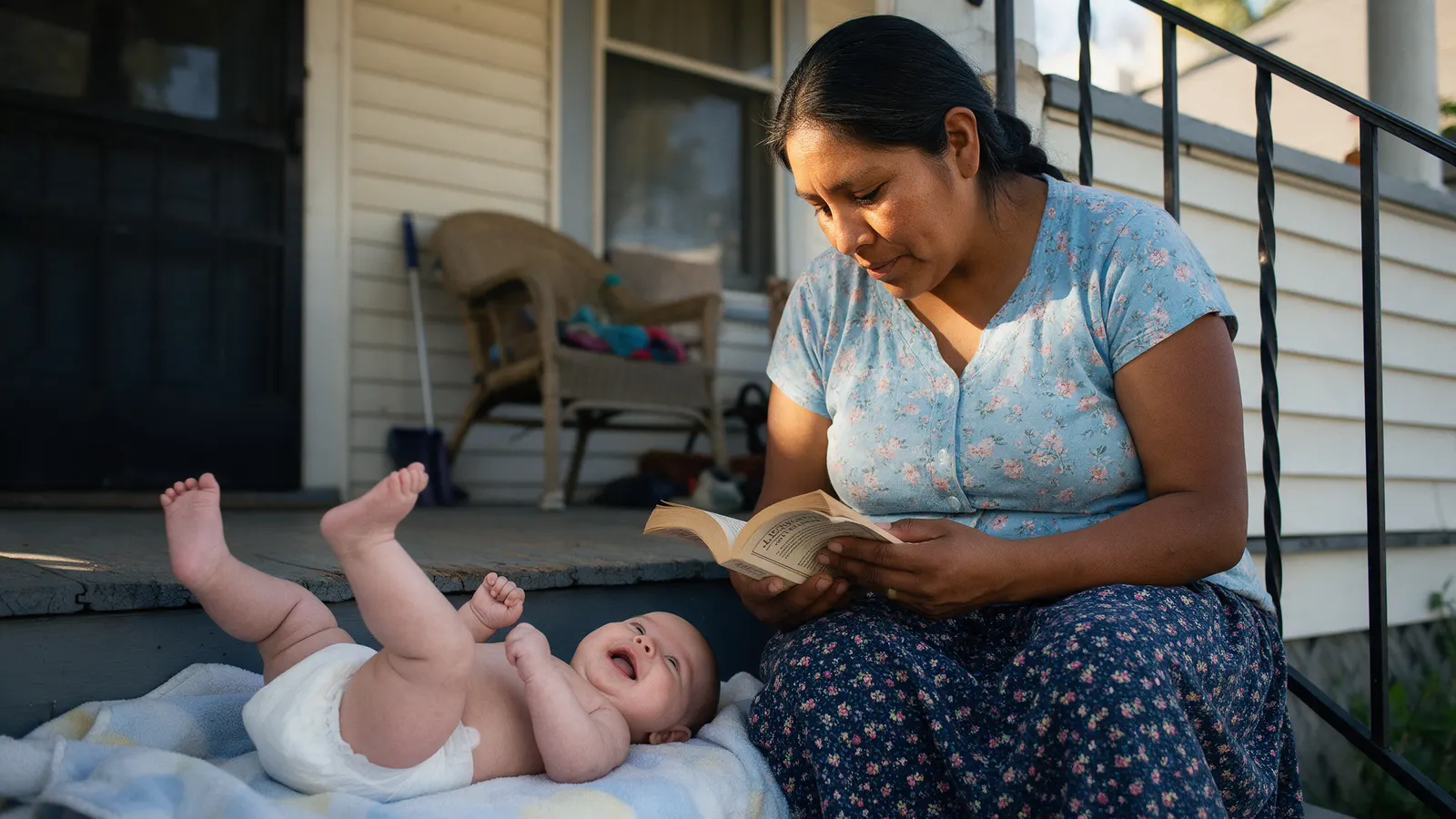
Your baby has started calling you. Not crying, calling. Today's game is about answering.
Heart
By 4 months, most babies look at you, move, or make sounds to get or keep your attention, and smile on their own to get it (CDC). That is a different thing from a cry. It's a baby who has learned that a look, a wiggle, or a squeal brings a face, and who is now sending them on purpose. Everyday back-and-forth like this helps build connections in the brain (Harvard Center on the Developing Child).
Head
The game has two halves, and the second is theirs. Looking away mid-game is normal; it keeps your baby from getting overwhelmed (AAP), so a turned head means pause, not try harder. And your reaction is part of what they're learning: in a study of 37 babies tested at 5 to 7 months, babies smiled longer, or sooner and more often, at a parent's raspberries when the parent laughed too (Mireault et al., 2015). When they call and you light up, they learn calling works.
Body
Try today
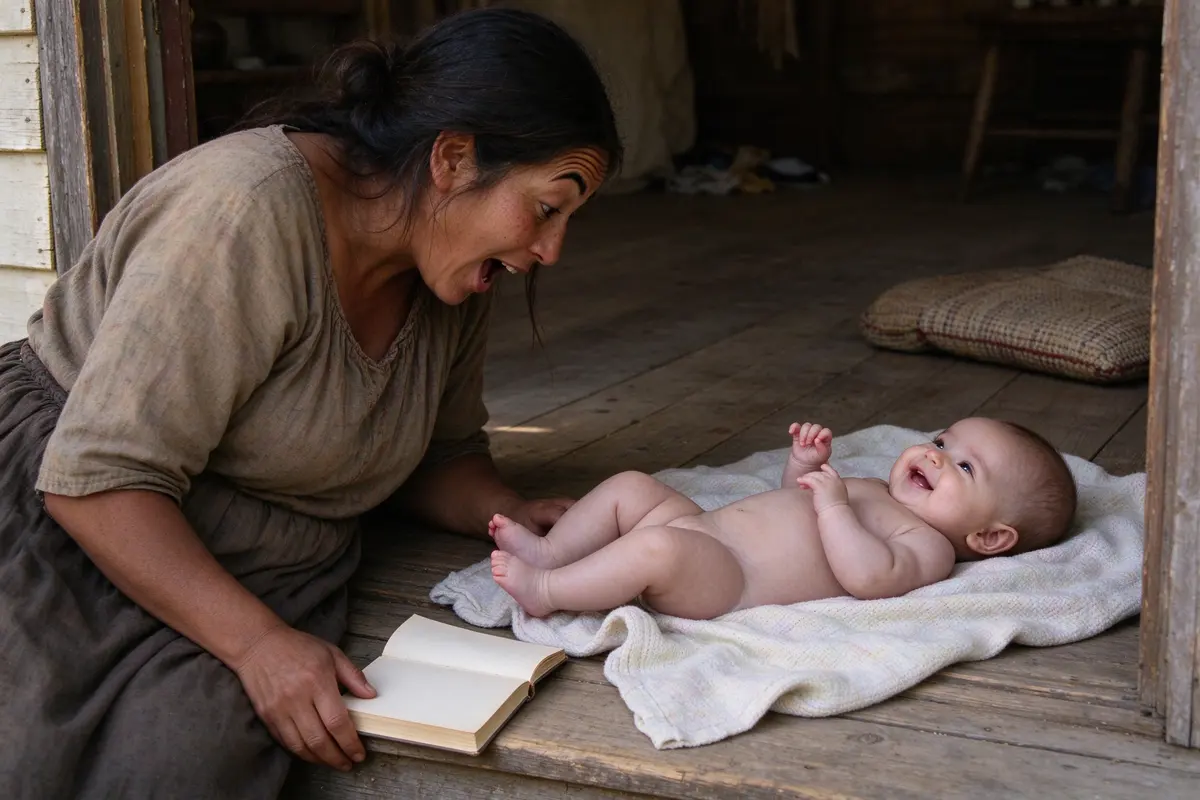
The attention game
Time: 2 to 3 minutes, a few times today · Laugh together in the guide
Sit on the floor near your baby and look at something else: a book, the window, your hands.
Wait. The moment they look at you, wiggle, or make a sound, answer big: turn, smile, say their name, "You called me!" (CDC).
Look away again, briefly, and wait for the next call.
When they look away and stay away, the game is over (AAP).
Make it work:The waiting is the game. If no call comes in a minute, call them instead and start over; nothing here has been studied as its own activity, and it's for fun.
Watch for
Normal
calls that are grunts and kicks more than smiles, some days.
Normal
a cry that stops the moment you arrive.
Call your pediatrician right away
if your baby has a fever and cries nonstop, cries when touched, or looks very sick (AAP).
Normal
a skill that shows up, then hides for a few days.
Don't wait
if your baby has lost skills they had: ask about developmental screening, or call your state's early intervention program for a free evaluation (CDC).
For you
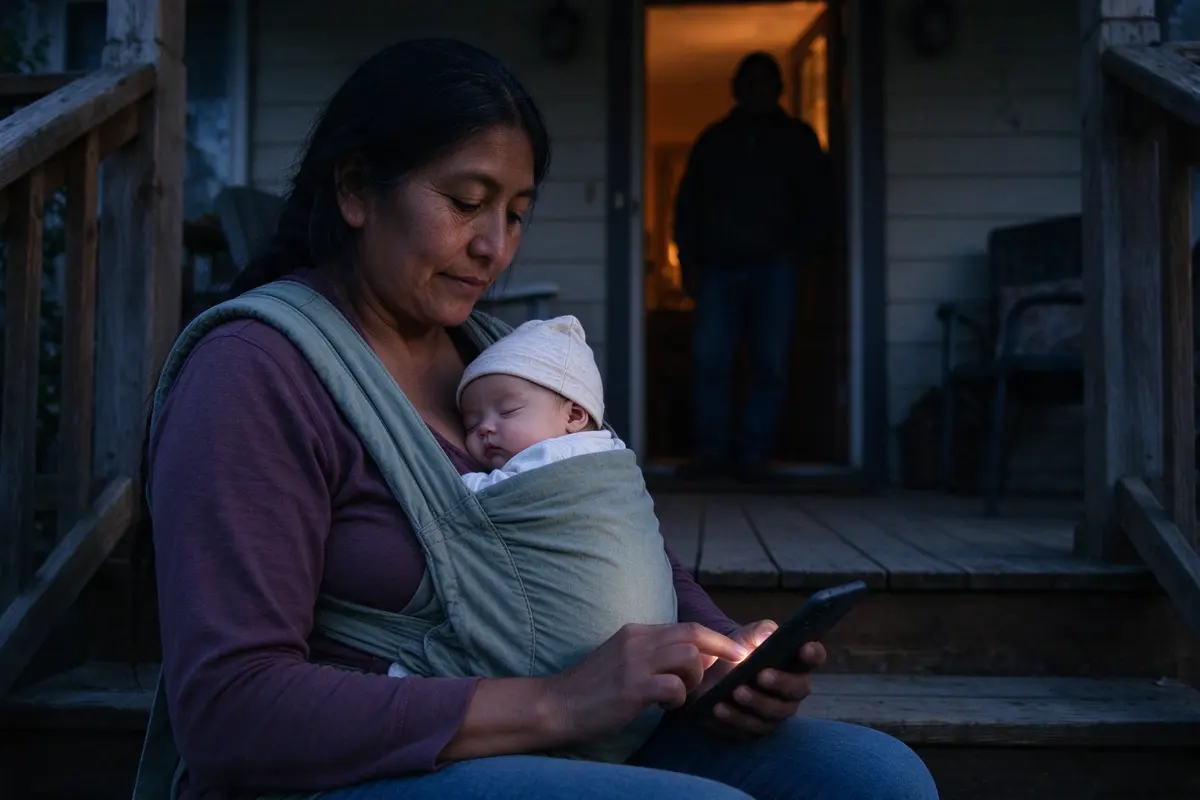
The attention you need: name one person. In a study of 100 new mothers, unwanted thoughts of the baby being harmed were universal, and more common with high stress and little support (Fairbrother & Woody, 2008). Support is not a mood. It's a person with a name who you can call at 3 p.m. on a Tuesday about nothing. Write the name down today, and send the first message: "Can I call you this week? Nothing's wrong. I just need a grown-up."
If the thing you need to say is bigger than a friend can hold, call or text the National Maternal Mental Health Hotline at 1-833-TLC-MAMA (1-833-852-6262), or call or text 988 (CDC).
If you're the partner: you can be the name, but you can't be the only one. Help her find the second.
Sources
- Centers for Disease Control and Prevention. "Milestones by 4 Months." Learn the Signs. Act Early., 2026. https://www.cdc.gov/act-early/milestones/4-months.html
- Center on the Developing Child at Harvard University. "Serve and Return." 2026. https://developingchild.harvard.edu/key-concept/serve-and-return/
- American Academy of Pediatrics. "Emotional & Social Development in Babies: Birth Through 3 Months." HealthyChildren.org, 2026. https://www.healthychildren.org/English/ages-stages/baby/Pages/Emotional-and-Social-Development-Birth-to-3-Months.aspx
- Mireault GC, Crockenberg SC, Sparrow JE, et al. "Laughing matters: Infant humor in the context of parental affect." Journal of Experimental Child Psychology, 2015. https://pubmed.ncbi.nlm.nih.gov/25897958/
- American Academy of Pediatrics. "Hearing & Making Sounds: Your Baby's Milestones." HealthyChildren.org, 2021. https://www.healthychildren.org/English/ages-stages/baby/Pages/Hearing-and-Making-Sounds.aspx
- Centers for Disease Control and Prevention. "Milestones by 6 Months." Learn the Signs. Act Early., 2026. https://www.cdc.gov/act-early/milestones/6-months.html
- American Academy of Pediatrics. "Developmental Milestones: 7 Months." HealthyChildren.org, 2009. https://www.healthychildren.org/English/ages-stages/baby/Pages/Developmental-Milestones-7-Months.aspx
- American Academy of Pediatrics. "Fever" (symptom checker). HealthyChildren.org, 2026. https://www.healthychildren.org/English/tips-tools/symptom-checker/Pages/symptomviewer.aspx?symptom=Fever
- Centers for Disease Control and Prevention. "Concerned About Your Child's Development?" 2026. https://www.cdc.gov/act-early/families/concerned.html
- Fairbrother N, Woody SR. "New mothers' thoughts of harm related to the newborn." Archives of Women's Mental Health, 2008. https://pubmed.ncbi.nlm.nih.gov/18463941/
- Centers for Disease Control and Prevention. "Symptoms of Depression Among Women." 2024. https://www.cdc.gov/reproductive-health/depression/index.html
This guide is general education that summarizes published research and guidance from groups like the American Academy of Pediatrics, the CDC, and the WHO. It isn’t medical advice, and every child develops on their own timeline. Your pediatrician knows your child; if something feels wrong, call them. In an emergency, call 911.
Get each day’s note the morning it applies
Add your baby to a free Chorevia household with their date of birth, and every morning for 120 days the day’s note arrives in the app and by email: what’s developing, one thing to try, what to watch for, and a word for you.
Create your household