Parent guides · 6 months
Your seventh month, day by day
Days 181 to 210: first bites, one new food at a time, peanut and egg early and often, gagging versus choking, cups, the drop game, the first tooth, night waking, babyproofing, and seven months, with one new thing to try every day.
Every note draws on the 6-month guide and cites its sources. Babies don’t keep calendars: read each day as “around now”, and let your pediatrician’s read of your baby beat any note.
← Your sixth month, day by day (days 151 to 180)Your eighth month, day by day (days 211 to 240) →
Week 25: first bites
A half spoonful, one new food at a time, rotating grains, peanut this week, and keeping it coming.
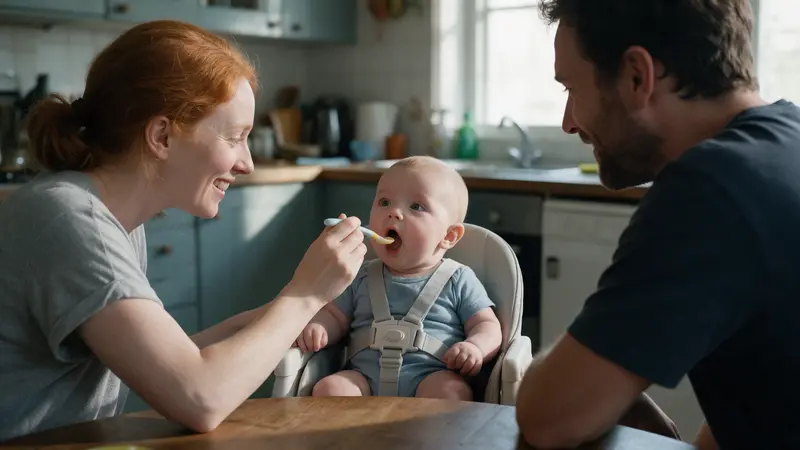 Day 181Month seven: first bitesSolids start when the readiness signs are there, not when the calendar says so. The signs, why milk is still the main meal, and the six-month list once more as 'most babies, around now'.Try: First tastes from a spoon
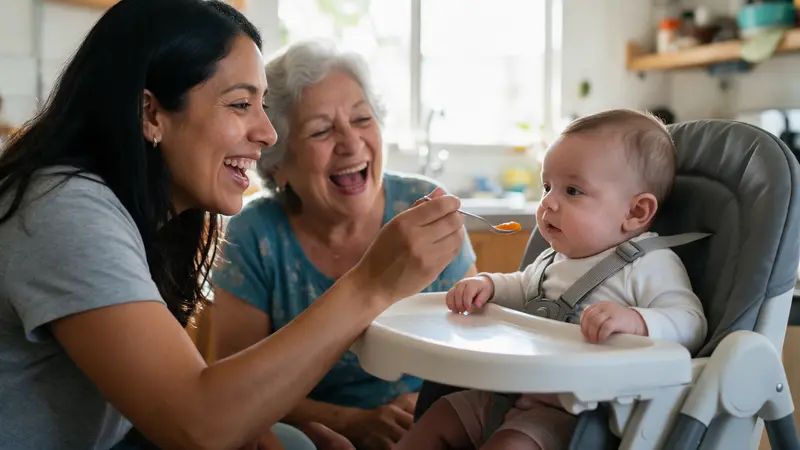 Day 182Half a spoonfulStart smaller than feels right: half a spoonful or less, a little milk first, and a week off if it comes straight back out. The sweet-potato script, and why the mess is the point.Try: The half-spoon rule
 Day 183One new food, three to five daysOne single-ingredient food at a time, a few days apart, so a reaction has a name. No required order, fruit first is fine, and iron leads. Today the food diary begins.Try: The food diary
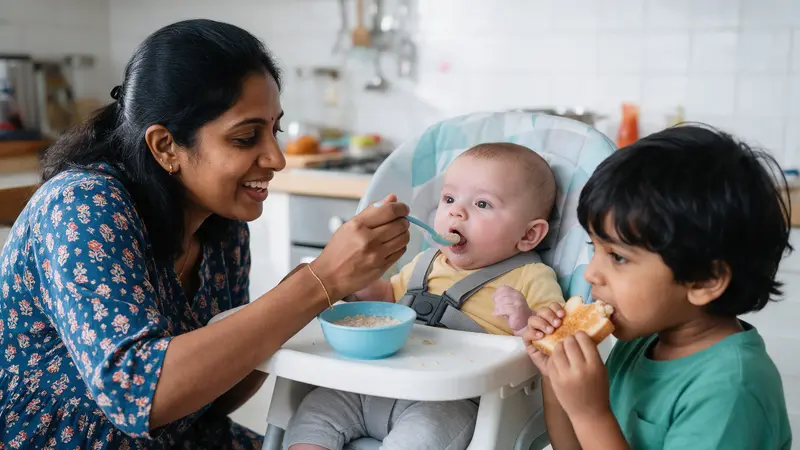 Day 184Rotate the grainsRice soaks up more arsenic than other crops, so rice cereal shouldn't be the first or only one. Oat, barley, multigrain, and what the AAP says heavy metals in baby food add up to.Try: The cereal swap
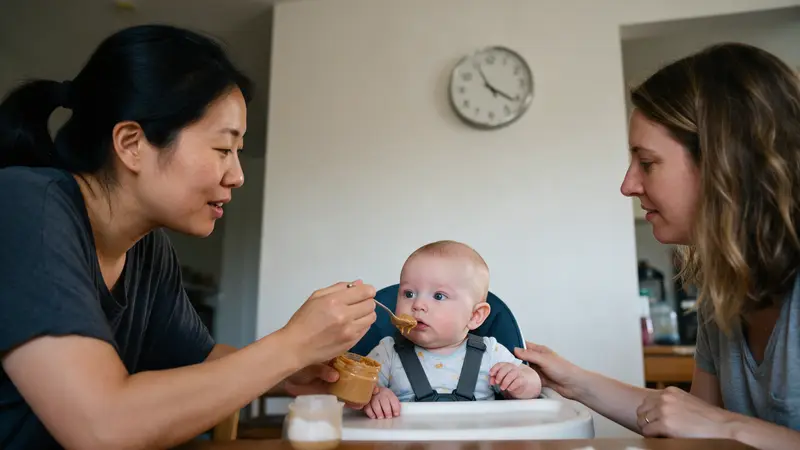 Day 185Peanut, this week or nextThree groups, one recipe, two hours of watching. The NIAID home-feeding steps for peanut, egg on another day, and the exact signs that mean a call or 911.Try: Peanut and egg, early and often
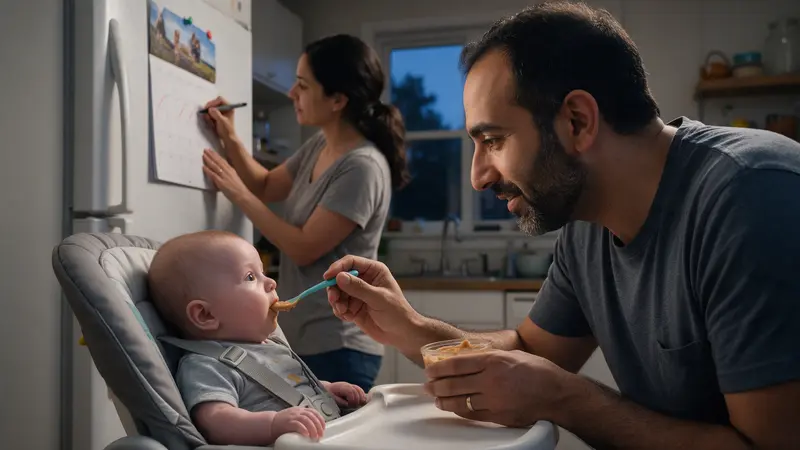 Day 186Keep it comingThe first taste matters less than the next thirty. The weekly peanut target, what the EAT and LEAP trials found about sticking with it, and why your own diet is no shortcut.Try: The three-a-week tally
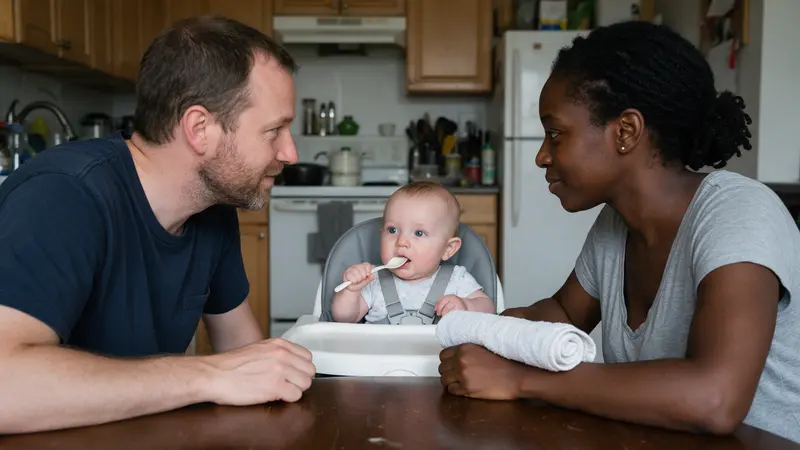 Day 187Twenty-six weeks: gagging is normalA gag is loud and expected at six months. Choking is silent. The two lists, the five back blows and five chest thrusts, and the drill you say out loud with your partner tonight.Try: The gag-or-choke drill
Week 26: spoon, fingers, cup
Gagging is normal, spoon or fingers, sips of water, the foods that wait, hungry and full, meals together, and sitting.
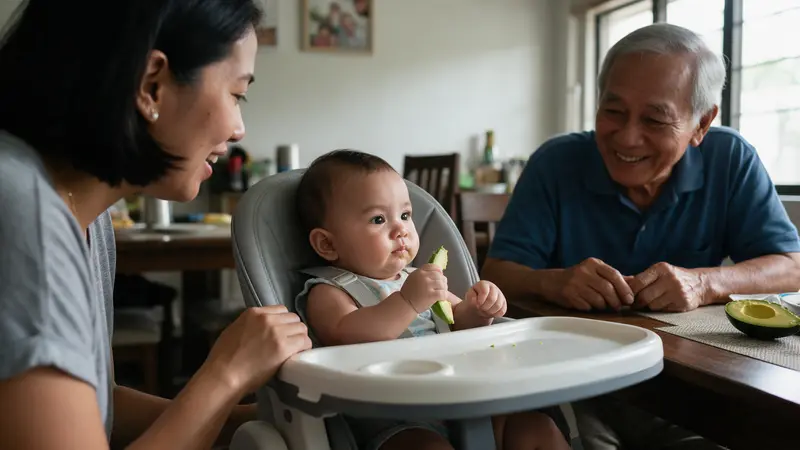 Day 188Spoon, fingers, or bothSpoon-feeding and baby-led weaning both work, and the trials say the label matters less than the shape of the food and the eyes on the baby. Today, a strip of avocado on the tray.Try: Soft finger-food practice
 Day 189Sips of waterA few sips of water from a cup are fine now, up to 4 to 8 ounces a day, and juice, cow's milk, and honey all wait for the first birthday. Today, the first open cup.Try: Sips from an open cup
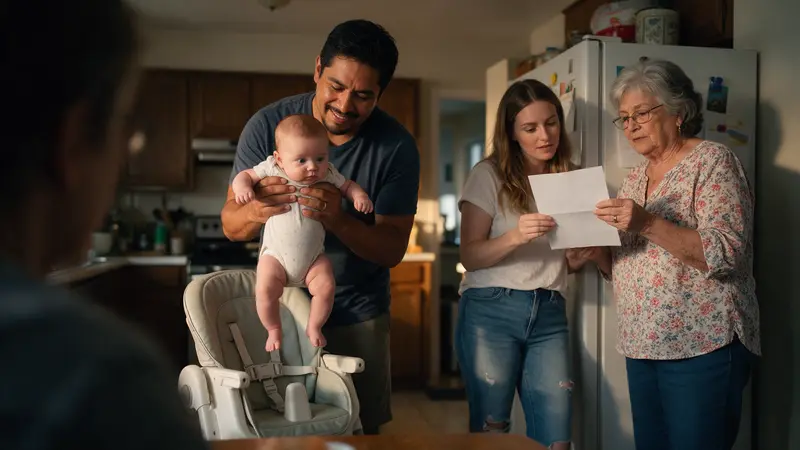 Day 190The foods that waitHot dogs, whole grapes, nuts, popcorn, raw apple, and the rest of the choking list wait until after the first birthday, with honey, juice, and cow's milk. Today it goes on the fridge.Try: The not-yet list on the fridge
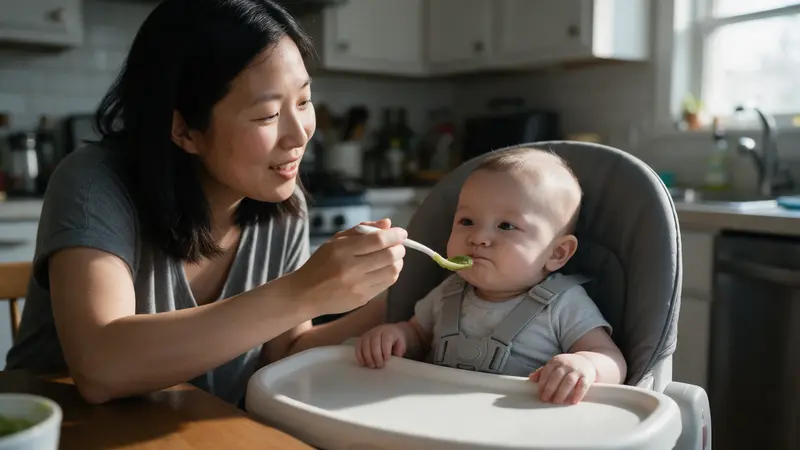 Day 191Hungry, full, doneClosed lips, a turned head, a hand on the spoon: your baby already says when they're done. How to read hunger and fullness, and why a grimace isn't a verdict.Try: Ten tries of green beans
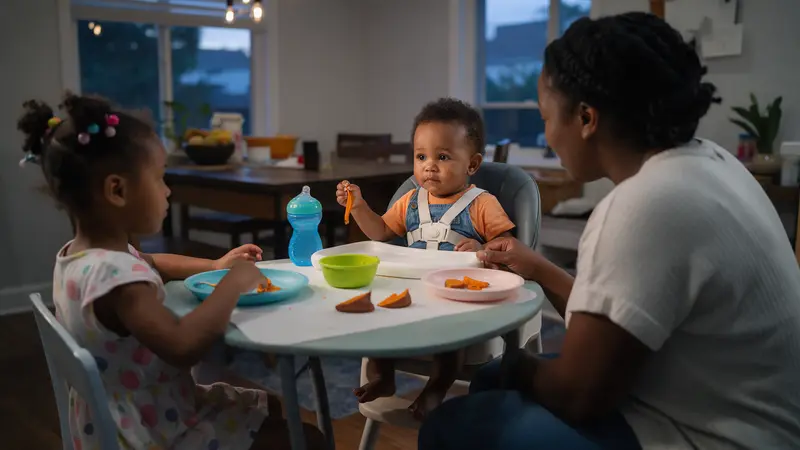 Day 192Meals togetherThe AAP encourages a seat at family meals from the very first feeding. Why the table matters more than the menu, and how one calm meal a day can work on a weeknight.Try: The family-meal seat
 Day 193Sitting, in stepsTripod first, then upright once you set them there, then sitting alone around 9 months. The WHO's wide window, and the crib mattress that goes down tonight.Try: Sitting practice
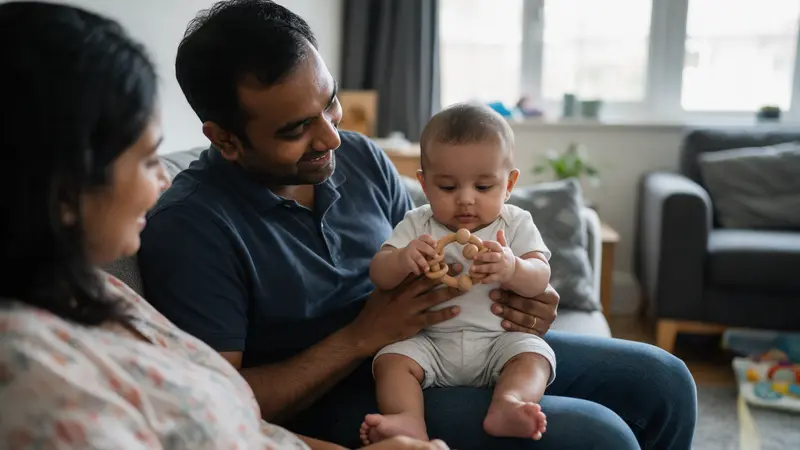 Day 194Twenty-seven weeks: hand to handBetween 6 and 8 months, babies learn to pass a toy from one hand to the other and turn it over. The two-toy test, bouncing feet, and the pincer grasp still to come.Try: The hand-to-hand toy
Week 27: hands, rolls, and words
Hand to hand, roll to reach, the drop game, things come back, imitating sounds, words before words, and day two hundred.
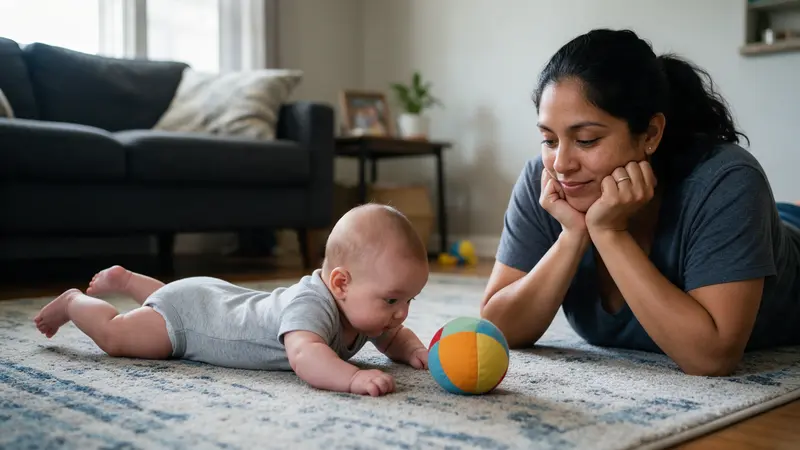 Day 195Roll to reachMany babies roll both ways by the end of this month, and the floor is where it happens. A toy just out of reach, the WHO's case for floor play, and why the walker is still a no.Try: Roll to reach
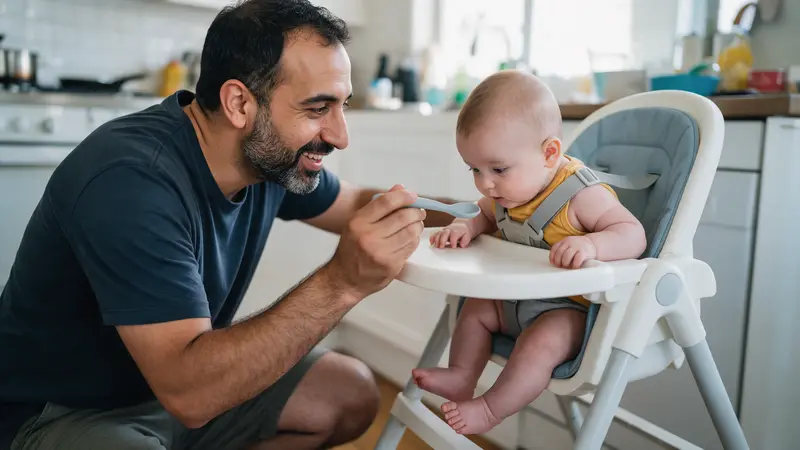 Day 196The drop gameThe spoon goes over the side again. Dropping on purpose is how babies learn that they make things happen, and the pick-up has a limit that you get to set.Try: The drop game
 Day 197Things come backToward the end of this month, many babies start to grasp that a hidden toy still exists. The 1985 study, the 1999 reply, and why a single look proves nothing either way.Try: Peekaboo and hide the toy
 Day 198Imitating soundsFrom about 6 or 7 months, babies get much better at copying the sounds you make, and a reply right after their babble is what shapes it. The echo game, and the 7-month line.Try: The echo game
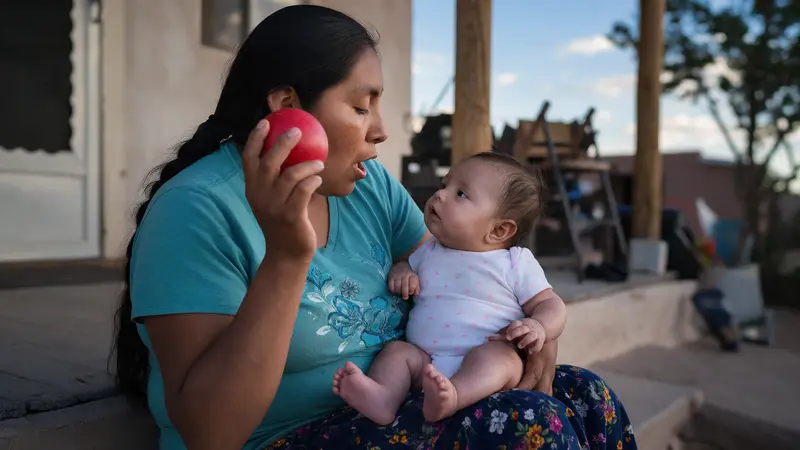 Day 199Words before wordsEvery babble answered builds language. 'Bah' becomes 'ball' and 'box', you name what they look at, and baby sign is fine for fun, but talking is what builds words.Try: The ba-ball bridge
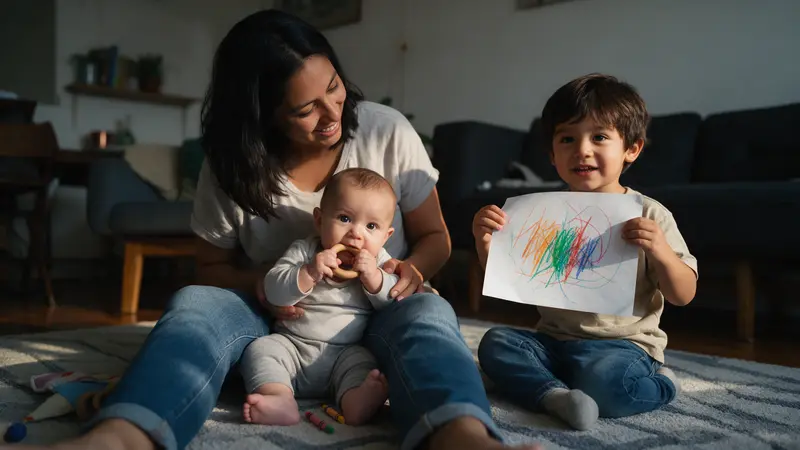 Day 200Day two hundredTwo hundred days: a first smile, a first laugh, a first roll, a first bite. The 6-month list as the frame, corrected age for babies born early, and a letter to put away.Try: The two-hundred-day letter
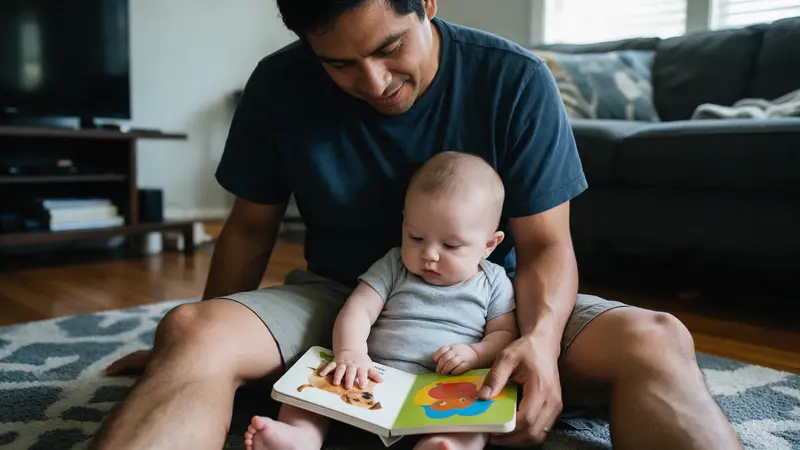 Day 201Reading and pointingFive to ten minutes a day with a board book, a finger on the picture, and a name for it. Why the AAP recommends shared reading from birth, and why the same book is fine.Try: Read and point
Week 28 and seven months
The first tooth, varnish and water, night waking, sleep training, new people, babyproofing, sun, fever, and seven months.
 Day 202Twenty-eight weeks: the first toothMost first teeth arrive between 6 and 12 months, lower front first, and some babies have none by one year. What teething does and doesn't do, and the first brush with a rice-grain smear.Try: The first brush
 Day 203Varnish and waterFluoride varnish prevented about 37% of decay in baby teeth in a Cochrane review. Whether your tap water is fluoridated, why fluoride drops are contested, and the one question to ask.Try: The water question
 Day 204Night waking at six monthsWaking and resettling at six months is normal, and a study of 388 babies found no link between sleeping through and development or a mother's mood. The routine comes before any method.Try: The routine audit
 Day 205If you decide to sleep trainSleep training is a choice, not a requirement. Two trials found no harm to attachment a year later and no lasting harms or benefits at age 6. How two adults decide, together, or decide not to.Try: The method talk
 Day 206Shy, clingy, new peopleStranger anxiety normally shows up between 7 and 12 months, and being shy or clingy is on the 9-month list. Watching from your arms, saying when you leave, and a goodbye ritual that holds.Try: The goodbye ritual
 Day 207Babyproof before they moveA baby who rolls both ways and reaches for everything is weeks from moving across a room. The floor-level sweep, the furniture anchors, and the one number to save before it's needed.Try: The crawl-level sweep
 Day 208Sun after six monthsFrom 6 months, sunscreen is fine on uncovered skin: broad-spectrum SPF 15 or higher, mineral if you can, reapplied every 90 minutes to 2 hours, with shade still first. And the car seat, as they grow.Try: The first sunscreen
 Day 209Fever and head bumps nowAfter 6 months the fever lines shift: call right away above 104°F, and 103°F may be a call too. Every head bump under 1 is a call. Two lists for the fridge, and a third for you.Try: The two lists on the fridge
 Day 210Seven monthsFirst bites, first allergens, maybe a first tooth, and a sit that holds. What seven months changed, what the 9-month visit will ask, and where these notes go next.Try: The first-bite video