Day 186 of 300 · Week 25
Keep it coming
Last reviewed · 3 min read · 12 sources · Plain-text version
The first taste matters less than the next thirty. The weekly peanut target, what the EAT and LEAP trials found about sticking with it, and why your own diet is no shortcut.
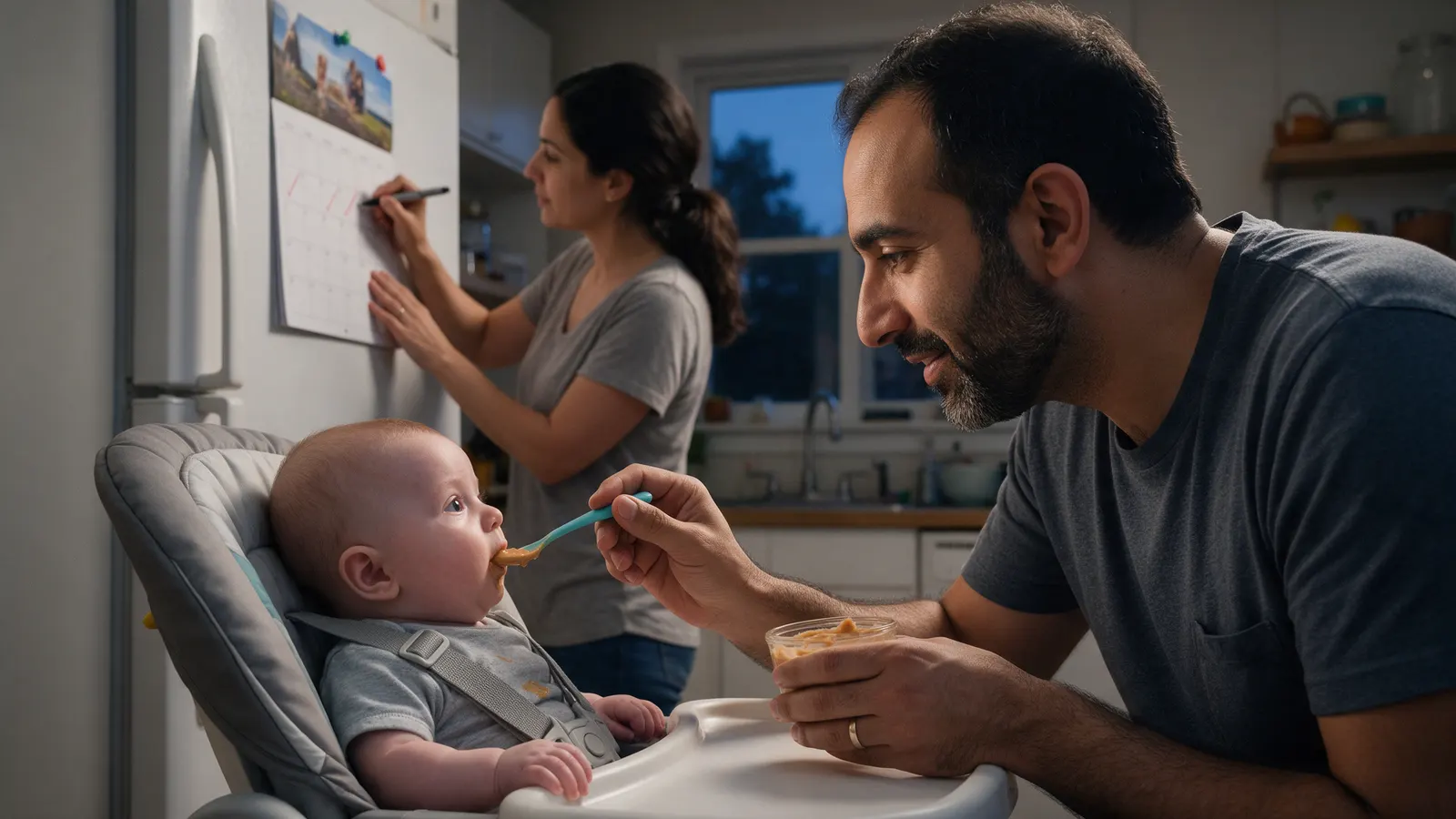
Yesterday was the first taste. Today is the part that does the work: the next one, and the one after that.
Heart
The goal is about 6 to 7 grams of peanut protein a week over 3 or more feedings (NIAID); 2 teaspoons of peanut butter has about 2 grams (NIAID). Keep egg and the other allergens in the diet too, and never serve whole nuts (AAP). That's the arithmetic of this month: not one brave spoonful, but the same thinned peanut butter stirred into a puree a few times a week until it's just another food.
Head
Consistency is the hard part, and the trials say so. The EAT trial randomized 1,303 breastfed 3-month-olds in the UK to start six allergenic foods early or at about 6 months. Allergy developed in 5.6% of the early group and 7.1% of the standard group, a difference that could have been chance; the families who stuck with the plan had less peanut and egg allergy, but many found it hard to keep up (Perkin et al., 2016). In LEAP, the protection held: at age 12, after years of eating peanut or not as they pleased, 15.4% of the original avoiders were allergic, versus 4.4% of the eaters (Du Toit et al., 2024). After the US guidelines changed, peanut allergy diagnoses by age 3 in primary care records fell from 0.79% to 0.45% (Gabryszewski et al., 2025), though a before-and-after comparison can't prove cause.
Body
A parent's diet is no shortcut. In a 2026 trial of 2,137 pregnant people with a family history of allergy, eating lots of eggs and peanuts through pregnancy and early breastfeeding didn't lower babies' egg or peanut allergy at age 1 (7.8% versus 8.4%) (Palmer et al., 2026). What protects your baby is your baby eating the food. The form stays the same every time: thinned peanut butter or peanut stirred into a puree, from a spoon, with your baby upright and buckled; no whole nuts, no thick globs (NIAID; AAP).
Try today
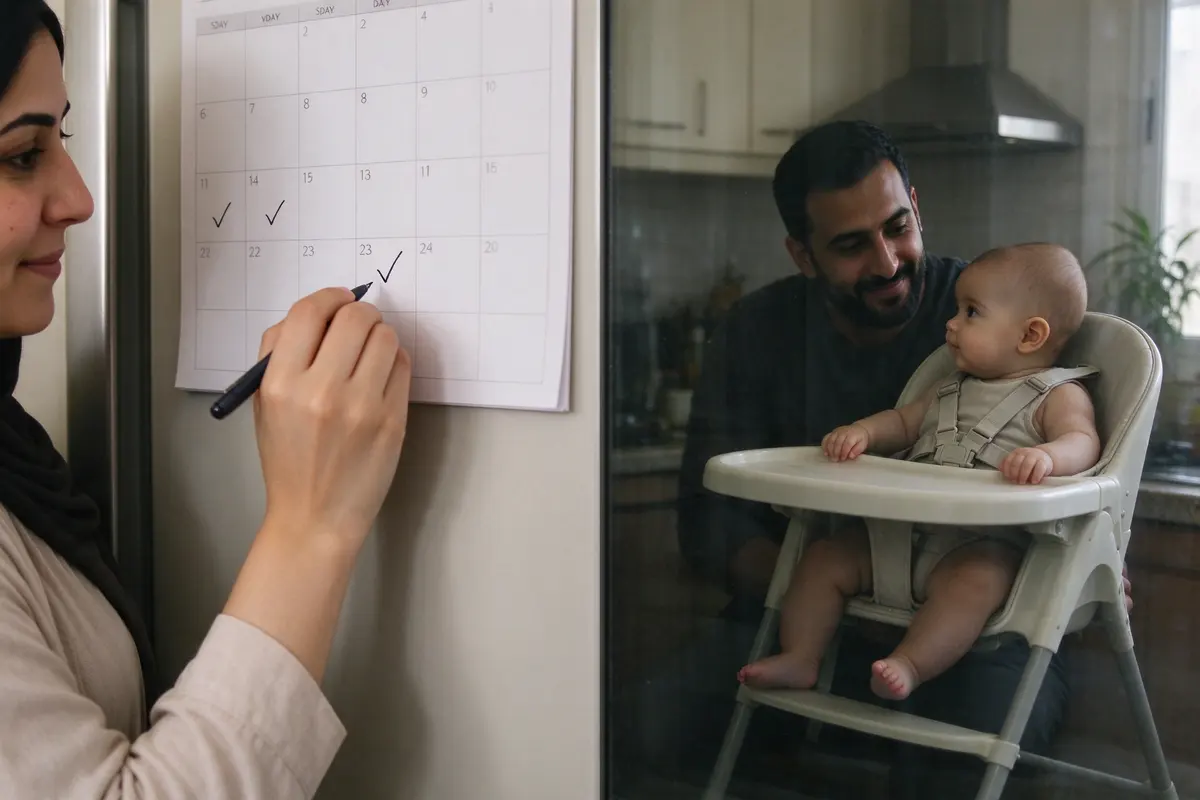
The three-a-week tally
Time: 10 seconds per serving
On the calendar, draw a small P on every day your baby eats a peanut serving (NIAID).
Each serving is the usual 2 teaspoons of smooth peanut butter, thinned or stirred into a puree (NIAID).
Look at the week on Sunday: 3 or more marks is the goal (NIAID).
Add an E for egg days, and keep both going (AAP).
Make it work:A week with one mark isn't a failure; it's a week to restart. The EAT families' problem was keeping up, not starting (Perkin et al., 2016).
Watch for
Normal
a reaction-free first taste followed by a reaction-free second; the marks are the plan.
Call 911
, on any serving, for lip, face, or tongue swelling, vomiting, widespread hives, wheezing, trouble breathing, pale or blue skin, or sudden floppiness (NIAID).
Normal
squeals and raspberries from the high chair between spoonfuls (CDC).
Normal
a serving eaten on Tuesday and refused on Friday; stop and try another time (AAP).
Call your pediatrician right away
if your baby cries nonstop, cries when touched or moved, or won't move an arm or leg normally (AAP).
For you
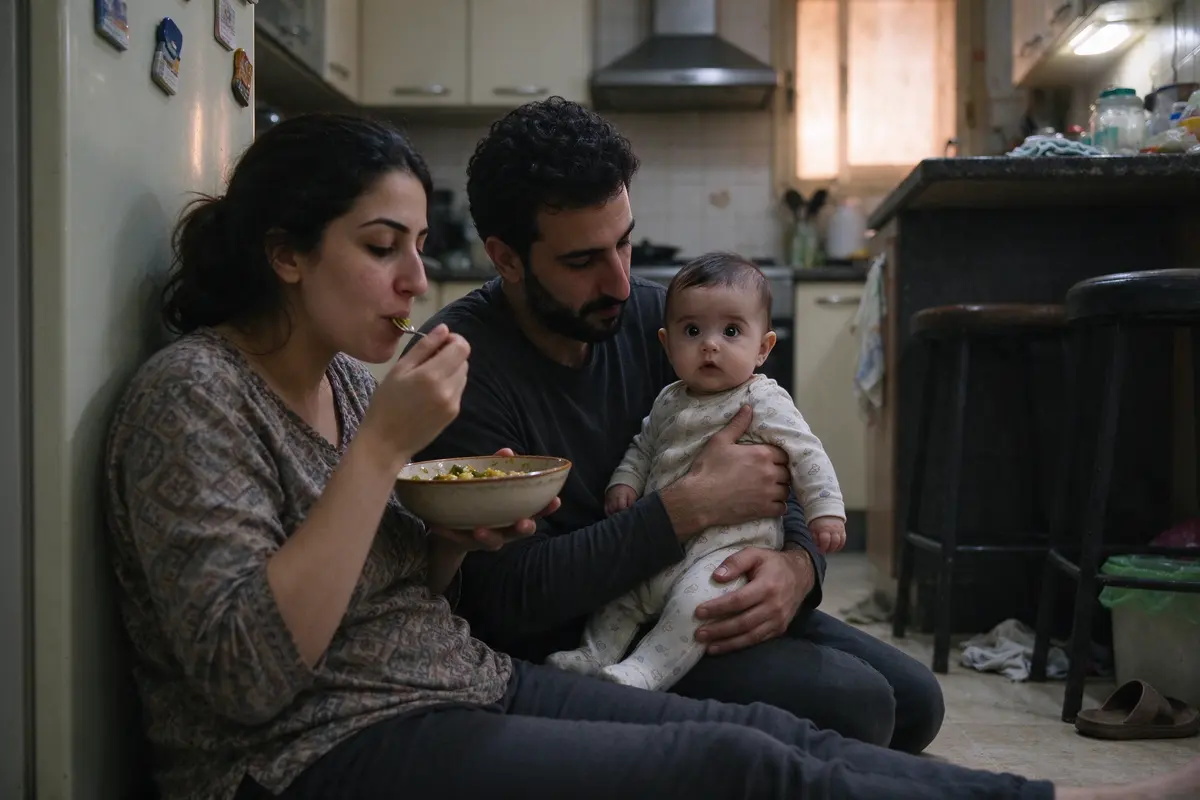
You don't have to eat a single peanut. The 2026 trial is the permission slip: eating eggs and peanuts through pregnancy and early breastfeeding didn't lower babies' allergy (Palmer et al., 2026). Eat what you like. What protects the baby is the baby eating the food, 3 or more times a week, from your spoon (NIAID).
The tally is also the thing that lets you stop thinking about it. Three marks and you're done for the week; no marks and you know on Sunday, not at the allergist's.
If you're the partner: the calendar is yours. Draw the P.
Sources
- Togias A, Cooper SF, Acebal ML, et al. "Addendum Guidelines for the Prevention of Peanut Allergy in the United States: Report of the NIAID-Sponsored Expert Panel." NIAID, 2017. https://www.niaid.nih.gov/sites/default/files/addendum-peanut-allergy-prevention-guidelines.pdf
- National Institute of Allergy and Infectious Diseases. "Instructions for Home Feeding of Peanut Protein for Infants at Low Risk of an Allergic Reaction to Peanut" (Appendix D). 2017. https://www.niaid.nih.gov/sites/default/files/addendum_guidelines_peanut_appx_d.pdf
- Cox A, Pistiner M. "When to Introduce Egg, Peanut Butter & Other Common Food Allergens to a Baby." HealthyChildren.org, updated 2025. https://www.healthychildren.org/English/healthy-living/nutrition/Pages/when-to-introduce-egg-peanut-butter-and-other-common-food-allergens-to-your-baby-food-allergy-prevention-tips.aspx
- Perkin MR, Logan K, Tseng A, et al. "Randomized Trial of Introduction of Allergenic Foods in Breast-Fed Infants." New England Journal of Medicine, 2016. https://pubmed.ncbi.nlm.nih.gov/26943128/
- Du Toit G, Huffaker MF, Radulovic S, et al. "Follow-up to Adolescence after Early Peanut Introduction for Allergy Prevention." NEJM Evidence, 2024. https://pubmed.ncbi.nlm.nih.gov/38804779/
- Gabryszewski SJ, Dudley J, Faerber JA, et al. "Guidelines for Early Food Introduction and Patterns of Food Allergy." Pediatrics, 2025. https://pubmed.ncbi.nlm.nih.gov/41110838/
- Palmer DJ, Campbell DE, Nanan R, et al. "Trial of a Maternal Diet Rich in Eggs and Peanuts to Reduce Infant Allergy." New England Journal of Medicine, 2026. https://pubmed.ncbi.nlm.nih.gov/42748429/
- Bradin S. "Choking Prevention for Babies & Children: What Every Parent Needs to Know." HealthyChildren.org, updated 2026. https://www.healthychildren.org/English/health-issues/injuries-emergencies/Pages/Choking-Prevention.aspx
- Centers for Disease Control and Prevention. "Milestones by 6 Months." Learn the Signs. Act Early. program, updated 2026. https://www.cdc.gov/act-early/milestones/6-months.html
- Centers for Disease Control and Prevention. "Concerned About Your Child's Development?" 2026. https://www.cdc.gov/act-early/families/concerned.html
- American Academy of Pediatrics. "When Can Babies Start Solid Foods? Readiness & Feeding Tips." HealthyChildren.org, updated 2026. https://www.healthychildren.org/English/ages-stages/baby/feeding-nutrition/Pages/Starting-Solid-Foods.aspx
- American Academy of Pediatrics. "Fever" (symptom checker). HealthyChildren.org, accessed 2026. https://www.healthychildren.org/English/tips-tools/symptom-checker/Pages/symptomviewer.aspx?symptom=Fever
This guide is general education that summarizes published research and guidance from groups like the American Academy of Pediatrics, the CDC, and the WHO. It isn’t medical advice, and every child develops on their own timeline. Your pediatrician knows your child; if something feels wrong, call them. In an emergency, call 911.
Get each day’s note the morning it applies
Add your baby to a free Chorevia household with their date of birth, and every morning for 300 days the day’s note arrives in the app and by email: what’s developing, one thing to try, what to watch for, and a word for you.
Create your household